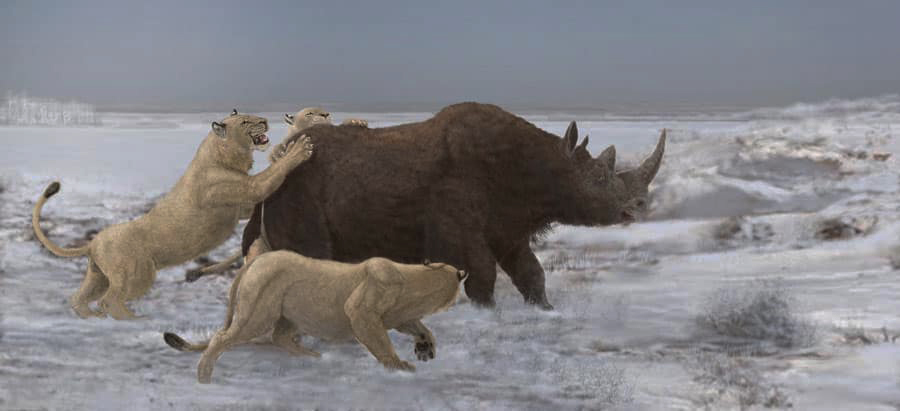
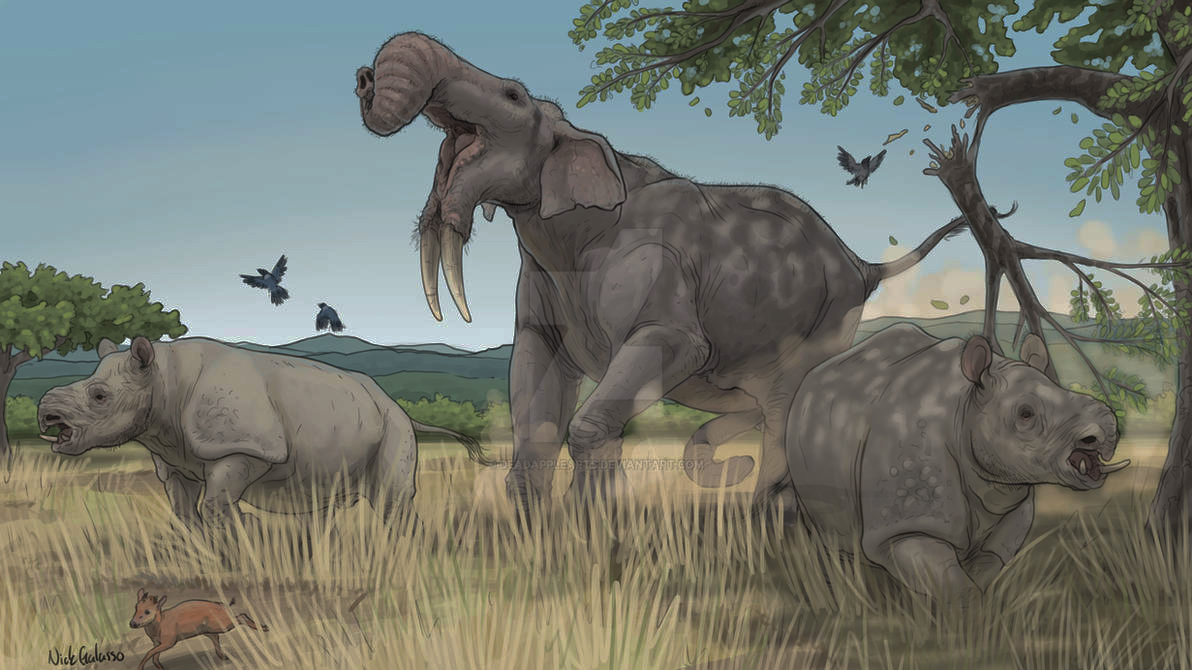
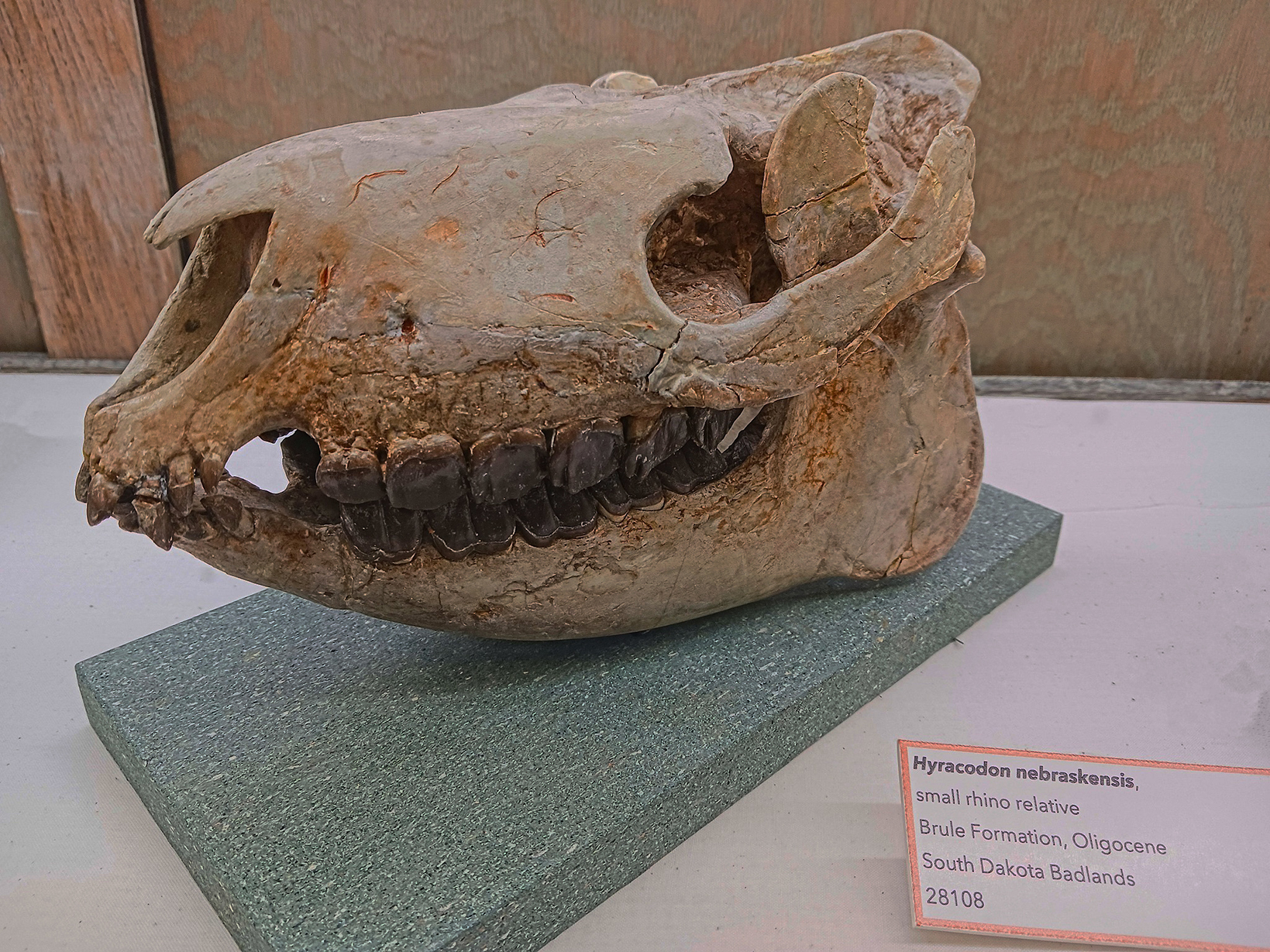
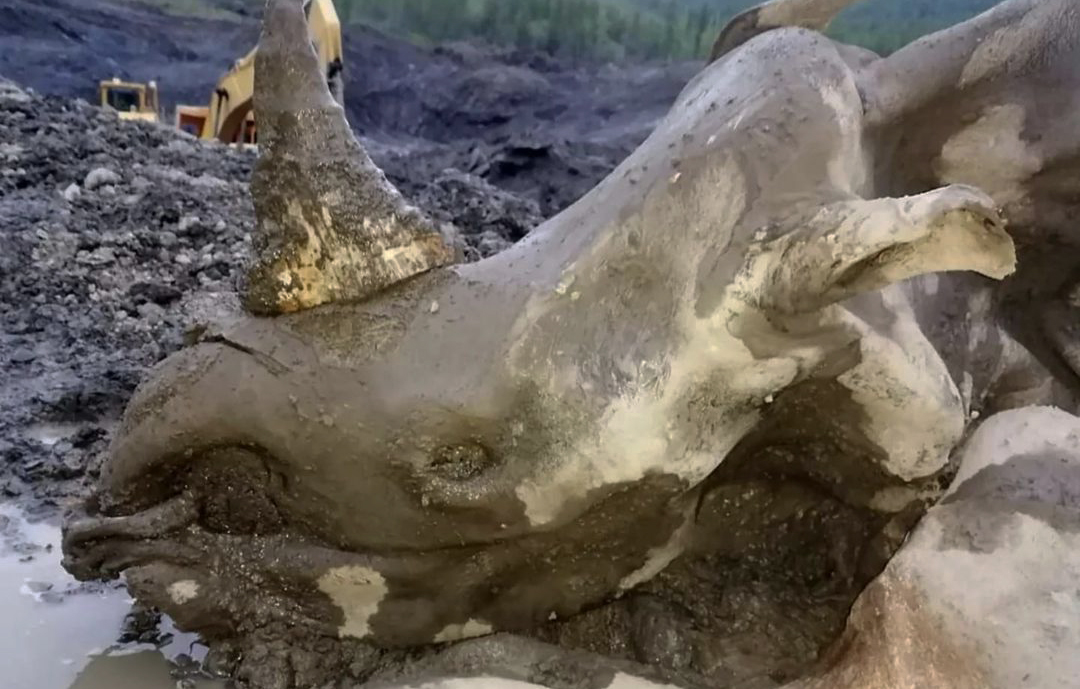
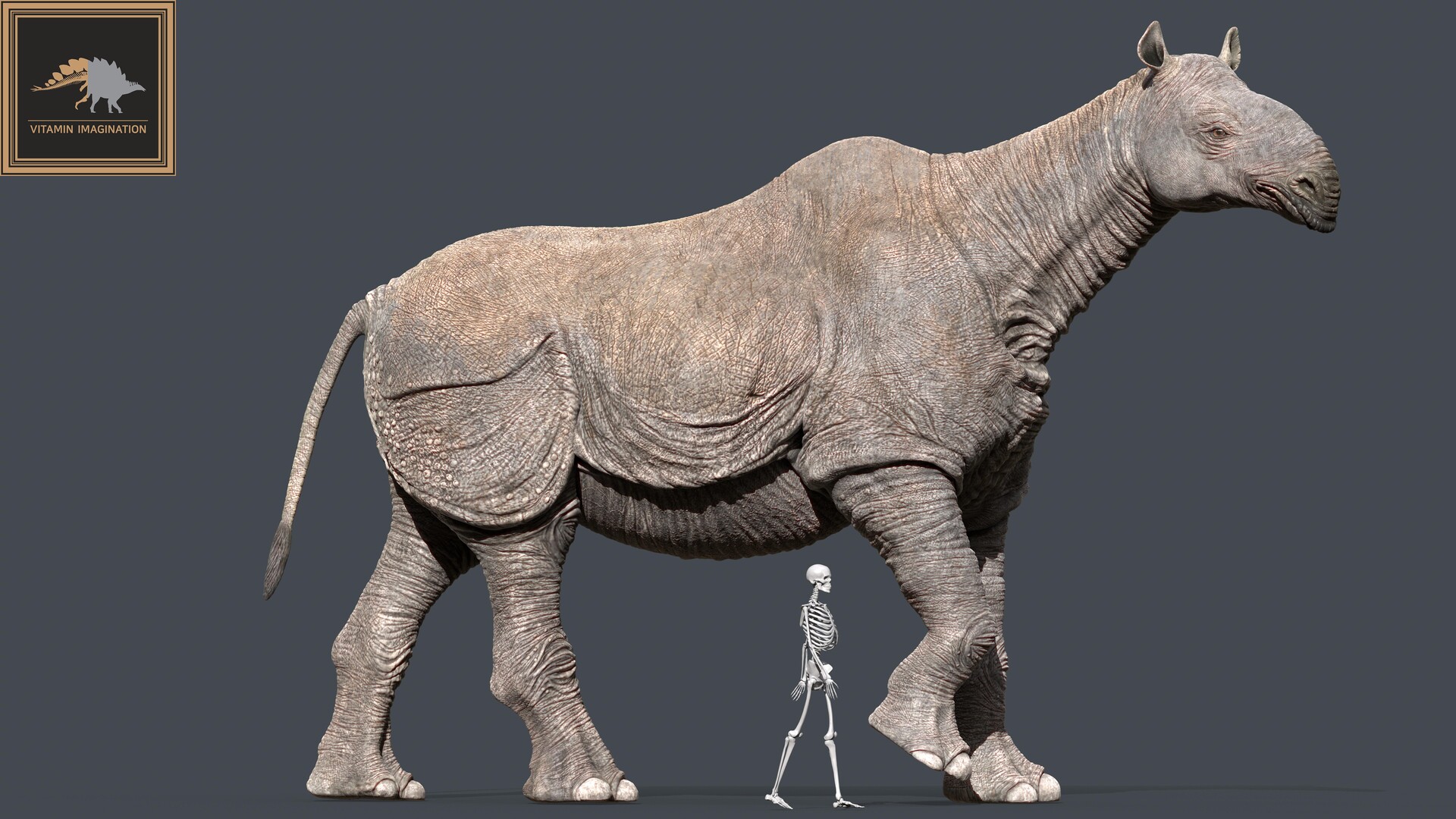
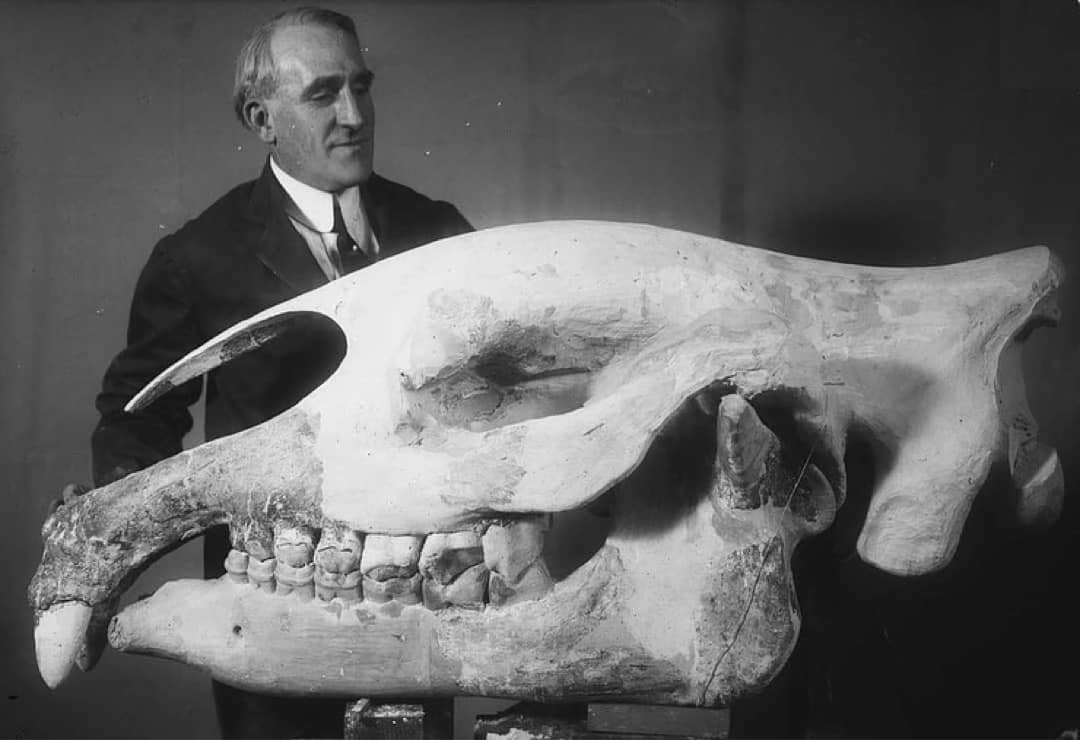
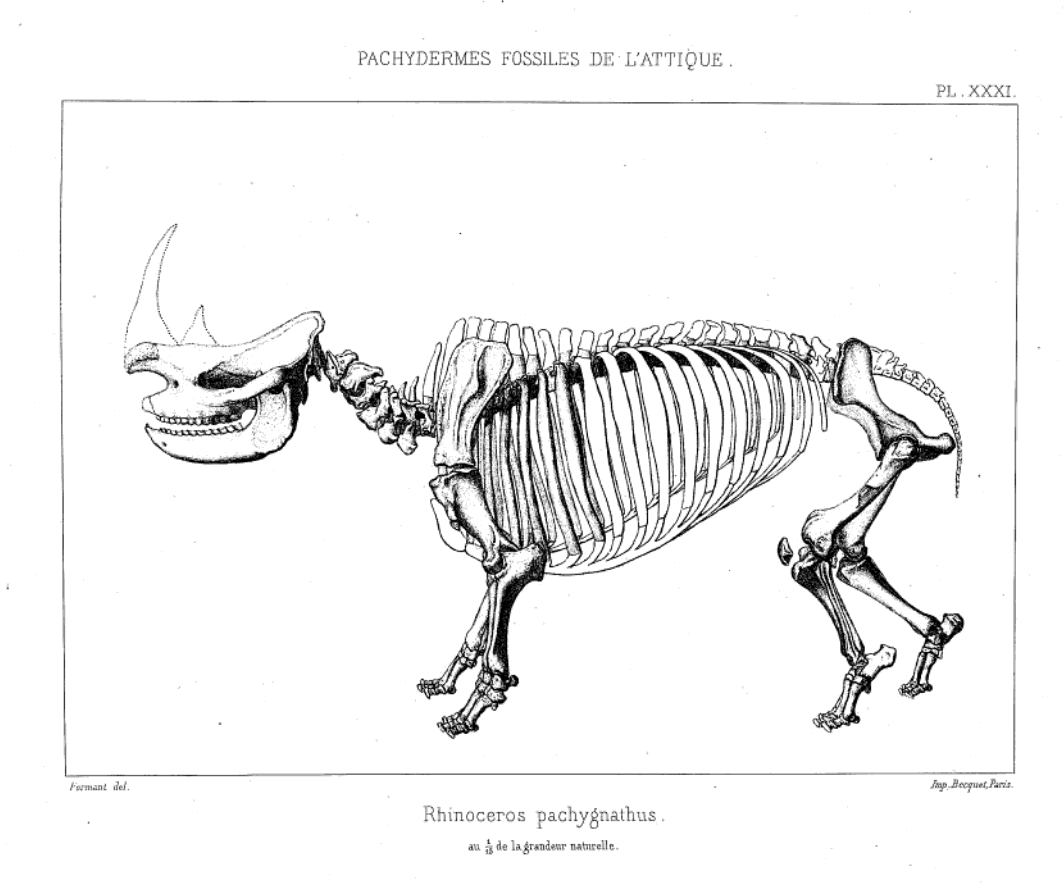
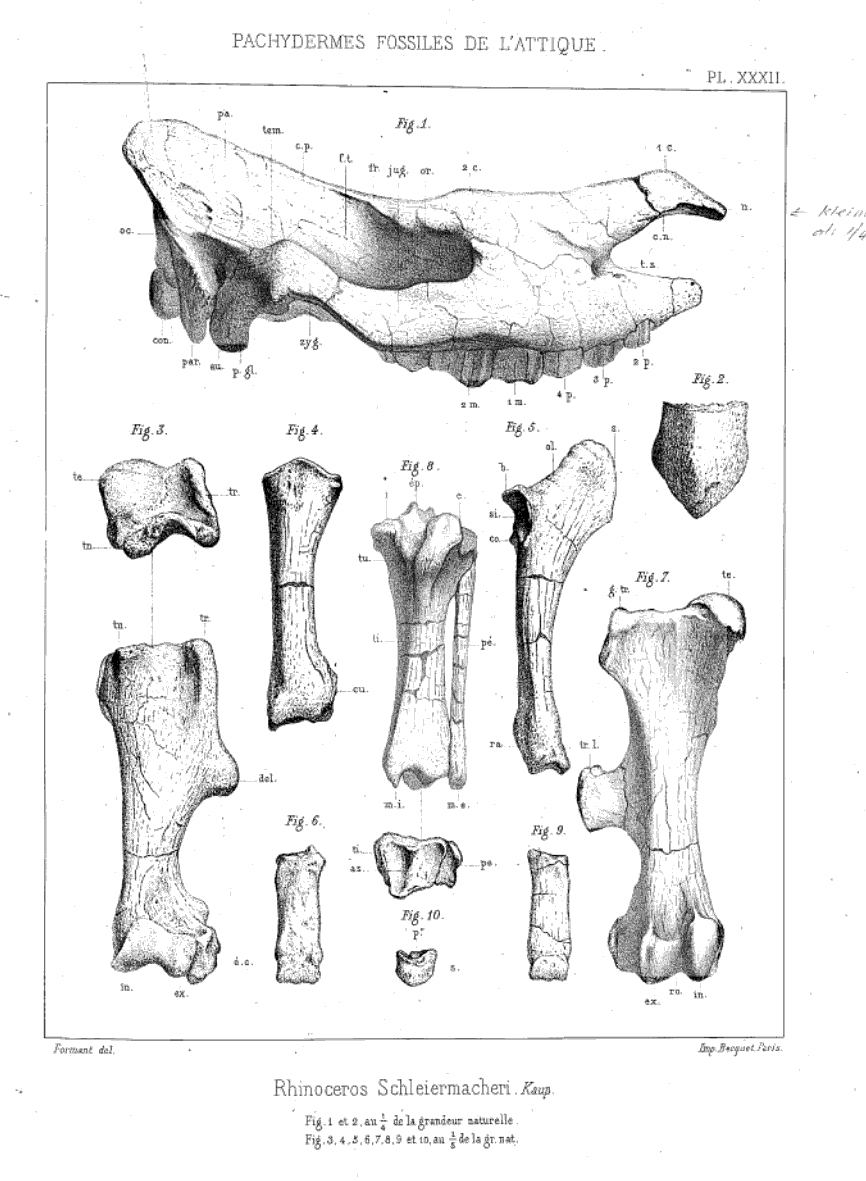
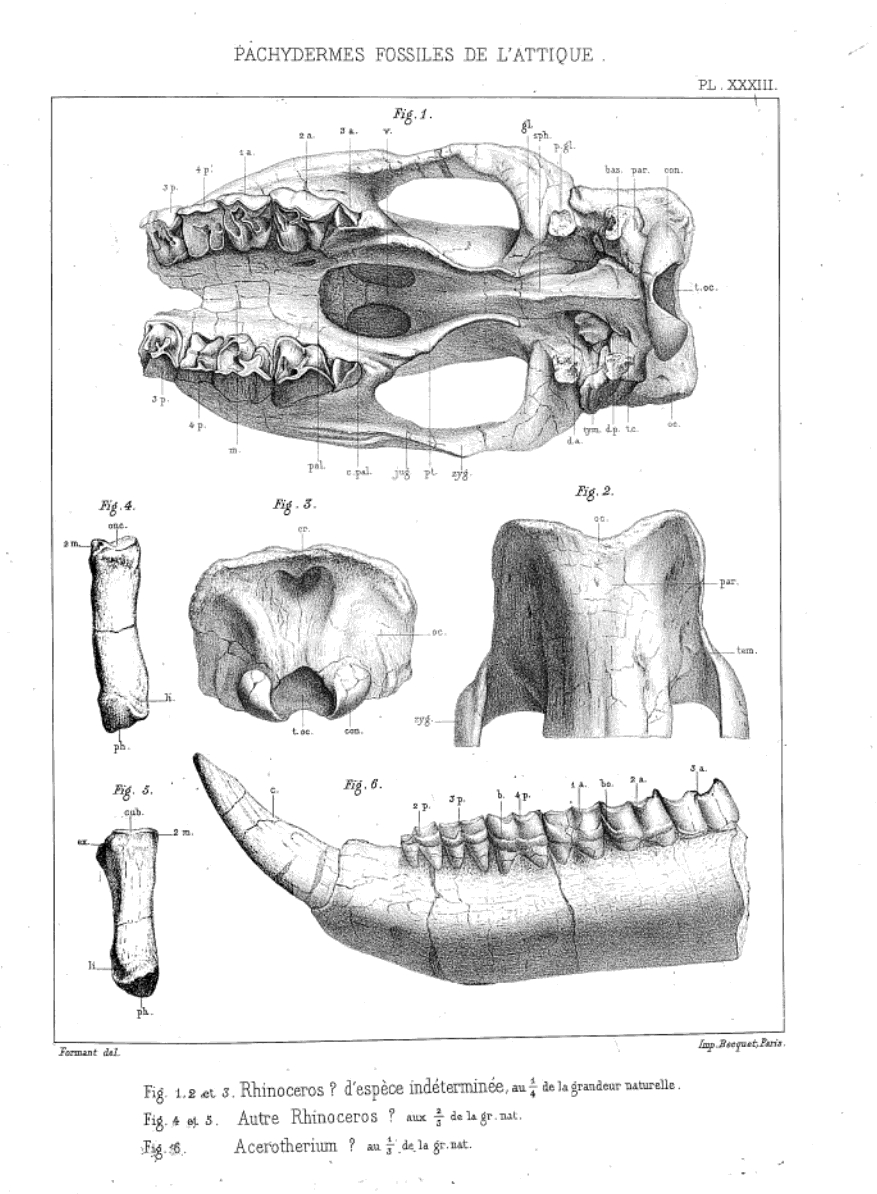
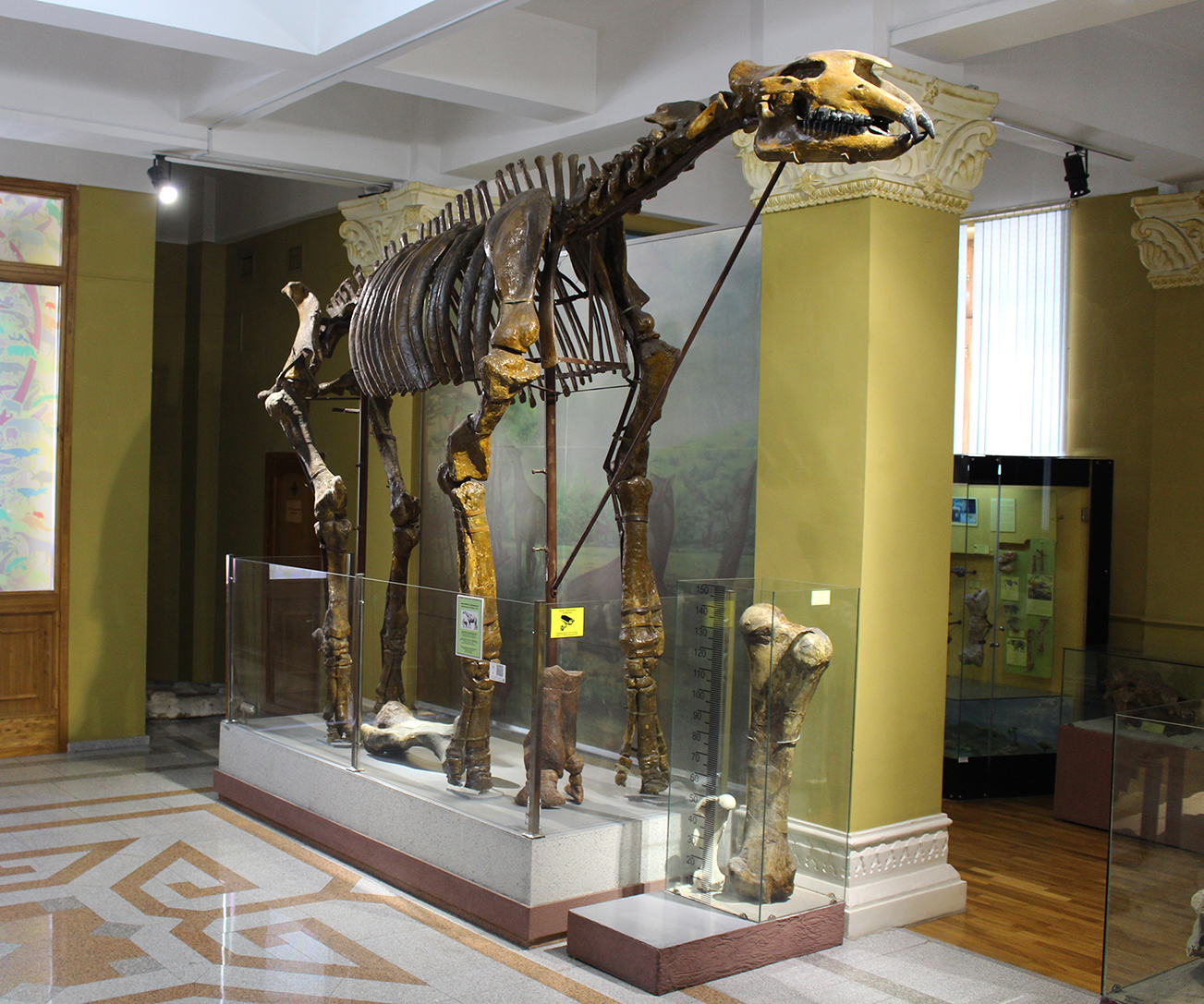
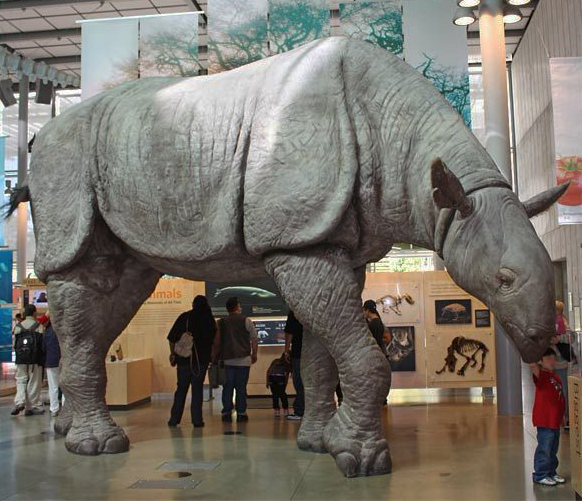
Around 34 to 23 million years ago, in the Oligocene, the plains and forests of Eurasia were home to a rhino that looked more like a stretched giraffe. Paraceratherium had a long neck, long legs and a skull the length of a person, with no horn at all. Fossils have been found from China and Mongolia through Kazakhstan and Pakistan to Turkey and the Balkans.
Estimates of its size have been argued over for a century. Early reconstructions put it at 30 tonnes, which is now considered an exaggeration. Modern estimates cluster around 11 tonnes on average, with the largest individuals reaching 15 to 20 tonnes; one 2016 study arrived at 17 tonnes for the biggest known specimen. Shoulder height was about 4.8 metres, so it could browse from treetops that no other mammal could reach. For comparison, a large African elephant bull weighs about 6 tonnes.
Whether it was the largest land mammal ever depends on which estimates you accept, and a few giant elephants run it close. But it is, by any measure, the largest rhino, and a reminder that the family has taken some unexpected shapes over 50 million years.
Sources
Deng, Tao; Lu Xiaokang; Wang Shiqi; Flynn, L.J.; Sun, D.; He Wen; Chen Shanqin 2021. An Oligocene giant rhino provides insights into Paraceratherium evolution. Communications Biology 4, Article number: 639: 1-10.
Forster-Cooper, C. 1911. Paraceratherium bugtiense, a new genus of Rhinocerotidae from the Bugti Hils of Baluchistan: preliminary notice. Annals and Magazine of Natural History (8) 8: 711-716, pl.10.
Oyal, N.; Sen, S.; Karadenizli, L.; Antoine, P.O.; Sarac, G.; Tunoglu, C. 2016. Turkey: Another country of the Oligocene giant rhinoceros Paraceratherium. World Multidisciplinary Earth Sciences Symposium Prague September 2016: 183.