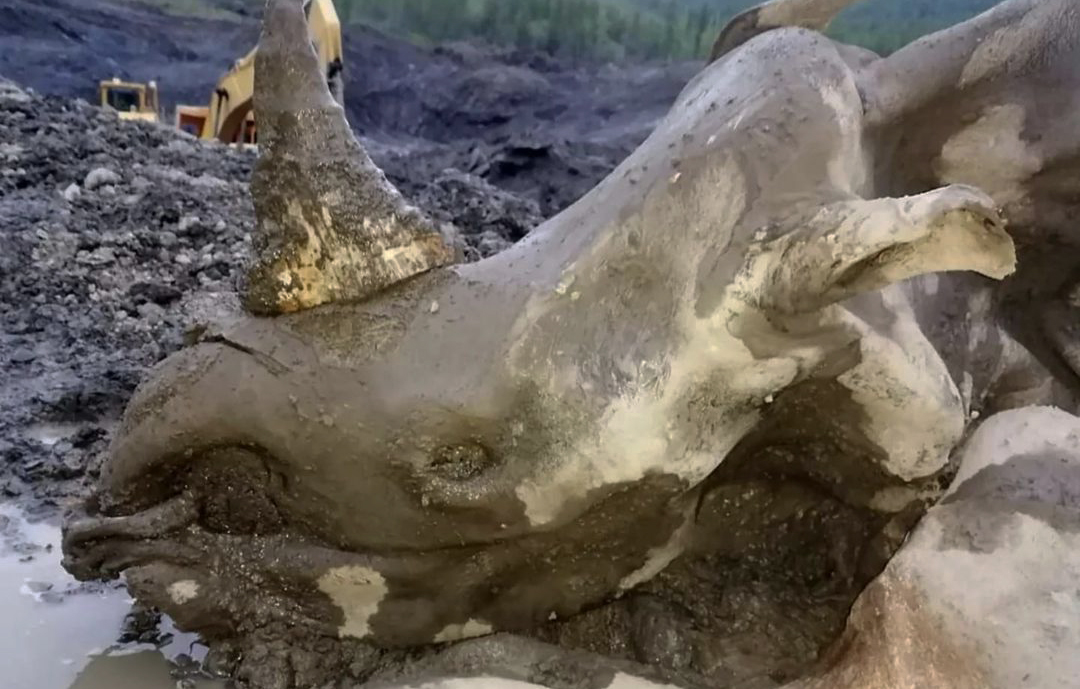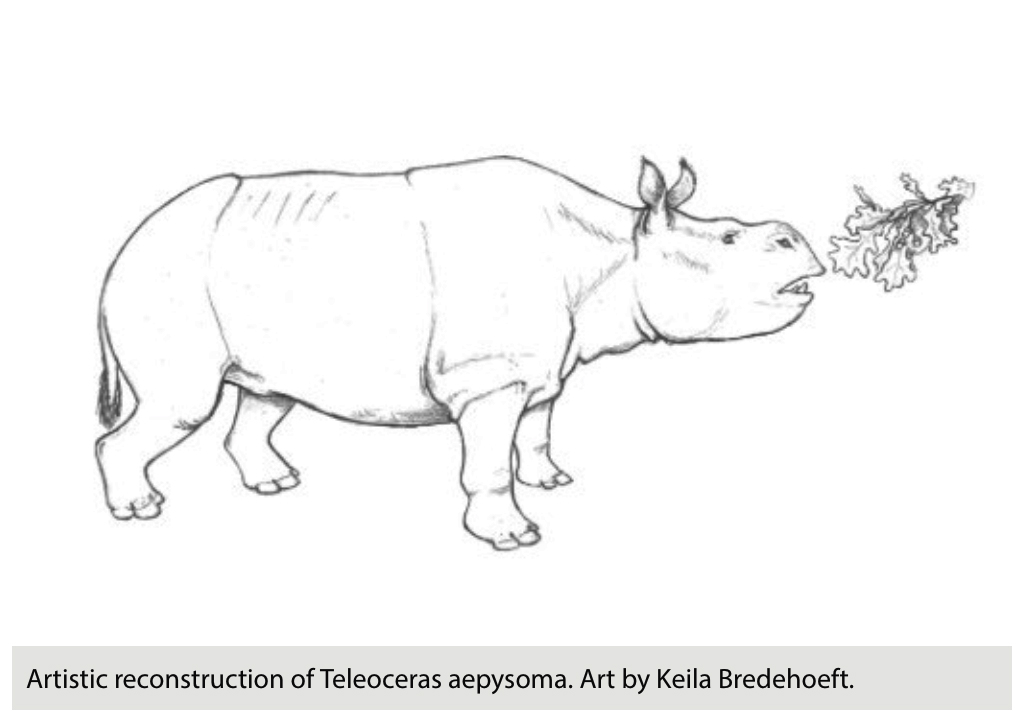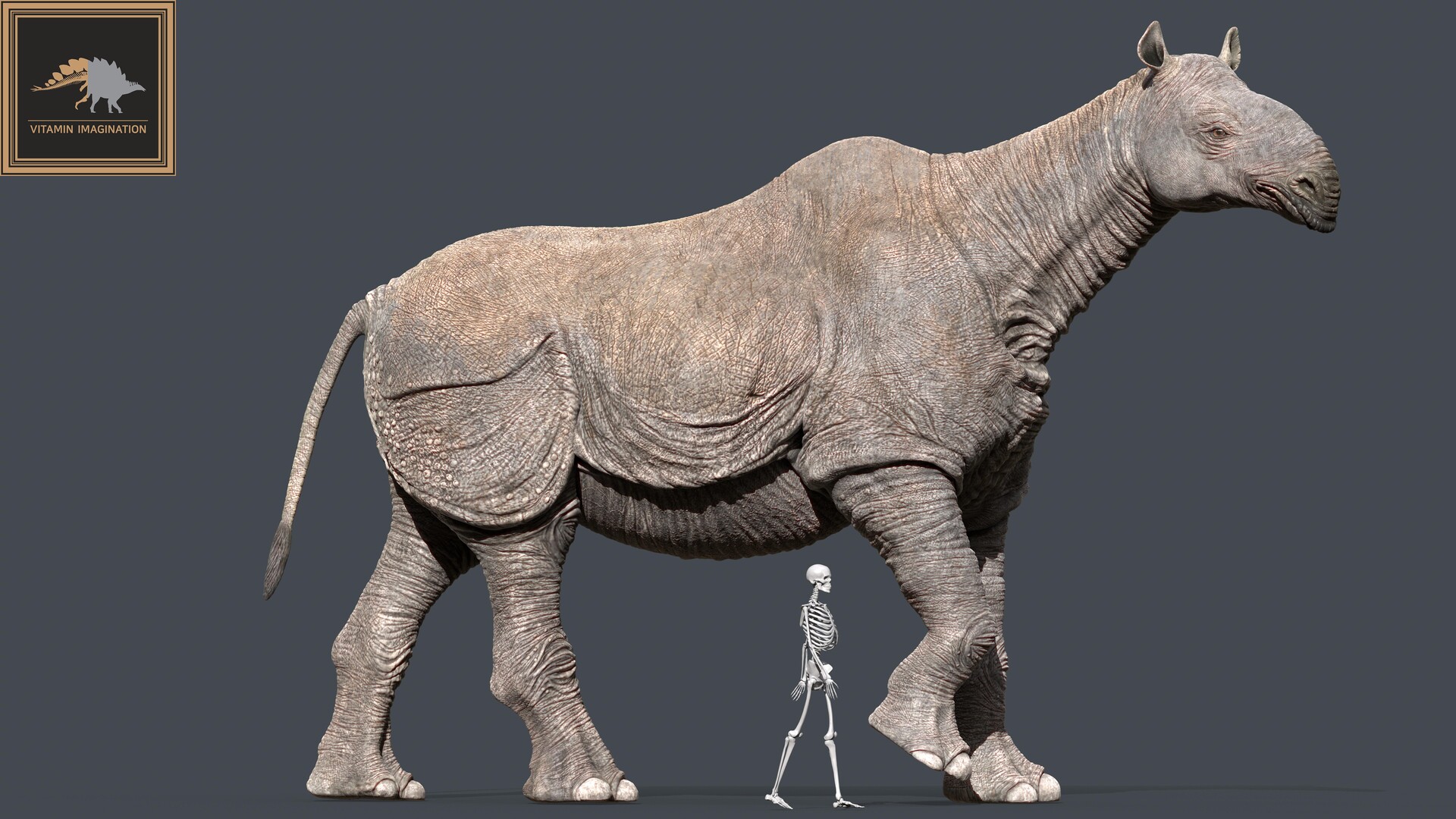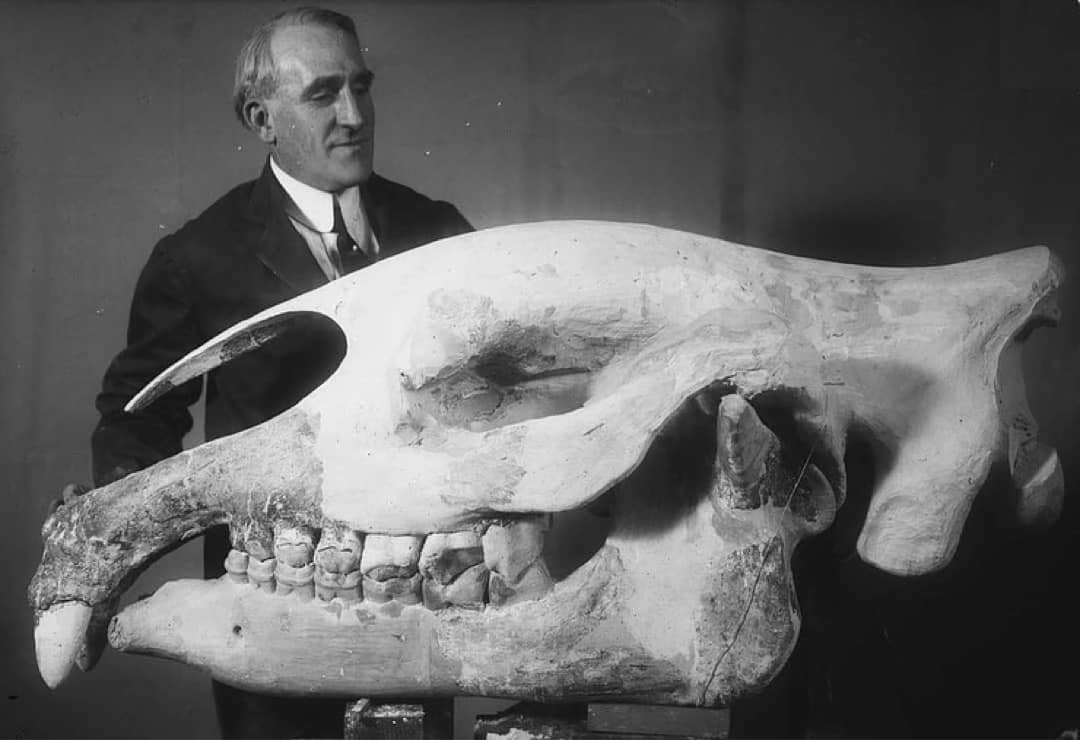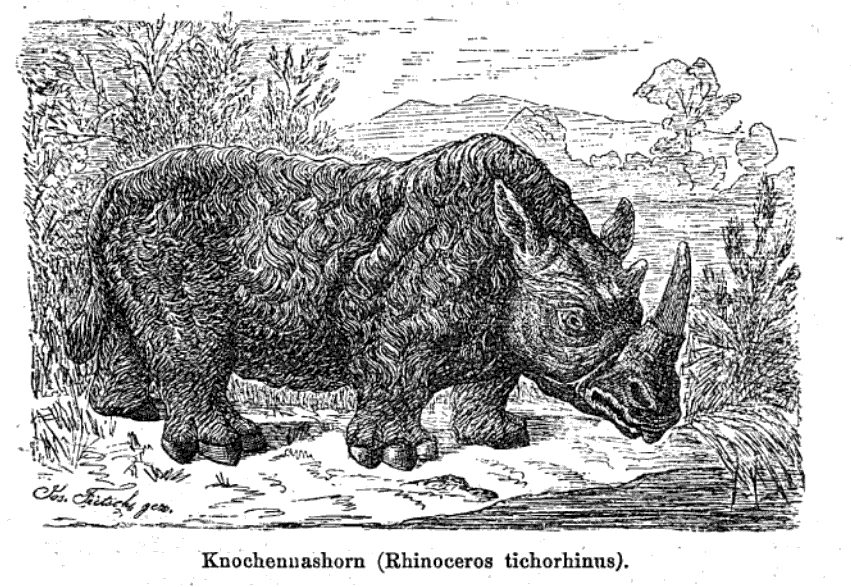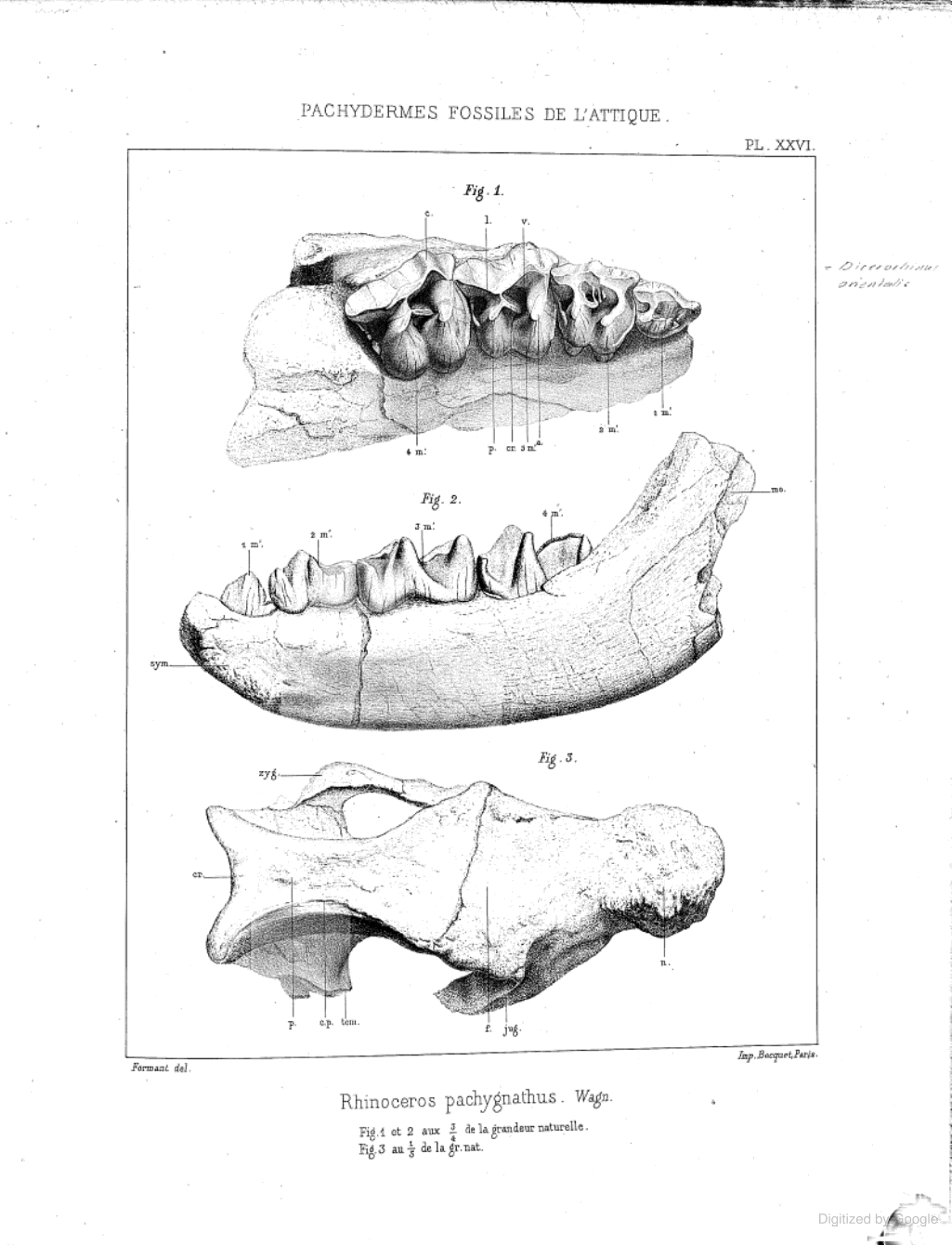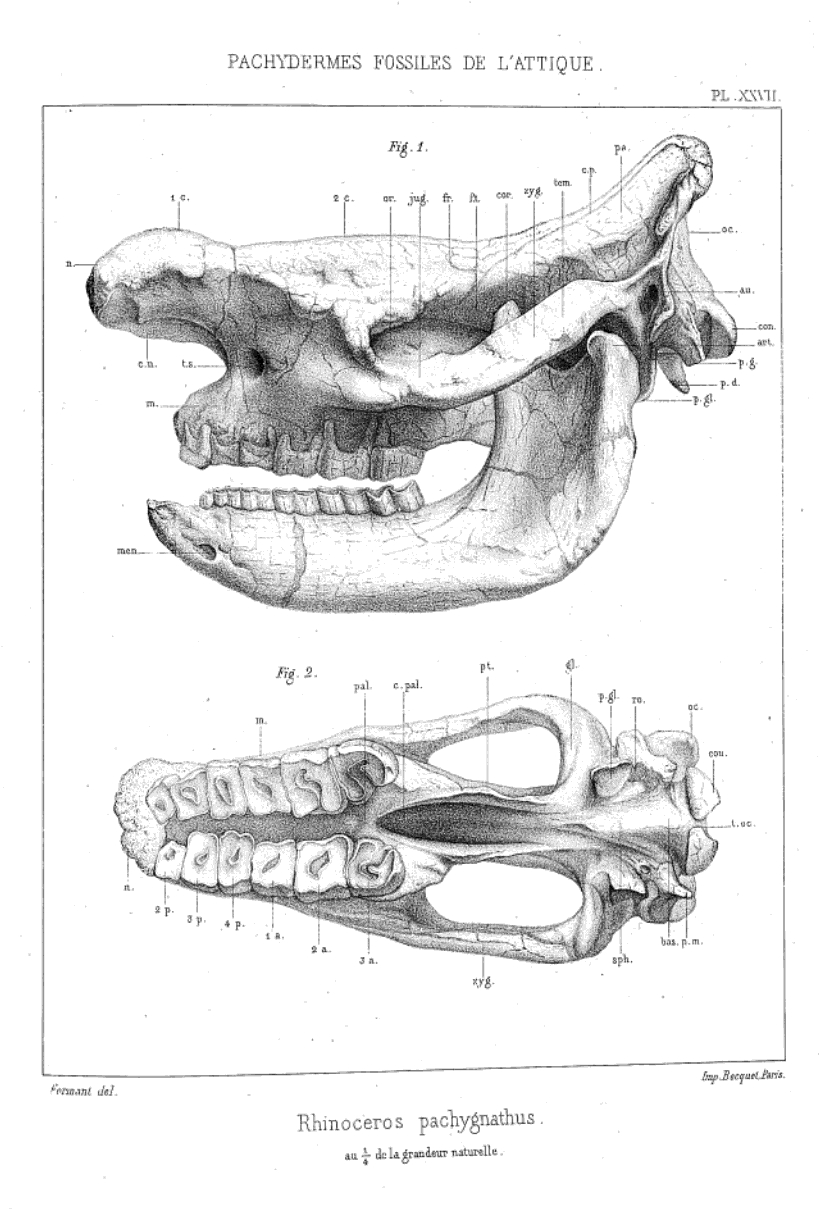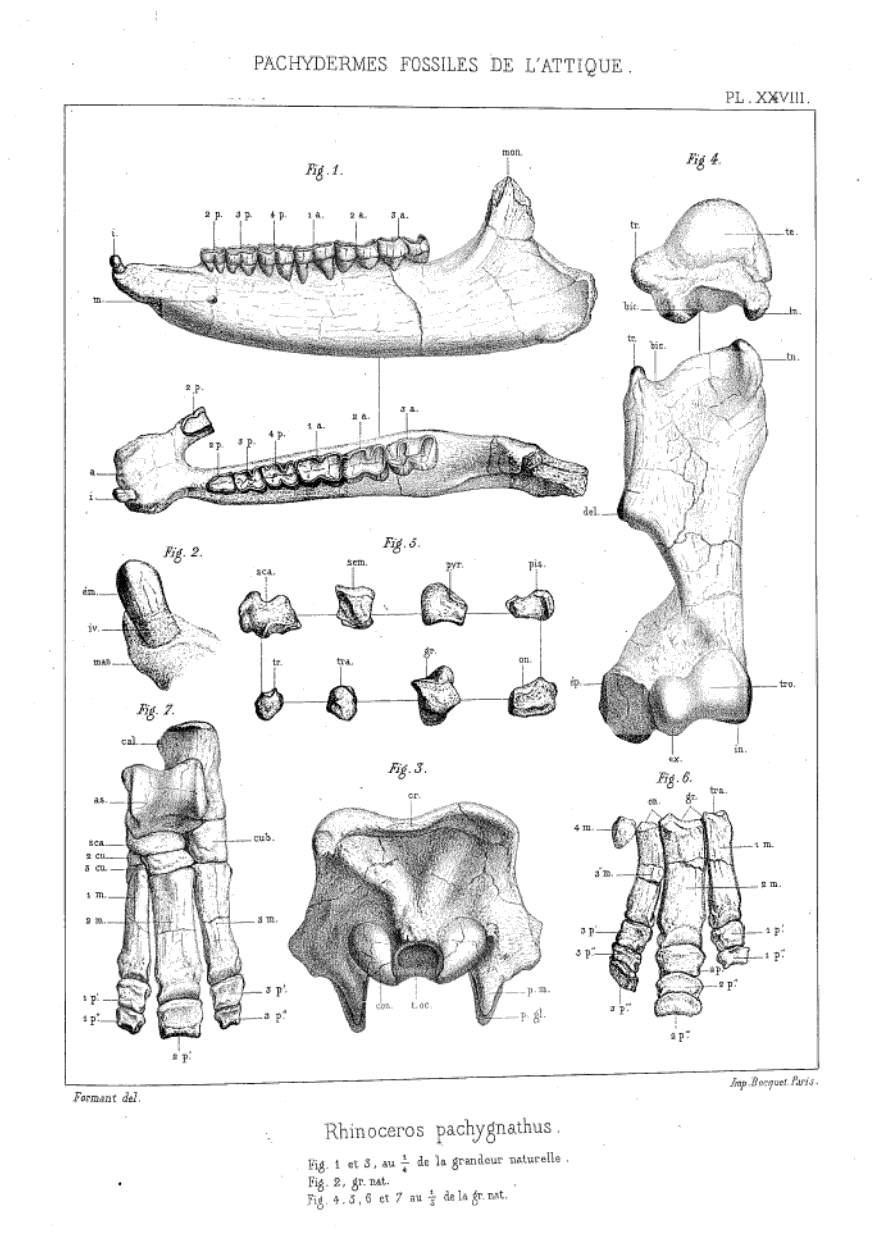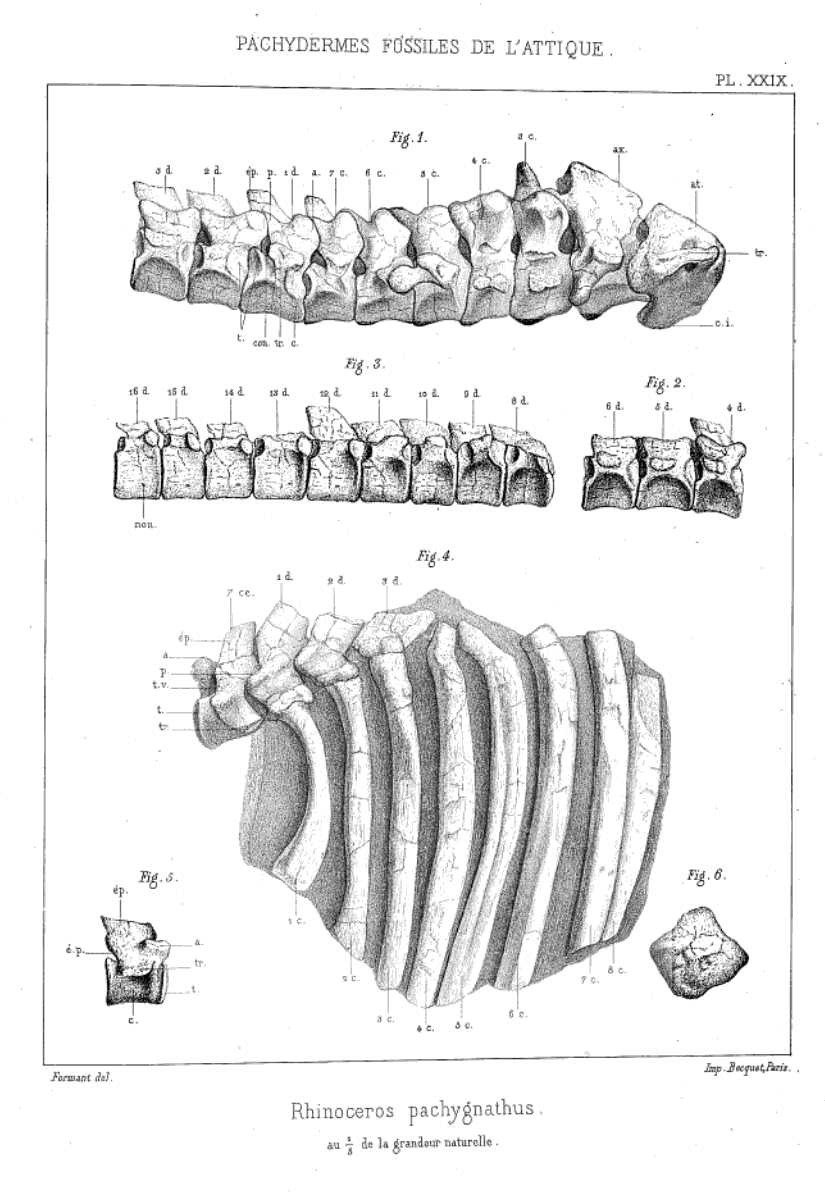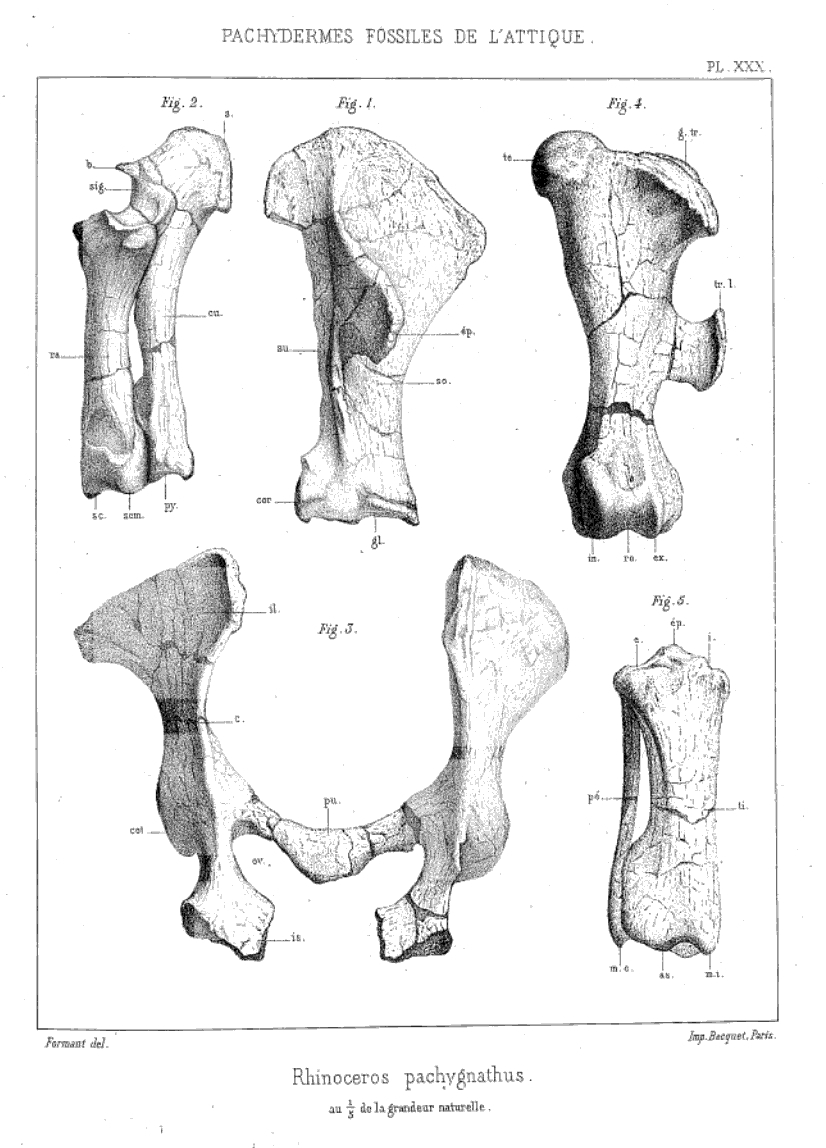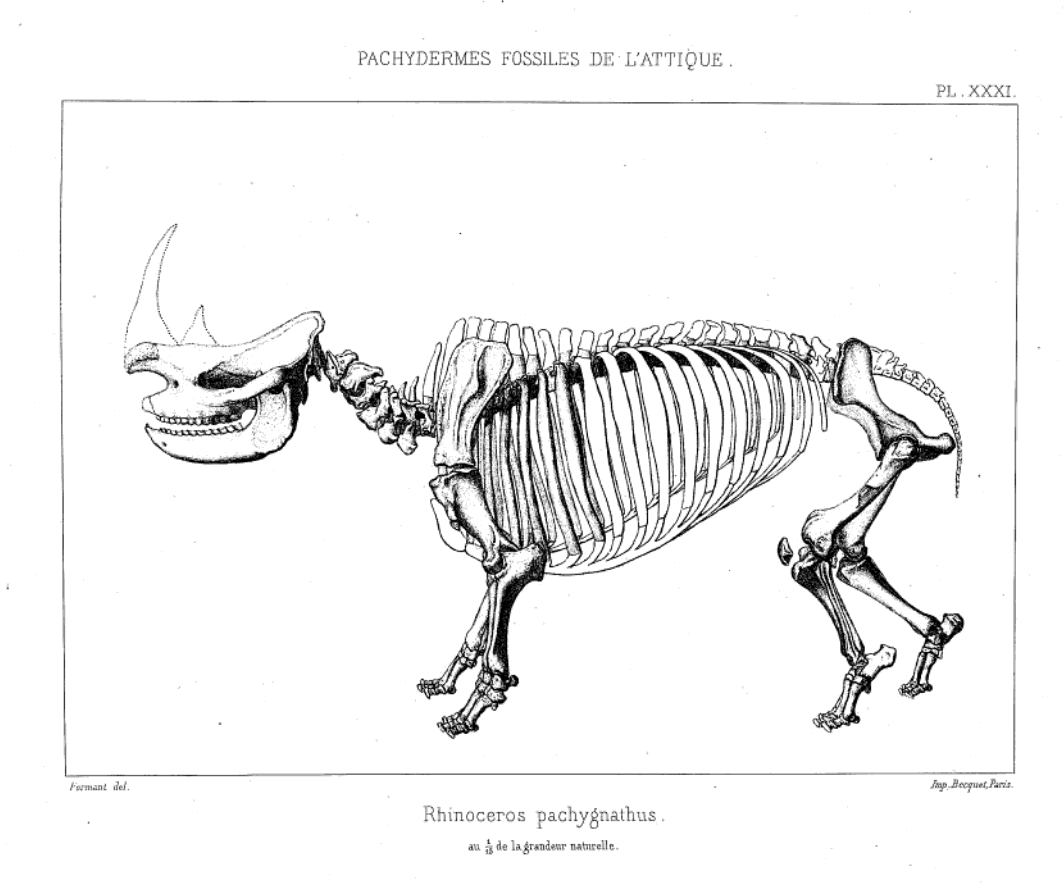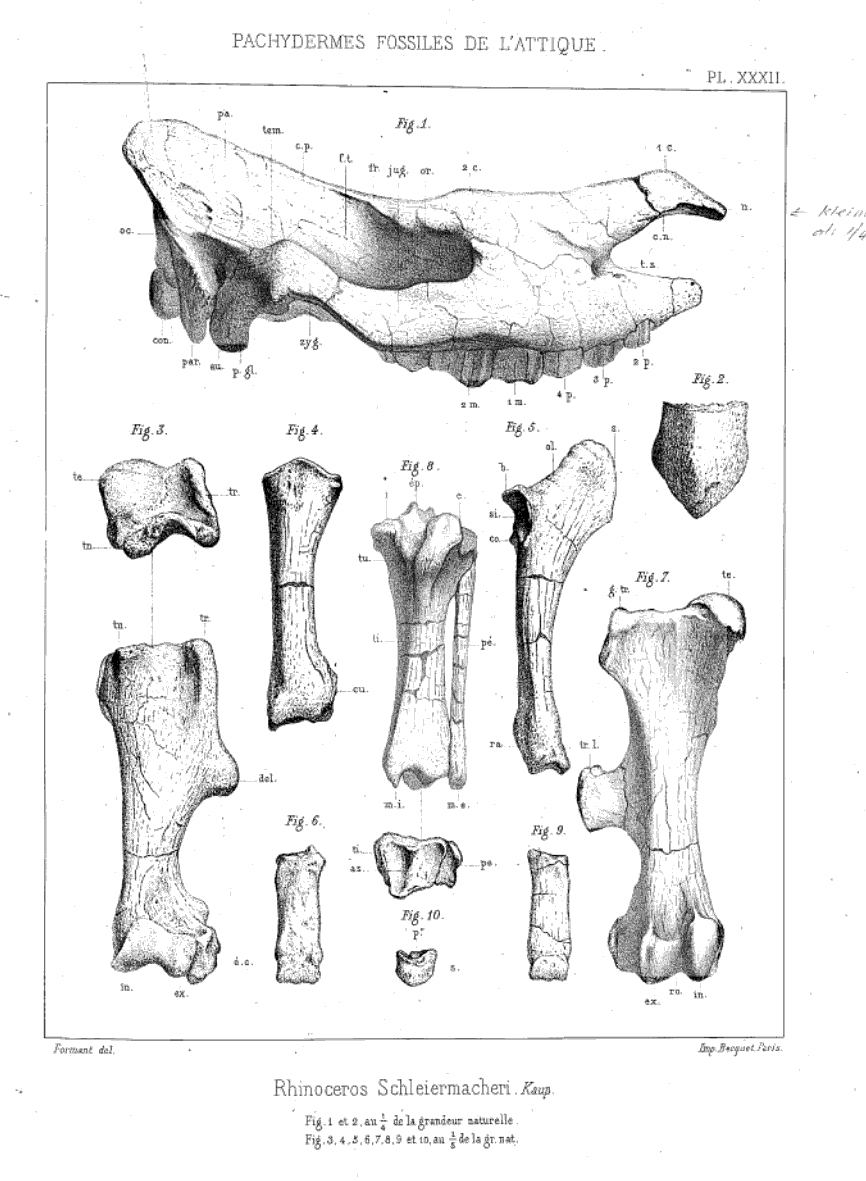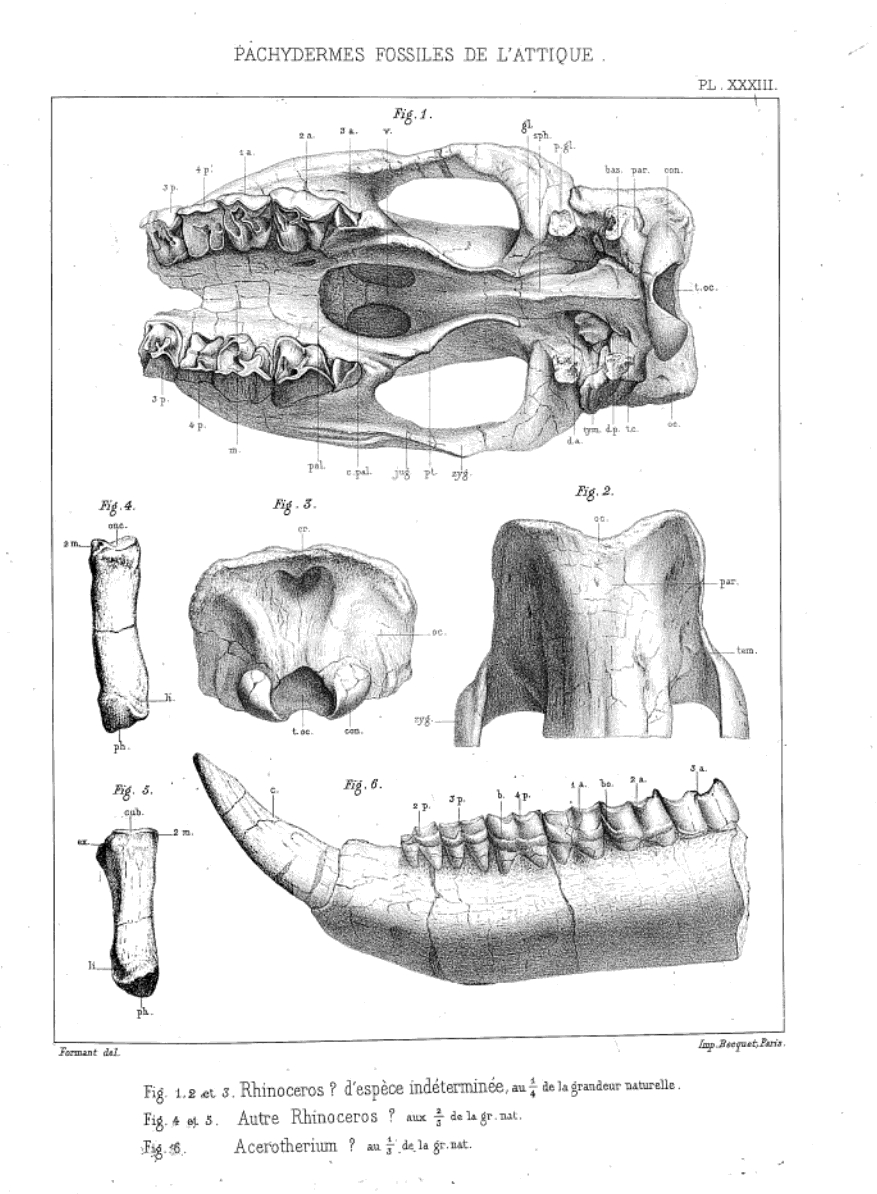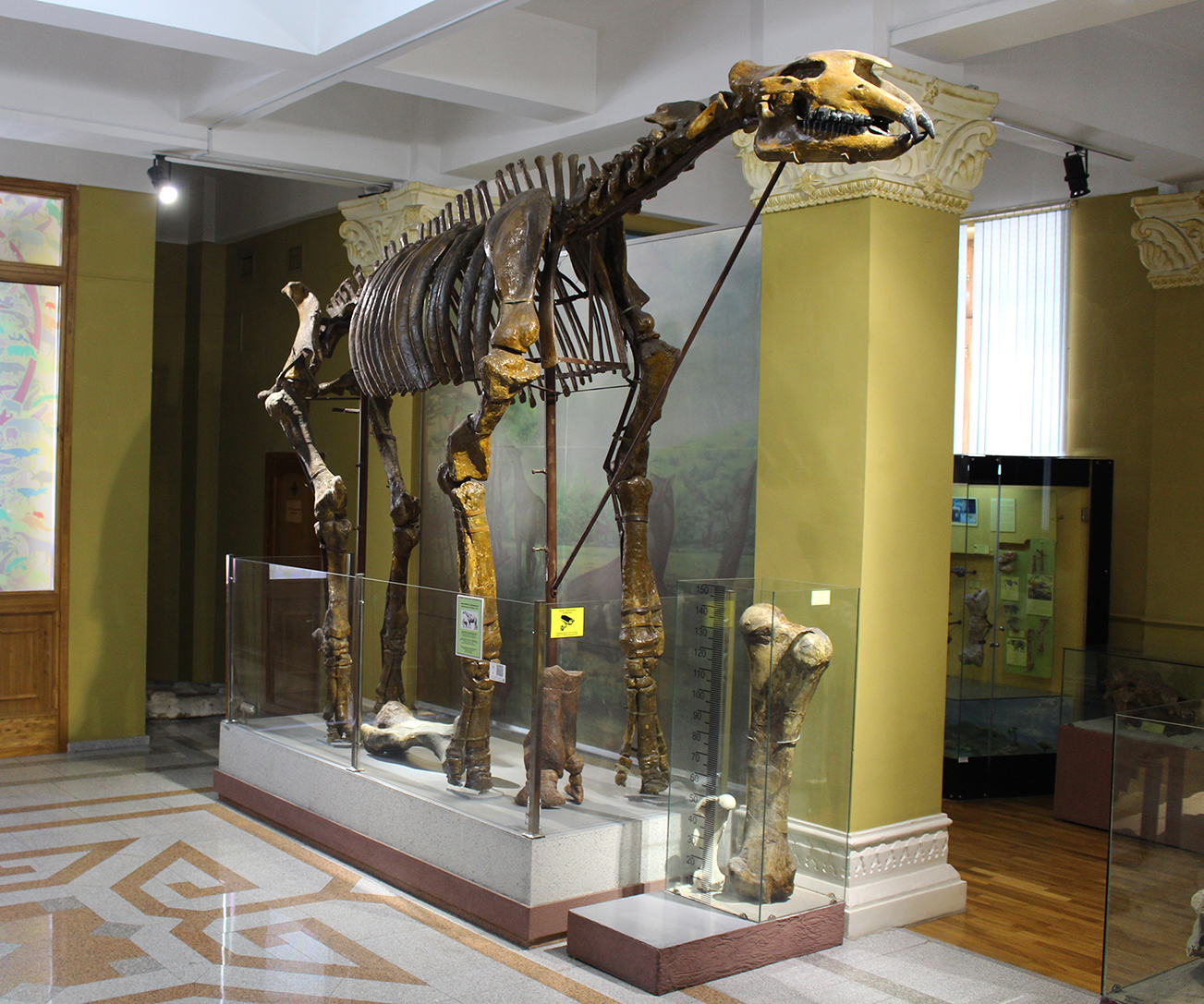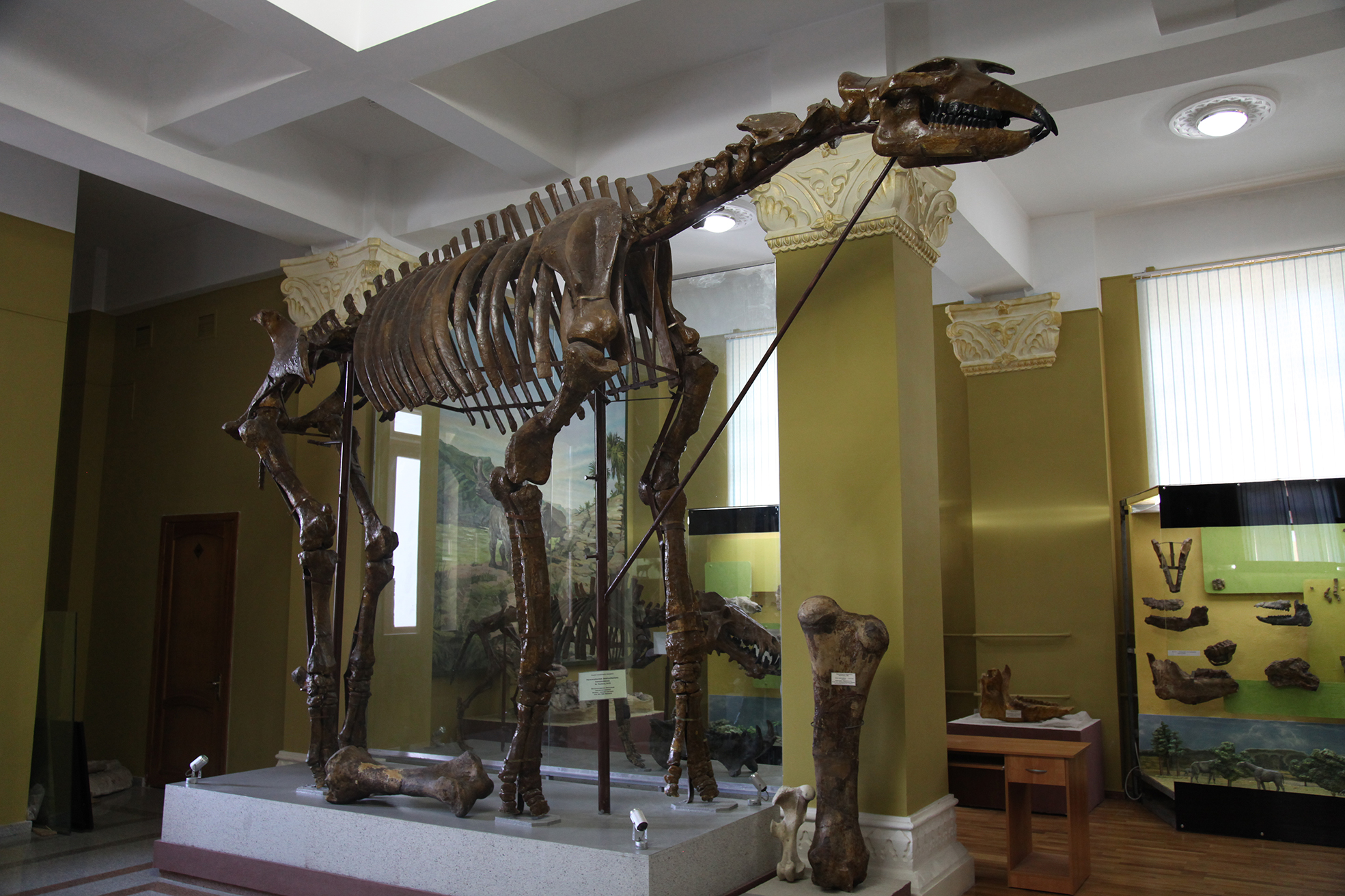


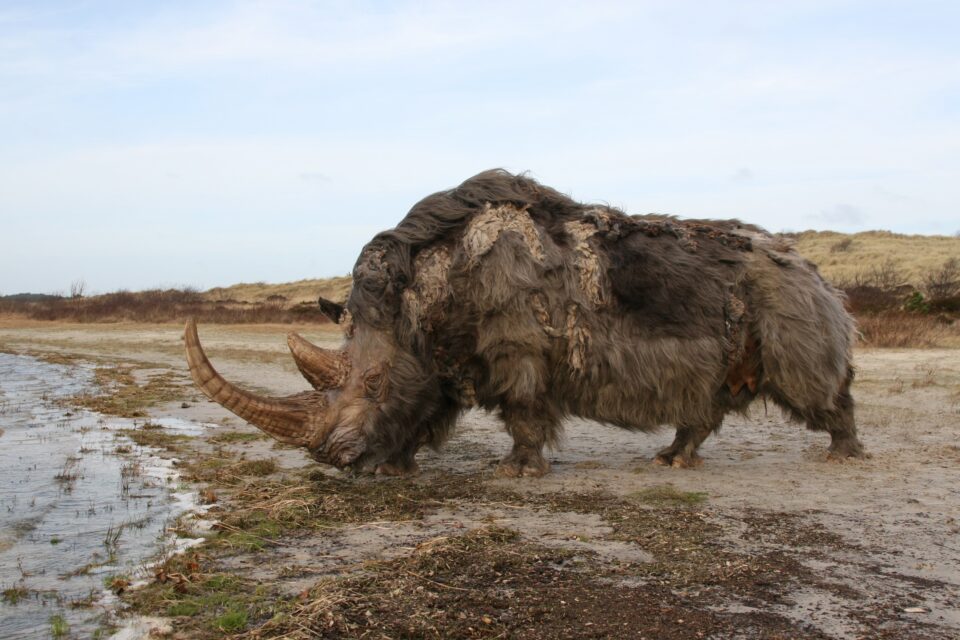
It is easy to forget that rhinos were once European animals. The woolly rhinoceros, thick-coated and two-horned, grazed the cold steppe from Britain to Siberia, and its bones and teeth still turn up in gravel pits and in trawler nets from the bed of the North Sea, which was dry land when the animal was alive. Two other species, Merck’s rhino and the narrow-nosed rhino, lived in the warmer forests of Europe before it.
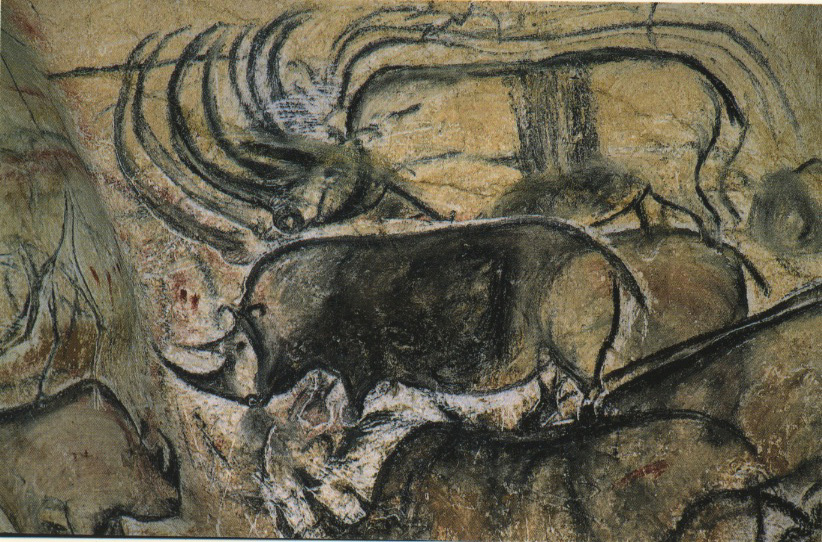
The people who shared that landscape drew what they saw. The Chauvet-Pont d’Arc cave in the Ardèche contains around 430 animal figures, dated to about 36,000 years ago, which makes them among the oldest paintings known. Unlike later cave art, which is dominated by horses and bison, Chauvet is full of dangerous animals: mammoths, cave lions, bears and rhinos together make up more than 60 percent of the figures. Several rhinos are shown with exaggerated curving front horns, and one famous panel depicts two rhinos apparently facing off, horn to horn.
The woolly rhino disappeared from Europe as the climate warmed at the end of the last glacial period, roughly 14,000 years ago. Its closest living relative is the Sumatran rhino.
Sources
Hullot, M.; Martin, C.; Blondel, C.; Becker, D.; Roessner, G.E. 2024. Paleobiology and paleoecology of the woolly rhinoceros (Coelodonta antiquitatis) in Northern and Central Europe: New insights from multi-proxy data. Quaternary International 713 (109573): 1-16.
Stefaniak, K.; Kovalchuk, O.; Ratajczak-Skrzatek, U.; Kropczyk, A.; Mackiewicz, P.; Klys, G.; Krajcarz, M.T.; Nadachowski, A.; Lipecki, G. 2023. Chronology and distribution of Central and Eastern European Pleistocene rhinoceroses (Perissodactyla, Rhinocerotidae) – A review. Quaternary International 674-675: 87-108.
Clottes, J. 1997. Observations sur les peintures de la Grotte Chauvet. Prehistoire Ariegeoise 52: 17-32, 8 figures.