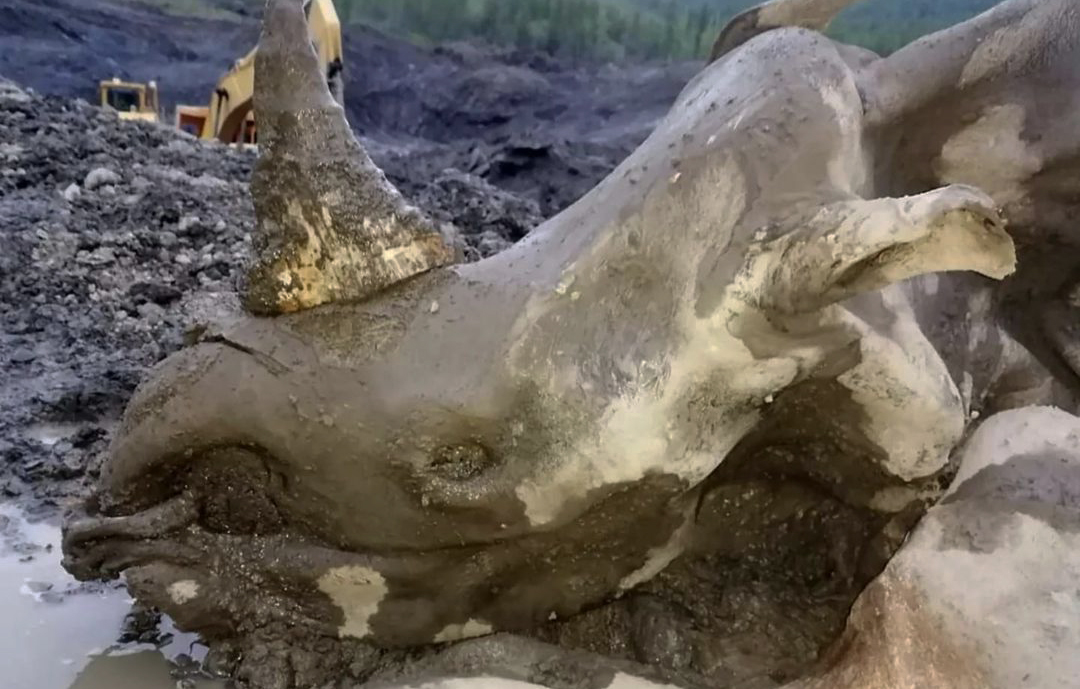
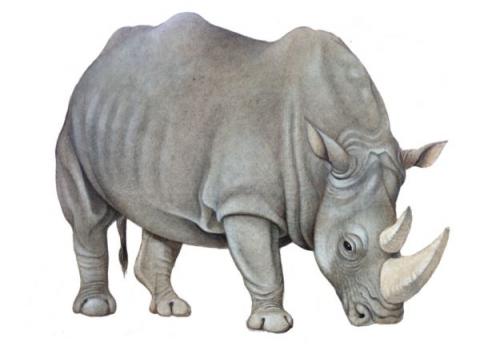
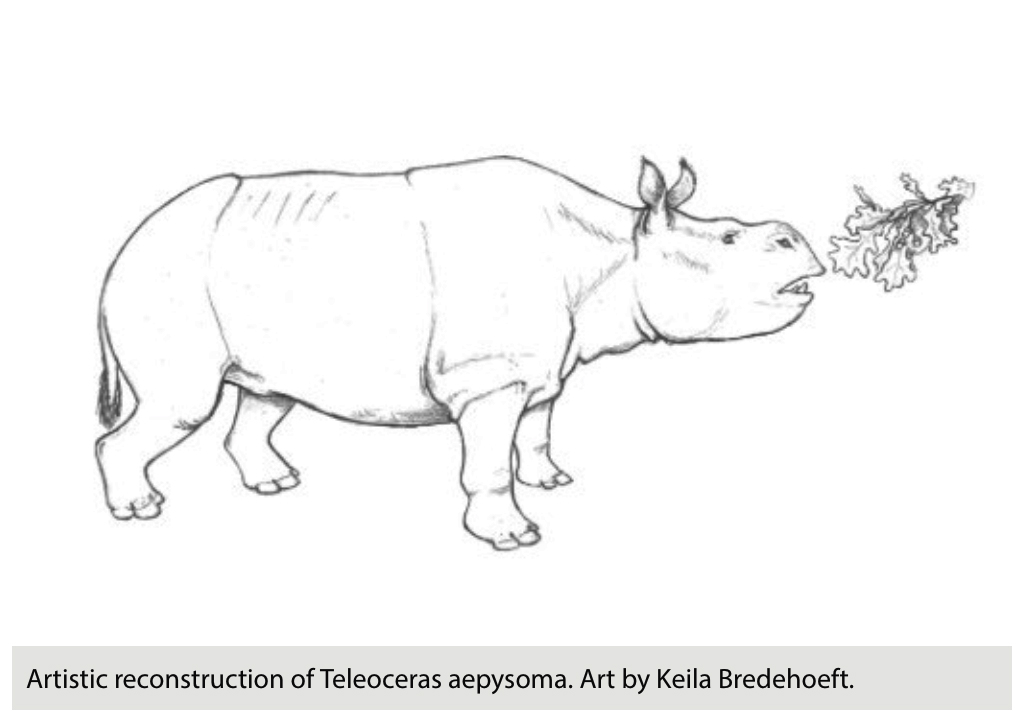
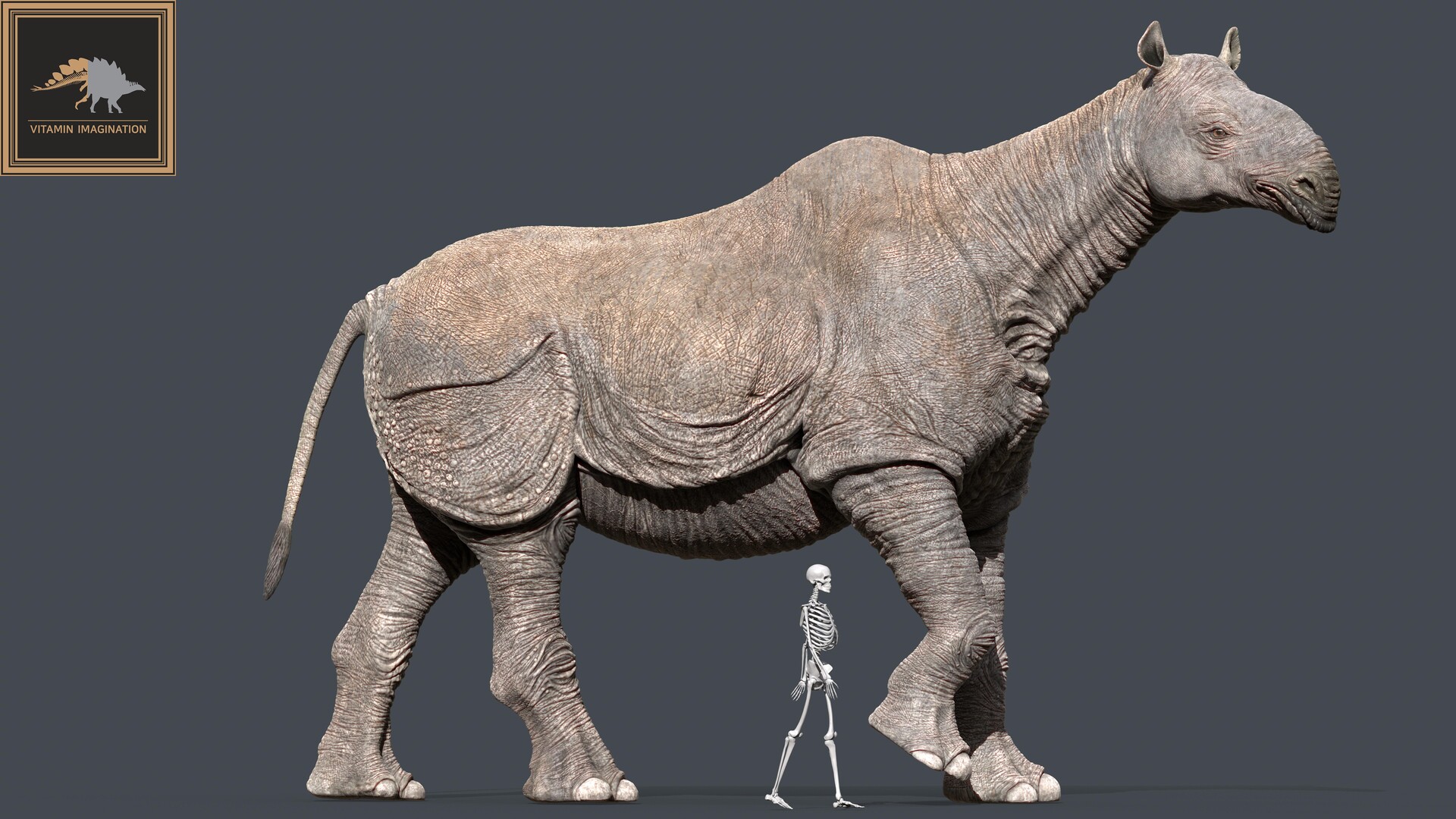
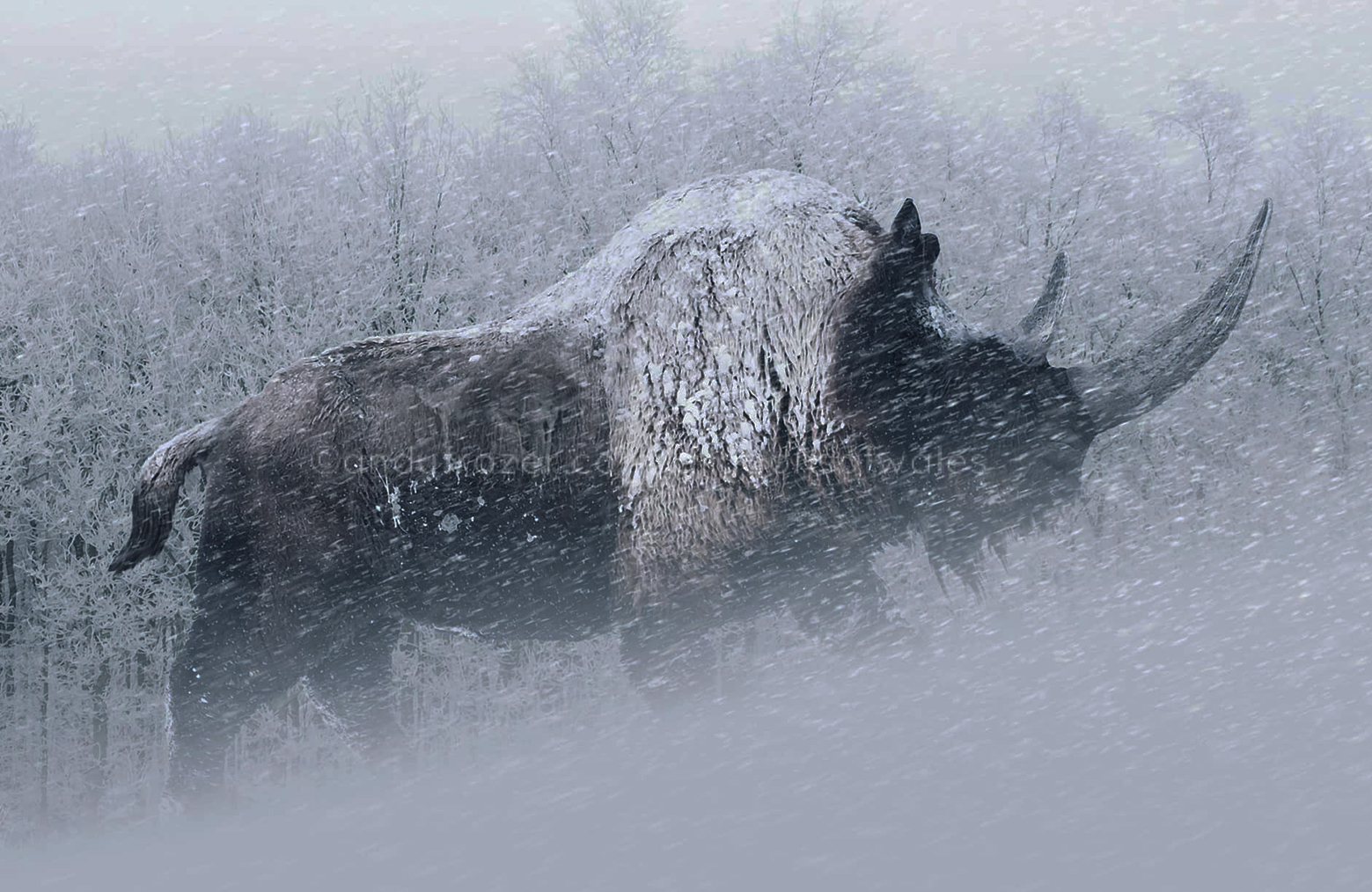
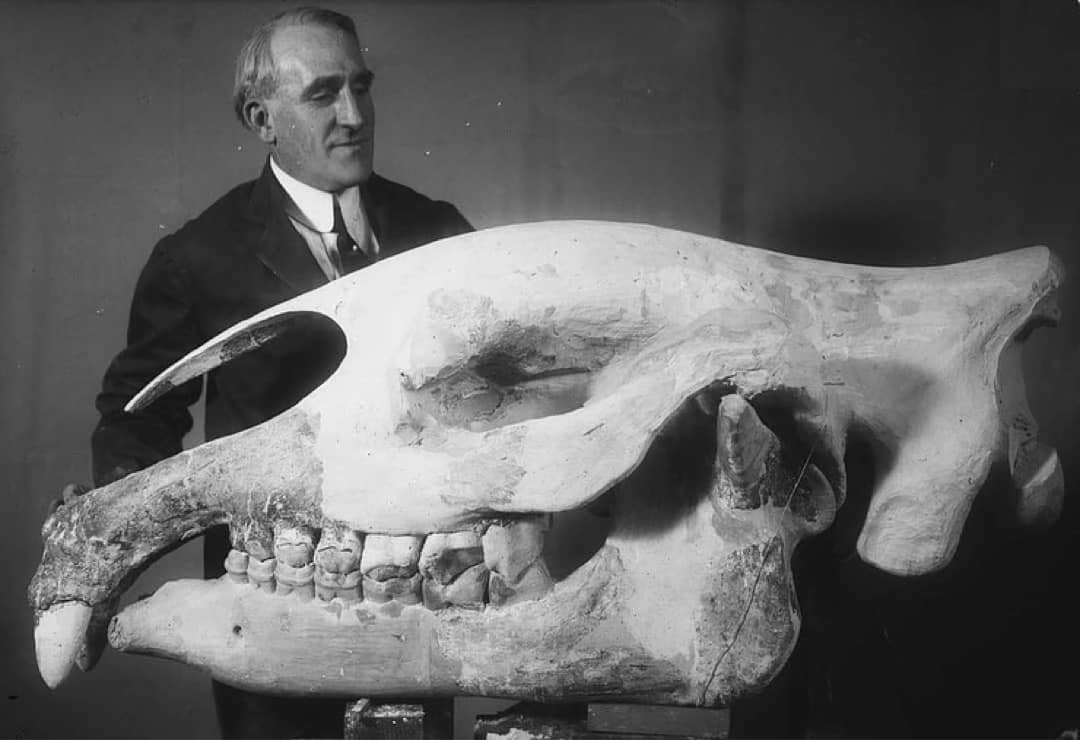
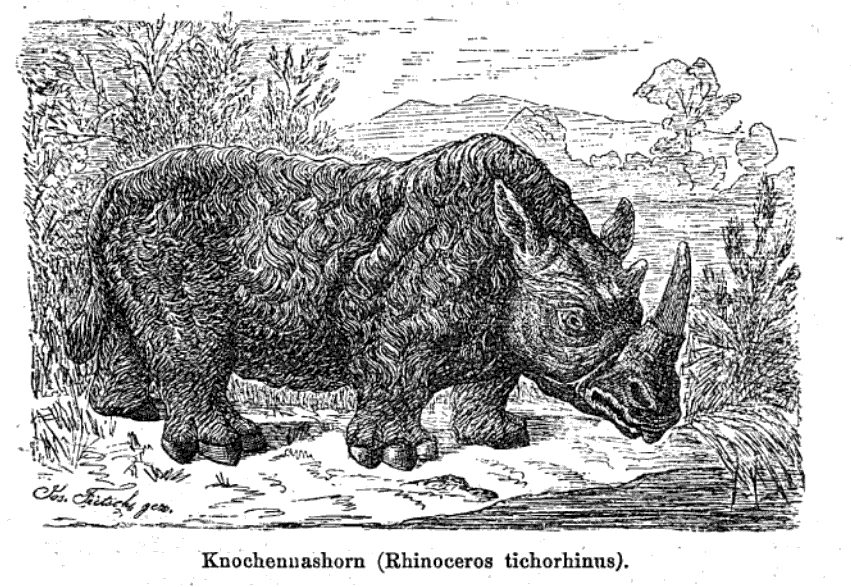
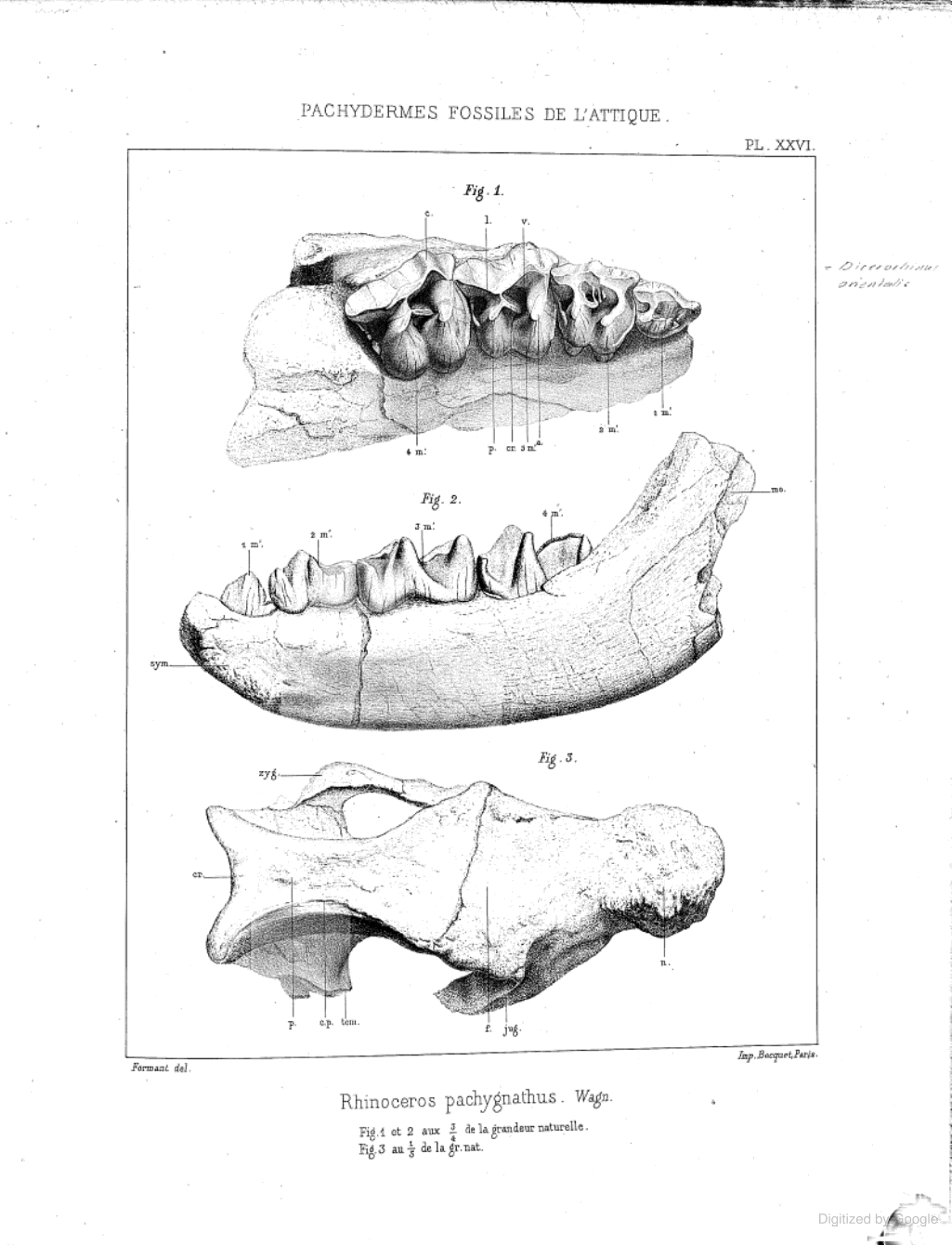
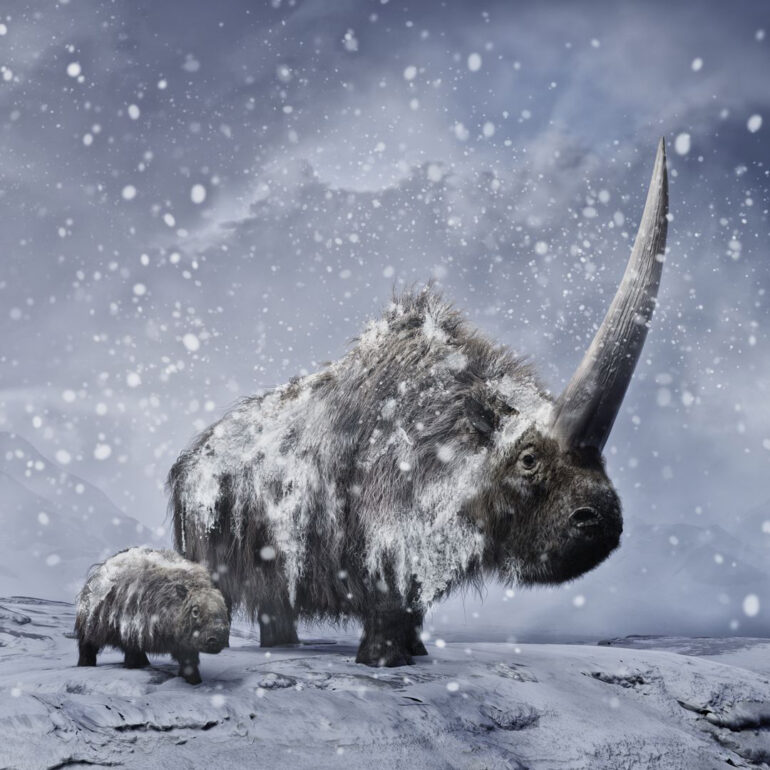
The Siberian unicorn was a rhino only in the loosest family sense. Its lineage split from the ancestors of today’s rhinos about 43 million years ago, and it grew into something quite different: twice the mass of a modern white rhino, with a huge domed boss on its forehead that almost certainly supported a single horn. No horn has ever been found, since horn does not fossilise, but the boss is unmistakable.
Until recently the species was assumed to have vanished between 200,000 and 100,000 years ago, long before humans reached its range on the steppes of Kazakhstan, southern Russia and Mongolia. In 2018 a team including the Natural History Museum in London radiocarbon-dated 23 specimens and found that the youngest were at least 39,000 years old, and possibly as recent as 35,000. That places the Siberian unicorn firmly alongside modern humans and Neanderthals in Eurasia, and makes it one of the last members of a rhino lineage that had been separate since the Eocene.
Its extinction coincided with a cold, dry period that shrank the grasslands it depended on, which is one reason it is studied today as a case of climate-driven extinction.
Sources
Kosintsev, P.A.; Mitchell, K.J.; Deviese, T.; Kuitems, M.; Petrova, E.; Tikhonov, A.N.; (and many others); Plicht, J. van der 2018. Evolution and extinction of the giant rhinoceros Elasmotherium sibiricum sheds light on late Quaternary megafaunal extinctions. Nature, Ecology and Evolution 3: 31-38, 5 figs.