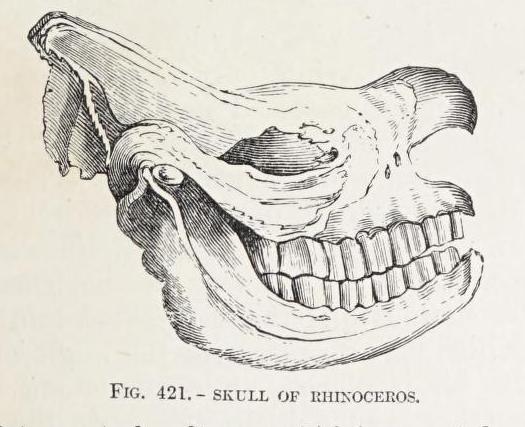


The name rhinoceros simply means nose-horn. The Greeks knew about rhinos from Egypt and India and gave the animal a plain, descriptive name: rhinokerōs, the nose-horned one. The Romans borrowed it as rhinoceros, and from Latin it passed into most European languages. The Dutch neushoorn and German Nashorn are literal translations of the same idea.
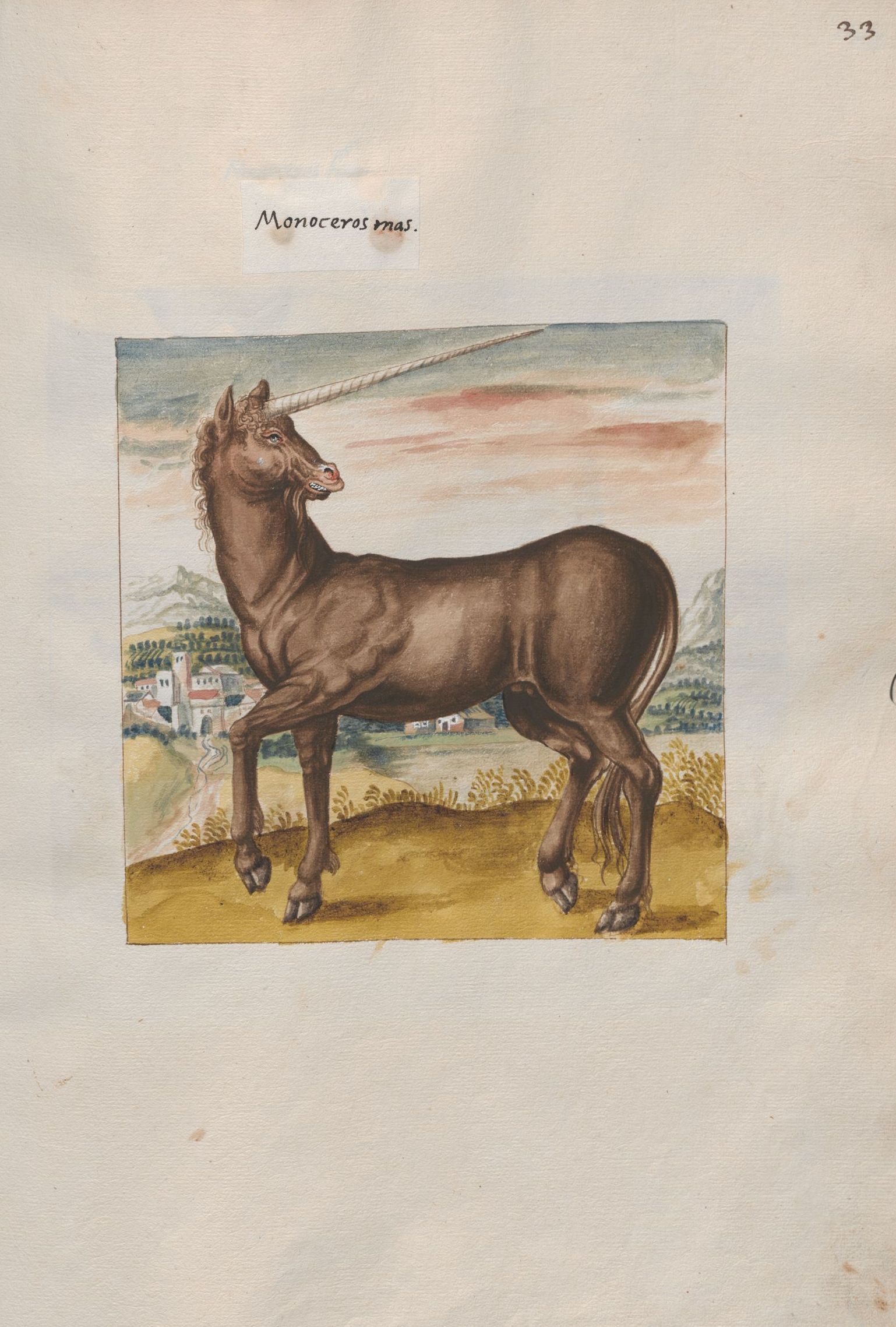
In Middle English the word appears as rinoceros around the year 1300, at a time when almost nobody in northern Europe had seen the animal. Medieval bestiaries described it from hearsay as a fierce one-horned beast, and the boundary between rhinoceros and unicorn was blurry; the two were often treated as the same creature. Real specimens did not settle the matter until the 16th century, when the first living rhinos reached Portugal.
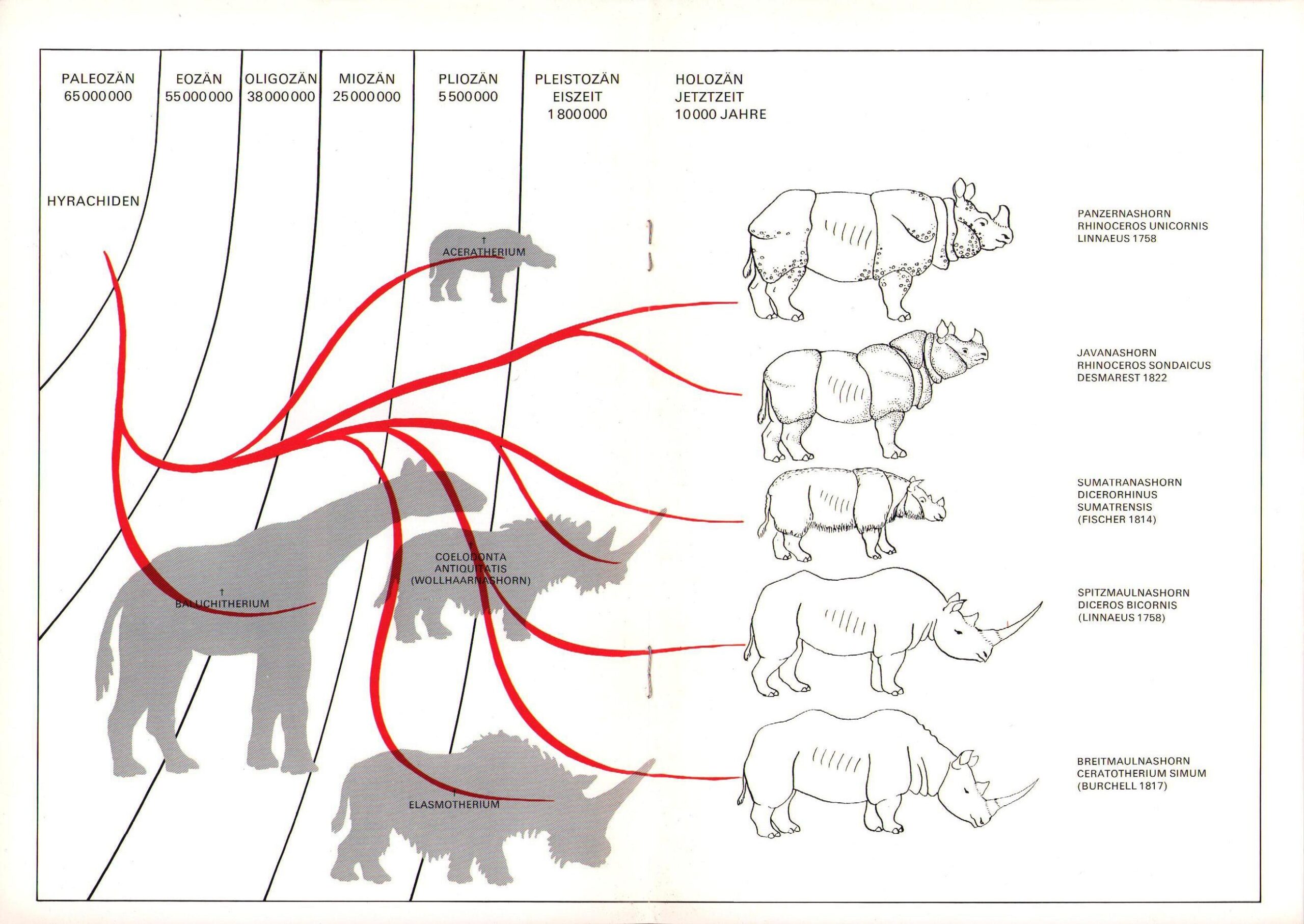
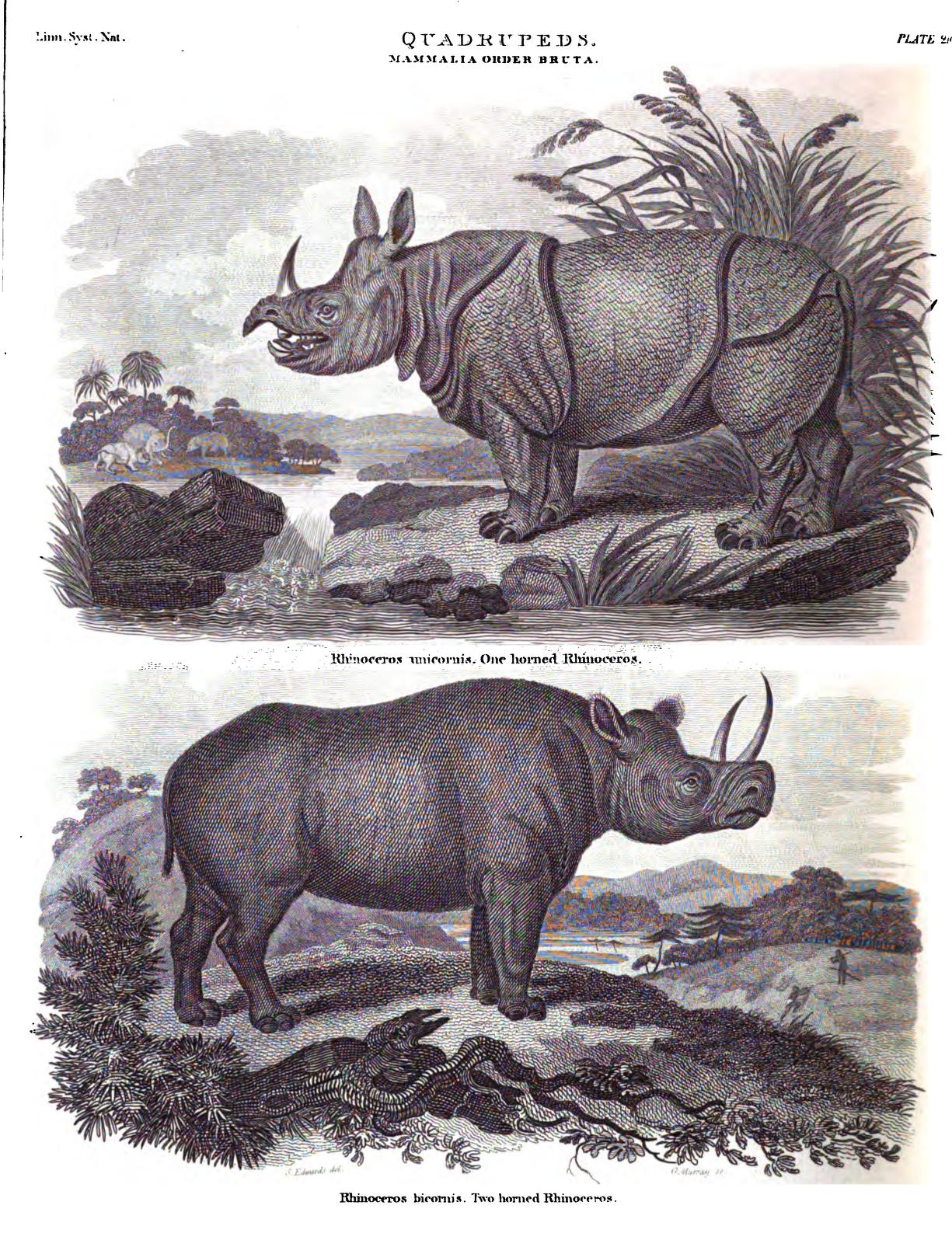
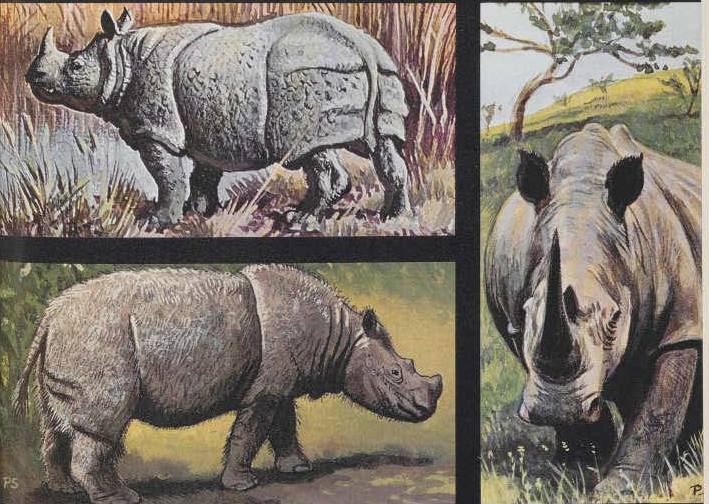
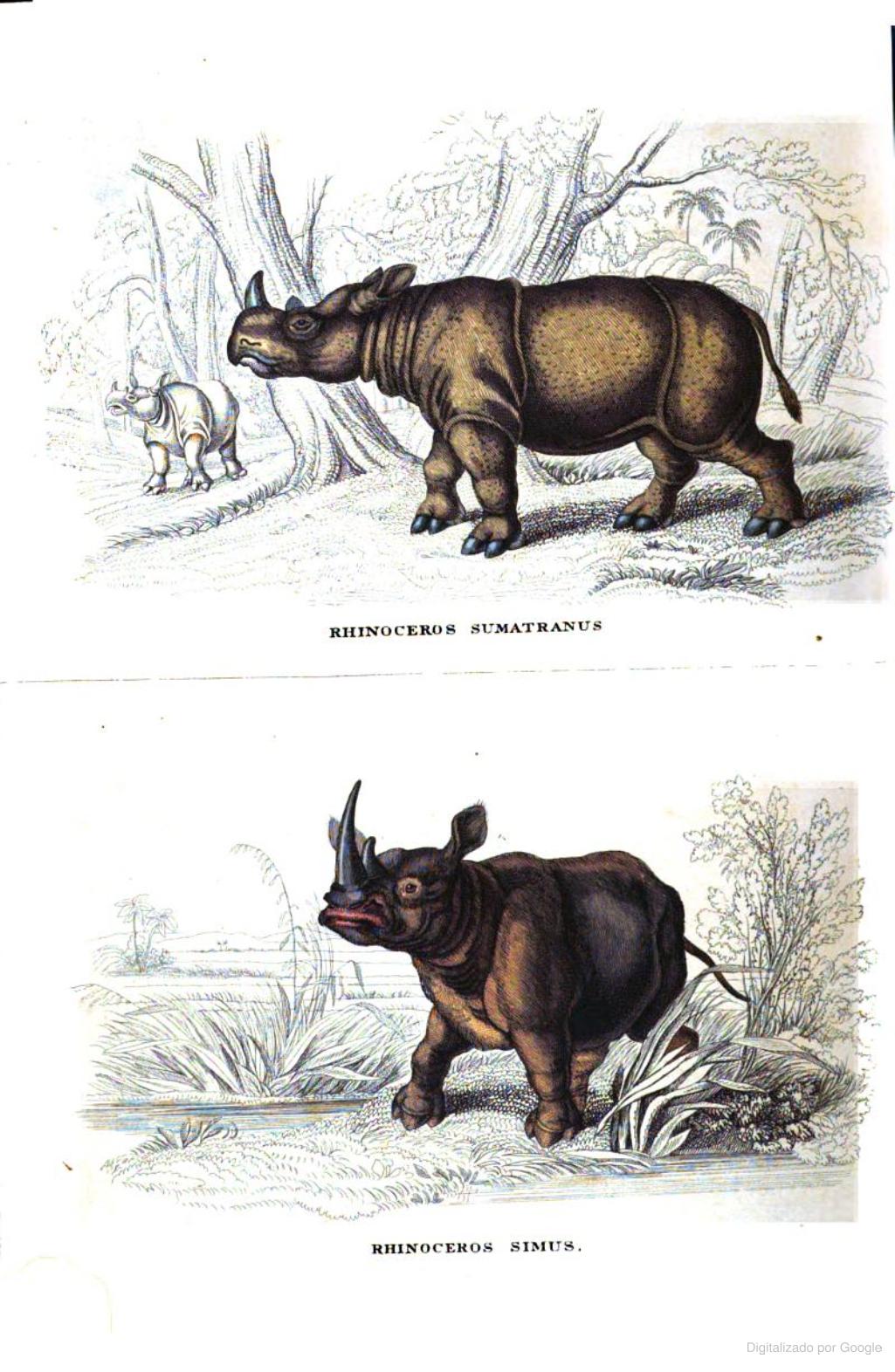
The scientific names carry on the tradition. The greater one-horned rhino is Rhinoceros unicornis, ‘one-horned nose-horn’; the Javan rhino is Rhinoceros sondaicus; the Sumatran rhino is Dicerorhinus, ‘two-horned nose’. The black rhino is Diceros bicornis, which manages to say ‘two-horned’ twice.
Sources
Topsell, E. 1607. The history of four-footed beastes: describing the true and lively figure of every beast, with a discourse of their several names, conditions, kindes, vertues (both naturall and medicinall), countries of their breed, their love and hate to mankinde, and. London, William Iaggard. pp. i-xli, 1-759, i-x.
Parsons, J. 1743. A letter containing the natural history of the rhinoceros. Philosophical Transactions of the Royal Society of London 42 (470): 523-541, pls. 1-3.