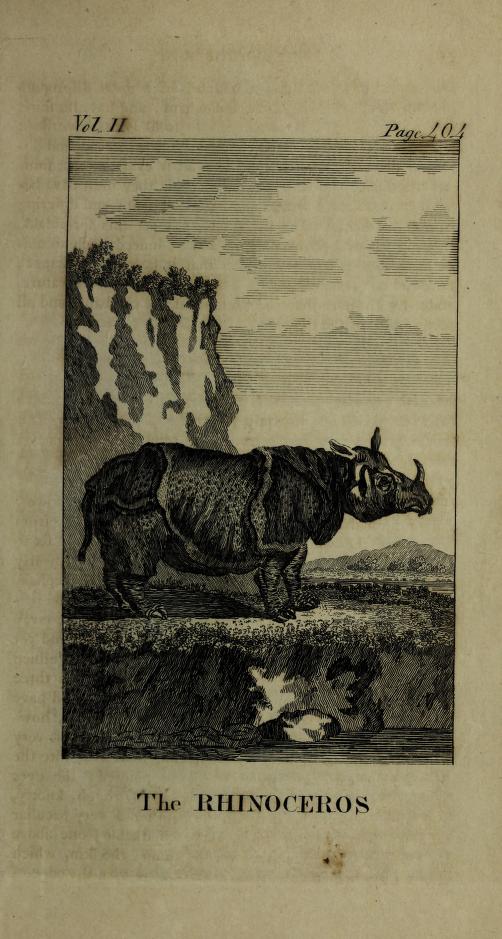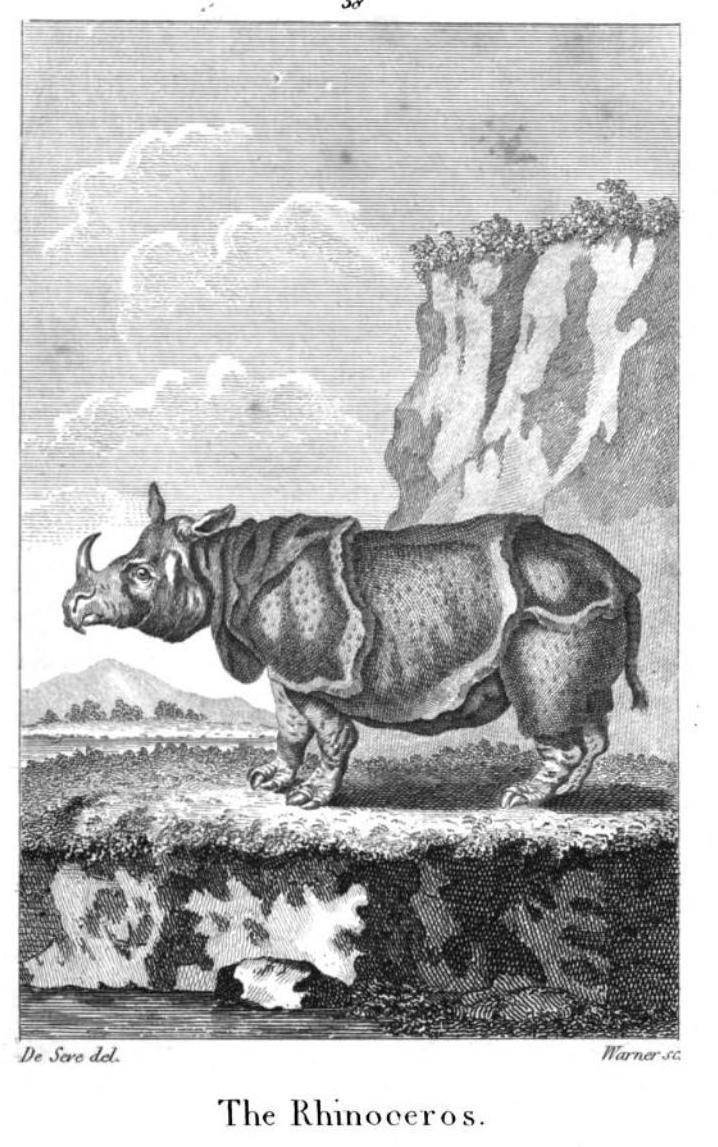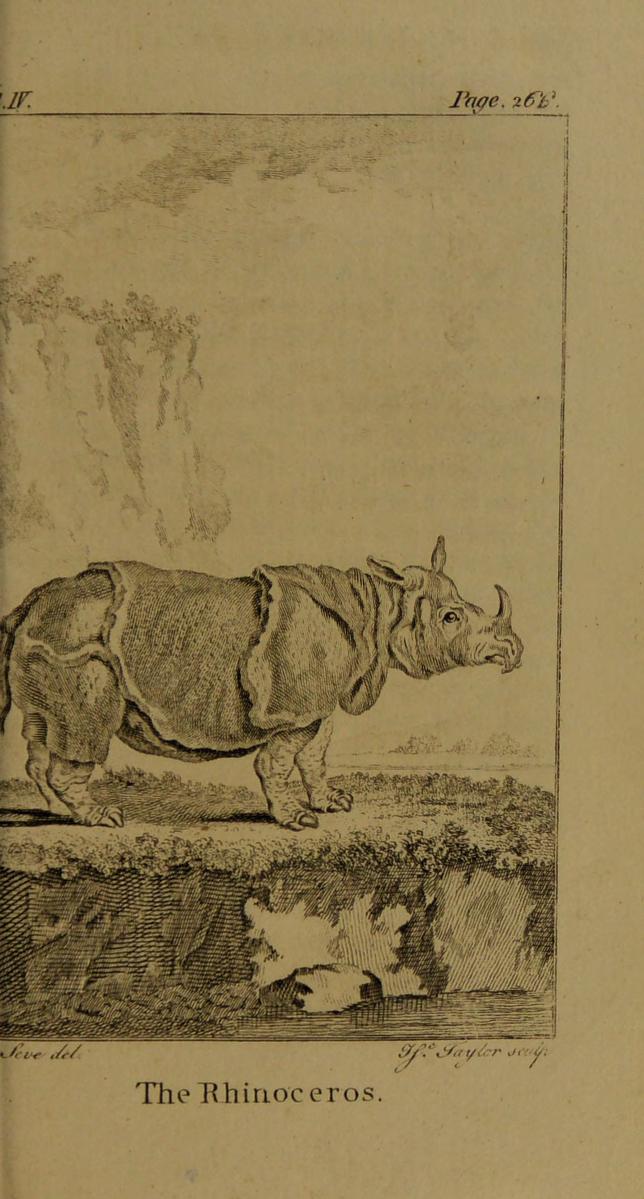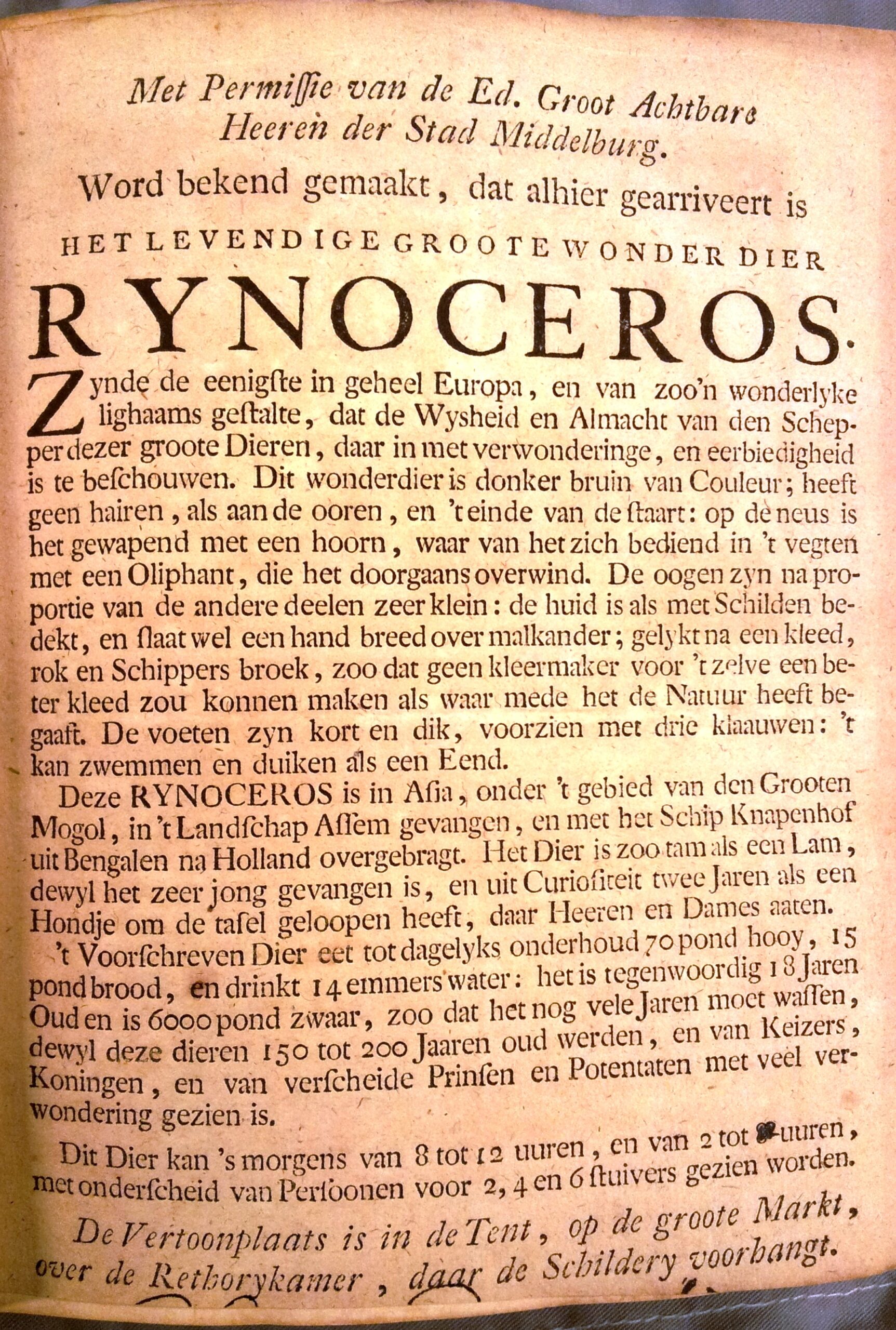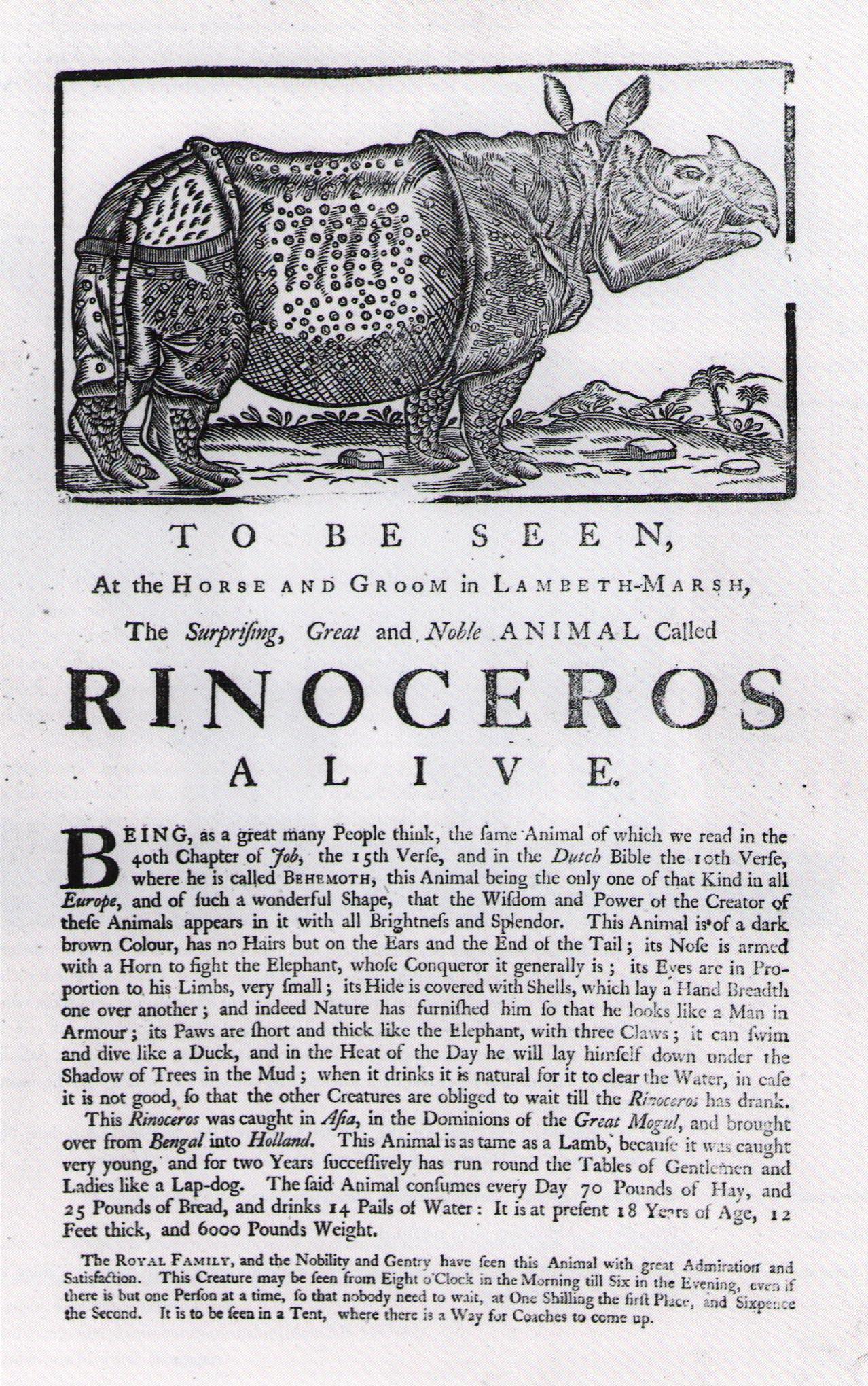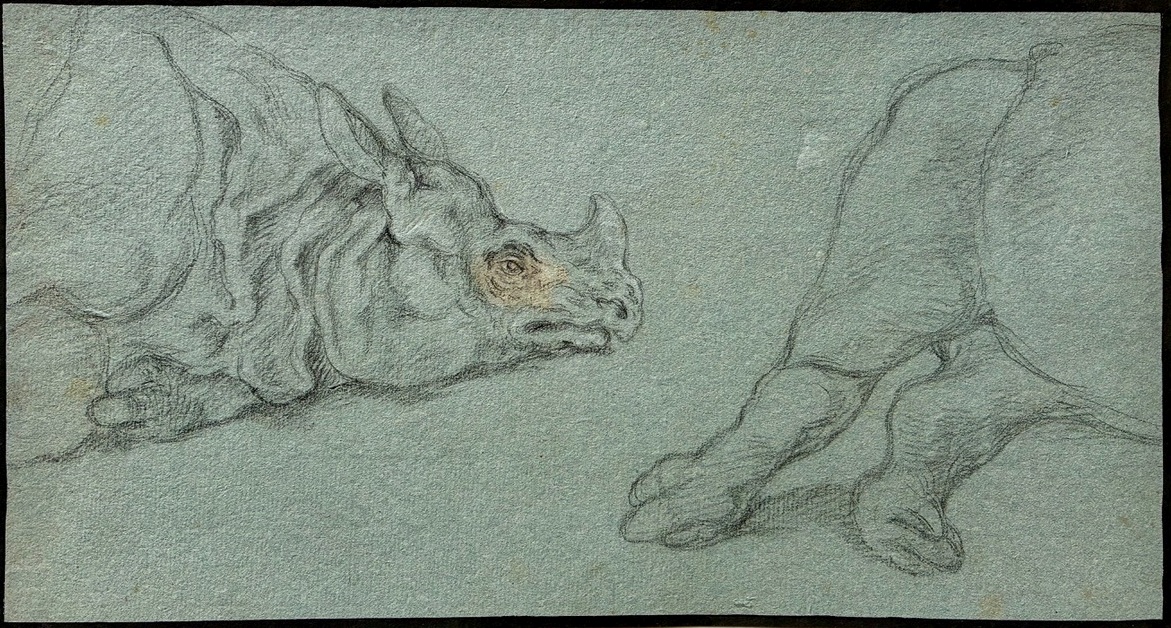


This was the third visit of Clara to Paris (first in 1749, second in 1752). The exhibition at the Foire St. Germain was advertised on 12 and 14 February 1753 (source 6651, source 6652). There is a broadsheet with the usual information, exhibition at the 4th Traverse of the Foire Saint-Germain, in the tent of Alexandre. This broadsheet is now irretrievable but the text was noted (source 6653). The rhinoceros was seen by two Dutch professors, Wouter van Doeveren and a friend, on 24 February 1753, who were shown the horn which had broken off, while the new horn had grown to almost similar size (source 6654). Van Doeveren owned a terracotta statuette of the rhinoceros, which had been made by Camper in Paris, said to date from 1749 but possibly mistaken for 1753? (source 6654)
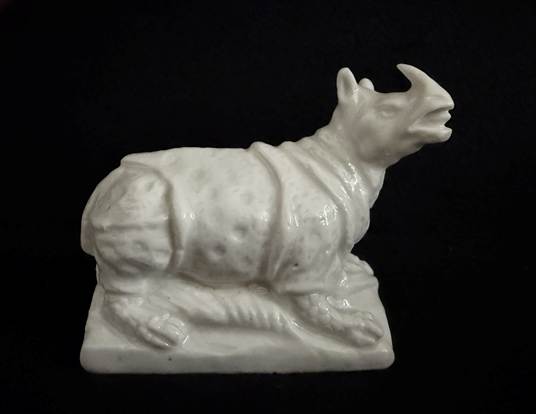
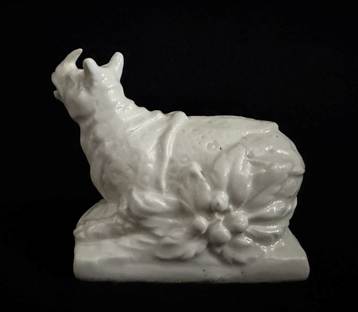
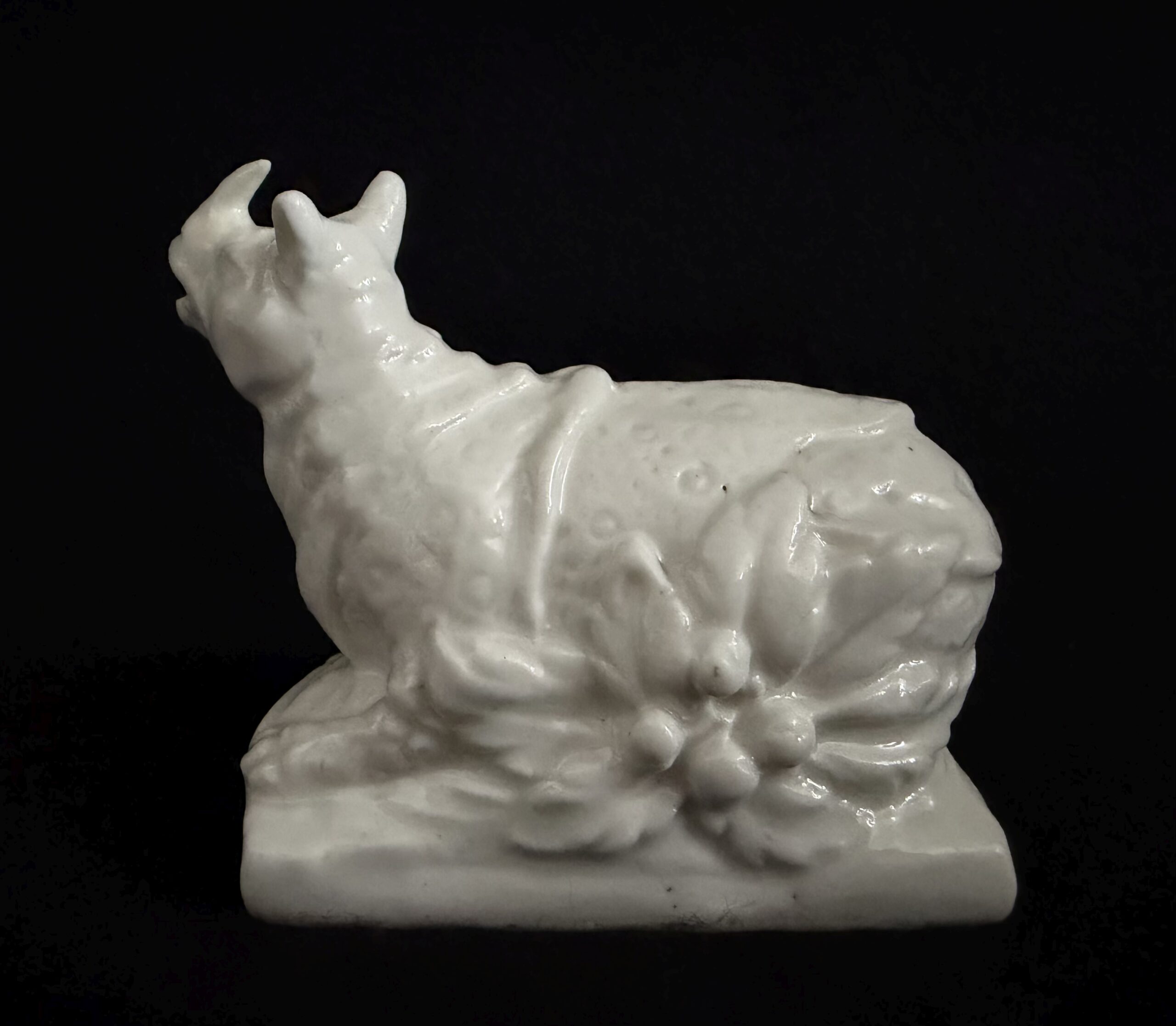
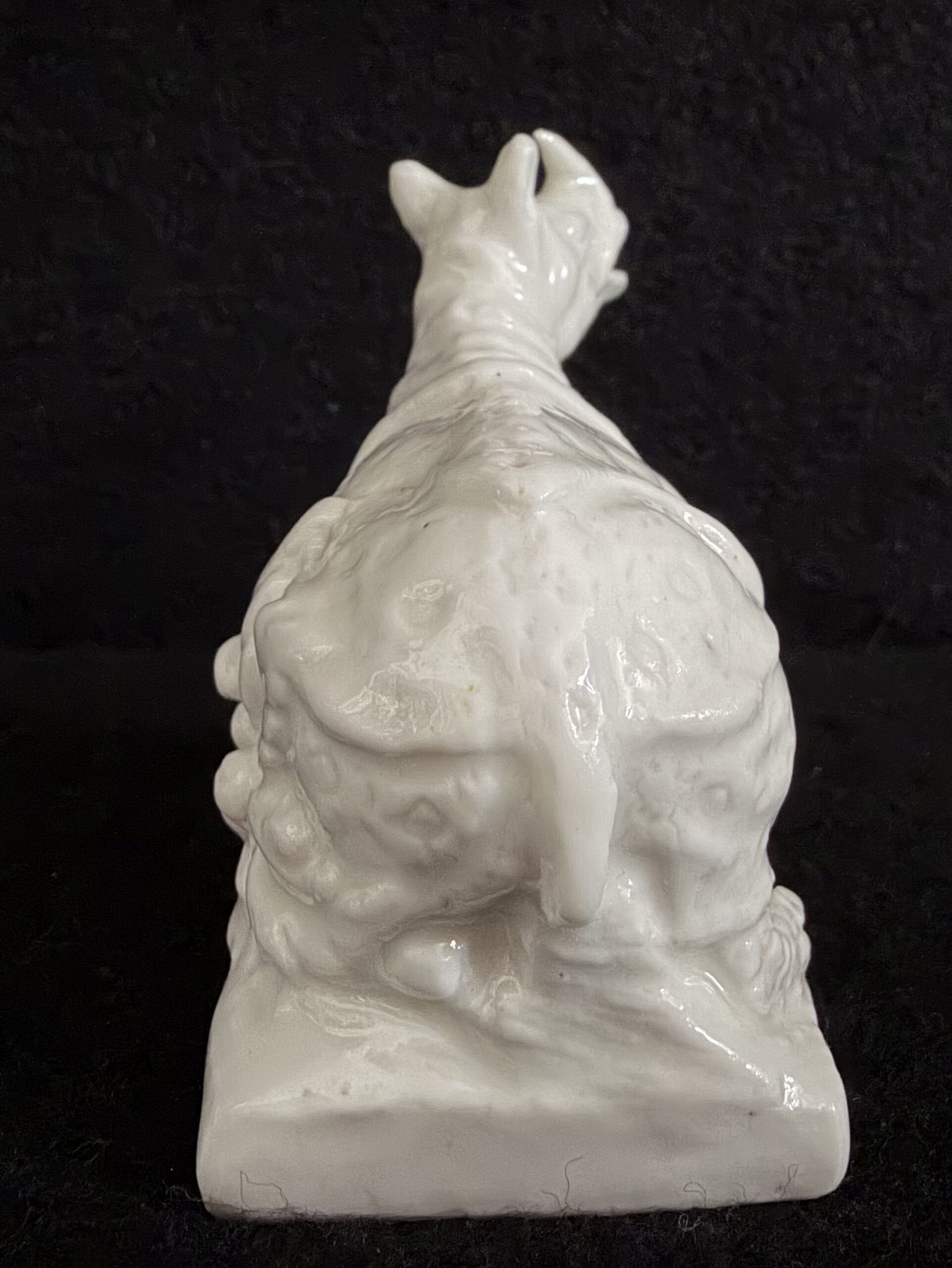
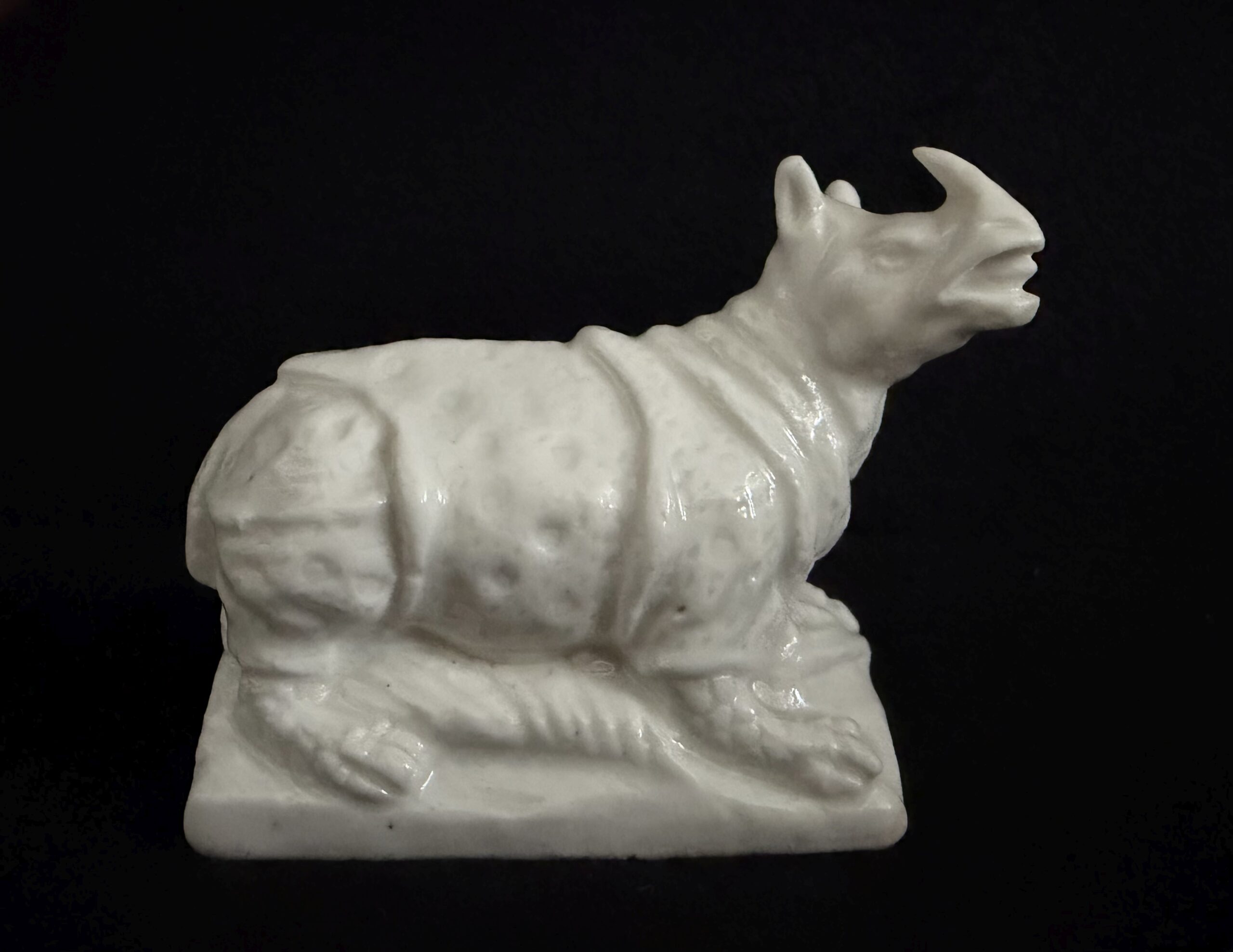
A soft-paste porcelain box was produced by the Mennecy factory, probably to be sold during the visit of Clara in 1753, which was the year the factory started to pruduce such items (source 6655).
Note that Van der Ham 2022, p. 115 links Casanova with the Paris visit of 1753, not 1749 or 1752. In 1753, Casanova was no longer in Paris. – see entry of 1749
There are no other records of Clara’s whereabouts until October 1753.
| Date | 1753 February 12, 14, 24 |
| Locality | Foire St. Germain, Paris |
| Age of Clara | 15 years |
Sources
- Annonces 12-02-1753, 14-02-1753
- Broadsheet of 1753 (Clara age 15 years)
- Visit Wouter van Doeveren
- Mennecy porcelain box
Literature
- Van der Ham 2022, note 231 – after Annonces, 14 Feb 1753
- Rookmaaker, L.C. 2028. The Dutch rhinoceros Clara in Paris: visits of 1752 and 1753. Pachyderm 67: 1-11. doi.org/10.69649/pachyderm.v67i.1376
- Klaber, P. 2026. Clara in Paris. Keramos (Zeitschrift der Gesellschaft der Keramikfreunde) 261: 3-17, figs. 1-12.
Source 6651. Annonces (Paris) 12 February 1753
Douwe Mout 1753. Spectacles: Exhibition of rhinoceros in Paris. Annonces, Affiches et Avis Divers (Paris) 12 February 1753: 103.
Text:
p. 103 Among list of Spectacles (from p. 102)
Un Rhinocéros âgé de 15. ans. A la quatrième traverse.
Source 6652. Annonces (Paris) 14 February 1753
Douwe Mout 1753. Spectacles: Exhibition of rhinoceros in Paris [Dutch Rhinoceros, Clara]. Annonces, Affiches et Avis Divers (Paris) No. 7, 14 February 1753: 28.
Text:
p.28 Foire St. Germain – Un Rhinoceros agé de 15. ans
*This mentioned (without source)
p.31 in Serge, 1947. Histoire du cirque. Illustrations, photographiques et dessinées de l’auteur. Paris, Librairie Gründ, pp. 1-243 – also refers to Charpentier broadsheet (see 1749)
Source 6653. Broadsheet – preserved in Bibliothèque Mazarine
* Alexandre, marchand fayancier
https://francearchives.gouv.fr/en/facomponent/9db21c16cba303e56ddb23930530ec7a83654e7f
- Record in Archives France for:
TUTREL (Alexandre) marchand faïencier Carrefour de la Croix Rouge § Bail à .. d’une ‘loge’ dans la foire couverte de Saint-Germain-des-Prés, par Pierre Hamon, sieur Des roches
E.C. 1900. Curiosites retrospectives: un Sauvage et un rhinoceros vivant exhibes a Paris. Anthropologie 11: 484-485.
Refers to broadsheet with rhino aged 15 years, from the collections of the Bibliothèque Mazarine, Paris. The broadsheet probably is without figure of rhino. It is at present not retrievable.
E.C. reproduced the text as follows:
Avis au public. Il est arrivé un Rhinocéros vivant, qui fut pris en Asie, éloignée d’ici de quatre milles lieues, Pays du Grand Mogol, dans la Province d’Assem; il a présentement 15 ans, et croît jusqu’à l’âge de 25 ans; par conséquent il n’est qu’un Veau, et des animaux de cette sorte vivent 150 à 200 ans. Il est le maître de l’Éléphant. Sa nourriture journalière est de 60 à 70 livres de foin et 20 à 25 livres de pain, sa boisson est de 14 seaux d’eau. Il est fort brun et n’a pas de poil. Sa peau a deux pouces d’épaisseur, et représente un Habit, Manteau et Culotte de matelot, laquelle peau se reploye l’une sur l’autre, de façon qu’on y pourroit cacher la main, de sorte qu’un tailleur ne le pourroit mieux ajuster à son corps; son poids est entre cinq et six mille L.
On peut voir ce Rhinocéros depuis huit heures du matin jusqu’à dix heures du soir.
Il loge dans la quatrième Traverse, Foire Saint-Germain, dans la loge de M. Alexandre Fayancier.
On prendra aux premières Places 12 sols par personne; aux secondes 6 sols.
Celui qui le fait voir vend une médaille pour 20 sols où se trouve le Portrait du Rhinocéros.
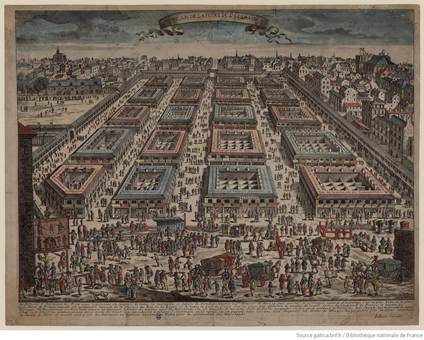
https://gallica.bnf.fr/ark:/12148/btv1b530727947/f13.item.zoom#
Source 6654. Van Doeveren – Travels
* Gualtherus van Doeveren (1730-1783), Wouter van Doeveren, professor of medicine at Groningen and Leiden.
Van Doeveren was in Paris 7 September 1752 to 12 June 1753, attending medical classes and practical lessons. He was a friend of David van Royen (1727-1799).
Together with ? Jan Tak, fellow student (1730-1797)
Literature:
- Van Ham 2022: 119, note 106
Heiningen, T.W. van; Doeveren, W.; Camper, P. 2014. Wouter van Doeveren and Petrus Camper in Paris : travel diaries, kept in the years 1752-1753, 1777 & 1787 and related correspondence. The Hague, Digitaal Wetenschapshistorisch Centrum; Huygens Instituut voor Nederlandse Geschiedenis.
Diary for 24 February 1753 – by Van Doeveren
Text:
Foire du St Germain [Paris]
Wij saagen daar de Rhinoceros die in Holland, en bijna door geheel Europa vertoond is, en door Hollanders geleid wierd, deselve weegd omtrend 6000 pond, wij sagen desselvs tanden, die seer ver agter in de mond staan, en saagen met verwondering dessels kleine oogen: men toonde ons een hoorn, die hem voorleede jaar te Romen was afgevallen hoewel hij nu wederom van een andere voorzien was bijna soo groot als de voorige.
[Translate:
We saw there the Rhinoceros which has been shown in Holland, and almost throughout all Europe, and was guided by Dutchmen, it weighs about 6000 pounds, we saw its teeth, which are set very far back in the mouth, and we saw with amazement its small eyes: they showed us a horn which had fallen off it last year in Rome, although it was now provided with another one almost as large as the former one.]
Note: The catalogue of the Cabinet of Wouter van Douveren dated 1785 includes a listing for a clay model of a rhinoceros “seen in Paris in 1749” made by Petrus Camper.
Source 6654. Porcelain Box by Mennecy Factory
Literature:
- Klaber, P. 2026. Clara in Paris. Keramos (Zeitschrift der Gesellschaft der Keramikfreunde) 261: 3-17, figs. 1-12
Mennecy French soft-paste porcelain box representing Clara, the celebrated Dutch Rhinoceros. c.1753
Size: 0. 7 x 4 x 7 cm
Private collection, London [2026]
The soft-paste porcelain box of Clara is ascribed to the earliest years of the Mennecy factory, around 1753 which coincided with her second visit. The Mennecy factory (1750 – 1773) was situated in a village south of Paris and was the continuation of the earlier Villeroy factory (1734 / 7 – 1748). Both under the patronage of the duc de Villeroy, they were operated by François Barbin and family. The mark DV was used by both factories. Production was large and varied. Smaller wares and all types of useful objects, including many different figures and little boxes, were a speciality. In around 1772 the factory transferred to Bourg-la-Reine, where lesser- quality production continued until 1804 / 5. Interestingly, only rarely are boxes from any of these soft-paste factories marked, which can make attribution sometimes less obvious. Paste, glaze, moulding and polychrome decoration can be helpful aids to attribution. Whilst Clara’s first visit to Paris was celebrated in early 1749, it is most probable that this Mennecy box was manufactured during her second visit in 1753.