

Ceratotherium simum simum (Burchell, 1817)
Overview
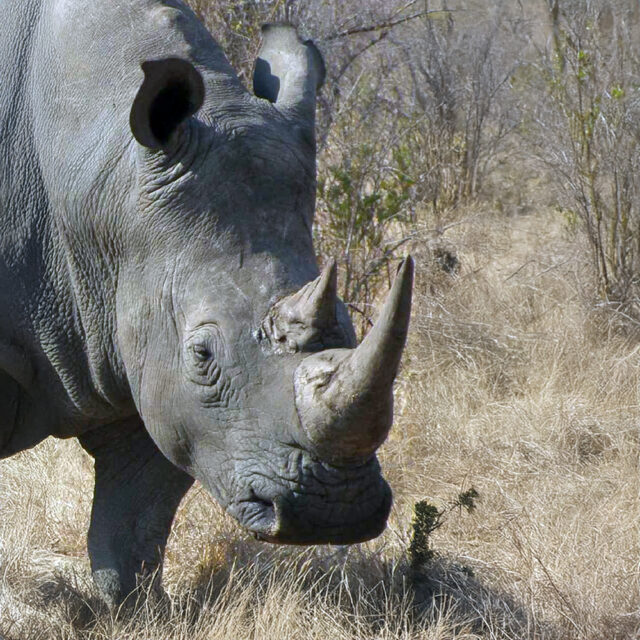
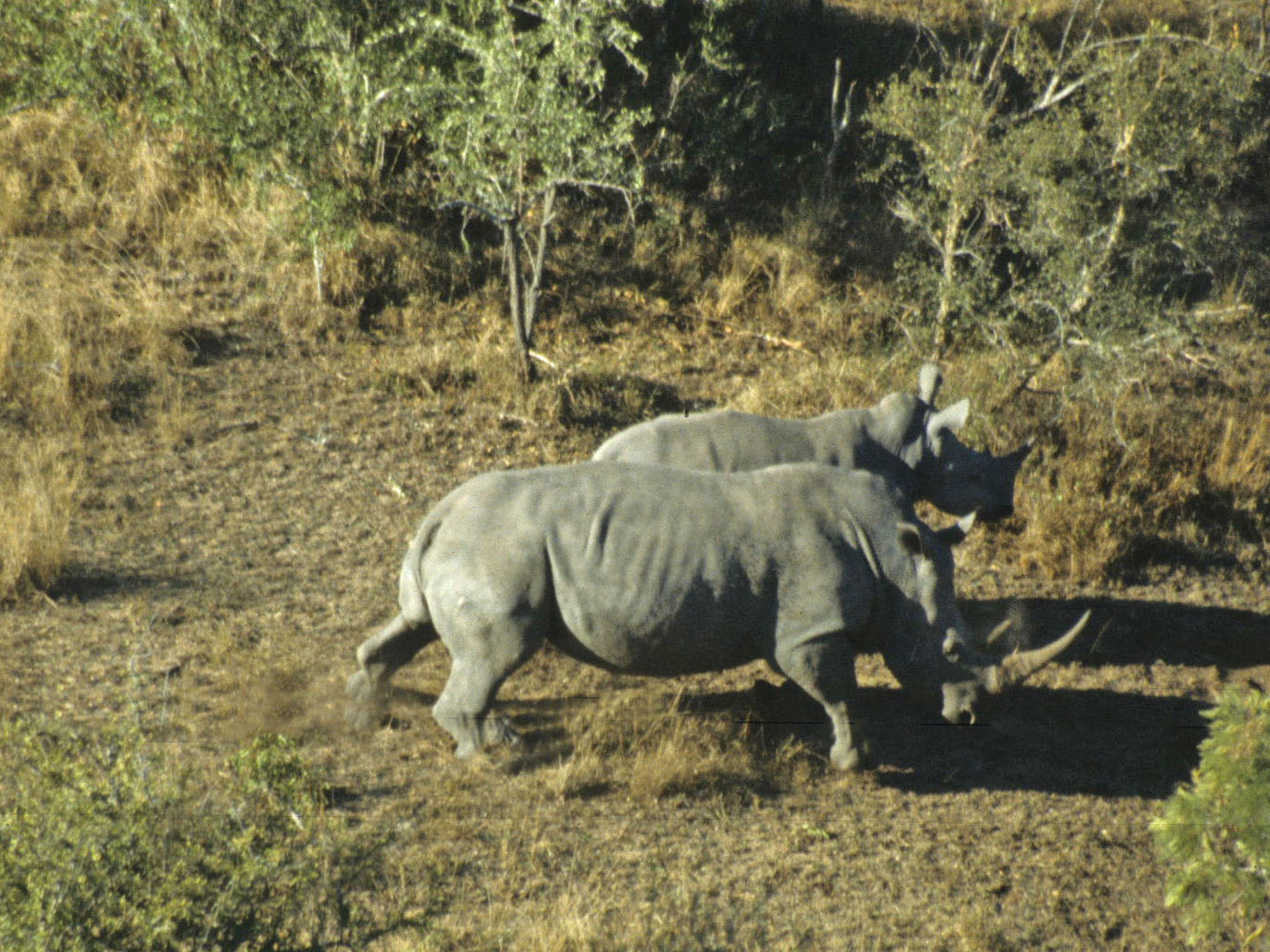
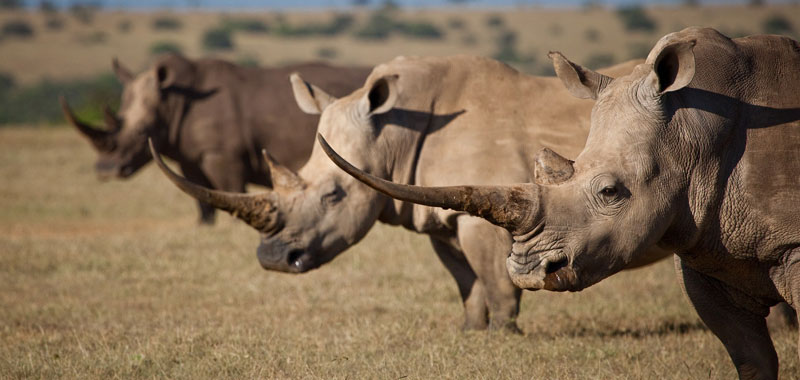
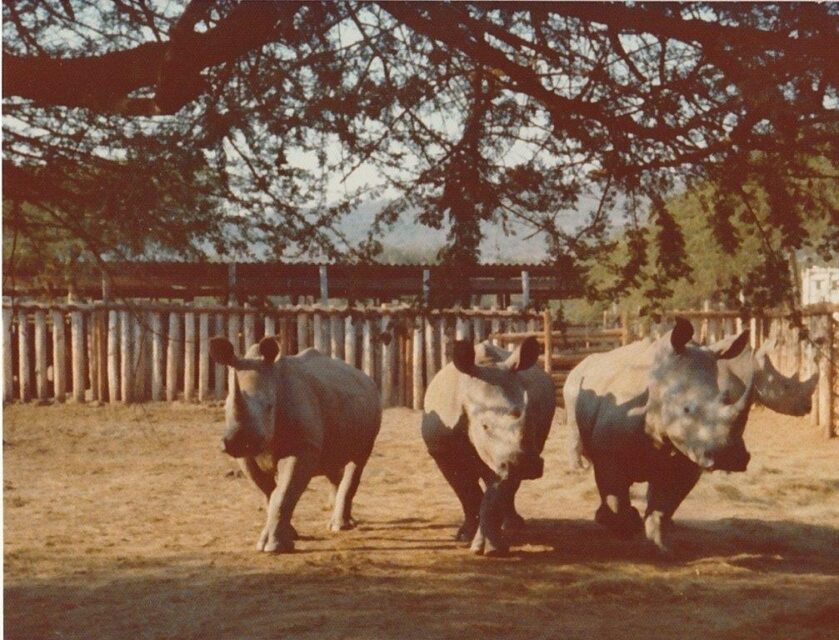
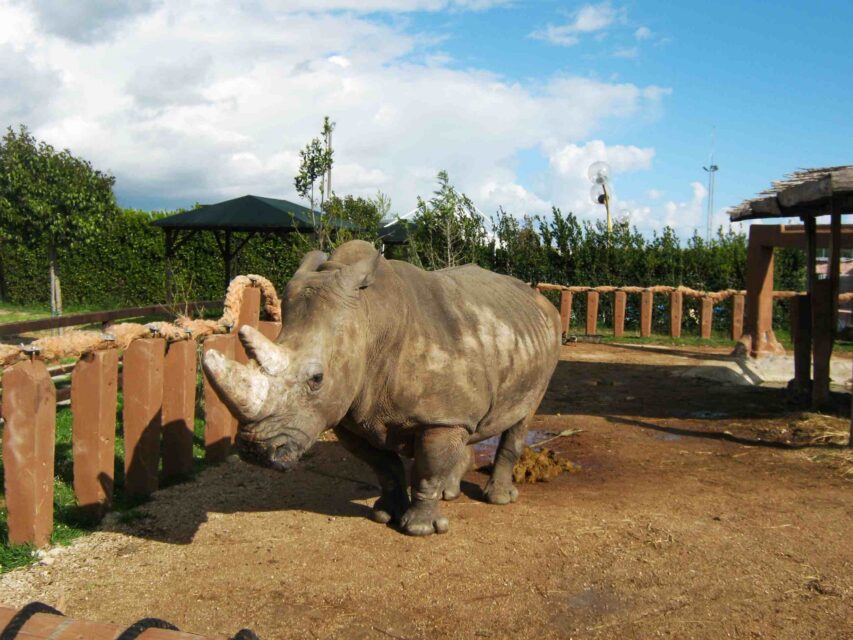
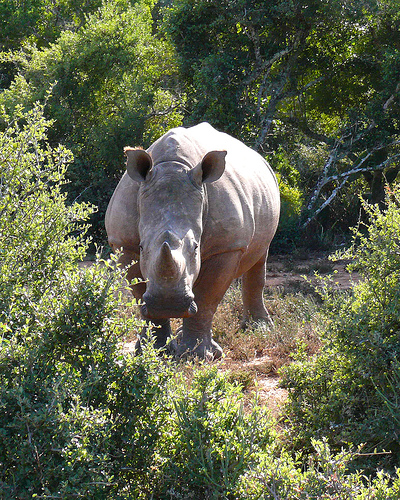
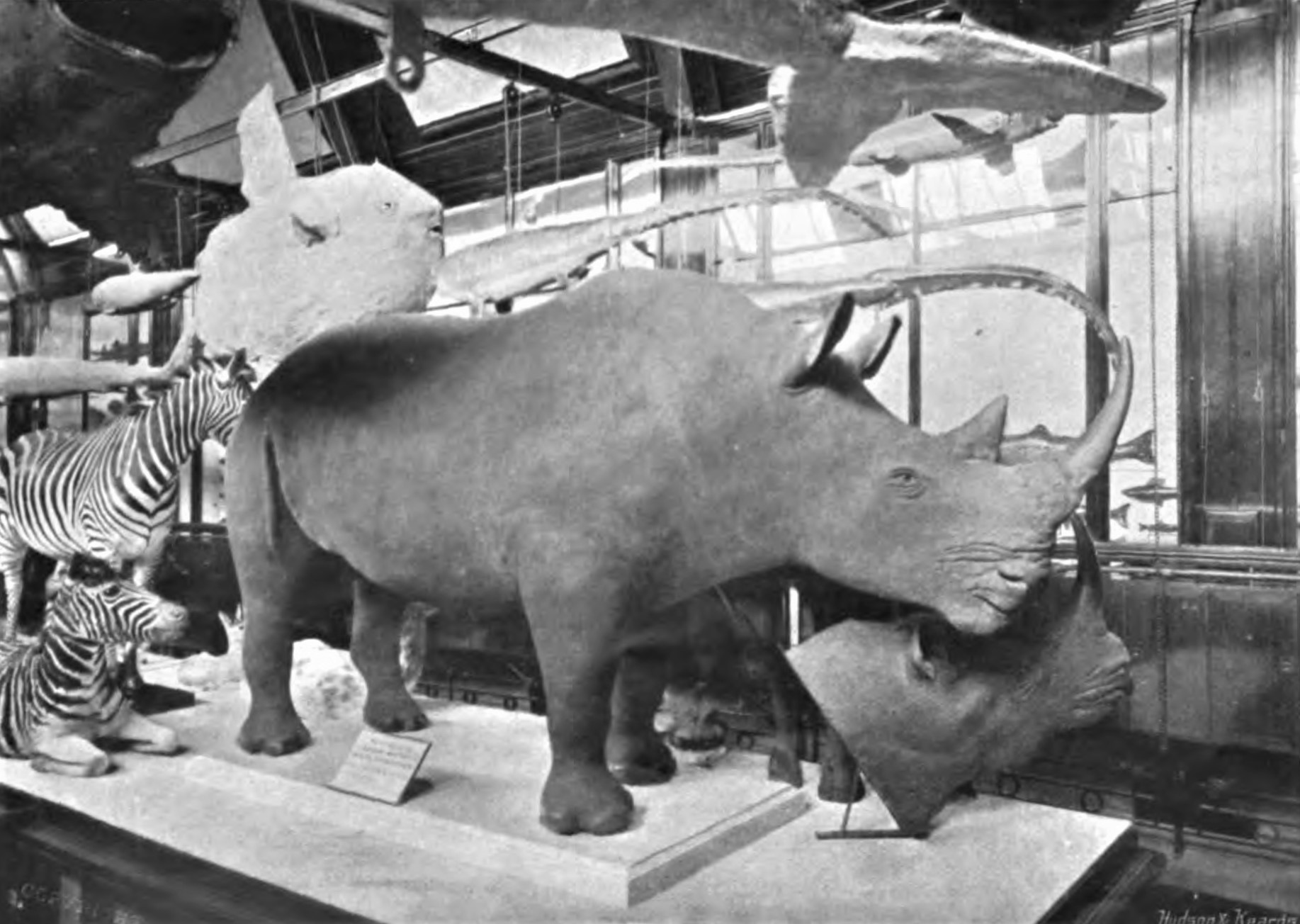
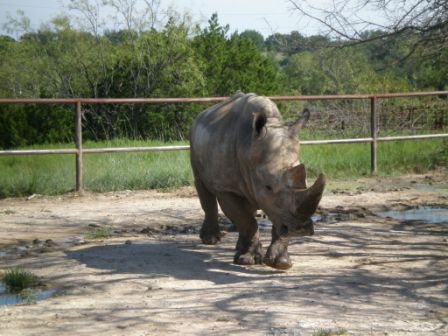
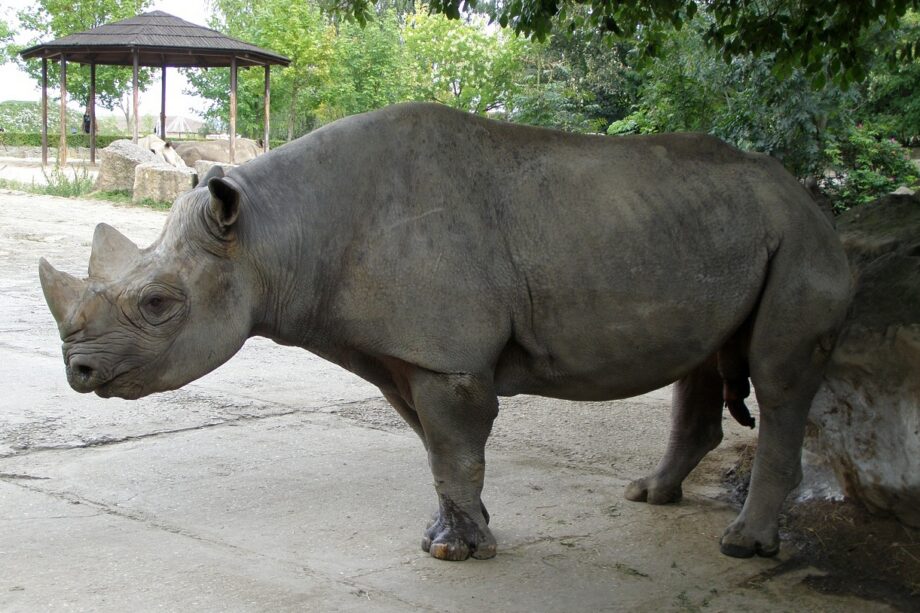
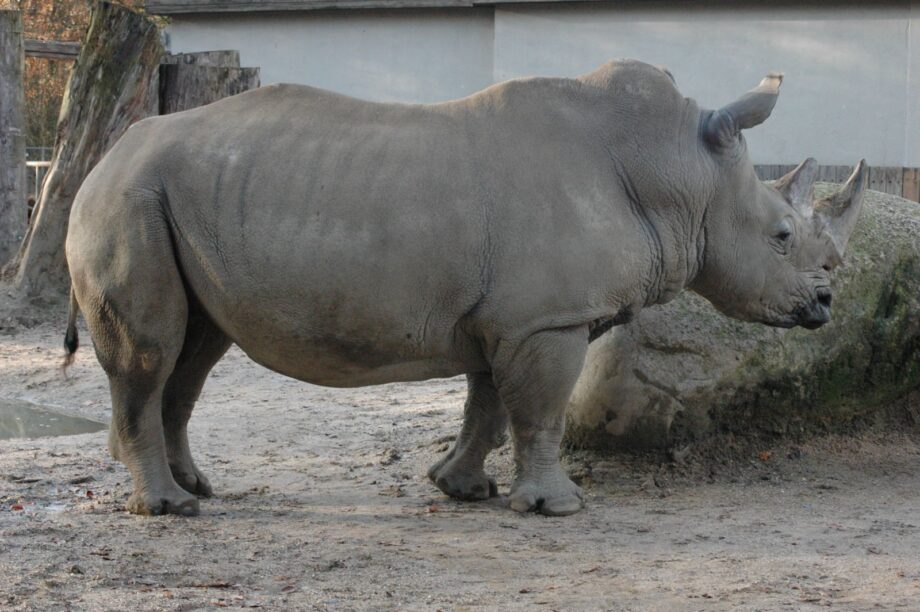
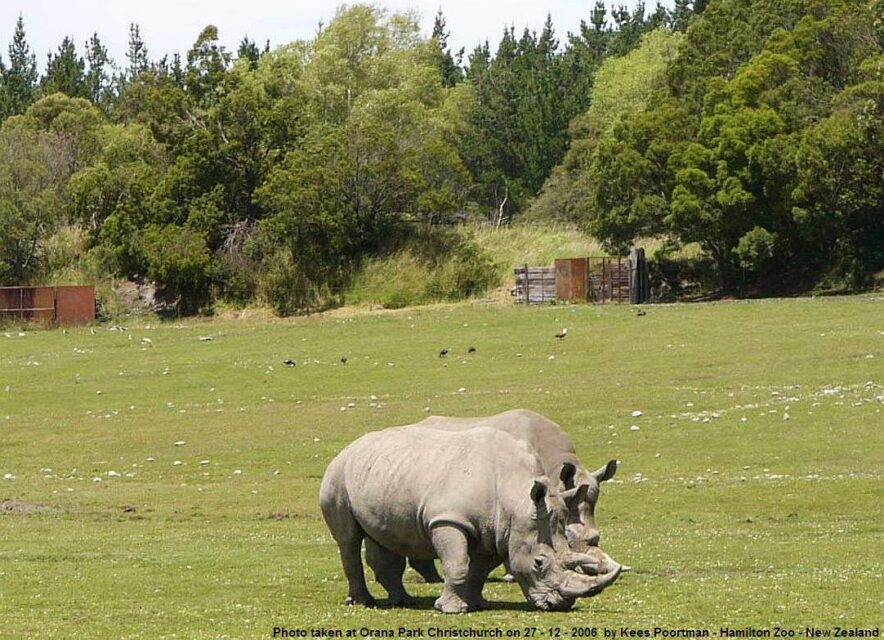
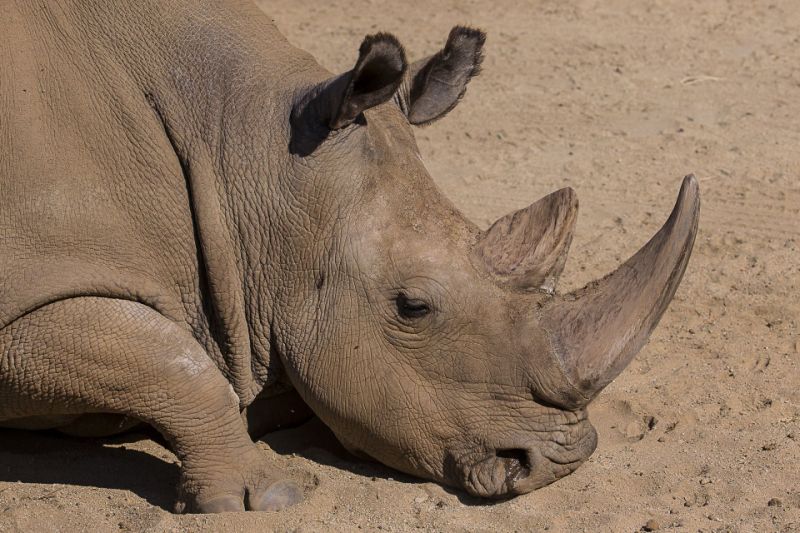
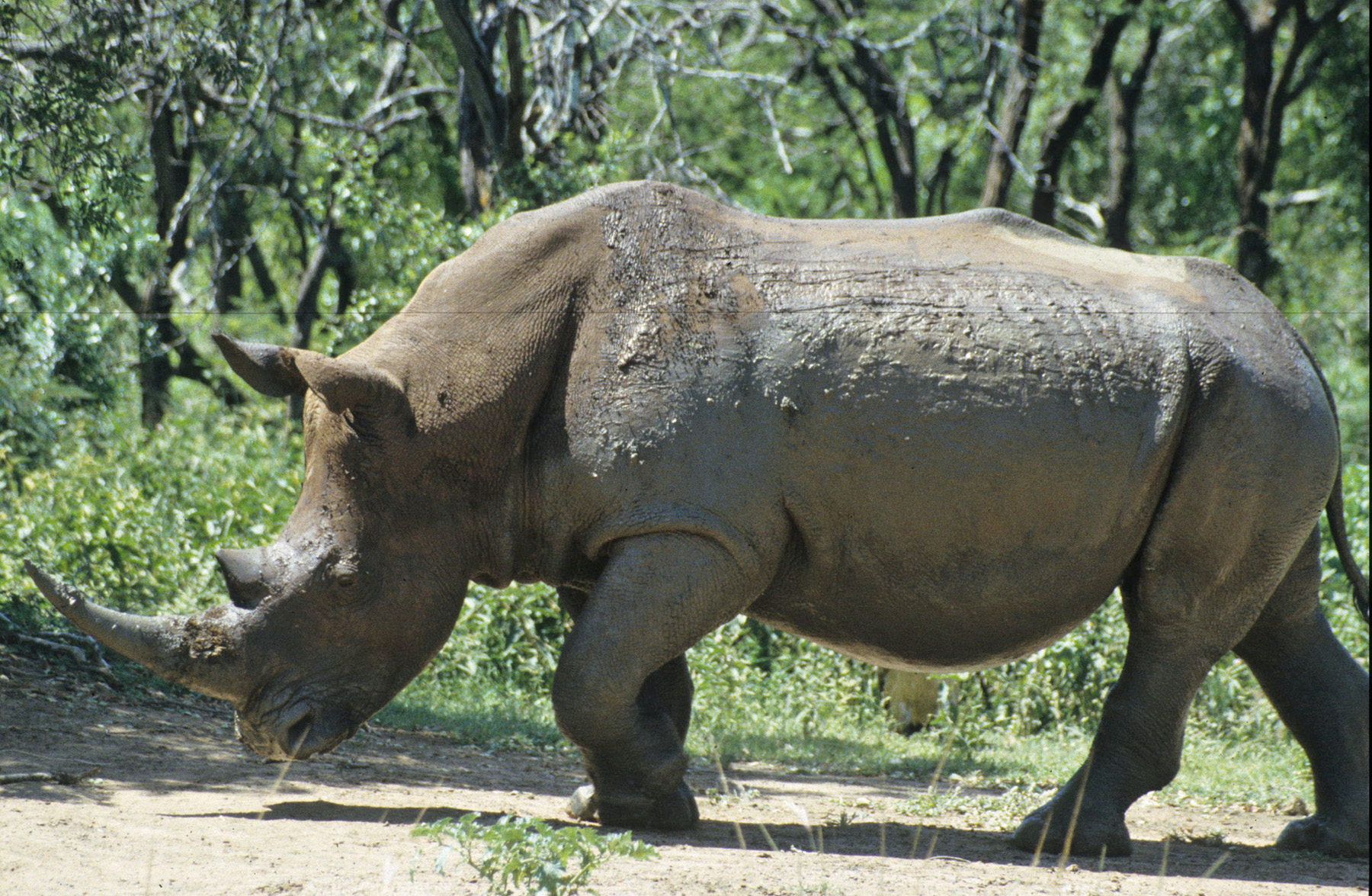
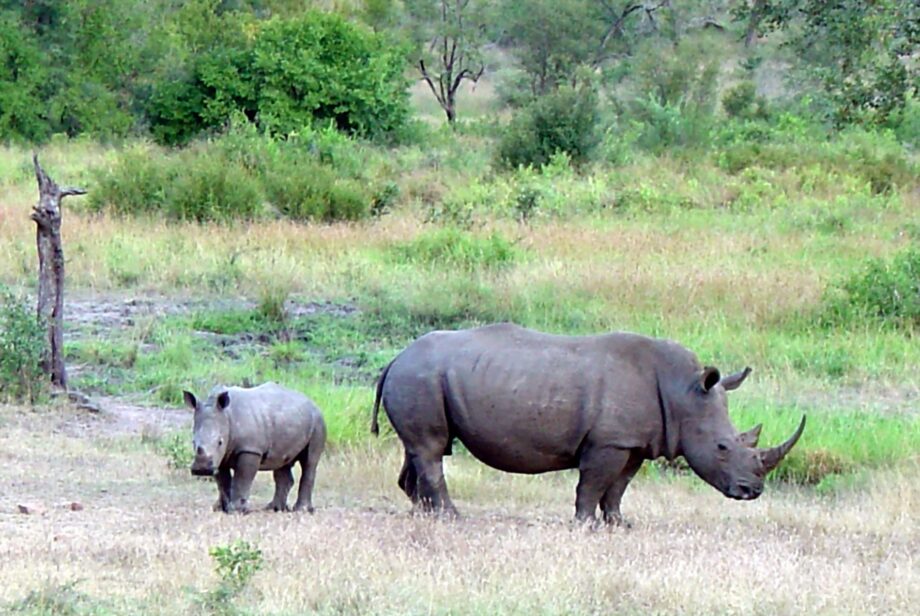
A large rhinoceros with two horns found in the southern part of Africa. It is a grazer living in savanna woodland.
Status
Near Threatened in the IUCN’s Red List in 2021
CITES listing: Appendix I and II (C. s. simum, only the population of South Africa and Swaziland and for the exclusive purpose of allowing international trade in live animals to appropriate and acceptable destinations and hunting trophies)
Scientific name
Ceratotherium simum simum (Burchell, 1812), from Latin ‘simus’ meaning flat-nosed, snub-nosed. The name was proposed in 1812 by William John Burchell (1781-1863), who had shot two specimens in October 1812 at Chué Springs or Heuningvlei, Northern Province, South Africa.
Other names proposed
Rhinoceros burchellii Lesson, 1827; Rhinoceros camus Griffith, 1827; Rhinoceros oswelli Elliot, 1847; Rhinoceros kiaboaba Murray, 1866; Atelodus simus var. camptoceros Brandt, 1878; Atelodus simus var. prostheceros Brandt, 1878
Subspecies
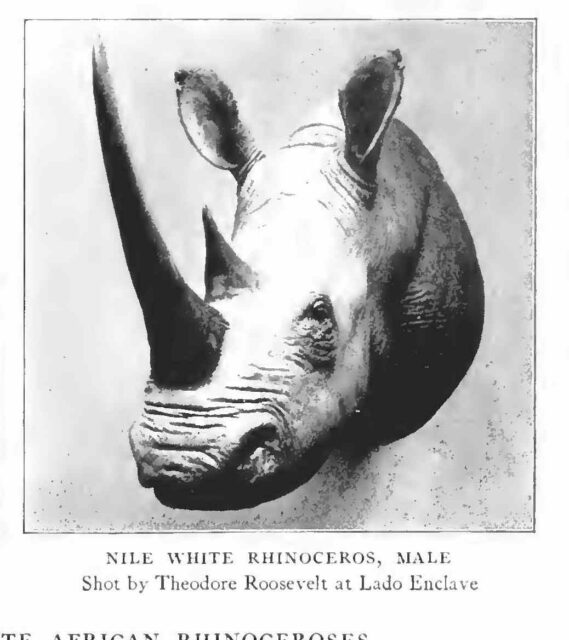
The two forms of the White rhinoceros are widely separated in distribution. The form in the southern part of Africa is known as the Southern white rhinoceros, Ceratotherium simum simum (Burchell, 1817) or could be a species without subdivisions. The form in the central part of Africa is known as the Northern white rhinoceros, Ceratotherium simum cottoni (Lydekker, 1908) or could be a separate species which could be known as Nile rhinoceros, white rhinoceros, Ceratotherium cottoni (Lydekker, 1908).
Common names
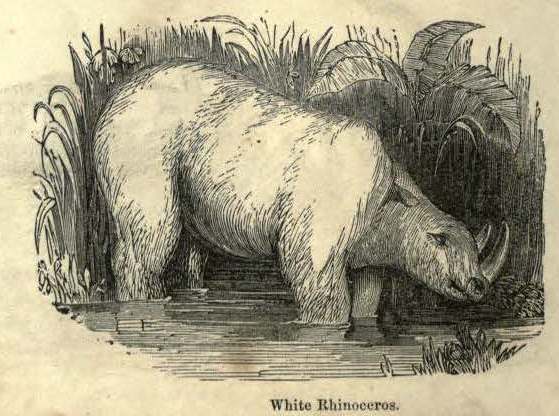
White rhinoceros, Square-lipped rhinoceros, Grass rhinoceros The name ‘white’ is definitely not derived from the Afrikaans ‘wide’ which is historically and linguistically impossible. The name ‘white’ was first used for a species of rhinoceros found in the African interior but unknown at the Cape of Good Hope, after the word was introduced by John Barrow in a book published in 1801 based on an interview with a local chief.
Measurements
Length, head and body: 3.6 – 4.2 m
Length of tail: 8-10 cm
Height at shoulders: 1.7-1.85 m
Girth: no data
Horn length: average about 58 cm. longest recorded 158 cm in length, 76.5 cm in circumference.
Weight: 1400-2000 kg (female), 2000-3600 kg (male)
Lifespan
40-45 years. Record in captivity is 52 years (Dolly, 1972-2025; Toby, 1973-2021)
(Some animals imported in the 1970s are said to have died at higher ages upto 53 years, which is circumspect, as their actual date of birth in the wild is estimated and might have been wrongly estimated or poorly documented).
Chromosomes
Chromosomes: 2n=82
White Rhino Reproduction
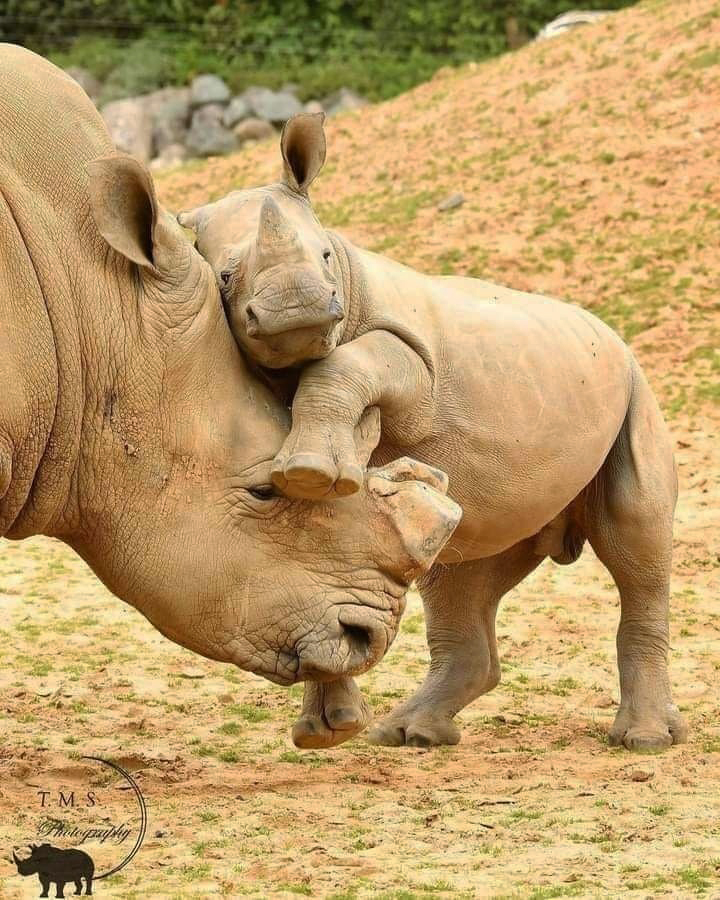
Rhinos give birth to 1 calf.
Gestation period: average 514 days (17 months). range 480-548 days.
Birth intervals per calf: 1 to 3 years. Shortest interval in captivity 409 days (14 months).
Female sexual maturity: At 5 to 7 years in wild. Youngest mother in captivity 4 years 4 months.
Male sexual maturity: in captivity youngest males were 3 years 2 month and 4 years 4 months
Newborn weaned: at 18 months
Distribution – Southern White rhinoceros
Historical Natural Range (starting 1700):
South Africa (KwaZulu-Natal, Mpumalanga, Gauteng, North West, Limpopo provinces), Botswana, Namibia, Mozambique, Zimbabwe. The bottle-neck around the start of the 20th century was widely exaggerated (as low as 20 animals), and it is historically likely that the totals never decreased below 200 animals.
Current distribution
South Africa, Botswana, Namibia, Mozambique, Zimbabwe. The populations in Kenya, Uganda, Rwanda, Zambia, Ivory Coast, Senegal are introduced and not part of the original fauna of these countries. The populations in South Africa’s Free State, Northern Cape, Eastern Cape, Western Cape are all introduced. There are no early records for Swaziland. South Africa is the stronghold for the white rhinoceros with numbers generally increasing.
White Rhino in Captivity
Numbers; up to 1994 there were there were 605 white rhino imported from the wild, 475 born in captivity, total 1080 animals.
Studbook: long kept by Berlin Zoo (and published regularly up to 2011). Then diversified with regional studbook keepers in Europe and USA.
First birth: On 8 June 1967 in Pretoria Zoo (mother wild-bred), on 23 October 1967 in Pretoria Zoo (captive-bred).