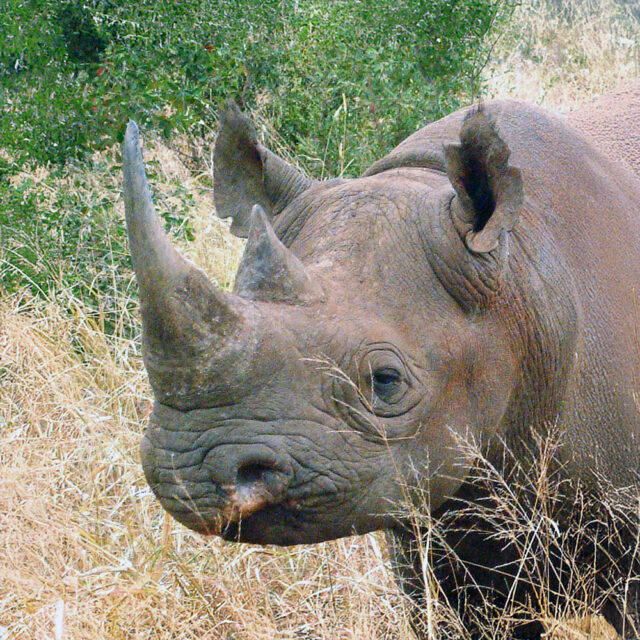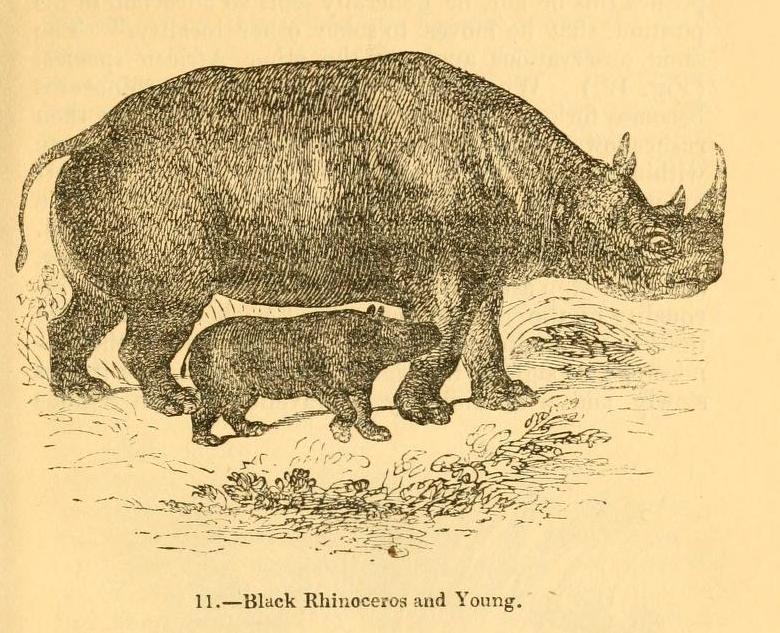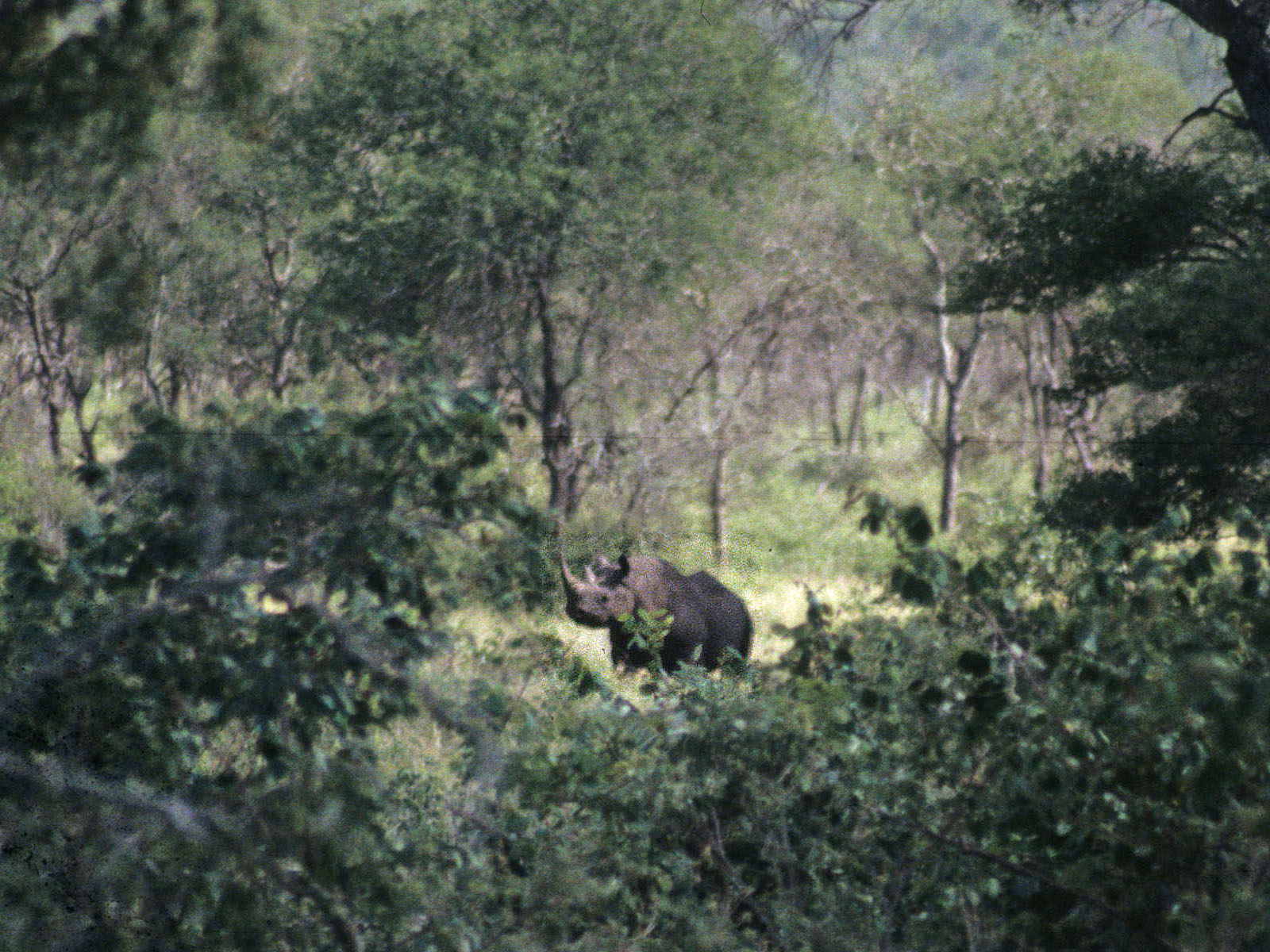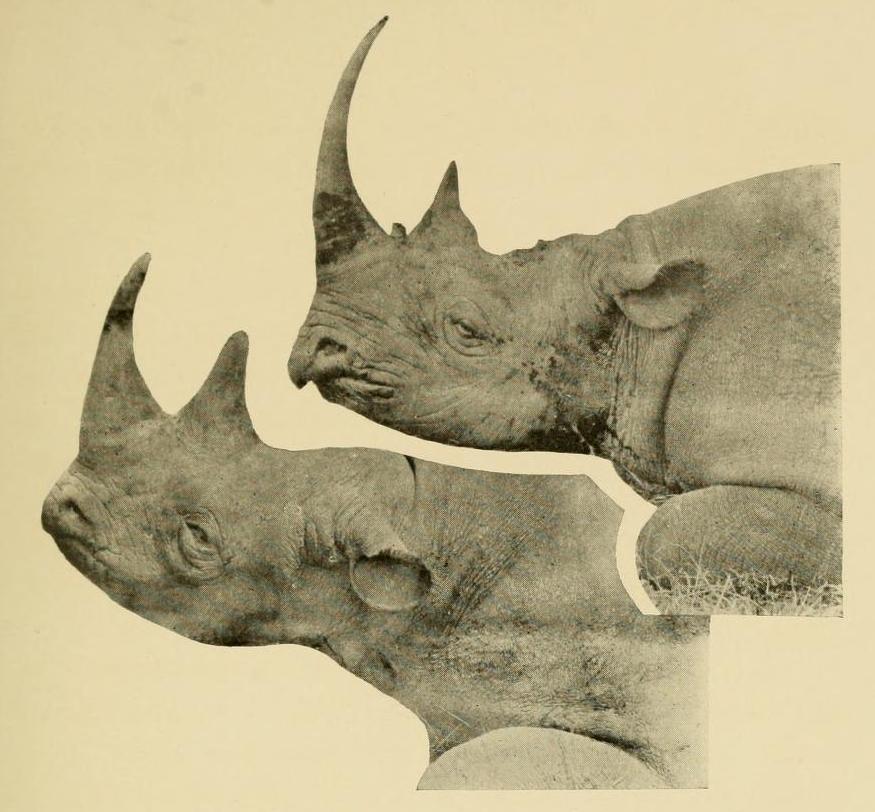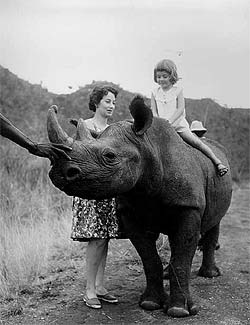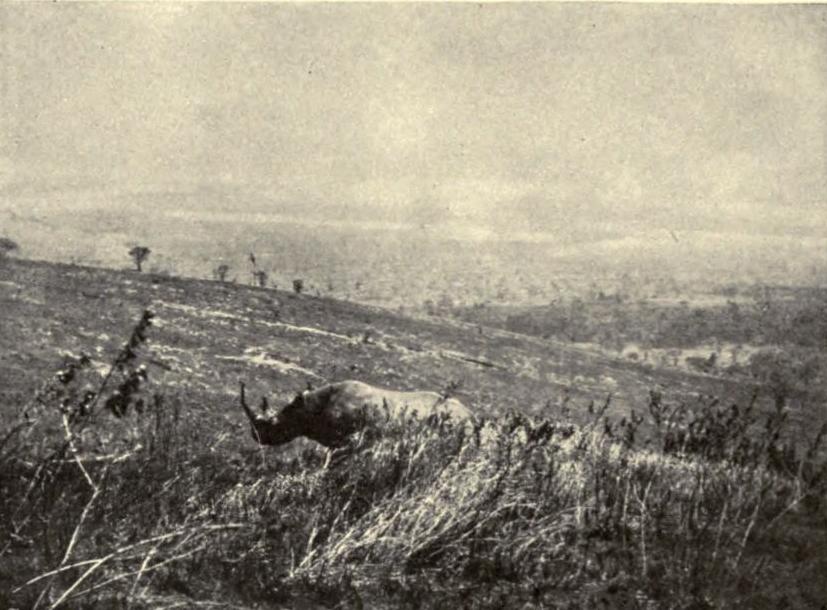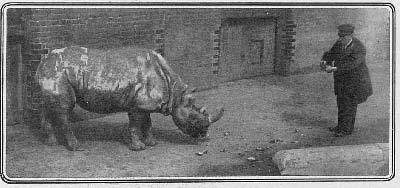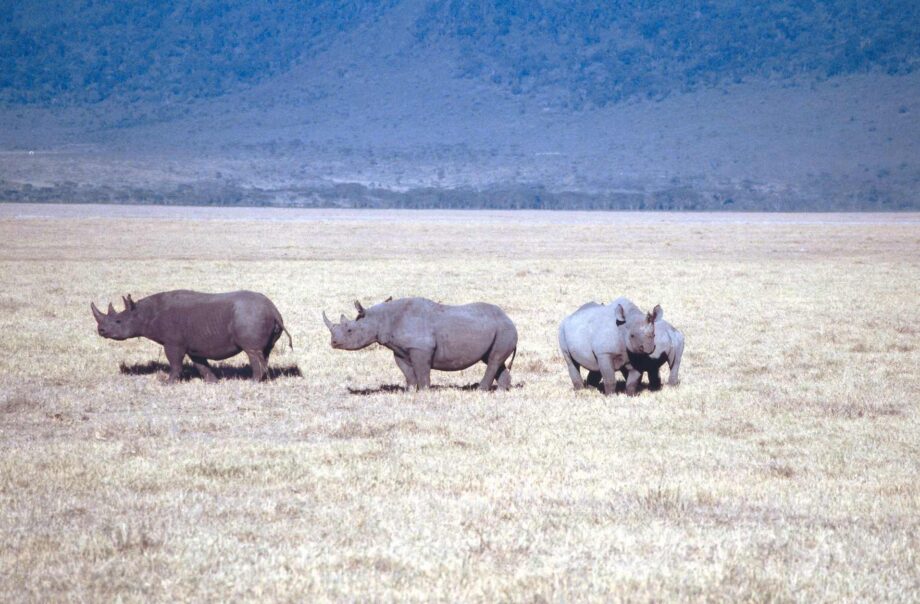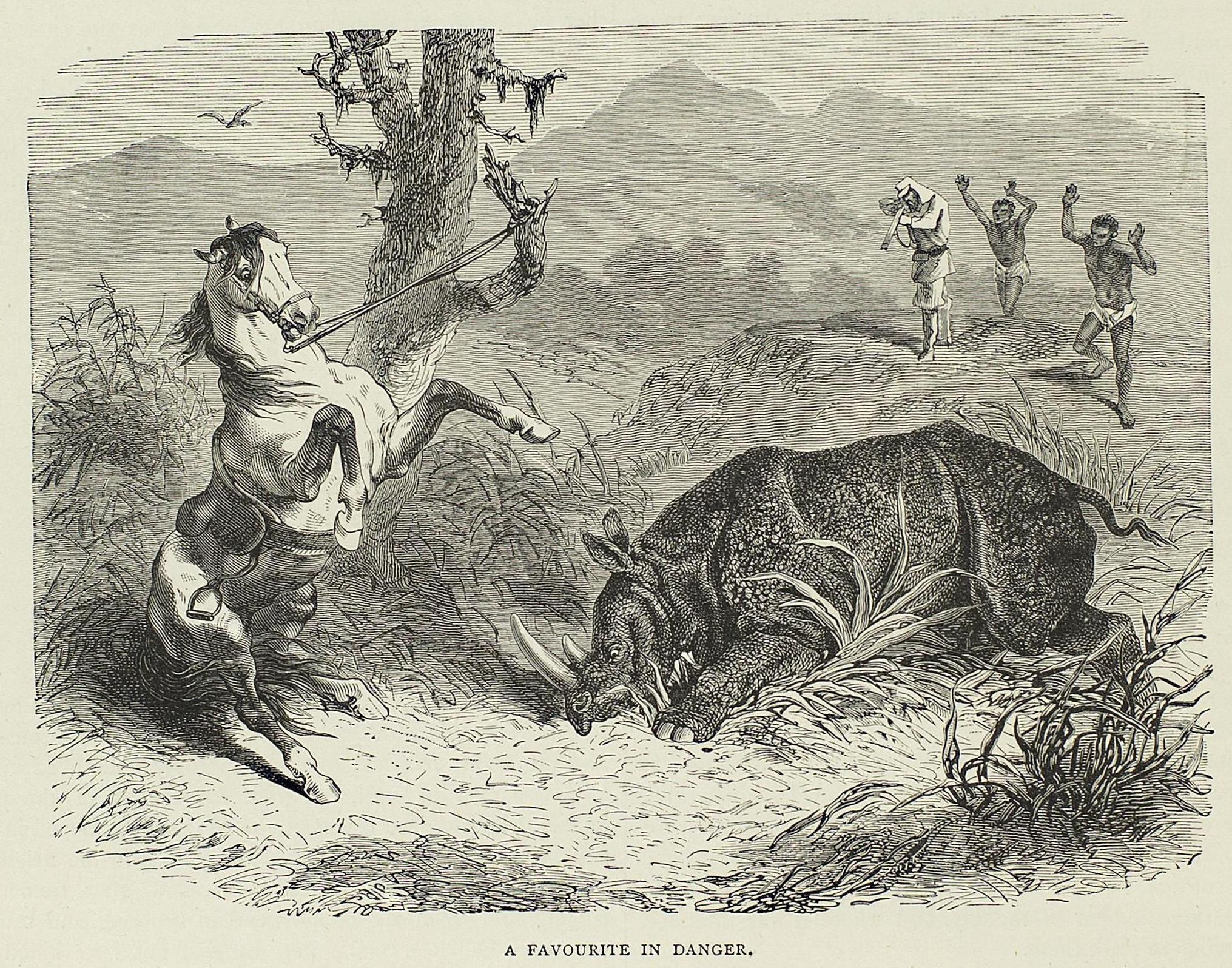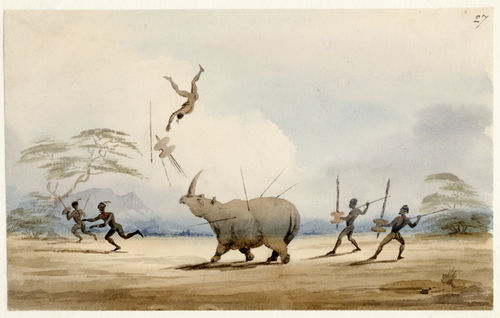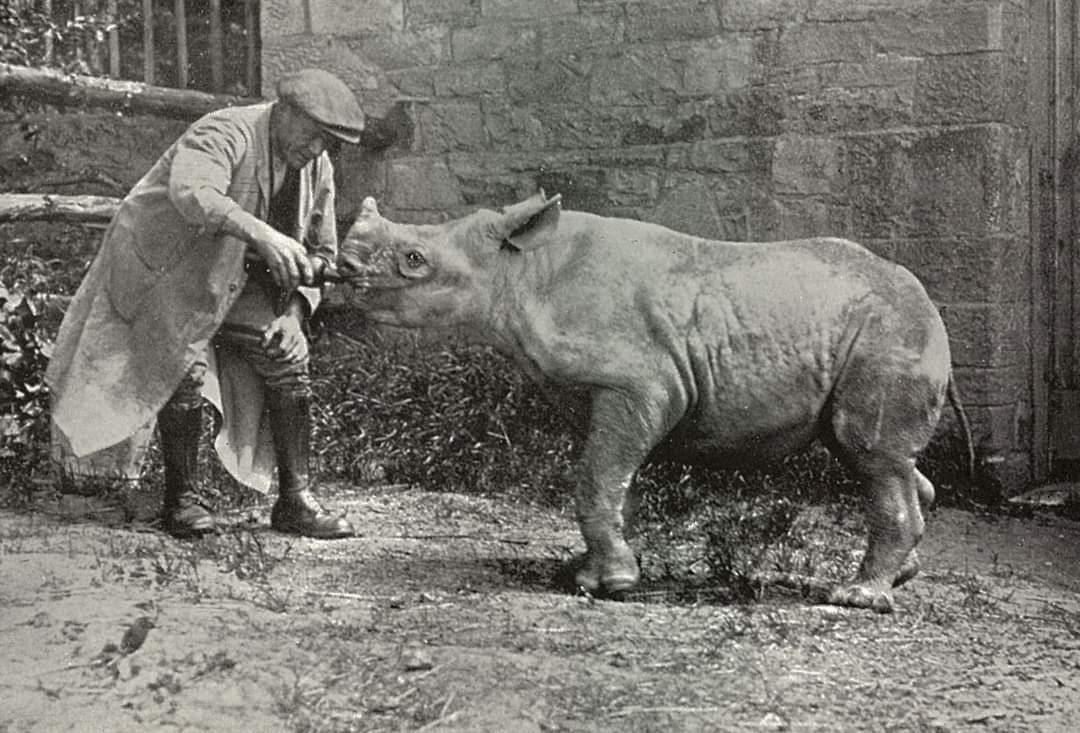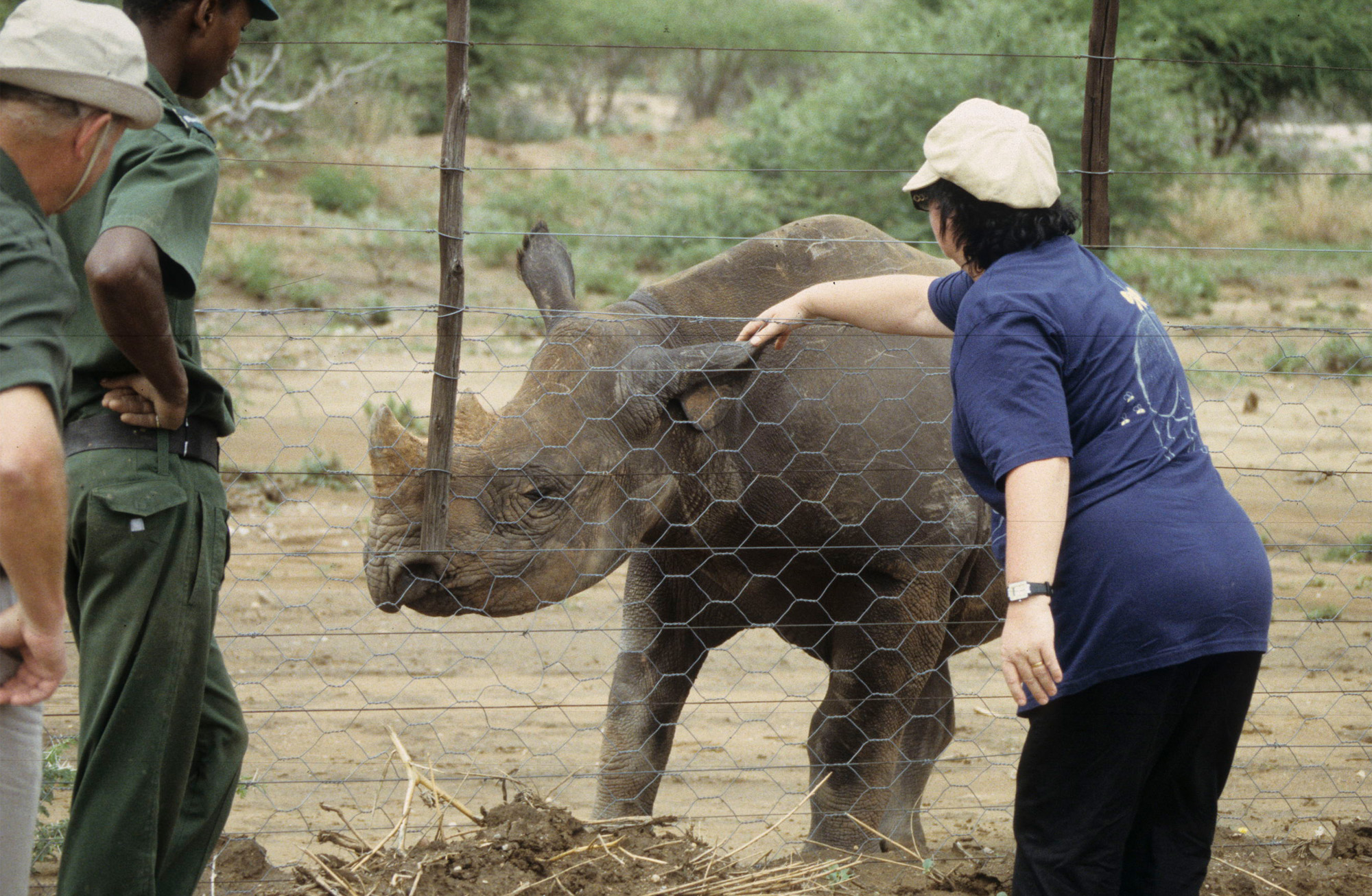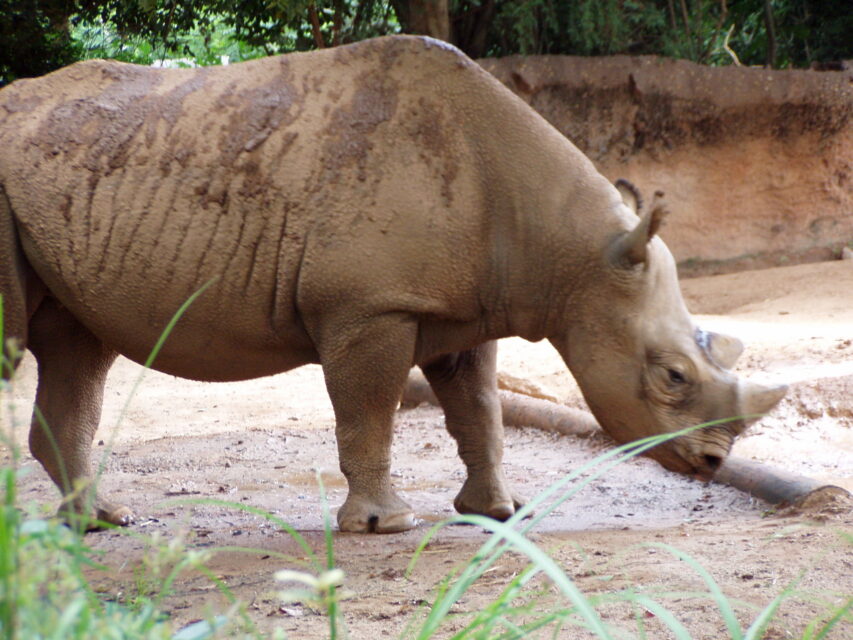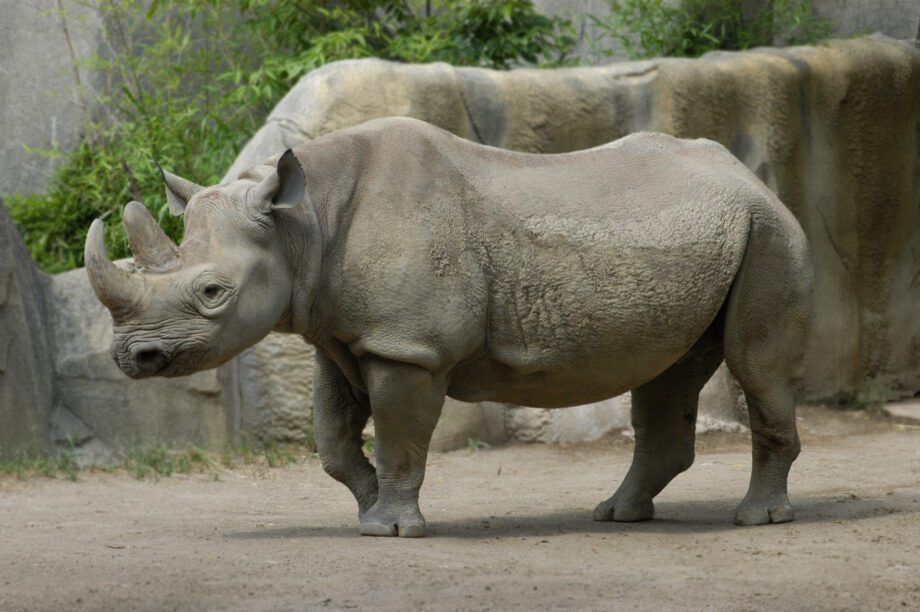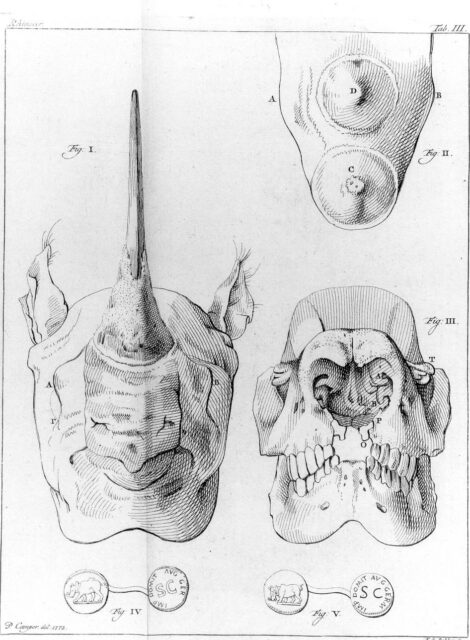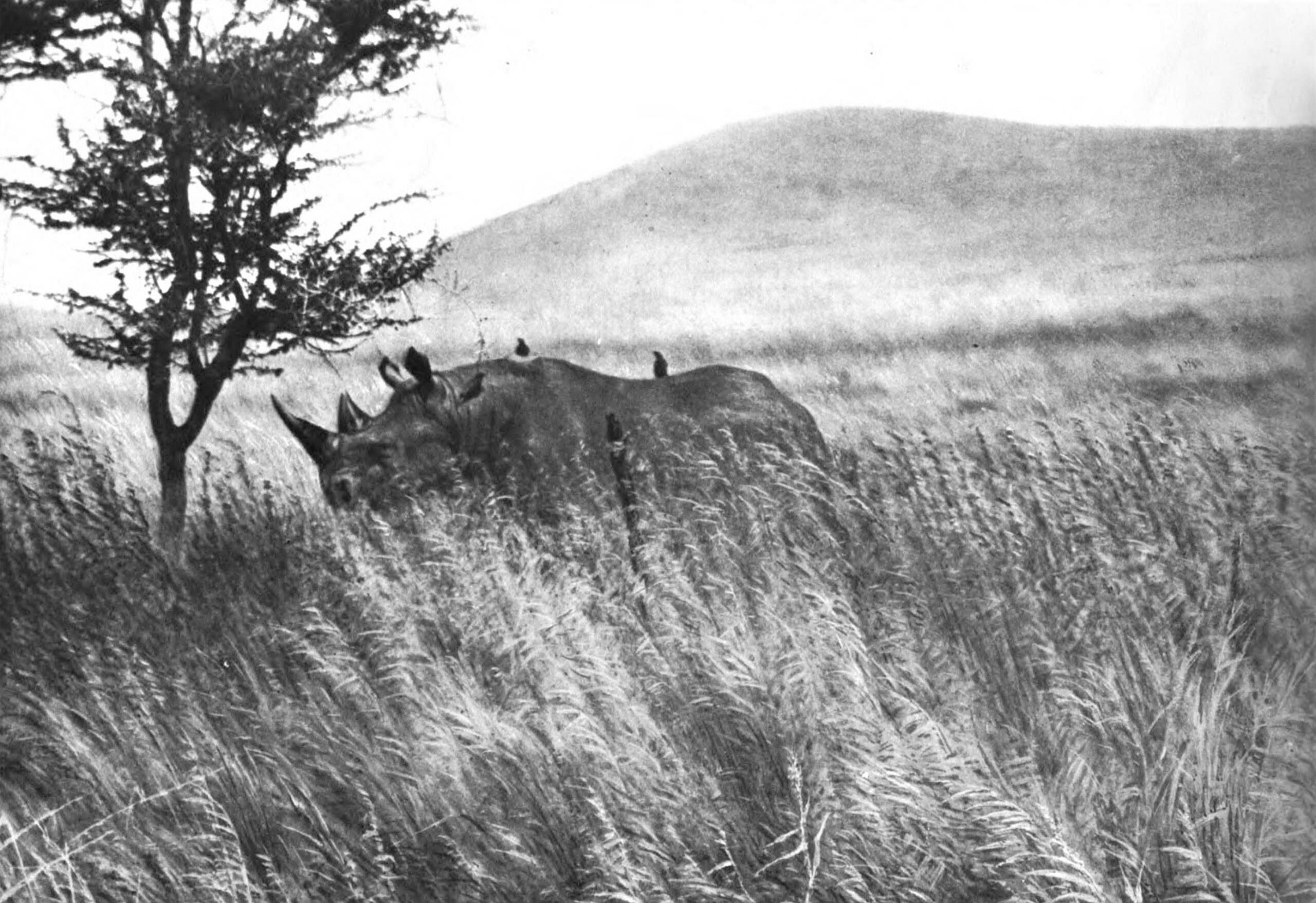


Black rhinoceros is a medium-sized species, found across Africa, with two horns. It is a browser, living in a habitat with herb and woody browse plants.
Status
Critically Endangered in the IUCN’s Red List
CITES listing: Appendix I (04/02/1977)
Scientific Name
Diceros bicornis (Linnaeus, 1758). Derivation of genus name Diceros: Latin bis (two) and Greek κέρας keras (horn). Derivation of specific name bicornis: Greek bis (two) and Latin cornu (horn). The name was included in the 10th edition (1758) of the Systema Naturae by Carl Linnaeus (1707-1778).
Other names proposed
Rhinoceros africanus Blumenbach, 1797; Rhinoceros cucullatus Wagner, 1835; Rhinoceros keitloa A.Smith, 1836; Rhinoceros ketloa A.Smith, 1837; Rhinoceros brucii Lesson, 1842; Rhinoceros gordoni Lesson, 1842; Rhinoceros camperi Schinz, 1845; Rhinoceros niger Schinz, 1845; Rhinoceros borili Blyth, 1870 [new synonym]; Rhinoceros bicornis capensis Gray, 1868; Rhinoceros bicornis major Drummond, 1876; Rhinoceros bicornis minor Drummond, 1876; Atelodus bicornis var. plesioceros Brandt, 1878; Atelodus bicornis var. porrhoceros Brandt, 1878; Atelodus bicornis var. platyceros Brandt, 1878; Rhinoceros bicornis holmwoodi Sclater, 1893; Rhinoceros bicornis somaliensis Potocki, 1897; Diceros bicornis occidentalis Zukowsky, 1922; Diceros bicornis palustris Benzon, 1947; Diceros bicornis punyana Potter, 1947; Diceros bicornis angolensis Zukowsky, 1965; Diceros bicornis atbarensis Zukowsky, 1965; Diceros bicornis chobiensis Zukowsky, 1965; Diceros bicornis ladoensis Zukowsky, 1965; Diceros bicornis longipes Zukowsky, 1965; Diceros bicornis michaeli Zukowsky, 1965; Diceros bicornis nyasae Zukowsky, 1965 (unavailable); Diceros bicornis rendilis Zukowsky, 1965; Diceros bicornis rowumae Zukowsky (unavailable); Rhinoceros kulumane Player, 1972
Subspecies
Taxonomy and classification of the Black rhinoceros is very complex. Differences between populations are clinal with many intergrades, which are not easily spotted in the wild. Material of extinct populations in museums is limited. There may be wisdom to discard subspecific differences for conservation purposes.
Classification according to taxonomic and genetic research
- Diceros bicornis bicornis – South Africa, Zimbabwe, Botswana, Mozambique
- Diceros bicornis occidentalis – Namibia, Angola
- Diceros bicornis rowumae – Tanzania, Malawi, Mozambique
- Diceros bicornis michaeli –Kenya, Northern Tanzania, DRC, Rwanda, Burundi
- Diceros bicornis holmwoodi – Kenya, Tanzania
- Diceros bicornis rendilis – Kenya
- Diceros bicornis ladoensis –Uganda, Western Kenya, Southern Sudan, DRC
- Diceros bicornis brucii – Somalia, Ethiopia, Eritrea, Eastern Sudan (extinct)
- Diceros bicornis longipes – Sudan, South Sudan, CAR, Chad, Cameroon, Nigeria, Togo, Niger, Burkina Faso, Ivory Coast (extinct). Note absence west of Ivory Coast, i.e. black rhino never found in Benin, Ghana, Mali, Liberia, Sierra Leone, Guinea, Guinea-Bissau, Gambia, Senegal.
Classification used by African Rhino Specialist Group (for practical reasons only)
- Diceros bicornis minor, South-central black rhinoceros.
- Diceros bicornis bicornis, South-western black rhinoceros.
- Diceros bicornis michaeli, East African black rhinoceros.
- Diceros bicornis longipes, West African black rhinoceros.
If the historical range of the South-central black rhinoceros (“Diceros bicornis minor”) included South Africa’s North West province, then the name must be changed to Diceros bicornis keitloa (A.Smith, 1836) because the type-locality (vicinity of Zeerust) lies within that proposed range.
Common Names
Black rhinoceros, Hook-lipped rhinoceros, Prehensile-lipped rhinoceros, Browse rhinoceros
Measurements
Length, head and body: 2.9 – 3.9 m
Height at shoulders: 132-173 cm, but D.b.bicornis from Cape larger 202-224 cm.
Tail length: 6-7 cm
Girth: no data
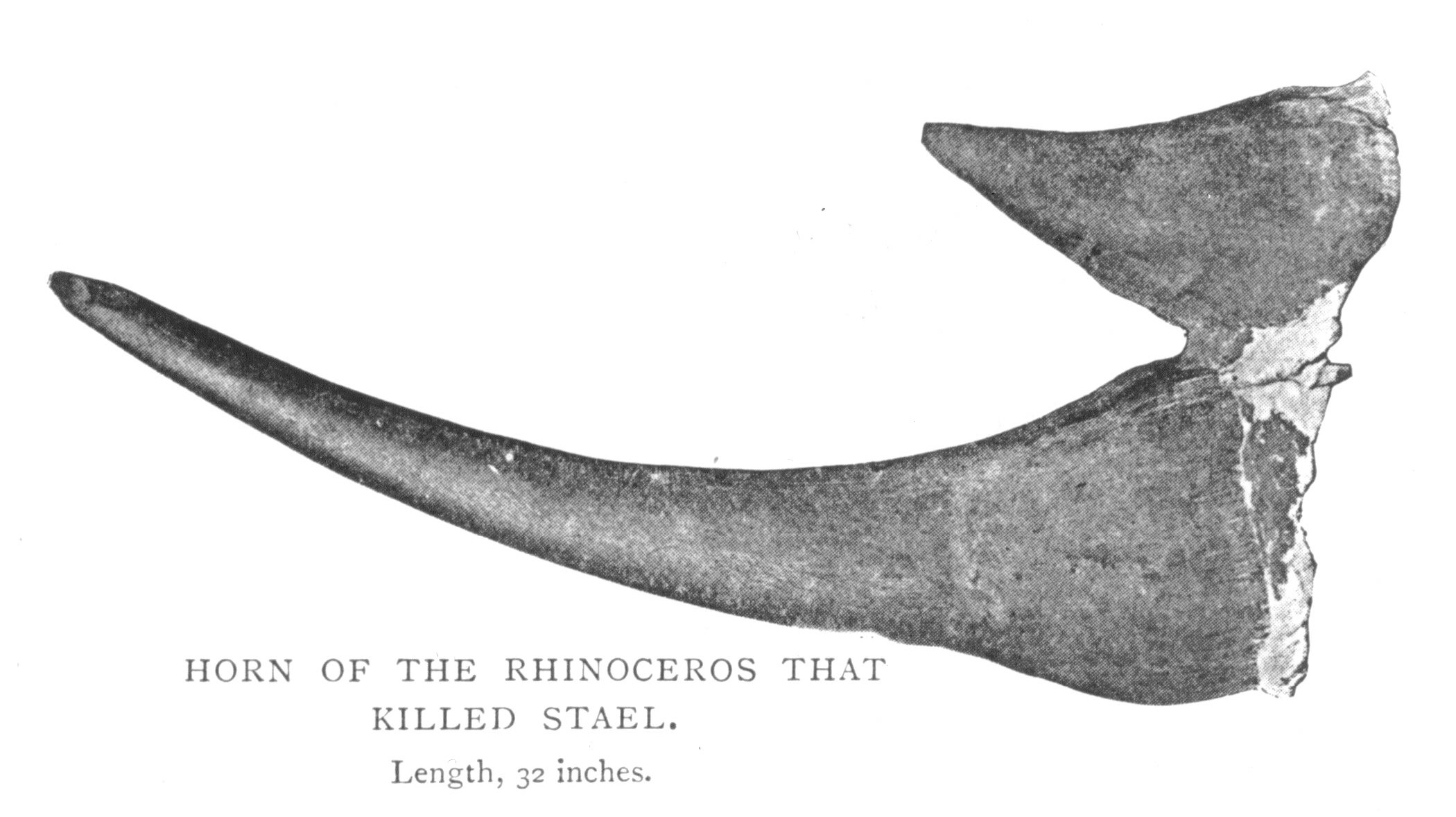
Horn length, anterior: average 42 cm. maximum record is 135.9 cm (Kenya).
Horn length, posterior: generally shorter than anterior
Weight: 800 to 1400 kg, females average less than males
Lifespan: 45 years. Record in captivity is 44 years 9 months.
Chromosomes: 2n=84
Black Rhino Reproduction
Rhinos give birth to 1 calf.
Gestation period: average 457 days (16 months). range 438-493 days.
Birth intervals per calf: 1 to 3 years. Shortest interval in captivity 483 days (16 months).
Female sexual maturity: at 5 to 7 years in wild. Youngest mother in captivity 6 years 6 months.
Male sexual maturity: at 7-8 years. in captivity youngest male was 5 years 8 months
Newborn weaned: at 18 months
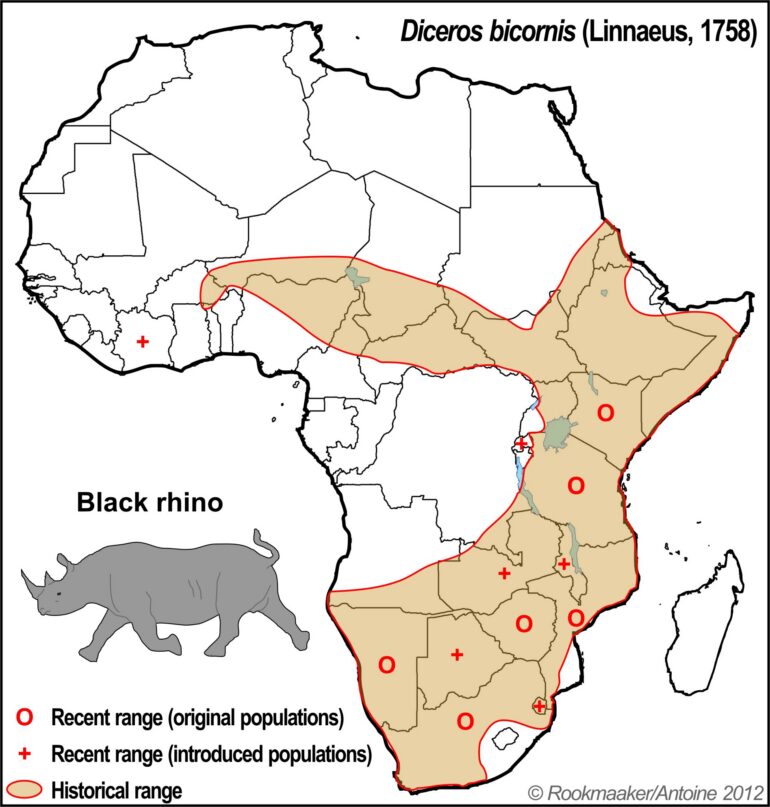
Distribution – Black rhinoceros
Historical Natural Range (starting 1700):
Southern Africa: South Africa, Namibia, Angola, Mozambique, Botswana, Malawi, Zambia, Zimbabwe
There are no records for Eswatini (Swaziland); Lesotho
Eastern Africa: Tanzania, Burundi, Rwanda, Congo, Kenya, Uganda, Sudan, South Sudan, Somalia, Ethiopia, Djibouti, Eritrea
West Africa: CAR, Chad, Cameroon, Nigeria, Togo, Niger, Burkina Faso, Ivory Coast.
Current distribution
As historical range. Likely to be extinct in Burundi, Somalia, Ethiopia, Djibouti, Eritrea, CAR, Chad, Cameroon, Nigeria, Togo, Niger, Burkina Faso, Ivory Coast. Main strongholds in Kenya and South Africa.
Captivity
Numbers: up to 1994 there were 483 black rhino imported from the wild, 292 born in captivity, total 775 animals.
Studbook: long kept by Berlin Zoo (and published regularly up to 2011). Then diversified with regional studbook keepers in Europe and USA.
First birth: 7 October 1941 in Chicago Brookfield Park