

In Malaya in the past there have been confirmed records from Province Wellesley, Perak, Pahang and Selangor; the last known specimens were shot at Ujong Permatang, Selangor, in 1928.
Badak berendam
Large rhinoceros tracks, possibly of this species, were reported from eastern Johore in 1949.
This rhino is better distinguished from the javan rhinoceros by the presence of only two deep and permanent folds of skin crossing the spine, one in the region of the shoulders, and the second over the hind quarters. Its skin is regularly granular. It is hairier than other rhinoceroses, especially when young
Badak raya
Rhinoceros sondaicus . the last known specimens were shot at Ujong Permatang, Selangor, in 1928.
Formerly abundant in lowland forests, e.g. the Dindings.
enumerates Rhinoceros sondaicus and Dicerorhinus sumatrensis subsp. niger.
It is hairier than other rhinoceroses, especially when young.
The natural diet consists of leaves and shoots of a wide variety of trees and shrubs, many characteristic of fringing forest or secondary growth. Small trees are pushed over and broken up by trampling before the foliage is eaten. The captive female at Copenhagen Zoo is fed on lucerne hay, supplemented by 10 kg daily of mixed raw potatoes, carrots and apples, and small amounts of rolled oats.
Malaysia. The footprints of mature adults exceed 22 cm in average diameter.
the last known specimens were shot at Ujong Permatang, Selangor, in 1928, and Telok Anson, Perak, in 1932 .
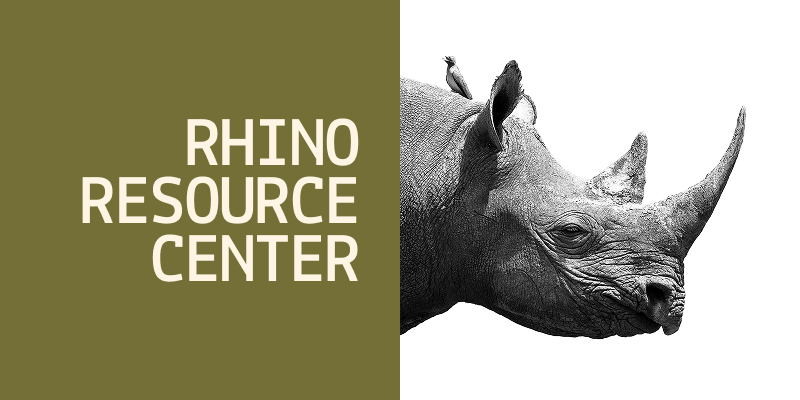
The presence of two horns on the muzzle is diagnostic, but may not be obvious, especially in the wild.
No. young: one
The natural diet consists of leaves and shoots of a wide variety of trees and shrubs, many characteristic of fringing forest or secondary growth. Small trees are pushed over and broken up by trampling before the foliage is eaten. The captive female at Copenhagen Zoo is fed on lucerne hay, supplemented by 10 kg daily of mixed raw potatoes, carrots and apples, and small amounts of rolled oats.
The longevity record in captivity is held by a male which was taken at about eighteen months of age and survived a further 21 years.
Longest recorded life span, a female which lived in captivity for 32 years 7 months.
Formerly abundant in lowland forests, e.g. the Dindings. Recent records are from all types of forest, including high mountains.
The skin bears a mosaic-like pattern of roughened thickenings, and is heavily folded. Distinguished from Sumatran rhinoceros by larger size, the single horn, and by the presence of three continuous folds of skin running over the back, one in front of and one behind the shoulder, and one over the rump.
Reported to range from shrill whistles and peculiar humming sounds emitted when at peace and enjoying a wallow, to whistling screams and harsh grunts when wounded.
The presence of two horns on the muzzle is diagnostic, but may not be obvious, especially in the wild.
The skin bears a mosaic-like pattern of roughened thickenings, and is heavily folded. Distinguished from Sumatran rhinoceros by larger size, the single horn, and by the presence of three continuous folds of skin running over the back, one in front of and one behind the shoulder, and one over the rump.
This rhino is better distinguished from the javan rhinoceros by the presence of only two deep and permanent folds of skin crossing the spine, one in the region of the shoulders, and the second over the hind quarters. Its skin is regularly granular. It is hairier than other rhinoceroses, especially when young
It is hairier than other rhinoceroses, especially when young.
Solitary, or single adults with young.
Frequent regular wallows, and visit salt licks and mineral springs.
Length of Body 2.5-2.8 m, head and body
The dung is similar to that of the tapir, but the nodules are larger, about 9 cm in greatest diameter.
One young is born.
Distinguished from Sumatran rhinoceros by larger size, the single horn, and by the presence of three continuous folds of skin running over the back, one in front of and one behind the shoulder, and one over the rump.
Footprints of adults range from 17-22 cm in diameter.
Height at shoulder 1.4 - 1.7 m
Gestation period about 17 months.
Height at shoulder 1.0 - 1.3 m
Weight 900 kg

