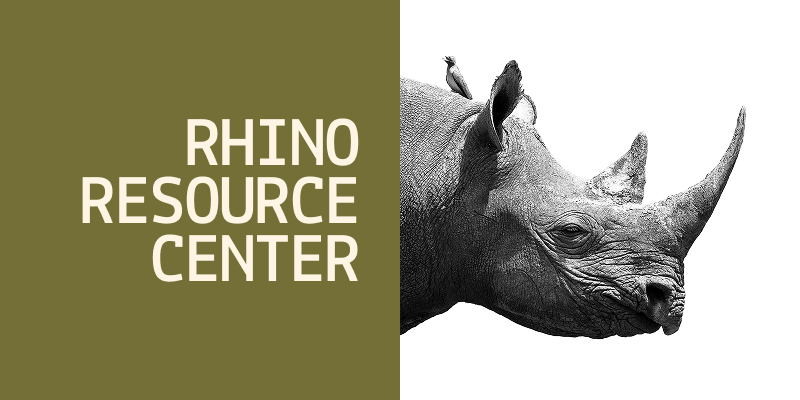


The horns of the rhinoceros, as its name specifies, grow on its nose : they contain no bony core, yet that portion of the nasal bone which underlies the horns of these huge and ugly beasts has a bony projection, but it does not enter into the composition of the horn, for this part of the rhinoceros is formed from the superficial (epithelial) layer of the skin which undergoes a change termed by physiologists, keratinisation, which means that the part becomes converted into horn. As a matter of fact the horns on the nose of a rhinoceros are from in anatomical point of view a mass of agglutinated hairs.
In the south-west of Kordofan the natives have a tradition that anyone who drinks out of a cup made from a rhinoceros horn never gets sick.
Rhinoceros horn is used for making handles for walking sticks and umbrellas, it is easily cut with a knife and if a fragment be soaked in weak caustic alkali solution it will soften and flake in the same way that our finger nails and patches of hard skin soften under the influences of soap and water. The long front horn of the rhinoceros is sometimes fashioned into sticks to beat cattle and goats, and occasionally it is made into clubs for Masai orators and councillors. In the south-west of Kordofan the natives have a tradition that anyone who drinks out of a cup made from a rhinoceros horn never gets sick. In some parts of the East such cups are supposed to neutralise poisons poured into them.
Sir John Willoughby shot a rhinoceros in East Africa (1889) with three horns in a row, one behind the other. The skin with the horns on it was shown at a meeting of the Zoological Society, London.
The long front horn of the rhinoceros is sometimes fashioned into sticks to beat cattle and goats, and occasionally it is made into clubs for Masai orators and councillors.
Of the two horns the front one, that nearest the animal's snout is usually the longer, it rarely exceeds a foot in length, but some examples have measured as much as forty inches.

