

Records from the Baram District showed that eighty Rhino horns were sold there in six years. I have talked to the Kenyah hunters who shot and sold these trophies : they laughed at the idea of getting such things in Sarawak then, they shot them over the border in Dutch Borneo - where no guns were allowed - and brought the horns back for sale in Sarawak. Rhinos still occasionally wandered over this side but the once resident Sarawak stock had been killed off by 1925. The sale of so many trophies convinced some authorities that Rhinos were still plentiful and they refused to put a stop to Rhino hunting - in fact there was a back-lash and sometimes they encouraged it.
The Two-Horned Sumatran Rhinoceros was formerly found all over Sarawak, there are early records even from the Bau District close to Kuching.
Places to wallow in the mud were always necessary. I saw a good one in the Ular Bulu mountains on the water-shed between the Rejang river and the Mukah river.
Badak
Rear horn may reach 5 inches but is usually just a knob.
Coming back from the top of Mulu, I found a Rhino had crossed our upward track it had made a prodigious leap and disappeared down a very awkward gully. The general opinion was it would not stop running all day. Rhinos may look clumsy and awkward but they are very strong and agile. The steepest hills are nothing to them, up or down, rocks are no obstacles and they are quite tireless, running away for days without stopping when alarmed.
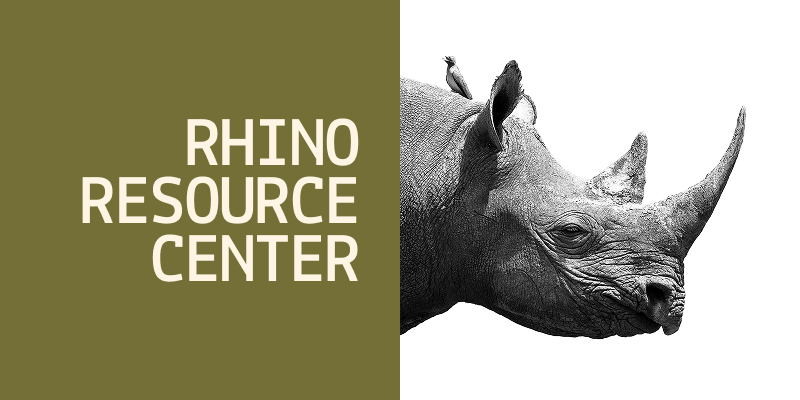
Borneo. I have never seen a live Rhino. I believe they look like a very large Pig, black and hairy when young, grey and more or less hairless when adult.
The sight is said to be poor, the hearing fair.
Borneo. The Rhino browsed on leaves and I have seen a small tree that had been uprooted by the Rhino walking up the trunk until its weight pushed over the whole thing and the animal could get at the leaves.
Borneo. You may laugh, but the Kenyah hunters vowed the young ones avoided the falling trees by taking refuge inside the mother's body and riding in safety with the head sticking out behind - and they made me a very nice wooden model too.
Borneo. I have never seen a live Rhino. I believe they look like a very large Pig, black and hairy when young, grey and more or less hairless when adult.
There they travelled about at their leisure, wandering this way and that, following no particular route, bulldozing through obstructions by lifting them up with the front horn. The two horns seem to be no more than a sort of fork lift used to raise up obstructions in its path.
Male 8-9 feet long, female slightly smaller.
Longest front horn 19 inches, but 10 inch is about average.
Schimaru
I once went Rhinoceros hunting. After a day and a half by outboard motor from Trusan town we left the river and marched inland. The first hill was Bukit Tamunan, a monument to liars. In the old days anyone who told a whopper had a pile of stones erected in his 'honour' and passers by added to it - this one was 3000 feet high. We came to a village long house and arrived next night at the home of our Rhino hunting guide. He was no tea-totaller and next morning he said his real home was another days walk further on. That was no tea-total house either and the following morning the gloom was great, there were no Rhinos, I had one eye bunged up and two flat feet. From there we set off into unexplored territory, myself and twelve Muruts. Their carrying powers only let them take enough rice for twelve days and when we finished that, there would be no more. The second day out we ran into a party of Muruts working gum resin, ruining their futures by cutting down the gum trees. I heard the Old Man telling them to hide their unlicensed guns - muzzle loaders some of them - and laughed heartily at this, being far too fond of shooting myself to stop anyone else doing so. It did not dawn on me that my followers shared dinner and breakfast with these damn gum-gatherers. A week later I knew all about it. The next day we climbed to over 4000 feet, passing an old Rhino wallow and a pushed over tree where one had fed. The jungle became so thick we could see no more than five yards in thick cloud and dismal rain. Eventually we had to come down off the top for better conditions. The Old Man had now shaved his head and started to wear a hair net. Next day was even worse, the jungle was just a mass of thorny rotans, the trail cutter was done up in half an hour and had to be replaced - I had never seen anything like it before. The Rhinos did not mind and there were several wallows about. Another day of this sort of thing and we were lost, hill streams and deep gullies got in the way, coughs and fevers began to appear and the whisky to disappear. And then at midday we came out on a scrub covered ridge 5000 feet high with stunted trees, huge pitcher plants and many ground orchids in bloom. They even got me up a tree to look at Labuan Island. All round was a flattish, sandy plain with lots of open spaces through which ran the Maga River. The guide went off on some do of his own and did not come back that night. It seemed odd to me but 1 was too glad to see him again next morning to ask any silly questions. 1 spent the day wandering about this Paya Maga, climbing trees to see the surrounding country and looking for a Rhino but the fact is I found no trace of this or any other game - the place was deserted. When 1 got back to camp I found the carriers were full of something besides a lot of cat-fish, the 1,ast thing one would expect to find up here. Then they told me they had only one day's rice lef t - those damn gum-gatherers had eaten the rest. We were now in a proper mess, five days walk back and one days food. The only thing to do was to go down the other side of the mountain. Next morning we left behind all the pots and pans and the collecting gear and took off with our last belly-full. An hour later the boys bolted back to the camp and started sharing out the things among themselves. I am not a he-man but I must have given a good imitation of a bailiff turning out the non-paying tenants and we were soon on our way again. At first we crossed a wide, flat plain, another Bah country, then up the hills and a long descent away from the moss and the thorns, very cold and wet, then up again higher still until we camped foodless for the night. By now some were giving up and could go no further. To my surprise the three Malays were going strong, enjoyed telling off the Muruts : in fact they took over from them. Only the guide was any good now. He was a startling old character named Tai Langub and seemed likely to he the last survivor. The District Officer had said they were nearly all tea-totallers except him and had laughed at my bottles of whiskey. They saved us now. We filled up the Muruts with the stuff - the Malays would have no truck with it - and set off next day, wet and cold and foodless. Sometimes I went on ahead and fired off the gun, when they came running hoping to find a pig. Once I walked into a wasp's nest which so quickened my own progress that I left it for the others to find for themselves, a cause of much indignation. In the evening we came to a hunter's path and quarrelled which way it went. Fortunately we did not follow 'heel' next day, reached a village, shot a deer and filled up on rice wine - all honour to the Muruts for sticking it out.
Borneo. The Rhino browsed on leaves and I have seen a small tree that had been uprooted by the Rhino walking up the trunk until its weight pushed over the whole thing and the animal could get at the leaves.
The large, odd shaped head is mostly full of nasal bones which give the Rhino a particularly well developed sense of smell.
The sight is said to be poor, the hearing fair.
There they traveled about at their leisure, wandering this way and that, following no particular route, bulldozing through obstructions by lifting them up with the front horn.
The Rhino when feeding squeals to itself with pleasure and can be heard some way off. When wallowing it snorts and blows and also makes a plaintive sound rather like the swishing noise made by the wings of a Hornbill in flight. When suspicious it gives a loud snort, breathes heavily through the nose and finally when really alarmed lets out a loud squeal.
The skin is said to be more than half an inch thick but the epidermis is very thin and I believe dries very quickly. There is a deep fold in the skin behind the shoulder and another not so deep, just in front of the hind quarters.
Borneo. Rhino tracks often show the toes of the fore-feet dug well into the ground, the toes of the hind feet imprinted on them to produce a ridge and furrow pattern characteristic of the Rhinoceros.
Borneo. I have never seen a live Rhino. I believe they look like a very large Pig, black and hairy when young, grey and more or less hairless when adult.
Borneo. I have never seen a live Rhino. I believe they look like a very large Pig, black and hairy when young, grey and more or less hairless when adult.
In my time the few that were left lived far away in the hills and mountains, as high up as 7000 feet in the moss and rotan forest.
Male height 4-5 feet, female slightly smaller
The skin is said to be more than half an inch thick but the epidermis is very thin and I believe dries very quickly. There is a deep fold in the skin behind the shoulder and another not so deep, just in front of the hind quarters.
Borneo. Rhino tracks often show the toes of the fore-feet dug well into the ground, the toes of the hind feet imprinted on them to produce a ridge and furrow pattern characteristic of the Rhinoceros.
Places to wallow in the mud were always necessary. I saw a good one in the Ular Bulu mountains on the water-shed between the Rejang river and the Mukah river. Afterwards it had rubbed against a smooth rock, probably used on many previous occasions.
There seemed to be no feeding and sleeping times, it was on the go all day.
Defecation takes place in water as well as on land, the droppings round like tennis balls but I have never seen or heard of the pyramids of cannon balls piled in one place.
The male organ points backwards between the hind legs, urine is said to be sprayed along the back track for as much as half an hours walk, sometimes six feet off the ground and twenty feet away.
Places to wallow in the mud were always necessary. I saw a good one in the Ular Bulu mountains on the water-shed between the Rejang river and the Mukah river. The crest of the ridge went up and down and in one of the downs a Rhino had made a muddy pond about ten feet by five feet and three feet deep. I believe it lay down with the feet tucked underneath and mixed up the mud to its liking with the horn. Afterwards it had rubbed against a smooth rock, probably used on many previous occasions. The skin is said to be more than half an inch thick but the epidermis is very thin and I believe dries very quickly. Wallowing daily is vital and when the hill top sites dry out, the Rhino wanders off into the lowlands in search of other places and these are the stray animals met with in unlikely places and at odd times.
And so I once explained to a party of Big Game Hunters fresh from Africa, when they were visiting the Natural History Museum, that the Bornean Rhino was not at all brave, it ran away if there was the slightest smell of a man about, pushing the horn under the nearest fallen tree, tossing the whole lot over its back to form a road block which delayed its pursuers, giving the Rhino time to escape. The Big Game Hunters did not believe it - had 1 ever seen it happen? I had not, for the Bornean Rhino was now extinct, all the little ones running behind their mothers had been killed by the falling trees. I was 'carpeted' for this story - Did they really think I would make up such a thing? They did. You may laugh, but the Kenyah hunters vowed the young ones avoided the falling trees by taking refuge inside the mother's body and riding in safety with the head sticking out behind - and they made me a very nice wooden model too.
For a long time the animals were of no value at all, Kayans and Kenyahs carved the Rhino horns into knife handles and sword hilts, there are several specimens in the Sarawak Museum. From about 1918 onwards the horns became very profitable in the export trade to China for medicine and this made the Rhinoceros the most valuable of all animals: in less than ten years it was for practical purposes exterminated in Sarawak.
one young born, about 2 feet high.
Borneo. One young is born about two feet high and follows the dam very closely, its head between her hind legs and they are said to stay with the mother for as long as seven years.
One young is born about two feet high and follows the dam very closely, its head between her hind legs and they are said to stay with the mother for as long as seven years.
The lower incisor teeth are very sharp and point forward, it bites fiercely with these in defence though I have never heard of anyone getting hurt - even the Punan who crept up to a Rhino, seized its tail with one hand and speared it with the other.
