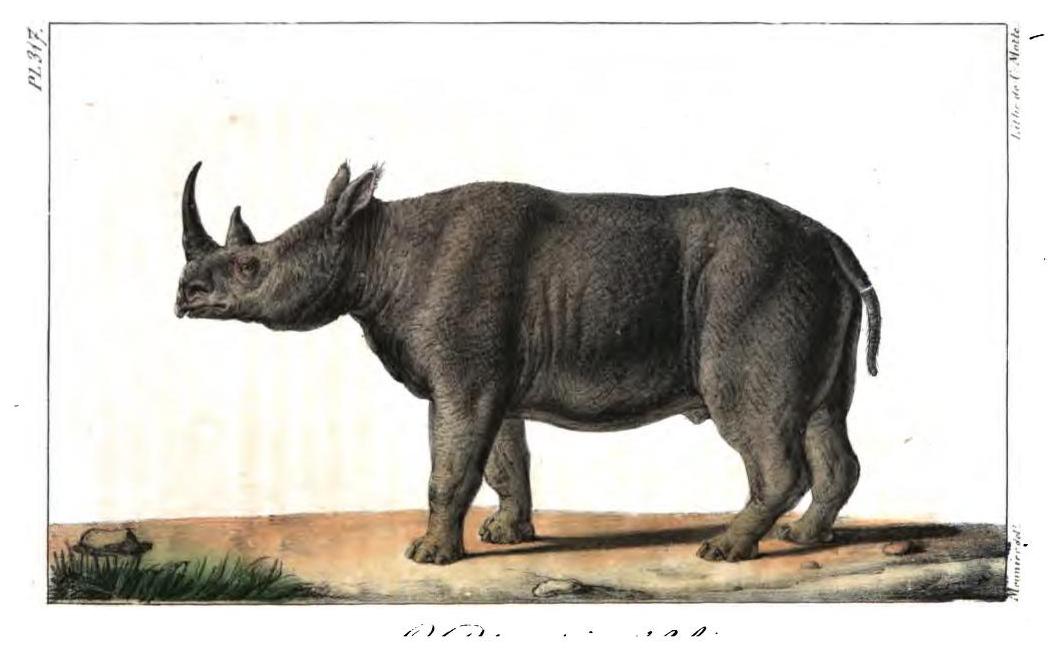


By creating paths, wallows, and dispersing seeds through their dung, rhinos shape entire ecosystems. A single white rhino can produce 20 kilograms of dung daily, fertilising the landscape and spreading plant seeds.
Rhinos are what ecologists call megaherbivores — plant-eaters that weigh up to 2300 kilograms — that reshape their environment simply by living in it. Their regular paths become wildlife highways used by countless other species. The wallows they create by rolling in mud become temporary water sources for smaller animals during dry seasons. But perhaps their most important role is as mobile seed dispensers.
A rhino’s digestive system is relatively inefficient, meaning seeds pass through intact and germinate readily in nutrient-rich dung. Studies show that some acacia trees germinate better after passing through a rhino than when planted directly.
White rhinos, as grazers, maintain short grass lawns that benefit other herbivores like gazelles and zebras. Black rhinos, as browsers, help control bush encroachment and maintain the balance between grassland and woodland. They maintain the diverse African grass and woodlands on which countless other species depend. Without rhinos, African savannahs would look dramatically different.