

Rhinoceros unicornis Linnaeus, 1758
Overview
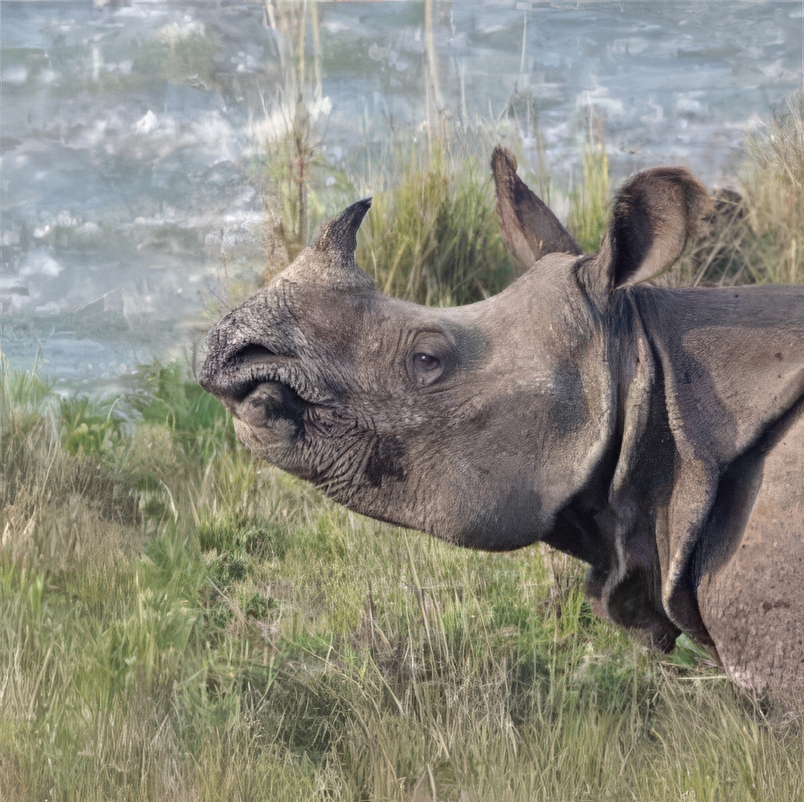
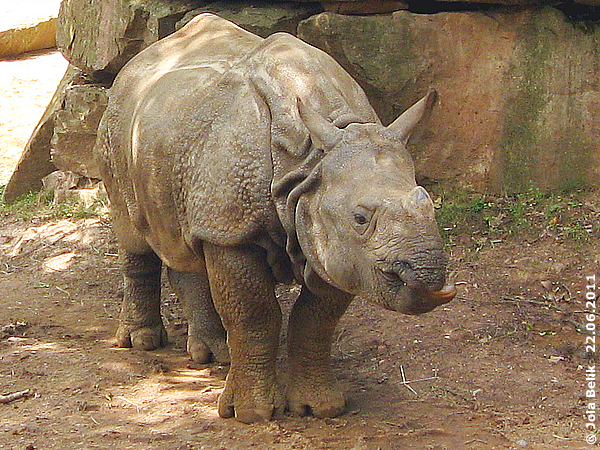
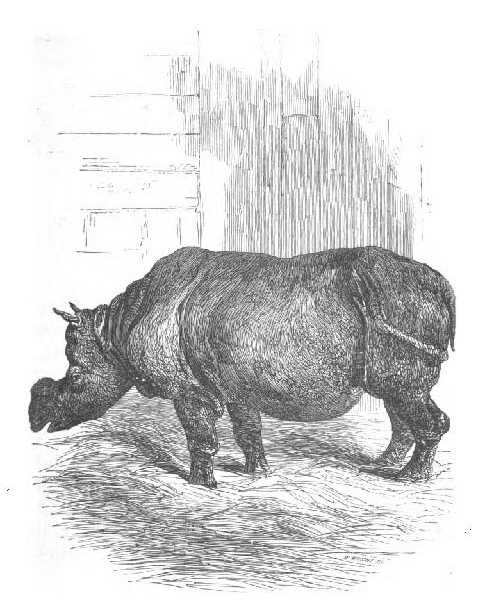
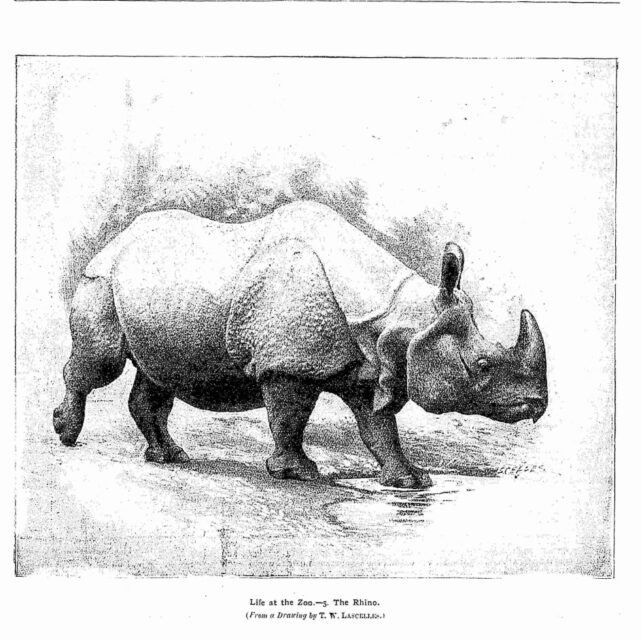
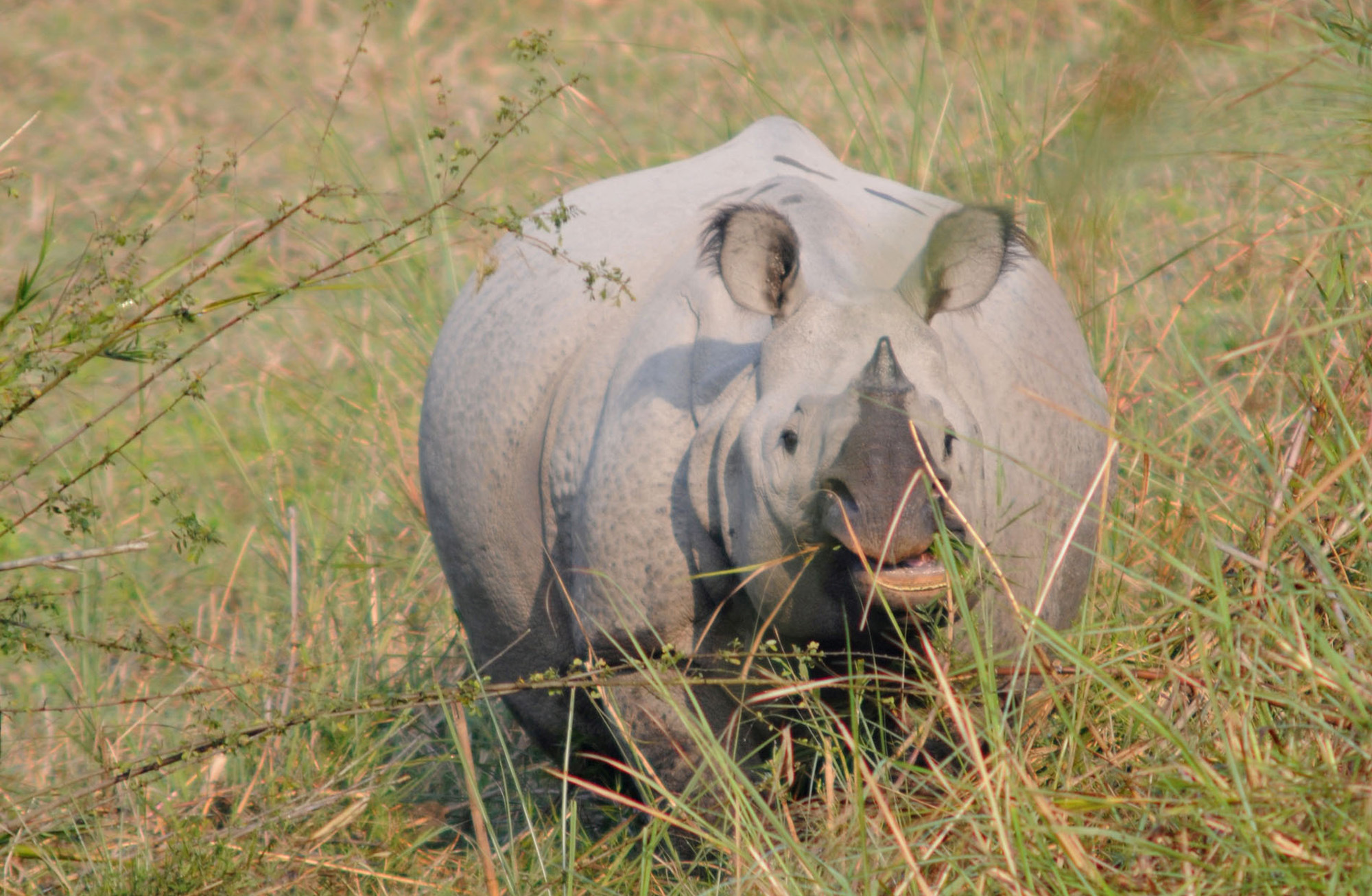
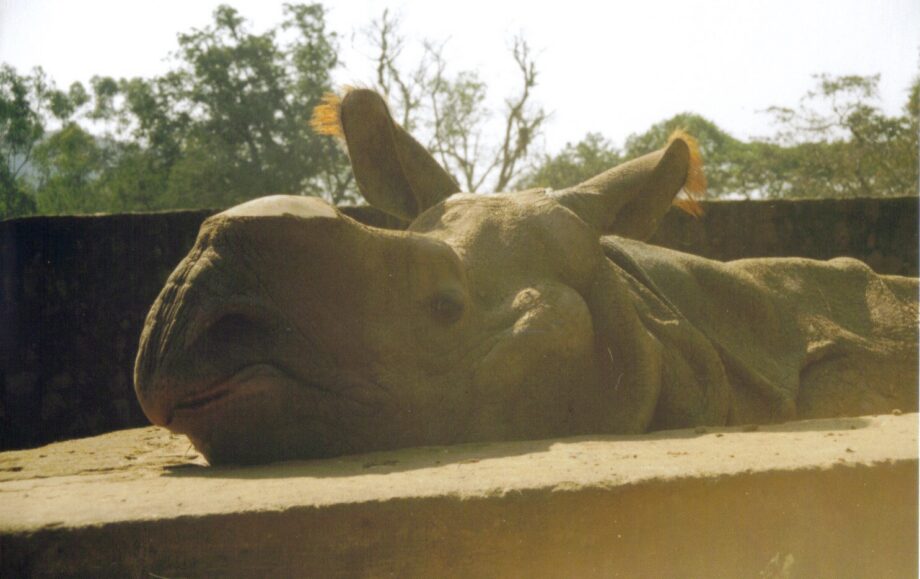
The Greater one-horned rhinoceros is the largest of three species of rhinoceros in Asia. It has conspicuous skin fold in the neck region, with a single horn, and dentition with incisors and lower canines.
Status
Vulnerable in the IUCN’s Red List
CITES listing: Appendix I
Scientific Name
The scientific name is Rhinoceros unicornis Linnaeus, 1758. Derivation of genus name Rhinoceros: Greek ῥινόκερως, from Greek ῥίς rhis (genitive ῥινός rhinos) (nose, nostril) and Greek κέρας keras (horn). Derivation of specific name unicornis: Latin unus (one) and Latin cornu (horn). The name was included in the 10th edition (1758) of the Systema Naturae by Carl Linnaeus (1707-1778).
Other names proposed for the species
Rhinoceros rugosus Blumenbach, 1779; Rhinoceros asiaticus Blumenbach, 1797; Rhinoceros indicus Cuvier, 1816; Rhinoceros stenocephalus J.E.Gray, 1868; Rhinoceros unicornis bengalensis Kourist, 1970 (not valid).
Subspecies
There are no subspecies of the Greater one-horned rhino.
Common Names
Greater one-horned rhinoceros; Indian Rhinoceros; Nepal rhinoceros.
Measurements – Greater One-horned Rhino
Length, head and body: 3 – 3,8 m. A length over 4m is exceptional.
Height at shoulders: 1,6 – 1.9 m
Girth: average 3.9 m.
Horn length: 0,20 – 0,60 m. Longest horn: 61.5 cm (India), 54 cm (Nepal)
Weight: 1,600 – 2,100 kg
Lifespan
40 years. Record in captivity is 40 years 4 months.
Chromosomes
Chromosomes: 2n= 82.
Indian Rhino Reproduction
Rhinos give birth to 1 calf.
Gestation period: average 478 days (16 months). range 462-489 days.
Birth intervals per calf: 1 to 3 years. Shortest interval in captivity 457 days (15 months).
Female sexual maturity: At 5 to 7 years in wild. Youngest mother in captivity 4 years 4 months.
Male sexual maturity: in captivity youngest males were 5 yrs 10 months and 7 years 11 months
Newborn weaned: at 18 months
Distribution – Greater one-horned rhinoceros
Historical Natural Range (starting 1500):
Afghanistan, Northern Pakistan, Himachal Pradesh, Uttarakhand, Gujarat, Rajasthan, Madhya Pradesh, Uttar Pradesh, Bihar, Jharkhand, Northern West Bengal, Meghalaya, Assam (to the upper reaches of the Brahmaputra River). Northern Bangladesh. Central Southern Nepal, South-East Nepal.
The Protohistorical distribution extends the historical range further south to larger parts of Gujarat and Madhya Pradesh (based largely on rock art), and to parts of southern Pakistan.
Current distribution of the Greater one-horned rhinoceros
Rhinoceros unicornis is now only found in India and Nepal, largely confined to protected areas. Bhutan has strays only. The species is now extinct (or never existed) in the territories of Afghanistan, Pakistan, Sri Lanka, Bangladesh, China, Myanmar.
The protected areas with populations of R. unicornis include: (INDIA – ASSAM) Kaziranga National Park; Laokhowa Wildlife Sanctuary – reintroduced; Pabitora Wildlife Sanctuary; Orang National Park ; Manas National Park – reintroduced. (INDIA – WEST BENGAL) Jaldapara National Park; Gorumara National Park. (INDIA – UTTAR PRADESH) Dudhwa National Park – reintroduced. (NEPAL) Chitwan National Park; Bardia National Park; Shuklaphanta National Park.
CAPTIVITY – Greater One-horned Rhino
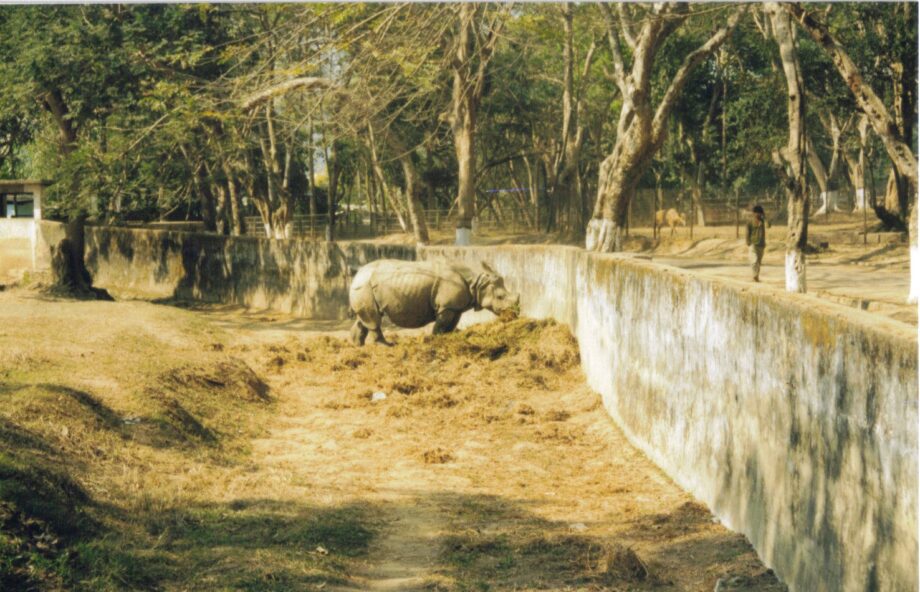
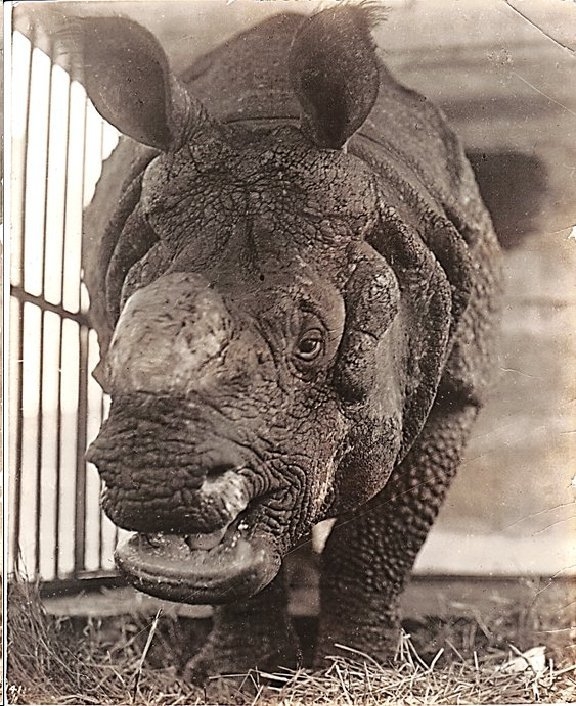
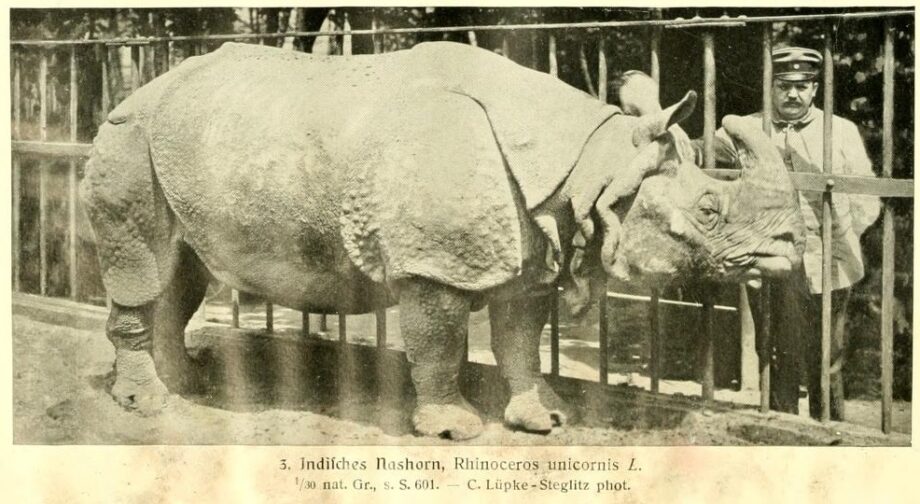
Rhinoceros unicornis is successfully kept across the world. From 1515 to 2009, there have been 757 animals (of which 400 were born in a zoo). The studbook for the species is kept by Basel Zoo.
First birth in captivity in 1824 (once) and from 1956 more frequently.
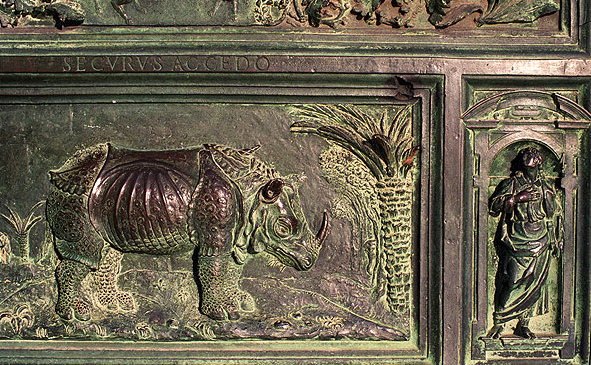
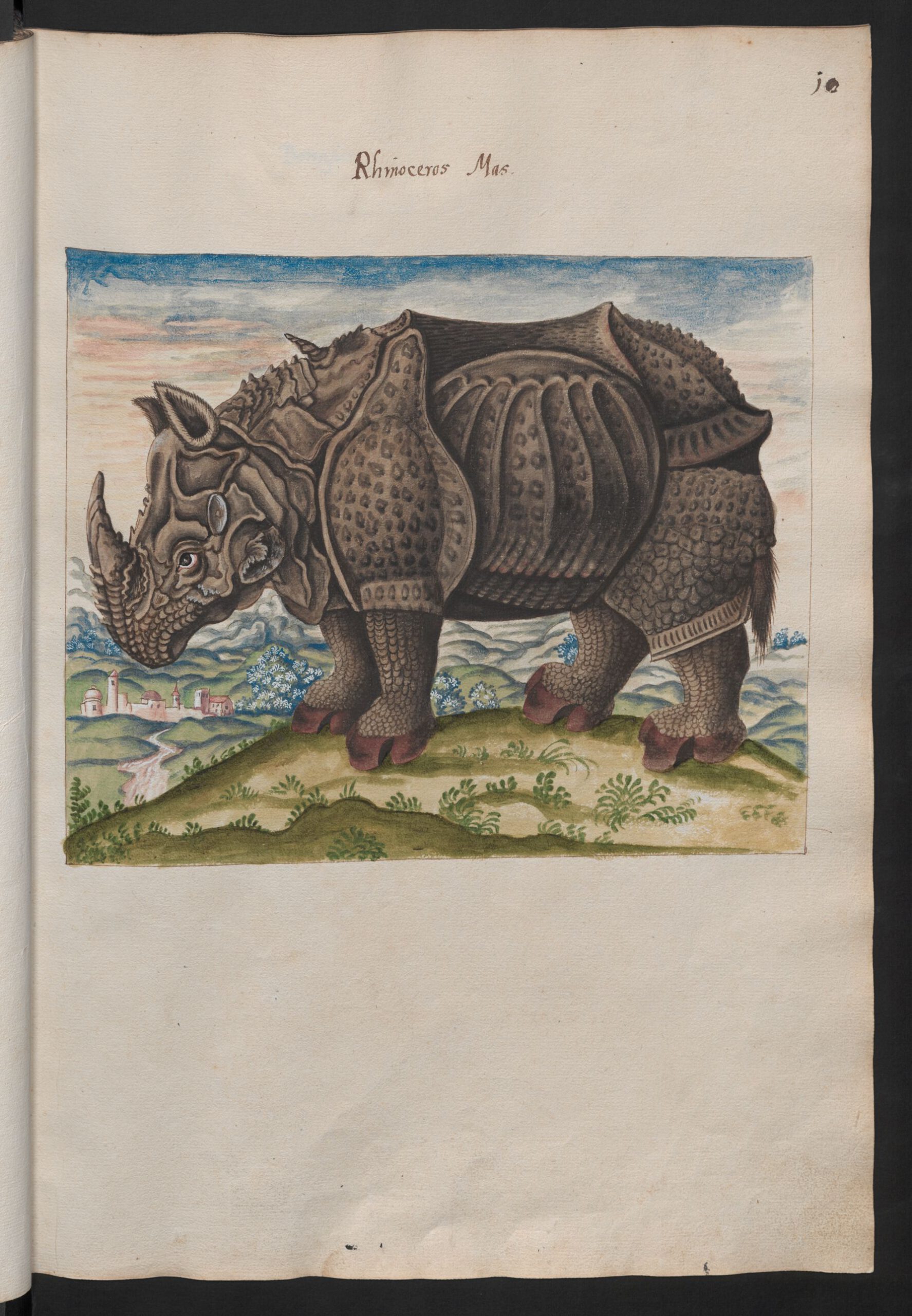
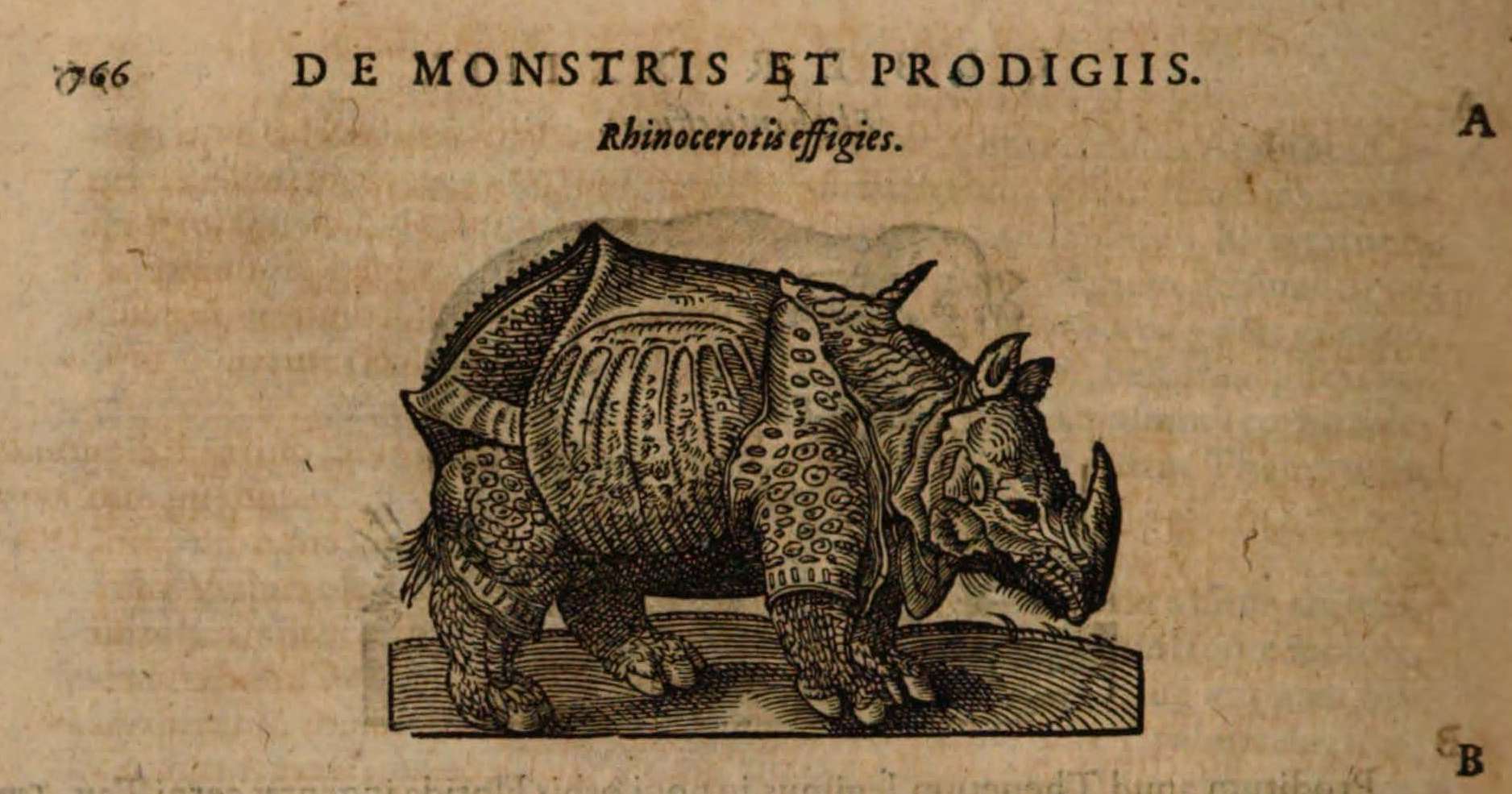
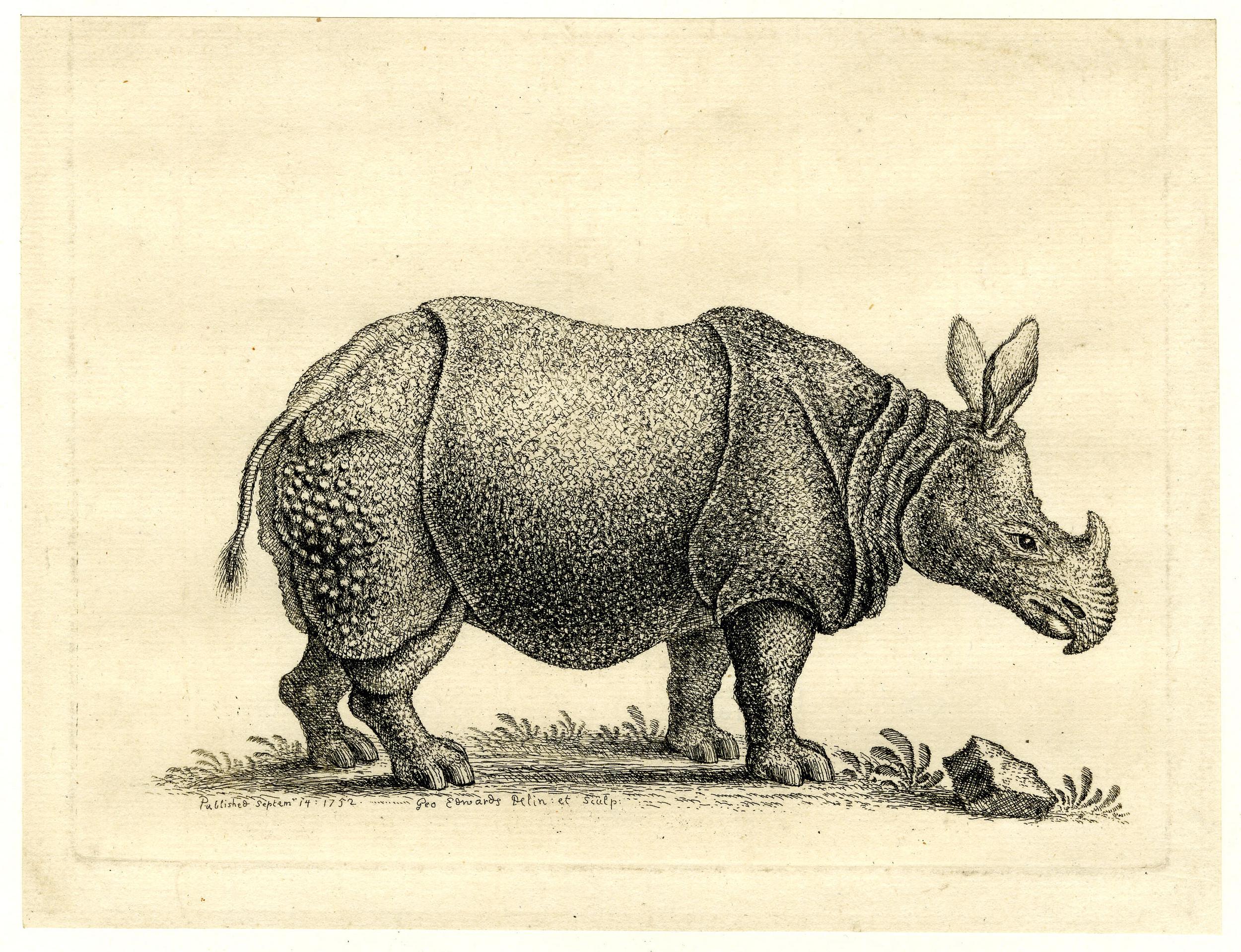
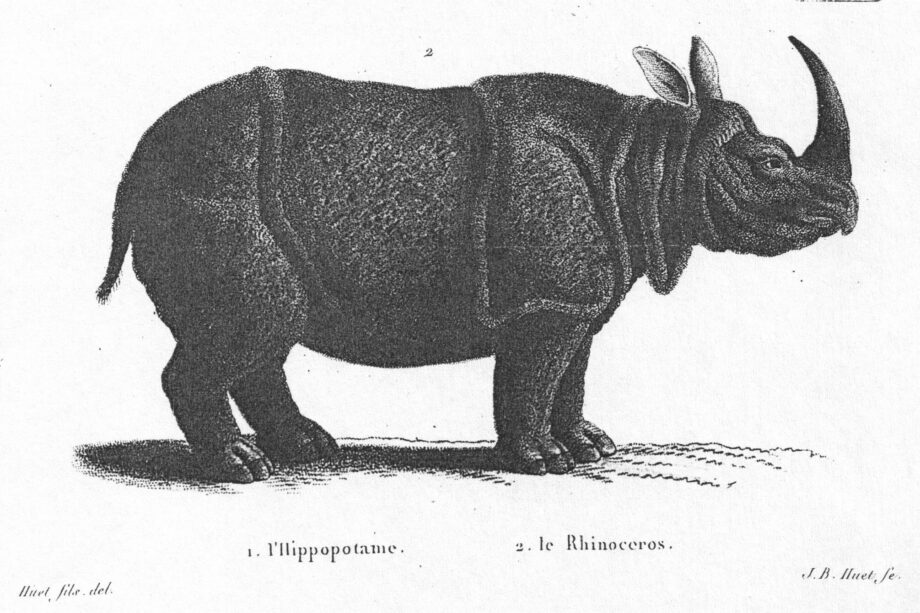
The few Greater one-horned rhinos which reached Europe from 1500 to 1799 have had an enormous impact on scientific enquiry as well as art and popular perception. Those best known arrived in 1515 (Lisbon’s ganda), 1576 (Iberian abada), 1684 (London), 1739 (London), 1741 (Dutch Rhinoceros Clara), 1770 (Versailles) and 1790 (London Exeter ‘Change).
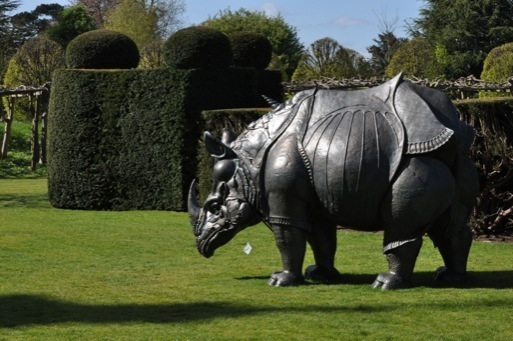
Two rhinos imported to Europe have greatly increased both the scientific and popular perception of the rhinoceros. The Ganda was brought in 1515 from India to Lisbon, and immortalized in a famous woodcut by Albrecht Dürer. Clara, the Dutch Rhinoceros, born on 19 June 1738 in Assam reached The Netherlands in 1741 and traveled through Germany, Austria, Switzerland, France, Italy, Belgium, Poland, Czech Republic, Denmark, until she died in the United Kingdom on 22 April 1758.
The RRC has a special CLARA COLLECTION with all available documents regarding her life.