

[vol.3, p.596]
Description of the Rhinoceros.
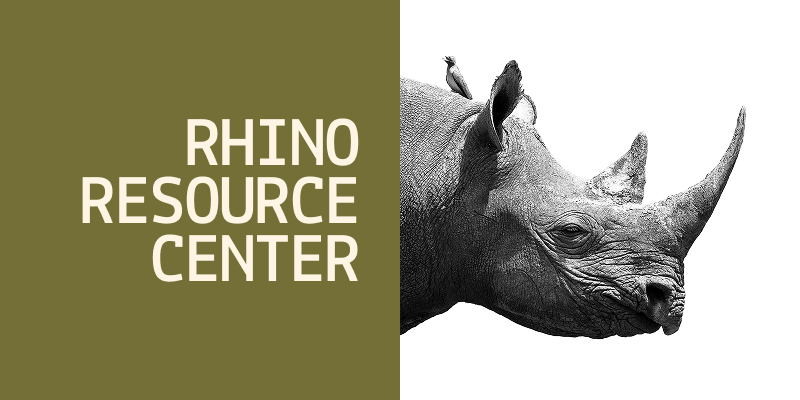
After crossing the river of Sind called Banj Ab, we entered a forest of reeds, following the track which led through the midst of it, when we were confronted by a rhinoceros. In appearance it is a black animal with a huge body and a disproportionately large head. For this reason it has become the subject of a proverb, as the saying goes Al-karkaddan ras bila badan (rhinoceros, head and no torso). It is smaller than an elephant, but its head is many times larger than an elephant's. It has a single horn between its eyes, about three cubits in length and about a span in breath. When it came out against us one of the horsemen got in its way; it struck the horse which he was riding with its horn, pierced his thigh and knocked him down, then went back into the thicket and we could not get at it. I saw a rhinoceros a second time on this road after the hour of afternoon prayer. It was feeding on plants but when we approached it, it ran away. I saw a rhinoceros yet another time when in the company of the king of India we had entered a jungle of reeds. The sultan was mounted on an elephant and we too were mounted on elephants along with him. The foot-soldiers and horsemen went in and beat it up, killed it and conveyed its head to the camp.
Gibb, H.A.R.; Ibn Battuta 1971. The Travels of Ibn Battuta AD 1325-1354, translated with revisions and notes from the Arabic text edited by C Defremery and BR Sanguinetti. London, Hakluyt Society, Works Second Series, vol. 141. vol. 3, pp. i-xii, 539-772.
The Travels of Ibn Battuta AD 1325-1354, translated with revisions and notes from the Arabic text edited by C Defremery and BR Sanguinetti
Note
Location
World
Subject
General
Species
All Rhino Species

