

We often hunted this huge animal in the neighbourhood of Tezpore, where it was by no means rare; an exceedingly fine specimen was shot by my brother officers, near the margin of the Lowqua Lake in the month of April 1865. [Tezpur on north bank of Brahmaputra, just west of Kaziranga]
The Indian Rhinoceros is found in Assam, where it is still plentiful, and also in the Bhootan jungles.
General Colour - Dirty black.
Rhinoceri are usually found in swamps where the reeds and grass are very dense, remaining hidden, often asleep, during the day: at night they come out to feed on the edge of the forest. We usually came across them on the edge of some inland jheel or lake, where the water was surrounded by dense reeds, grass, and jungle.
Tail - Short.
Feet - Divided into three toes. The foot of the rhinoceros is divided into three, that of the elephant into five toes, so that their footmarks are at once distinguishable the one from the other. Moreover, the prints differ in size, the elephant's being much larger.
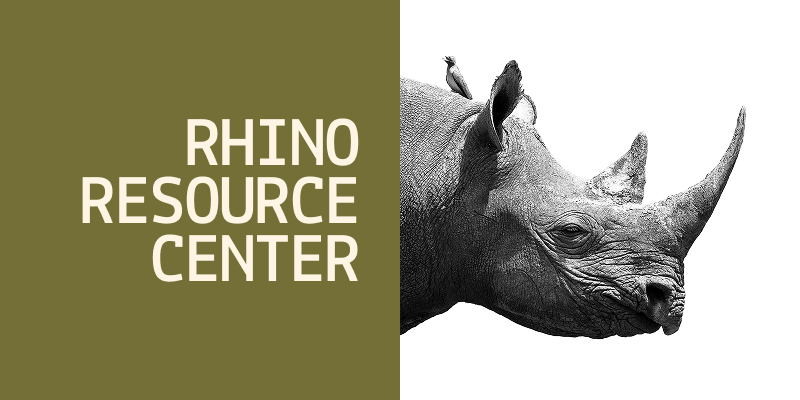
Both sexes a single horn, situated near the end of the snout, slightly curved and poitning backwards, from 15 to 20 inches in length. The Indian Rhinoceros, male and female, has a single horn, seldom growing to more than eighteen inches in length. The horn of the rhinoceros can be removed with ease, whereas the tusks of the elephant are extracted with great difficulty.
They sometimes will travel long distances to reach rice and corn fields, and do immense mischief, so much so that there is a Government reward of twenty rupees to anyone shooting a rhinoceros.
The Indian Rhinoceros is found in Assam, where it is still plentiful, and also in the Bhootan jungles.
The Indian Rhinoceros is found in Assam, where it is still plentiful, and also in the Bhootan jungles.
During the campaign of 1865, an advance guard, when marching very early one morning between Bala and Buxa, suddenly came upon a huge 'Gainda' standing in the middle of, and completely blocking, the narrow path. The animal, however, quickly wheeled round, and disappeared in the jungle. Later, a very fine rhinoceros was shot by my commandant, Colonel S--d, in the neighbourhood of Buxa.
Ears. - Rather long and rounded. When erect they point forwards.
Eyes - Small and twinkling.
Neck - Very short and thick, and overlapped by two or three heavy folds of thick skin. Body -Very broad, and much rounded. Back slightly hollow.
Both sexes a single horn, situated near the end of the snout, slightly curved and poitning backwards, from 15 to 20 inches in length. The Indian Rhinoceros, male and female, has a single horn, seldom growing to more than eighteen inches in length. The horn of the rhinoceros can be removed with ease, whereas the tusks of the elephant are extracted with great difficulty.
Both sexes a single horn, situated near the end of the snout, slightly curved and poitning backwards, from 15 to 20 inches in length.
The hide of the rhinoceros is so very thick, being covered with huge plates, that unless struck on the head (behind the ear is also a very deadly place) bullets from a common gun do him little harm, and even rifle balls with large charges of powder, unless well placed, are ineffectual.
Ears. - Rather long and rounded. When erect they point forwards.
Eyes - Small and twinkling.
Neck - Very short and thick, and overlapped by two or three heavy folds of thick skin. Body -Very broad, and much rounded. Back slightly hollow.
General Colour - Dirty black.
Tail - Short.
Feet - Divided into three toes. The foot of the rhinoceros is divided into three, that of the elephant into five toes, so that their footmarks are at once distinguishable the one from the other. Moreover, the prints differ in size, the elephant's being much larger.
Extreme length, from 12 to 13 feet
The hide of the rhinoceros is so very thick, being covered with huge plates, that unless struck on the head (behind the ear is also a very deadly place) bullets from a common gun do him little harm, and even rifle balls with large charges of powder, unless well placed, are ineffectual.
They sometimes will travel long distances to reach rice and corn fields, and do immense mischief, so much so that there is a Government reward of twenty rupees to anyone shooting a rhinoceros.
Rhinoceri are usually found in swamps where the reeds and grass are very dense, remaining hidden, often asleep, during the day: at night they come out to feed on the edge of the forest.
If left unmolested they are, usually speaking, harmless, but when wounded, dangerous, especially to a sportsman on foot.
Rhinoceri are in the habit of depositing their ordure in one particular spot. I have several times come across these places: apparently, from the heap of soil and the rankness of the grass around, they had been used for very many years, and on examination I invariably found fresh traces of the brutes. Natives have told me that often savage encounters take place at these spots between the males, who, I suppose, have casually met. The Assamese build machans in trees near, and on moonlight nights wait for the rhinoceri and sometimes shoot them.
Rhinoceri are in the habit of depositing their ordure in one particular spot. I have several times come across these places: apparently, from the heap of soil and the rankness of the grass around, they had been used for very many years, and on examination I invariably found fresh traces of the brutes. Natives have told me that often savage encounters take place at these spots between the males, who, I suppose, have casually met. The Assamese build machans in trees near, and on moonlight nights wait for the rhinoceri and sometimes shoot them.
We usually came across them on the edge of some inland jheel or lake, where the water was surrounded by dense reeds, grass, and jungle. The animals like to roll and wallow in the soft mud, and generally speaking their hides are thickly coated with a layer of clay.
Height, from 5 1/4 to 5 ? feet

