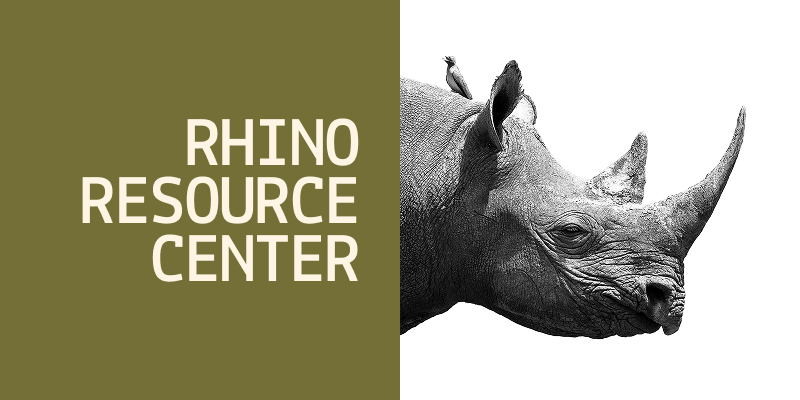


Borneo. He has two horns and his hair is tough and bristly, almost like fine wire.
Bornean Rhinoceros
Borneo. He frequents the foothills below the mountains.
Borneo. He has two horns and his hair is tough and bristly, almost like fine wire.
Another story recounting how the Animals of the Jungle, observing Man's success, resolved upon a tuba-fishing of their own, the triruration of the root to be performed by ordinary chewing. Unhappily the only four-footed creatures who could deal with Derris elliptica without harm to the system, were the Porcupine and the Rhinoceros, who tereupon set to work. The Porcupine did his bit, and the Rhinoceros (whom legend credits with a somewhat pompous humour) chewed Tuba-root for 24 hours at a stretch, finding perhaps that it promoted a healthy action of the skin. The two then proceeded to the river-bank and discharged the juice, much to the consternation of the fish but to the sdatisfaction of the other members of the Animal Kingdom, which was thus able to prove its superiority.
He comes down in the heat of the day to take his ease in what are called 'salt-licks', muddy baths formed by springs of saltish water. The clearing and the mud of the bushes were, as I was told, caused by the creature's trampling movement on his way home to his lair higher up the hills. My informants were quite right, for very soon we came across one of these salt-licks, although we found no one 'taking the course.'

