

From the rhinoceros which occurs in Takah, Homran, Qalabat and on the Anseba I only obtained young specimens, which are similar to the one described by Blanford, and I often saw apparently adult animals, in which the front horn was only 6 inches longer than the second one.
From the rhinoceros which occurs in Takah, Homran, Qalabat and on the Anseba I only obtained young specimens, which are similar to the one described by Blanford, and I often saw apparently adult animals, in which the front horn was only 6 inches longer than the second one.
The rhinoceros lives on the upper Atbarah and its tributaries, but always near flowing water or deep pits.
From the rhinoceros which occurs in Takah, Homran, Qalabat and on the Anseba I only obtained young specimens, which are similar to the one described by Blanford, and I often saw apparently adult animals, in which the front horn was only 6 inches longer than the second one.
The rhinoceros lives on the east-, north- and west slopes of the abyssinian mountain range and its branches, in the Barkah northwards up to To-Kar.
From the rhinoceros which occurs in Takah, Homran, Qalabat and on the Anseba I only obtained young specimens, which are similar to the one described by Blanford, and I often saw apparently adult animals, in which the front horn was only 6 inches longer than the second one.
The rhinoceros lives in East Senar.
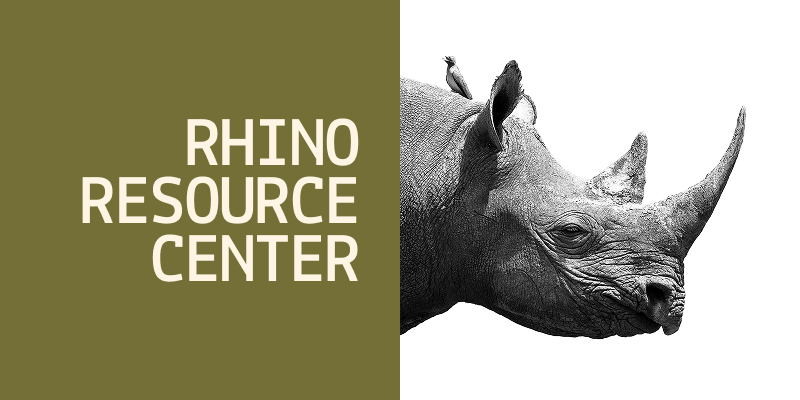
[There is a drawing of an African rhinoceros, R. keitloa.] It is very probable that the rhinoceros of Abyssinia and from Takah should be regarded as a variety of the two-horned African species (Rh. africanus, camp. - Rh. bicornis, Smith). The size, colour, shape of the horns, folds in the skin, shape of the upper lip and the head change so much in each individual and according to location, sex and age, that no strict boundaries can be drawn between these two varieties. I cannot say from my own experience if Rh. simus is a separate species. On the upper part of the White Nile a kind of rhinoceros occurs, which could be that species as it has a very long front horn, up to 3 ? feet or even more. From the rhinoceros which occurs in Takah, Homran, Qalabat and on the Anseba I only obtained young specimens, which are similar to the one described by Blanford, and I often saw apparently adult animals, in which the front horn was only 6 inches longer than the second one. The anterior horn has an almost round circumference, is bent upwards and backwards, on the front side provided with an edge and strongly pointed. The posterior horn is more oval in circumference, sideways compressed, towards the tip two-sided and not bent.
When the animal is encountered suddenly in the open, it sometimes will go towards the people with its head bent down and snorting, apparently from a combination of fear and anger. Once two of my hunters were attacked by three rhinos, which following each other ran towards them with enormous speed. The people had just enough time to jump into the thorn bushes.
It is usually active by night, but we have sometimes found it during the day eating on the slopes when it was raining.
The rhinoceros is found northwards to To-Kar.
Kerkend
H'ardid
H'aris
Ahazah
Qaru
Awraris
Aris
Gedangih
Haris
So'hot
Endit
Arwie-Xaris
Ethiopia. The colour changes from the reddish shede of meat to dirty dark browngrey, but always with a streak towards the reddish. As the animals like to wallow in mud, the hide often taken the colour of the mud which clings to its skin.
In the dry season it retreats into the mountains, in the region of the bamboos and even higher.
The rhinoceros lives in pairs or in families.
From the rhinoceros which occurs in Takah, Homran, Qalabat and on the Anseba I only obtained young specimens, which are similar to the one described by Blanford, and I often saw apparently adult animals, in which the front horn was only 6 inches longer than the second one. The anterior horn has an almost round circumference, is bent upwards and backwards, on the front side provided with an edge and strongly pointed. The posterior horn is more oval in circumference, sideways compressed, towards the tip two-sided and not bent.
Ethiopia. The colour changes from the reddish shede of meat to dirty dark browngrey, but always with a streak towards the reddish. As the animals like to wallow in mud, the hide often taken the colour of the mud which clings to its skin.

