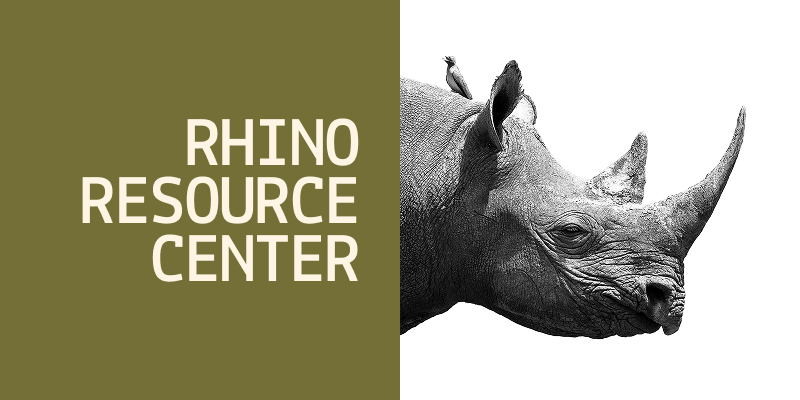


The Sumatran rhinoceros has been so heavily poached within the past twenty years that there are now vast stretches of suitable evergreen forest from which it has been completely exterminated.
The Javan rhinoceros has been shot illicitly on numerous occasions by professional hunters and poachers: in fact, it has now been poached almost out of existence.
Dicerorhinus sumatrensis. It may still be located in parts of the Salween and Tenasserim drainages and in a few other remote hill tracts. In most of these areas the Sumatran rhinoceros will be found below the crests of the main watersheds in heavy evergreen forest.
Rhinoceros sondaicus. It is open to question whether the Javan rhinoceros ever existed outside of the Thaton, Salween and Mergui Forest Divisions in Lower Burma. The only definite records of its existence come from these three Divisions.
This rhinoceros is one of the rarest marnmals in the world, and has been seldom shot or seen by any sportsman. Indeed, in Burma, there is no authentic record of its shooting, except in one instance, viz. a specimen shot and presented to the British Museum some years ago by Mr. T. Hubback.
The senses of smell and hearing are very good.
This sanctuary which, hitherto, has been guarded only by the occasional visits of one or two forest subordinates and a peculiar superstition to the effect that the sanctuary is occupied by wood-spirits which are intolerant of poaching.
Dicerorhinus sumatrensis. It may still be located in parts of the Salween and Tenasserim drainages and in a few other remote hill tracts. In most of these areas the Sumatran rhinoceros will be found below the crests of the main watersheds in heavy evergreen forest.
Rhinoceros sondaicus. The best-known grounds used to be the forests of the Victoria Point Subdivision in the Mergui District. Although, as Divisional Officer in charge of the Mergui Forest Division, I spent four months in touring through that Division, I could find no evidence of its existence outside of the Victoria Point Subdivision. In this Subdivision the javan rhinoceros was reported by all local hunters and guides to frequent heavy evergreen forests on flat or comparatively flat ground. It was supposed never to ascend high into the hills ie. into the typical habitat of the Sumatran rhinoceros. The forests of the Victoria Point Subdivision undoubtedly held, at one time, a very fair number of javan rhinoceros, but these have long since been poached out of existence for the sake of the valuable horn and blood which realize an even greater price than that of the Sumatran rhinoceros.
Dicerorhinus sumatrensis. The only area in which rhinoceros is now fairly common is the Shwe-u-Daung Game Sanctuary in the Mogok Subdivision of the Katha District. There are about ten rhinoceros in this sanctuary but, in default of adequate protection, I should not be surprised to hear that they had been decimated by some enterprising gang of poachers. The perpetuation of this species undoubtedly depends on the proper protection of this sanctuary which, hitherto, has been guarded only by the occasional visits of one or two forest subordinates and a peculiar superstition to the effect that the sanctuary is occupied by wood-spirits which are intolerant of poaching.
Rhinoceros sondaicus. This rhinoceros is one of the rarest mammals in the world, and has been seldom shot or seen by any sportsman. Indeed, in Burma, there is no authentic record of its shooting, except in one instance, viz. a specimen shot and presented to the British Museum some years ago by Mr. T. Hubback, of the Federated Malay States. This animal was shot in the Mergui District in southernmost Burma.
Dicerorhinus sumatrensis. In the days before the advent of fire-arms the Sumatran rhinoceros must have been fairly common throughout Burma.
The shooting of rhinoceros is now prohibited under the game laws, but such legislation has little effect on the native poacher. It is difficult to decide how best to protect an animal which is already so scarce and invested with such value. The solution probably lies in an increase in the extent and the number of game sanctuaries and the proper protection of the same.
Rhinoceros sondaicus. A few years ago a prolonged search for this rhinoceros in the Victoria Point Subdivision of the Mergui District by an expedition formed by Mr. Vernay was fruitless, and led to the conclusion that it is now very nearly extinct in the only locality where it was likely to be found in fair numbers. It is extremely doubtful whether there are now more than half a dozen specimens of R. sondaicus in existence in Burma, and it is unlikely that they will survive. There have been many plausible reasons given for this state of affairs. From personal experience, I am convinced that, given sufficient keenness and energy, the Javan rhinoceros could have been preserved in the forests of the Pakchan Reserve immediately north of Victoria Point. These southernmost forests are by no means so dense or inaccessible as the forests in the drainages of the Big and Little Tenasserim Rivers further north, and contain a sufficient measure of other game, including elephants, to have justified the formation of a sanctuary. The situation is now past remedy, and one can only hope that it does not foreshadow a similar situation in regard to R. sumatrensis and other large game in Burma.
Dicerorhinus sumatrensis. It may still be located in parts of the Pegu Yomas In most of these areas the Sumatran rhinoceros will be found below the crests of the main watersheds in heavy evergreen forest.
Average length about 10 feet (average of 3 shot in Burma), Largest 10 feet 2 inches.
Burma, animal shot for BMNH, 1930. Length from nose to tip of tail 9 feet 5 inches
The Javan rhinoceros is hairless, and the skin has a cracked and scaly appearance. The heavy folds of skin at shoulder, flank and knee are also more marked than is the case in the better-known species. In other respects this animal conforms nearly to the appearance of the Sumatran rhinoceros.
Rhinoceros sondaicus. It is open to question whether the Javan rhinoceros ever existed outside of the Thaton, Salween and Mergui Forest Divisions in Lower Burma. The only definite records of its existence come from these three Divisions.
Their movements coincide largely with those of most wild animals: i.e. they feed in the early mornings, evenings and part of the night-and lie up during the day, during which time they may spend many hours in their wallows.
Wet Kyan
The senses of smell and hearing are very good. I once watched a female rhinoceros in her wallow for nearly a quarter of an hour: she was plainly sensible of the very softest sounds.
Rhinoceros sondaicus. It is open to question whether the Javan rhinoceros ever existed outside of the Thaton, Salween and Mergui Forest Divisions in Lower Burma. The only definite records of its existence come from these three Divisions.
Dicerorhinus sumatrensis. It may still be located in parts of Myitkyina, in the angle between the Chindwin and the Uyu Rivers In most of these areas the Sumatran rhinoceros will be found below the crests of the main watersheds in heavy evergreen forest.
With .475- and .577-bore rifles I have never bothered to use other than soft-nosed bullets on rhinoceros, and doubt whether solid bullets are at all necessary for the Malayan variety.
Dicerorhinus sumatrensis. It may still be located in the Arakan Hills as far south as Bassein, In most of these areas the Sumatran rhinoceros will be found below the crests of the main watersheds in heavy evergreen forest.
Rhinoceros sondaicus. There are said to be four specimens of the javan rhinoceros existing in the Kahilu Game Sanctuary in the Thaton and Salween Forest Divisions. Indeed, this sanctuary was established mainly for their protection. These specimens are reputed to ascend hills in the manner of the Sumatran rhinoceros and, since they appear never to have been seen by any reliable authority, it is somewhat doubtful whether they are actually Javan rhinoceros or not.
Kyan
Kyan-Sin
Horn is used as aphrodisiac
Burma. Both species of rhinoceros are addicted to breaking down and twisting saplings from 1 to 3 inches in diameter. This habit is common to all, but more marked apparently in some individuals than others. Dicerorhinus sumatrensis: The food of the Sumatran rhinoceros consists mainly of various leaves, twigs, fruit and the shoots of various plants. On the main ridge of the Arakan Yomas I have seen it browsing on young khayin bamboo. Twigs as thick as one's little finger are bitten off and consumed.
The senses of smell and hearing are very good, but the sight is poor, probably equal to the sense of sight in elephants.
The Javan rhinoceros is hairless
The Javan rhinoceros is hairless, and the skin has a cracked and scaly appearance. The heavy folds of skin at shoulder, flank and knee are also more marked than is the case in the better-known species. In other respects this animal conforms nearly to the appearance of the Sumatran rhinoceros.
The weight is in the neighbourhood of 2000 pounds.
It favours the very heaviest types of evergreen forest and is usually found near the sources of streams in remote hill forests. It is very active for so heavy a beast and prefers steep, rather than low or moderately steep, hills. Unlike Rhinoceros sondaicus the Sumatran rhinoceros delights in steep forest-clad hills.
Burma. The Javan differs mainly from the Sumatran in its fondness for low-lying, swampy ground, and presumably also in being of a less active and alert disposition.
Rhinoceros horns are occasionally faked: I have seen a very clever imitation made of buffalo horn which defeated detection until it had been broken up.
Burma. The horns of males are said to be about 10 inches in length. The male has only one horn. The female may have a very small horn or none at all..
Burma. Both species of rhinoceros are addicted to breaking down and twisting saplings from 1 to 3 inches in diameter. This habit is common to all, but more marked apparently in some individuals than others. Dicerorhinus sumatrensis: The food of the Sumatran rhinoceros consists mainly of various leaves, twigs, fruit and the shoots of various plants. On the main ridge of the Arakan Yomas I have seen it browsing on young khayin bamboo. Twigs as thick as one's little finger are bitten off and consumed.
I have heard the humming sound that Burmans say this rhinoceros sometimes makes when in its wallow, but from so great a distance that I am not prepared to swear to the fact. From close quarters I have heard them utter harsh grunts, and one that I had shot emitted loud whistling screams that could have been heard at a considerable distance.
Burma, Gestation period 8 months
Burma. The tracks of male and female rhinoceros are identical. Indications of a large horn may be apparent in the deep holes and gashes sometimes made in the banks of wallows, and in the excessive twisting of saplings. The manner in which urine is dropped sometimes serves as an indication of sex. On sighting an animal, however, one is chiefly dependent on the size of the horns to arrive at a correct determination of sex.
One shot in Burma in 1930 for BMNH. The heavy folds of skin behind the shoulder, on the flank and round the neck, and other peculiarities of shape and structure are clearly seen in the illustration on Plate VI.
Burma - Confusion with other species. The three-toed tracks of a rhinoceros cannot be confused, even on a poor surface, with any animal except tapir and, perhaps, a young elephant. The tapir has four toes on the fore-feet but, since the impressions of the hindfeet usually cover those of the fore-feet, a three-toed track is left that is somewhat similar to that of a rather small rhinoceros. In the Tenasserim forests rhinoceros and tapir are located over the same ground, but this is not so in other parts of the Province, tapir being non-existent elsewhere than in Tenasserim. The tracks of the Javan rhinoceros are similar to, but somewhat larger than, those of the Sumatran rhinoceros. Average-sized tracks of adults would be about 9 inches and 7 ? inches in diameter respectively. The signs of the two species are very similar in most other respects, and it is difficult to distinguish between the two from signs and tracks alone. In the habitat of the Javan rhinoceros, however, a large track that leads in any direction other than through the rough hilly ground favoured by Rhinoceros sumatrensis, may very likely be that of a javan rhinoceros. The tracks of male and female rhinoceros are identical. Indications of a large horn may be apparent in the deep holes and gashes sometimes made in the banks of wallows, and in the excessive twisting of saplings.
The Javan rhinoceros is hairless
It is very active for so heavy a beast and prefers steep, rather than low or moderately steep, hills.
One shot in Burma in 1930 for BMNH. The heavy folds of skin behind the shoulder, on the flank and round the neck, and other peculiarities of shape and structure are clearly seen in the illustration on Plate VI.
Burma. The tracks of male and female rhinoceros are identical. Indications of a large horn may be apparent in the deep holes and gashes sometimes made in the banks of wallows, and in the excessive twisting of saplings. The manner in which urine is dropped sometimes serves as an indication of sex. On sighting an animal, however, one is chiefly dependent on the size of the horns to arrive at a correct determination of sex.
Burma - Confusion with other species. The three-toed tracks of a rhinoceros cannot be confused, even on a poor surface, with any animal except tapir and, perhaps, a young elephant. The tapir has four toes on the fore-feet but, since the impressions of the hindfeet usually cover those of the fore-feet, a three-toed track is left that is somewhat similar to that of a rather small rhinoceros. In the Tenasserim forests rhinoceros and tapir are located over the same ground, but this is not so in other parts of the Province, tapir being non-existent elsewhere than in Tenasserim. The tracks of the Javan rhinoceros are similar to, but somewhat larger than, those of the Sumatran rhinoceros. Average-sized tracks of adults would be about 9 inches and 7 ? inches in diameter respectively. The signs of the two species are very similar in most other respects, and it is difficult to distinguish between the two from signs and tracks alone. In the habitat of the Javan rhinoceros, however, a large track that leads in any direction other than through the rough hilly ground favoured by Rhinoceros sumatrensis, may very likely be that of a javan rhinoceros. The tracks of male and female rhinoceros are identical. Indications of a large horn may be apparent in the deep holes and gashes sometimes made in the banks of wallows, and in the excessive twisting of saplings.
Burma. The tracks of an adult Javan rhinoceros are about 8 ? to 9 inches in diameter. This is only an inch or two greater than the tracks of an adult Sumatran rhinoceros. The toes of the latter are less splayed out than the former, but the tracks appear almost identical except in size.
This sanctuary [Shwe u Daung] has been guarded by a peculiar superstition to the effect that the sanctuary is occupied by wood-spirits which are intolerant of poaching.
Large collections, of rhinoceros dung are commonly found and show that these animals, when not disturbed, are accustomed to return to the same spot for this purpose. I have seen a collection of their droppings nearly 2 feet high and 4 feet across.
Its wallows are generally found in the pockets of hills at the sources of streams springing from high and remote watershed. The wallows vary in size from a shallow depression scarcely larger than the animal itself, and apparently individual to itself, to ones 20 or 30 feet across which are used by elephant and other wild animals. Wherever rhinoceros are located there also will be found a number of wallows.
The blood and horn of the Sumatran rhinoceros have a very high medicinal value in the imagination of Chinamen, Burmans and tribesmen indigenous to Burma. One gathers that such parts of a rhinoceros have the properties of a very potent aphrodisiac. An average horn, about 8 inches in length, is worth about 1000 rupees, and the blood, when dried, is valued at its own weight in silver. Other parts of the rhinoceros have a lesser value but, in the extreme south of Burma, the inhabitants find a medicinal use even for the urine and dung.
The front horns of males average 7 or 8 inches and those of females about 3 inches. I have never seen a horn, in Burma, over 10 inches in length. There are two specimens in the British Museum of Natural History, however, in which the front horns measure 32 ? inches and 27 inches. Such horns would be quite abnormal in Burma.
Burma. I have never seen or heard of more than one calf at heel, but it is certain that the calves remain with the mothers to an advanced age.
1933, Burma, An average horn, about 8 inches in length, is worth about 1000 rupees, and the blood, when dried, is valued at its own weight in silver.
Burma. The height of a mature specimen of the javan rhinoceros is probably about 5 feet 6 inches, or roughly a foot higher than the Sumatran rhinoceros.
The posterior horns of males average about 3 inches and those of females are mere knobs.
Average height 4 feet 3 inches (average of 3 specimens shot in Burma). Largest 4 feet 8 inches high.
Burma, animal shot for BMNH, 1930. Tail only 1 foot 9 inches

