

Fortelius, M.
 Author
 References by this author
Wilson, O.E.; Fortelius, M.; Saarinen, J. 2022. Species discovery and dental ecometrics: good news, bad news and recommendations for the future. Historical Biology 35 (5): 1-15. doi.org/10.1080/08912963.2022.2060102
 PDF download available
Saarinen, J.; Oksanen, O.; Zliobaite, I.; Fortelius, M.; DeMiguel, D.; Azanza, B.; Bocherens, H.; Luzón, C.; Solano-García, J.; Yravedra, J.; Aringoli, D.; (and many others) 2021. Pliocene to Middle Pleistocene climate history in the Guadix-Baza Basin, and the environmental conditions of early Homo dispersal in Europe. Quaternary Science Reviews 268, 107132: 1-18, 6 figs, 2 tabs. doi.org/10.1016/j.quascirev.2021.107132
PDF download available
Kaiser, T.M.; Mueller, D.W.H.; Fortelius, M.; Schulz, E.; Codron, D.; Clauss, M. 2013. Hypsodonty and tooth facet development in relation to diet and habitat in herbivorous ungulates: implications for understanding tooth wear. Mammal Review 43: 34-46, 7 figs, 1 tab. doi.org/10.1111/j.1365-2907.2011.00203.x
PDF download available
Hernesniemi, E.; Giaourtsakis, I.X.; Evans, A.R.; Fortelius, M. 2011. Rhinocerotidae. In: Harrison, T. (ed.), Paleontology and geology of Laetoli: Human Evolution in Context. Volume 2: Fossil Hominins: pp. 275-294, 11 figs.
PDF download available
Hernesniemi, E.; Blomstedt, K.; Fortelius, M. 2011. Multi-view stereo three dimensional reconstruction of lower molars of Recent and Pleistocene rhinoceroses for mesowear analysis. Palaeontologia Electronica: 1-15.
PDF download available
Deng, Tao; Wang, Xiaoming; Fortelius, M.; Li, Qiang; Wang Yang; Tseng, Zhije J.; Takeuchi, G.T.; Saylor, J.E.; Saila, L.K.; Xie, Guang Pu 2011. Out of Tibet: Pliocene Woolly Rhino suggests high-plateau origin of Ice Age Megaherbivores. Science 333: 1285-1288, Supporting on-line material pp 1-47.
PDF download available

Hernesniemi, E.; Blomstedt, K.; Fortelius, M. 2010. Multi-view Stereo 3D reconstruction of the lower molars of recent and North-Western European Pleistocene rhinoceroses for the purpose of mesowear analysis.. Abstracts book of the International Palaeontological Congress, London. p. 198.
PDF download available
Fortelius, M.; Heissig, K.; Sarac, G.; Sen, S. 2003. Rhinocerotidae (Perissodactyla). In: Fortelius, M.; Kappelman, J.W.; Sen, S.; Bernor, R.L. (eds). Geology and paleontology of the Miocene Sinap Formation, Turkey. Columbia University Press. pp. 282-307.
PDF download available
Fortelius, M.; Eronen, J.; Jernvall, J.; Liu, Liping; Pushkina, D.; Rinne, J.; Tesakov, A.S.; Vislobokova, I.A.; Zhang Zhao-Qun; Zhou, Liping 2002. Fossil mammals resolve regional patterns of Eurasian climate change over 20 million years. Evolutionary Ecology Research 4: 1005-1016, 3 figs..
PDF download available
Zhang Zhao-Qun; Gentry, A.W.; Kaakinen, A.; Liu, L.P.; Lunkka, J.P.; Qiu Zhangxiang; Sen, S.; Scott, R.S.; Werdelin, L.; Zheng, S.H.; Fortelius, M. 2002. Land mammal faunal sequence of the late miocene of China: new evidence from Lantian, Shaanxi Province. Vertebrata PalAsiatica 40 (3): 165-176, figs. 1-2.
PDF download available
Mazza, P.; Sala, B.; Fortelius, M. 1993. A small latest Villafranchian (late Early Pleistocene) rhinoceros from Pietrafitta (Perugia, Umbria, Central Italy), with notes on the Pirro and Westerhoven rhinoceroses. Palaeontographia Italica, Pisa 80: 25-50, pls. 1-6.
PDF download available
Sala, B.; Fortelius, M. 1993. The rhinoceroses of Isernia La Pineta (early Middle Pleistocene, Southern Italy). Palaeontographia Italica, Pisa 80: 157-174, pls. 1-4.
PDF download available
Fortelius, M.; Kappelman, J. 1993. The largest land mammal ever imagined. Zoological Journal of the Linnean Society 107: 85-101.
PDF download available
Fortelius, M.; Mazza, P.; Sala, B. 1993. Stephanorhinus (Mammalia: Rhinocerotidae) of the Western European Pleistocene, with a revision of S. etruscus (Falconer, 1868). Palaeontographia Italica, Pisa 80: 63-155.
PDF download available
Fortelius, M. 1990. Rhinocerotidae from Pasalar, middle miocene of Anatolia (Turkey). Journal of Human Evolution 19: 489-508.
PDF download available
Fortelius, M. 1990. The mammalian dentition, a 'tangled' view. Netherlands Journal of Zoology 40 (1/2): 312-328.
PDF download available
Fortelius, M.; Heissig, K. 1989. The phylogenetic relationship of the Elasmotherini (Rhinocerotidae, Mammalia). Mitteilungen Bayerische Staatssammlung fur Palaontologie und historische Geologie 29: 227-233.
PDF download available
Janis, C.M.; Fortelius, M. 1988. On the means whereby mammals achieve increased functional durability of their dentitions, with special reference to limiting factors. Biological Reviews (Cambridge) 63: 197-230.
PDF download available
PDF download available
Boyde, A.; Fortelius, M. 1986. Development, structure and function of rhinoceros enamel. Zoological Journal of the Linnean Society 87 (2): 181-214, figs. 1-52.
PDF download available
Fortelius, M. 1985. The functional significance of wear-induced change in the occlusal morphology of herbivore cheek teeth exemplified by Dicerorhinus etruscus upper molars. Acta Zoologica Fennica 170. 157-158.
PDF download available
Fortelius, M. 1985. Ungulate cheek teeth: developmental, functional, and evolutionary interrelations. Acta Zoologica Fennica 180: 1-76.
PDF download available
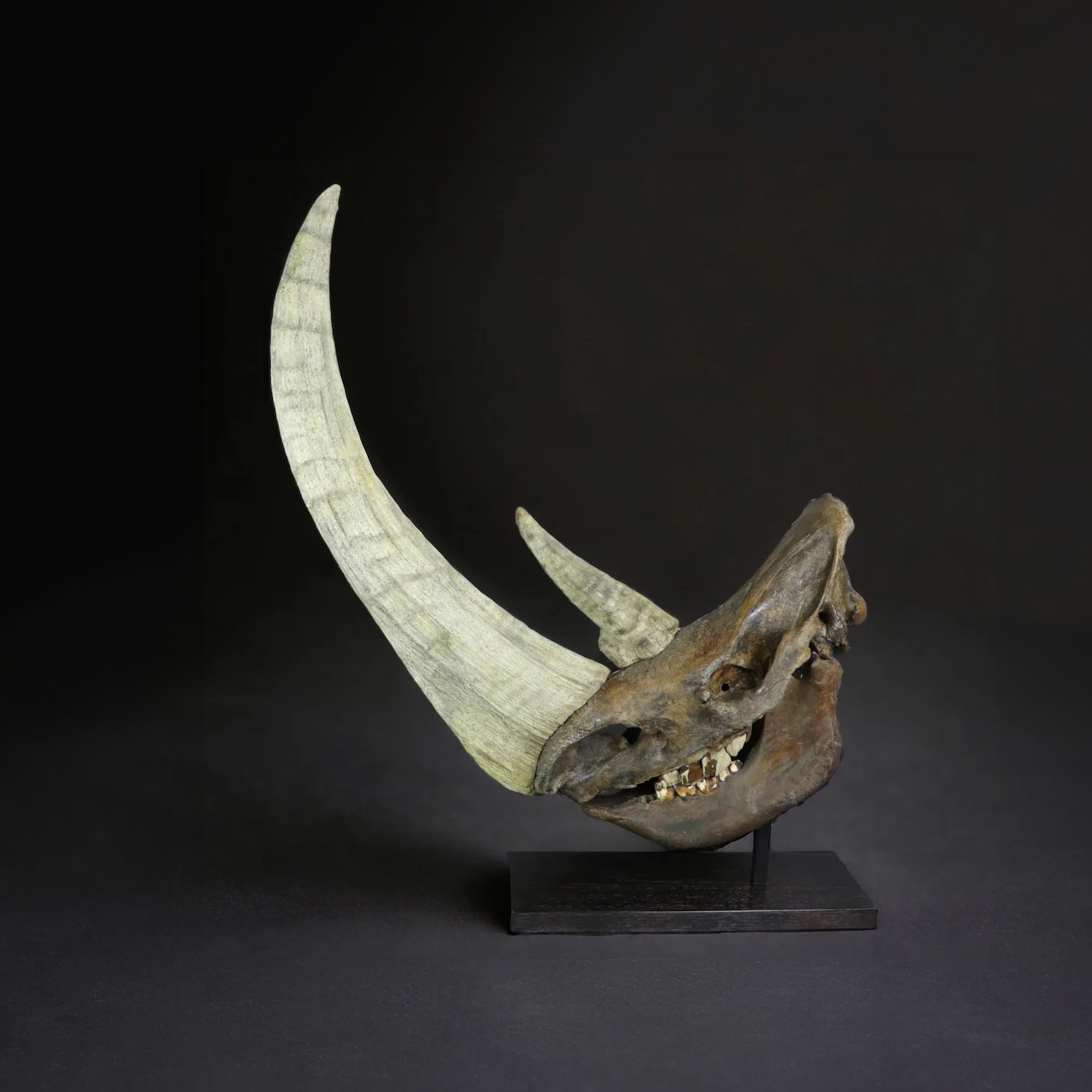
Fortelius, M. 1983. The morphology and paleobiological significance of the horns of Coelodonta antiquitatis (Mammalia: Rhinocerotidae). Journal of Vertebrate Paleontology 3 (2): 125-135.
PDF download available
Fortelius, M. 1982. Ecological aspects of dental functional morphology in the Plio-Pleistocene rhinoceroses of Europe. In: Kurten, B. (ed): Teeth – Form, Function, and Evolution). Columbia University Press. pp. 163-181.
PDF download available
Fortelius, M. 1981. Functional aspects of occlusal cheek-tooth morphology in hypsodont non-ruminant ungulates. International Symposium “Concept and Method in Palaeontology” (Contr.Papers), Barcelona. 153-162.
PDF download available