

Contributors: This database has been compiled by an international team of palaeontologists and researchers. View full list of contributors and affiliations.
About the Database
This database catalogues all known Neogene and Quaternary localities in the Old World that have yielded Rhinocerotidae fossils identified to at least genus level. The primary focus is geographic distribution rather than taxonomic revision.
Coverage is most comprehensive for western and central Europe (based extensively on Guérin, 1980, with added coordinates). Other regions may be less complete due to gaps in the fossil record or imprecise location data in published sources (particularly Russian sites). Ongoing bibliographic research continues to expand the database.
Database Contents
Occurrences
For each site, the database lists all published rhino taxa, plus the number of species in each genus and taxonomic group:
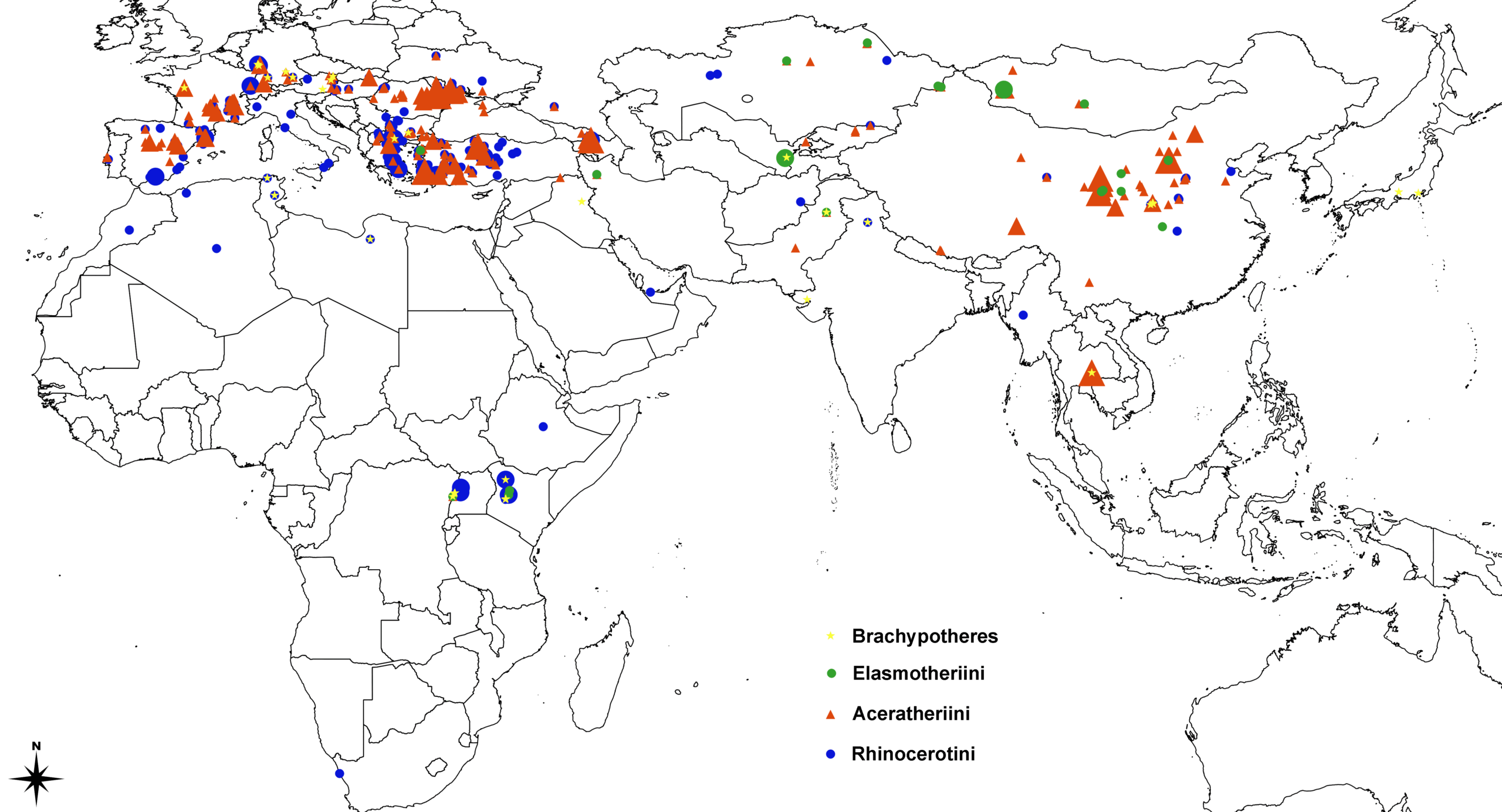
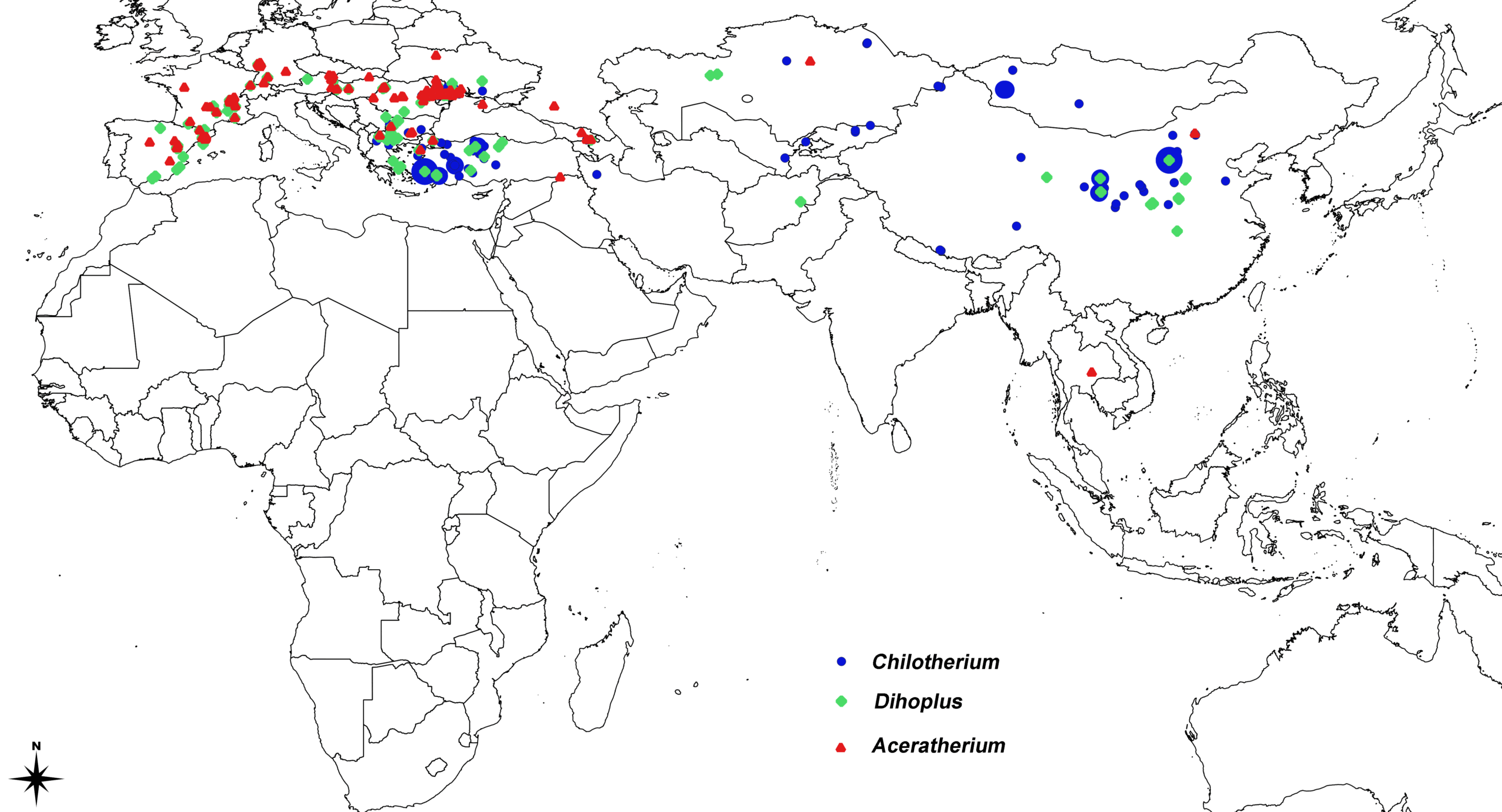
- Aceratheriini: Aceratherium, Acerorhinus, Alicornops, Chilotherium, Hoploaceratherium, Mesaceratherium, Plesiaceratherium, Protaceratherium, Shansirhinus, Pleuroceros, Subchilotherium
- Rhinocerotini: Diceros, Ceratotherium, Dicerorhinus, Rhinoceros, Stephanorhinus, Coelodonta, Paradiceros, Rusingaceros, Lartetotherium, Dihoplus, Gaindatherium
- Brachypotheres: Brachypotherium, Prosantorhinus, Diaceratherium
- Rhinocerotinae: Aceratheriini + Rhinocerotini + Brachypotheres
- Elasmotheriinae: Begertherium, Beliajevina, Bugtirhinus, Caementodon, Elasmotherium, Hispanotherium, Huaqingtherium, Iranotherium, Kenyatherium, Ningxiatherium, Ougandatherium, Parelasmotherium, Shennongtherium, Sinotherium, Tesselodon, Turkanatherium, Chilotheridium, Victoriaceros
- Stem taxa: All other genera
Taxonomic Notes
- Only sites with Rhinocerotidae identified to at least genus level are included
- Previous identifications are generally retained without revision
- Species names have been standardised for uniformity (e.g., Stephanorhinus jeanvireti for all rhinos referred to S. elatus; S. kirchbergensis for S. mercki)
- Qualifiers such as ‘cf.’ and ‘aff.’ have been removed for mapping purposes
Geographic Coordinates
- Coordinates are provided to the nearest 1/100 degree
- Most coordinates retrieved from original publications and Google Earth; some from the NOW database
Download the Database
The complete database package (in a zip file) includes the fossil rhino locality database (Excel and CSV formats), mapping instructions for Google Earth and QGIS, and example distribution maps.
Example Distribution Maps
References
References are provided for every site where possible, with preference for original sources. The NOW database has been invaluable for many sites.
The NOW Community 2020
New and Old Worlds Database of Fossil Mammals [NOW]
Licensed under CC BY 4.0
nowdatabase.org
Contribute
We welcome corrections and additions to improve the database. Please contact denis.geraads@mnhn.fr