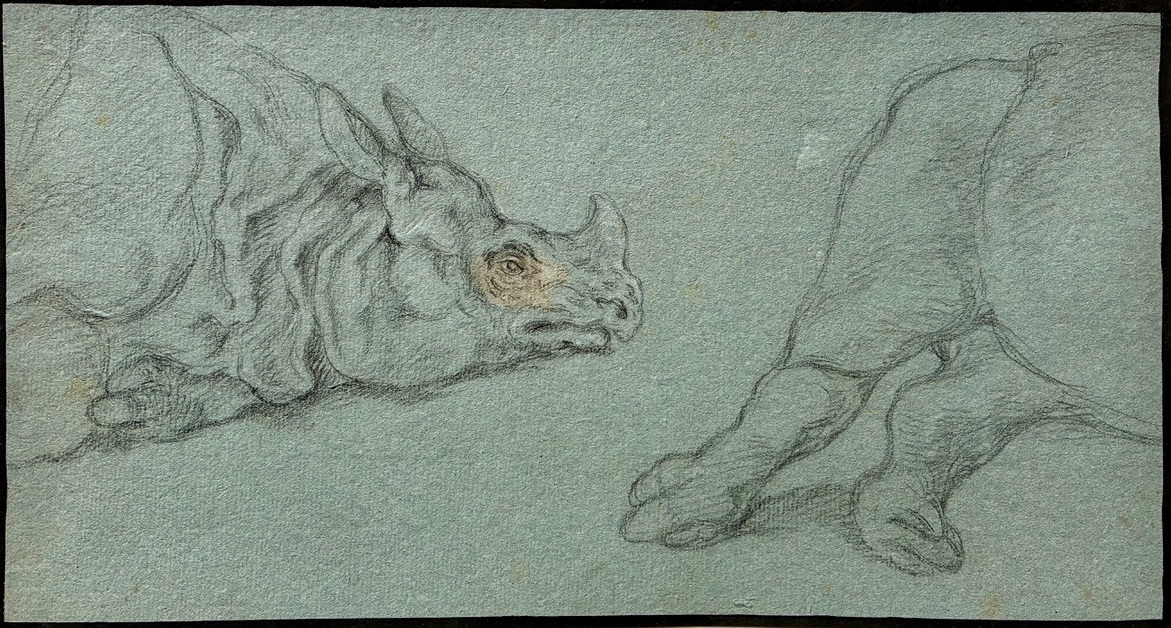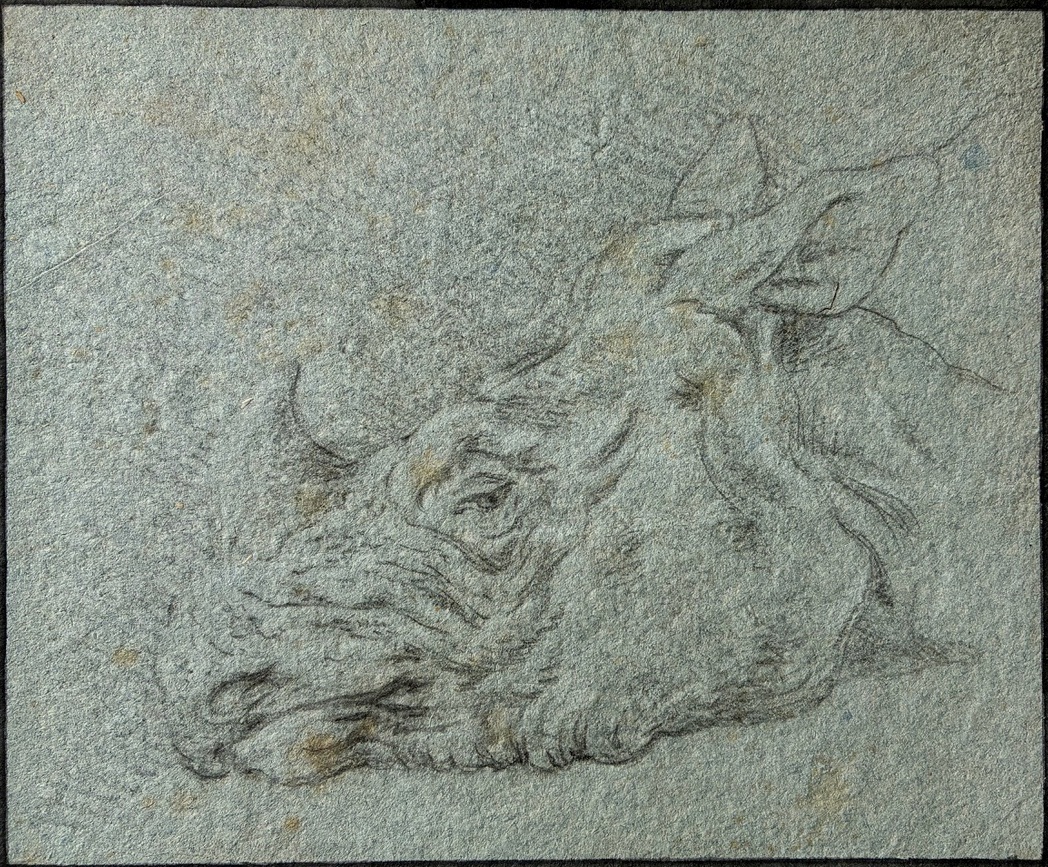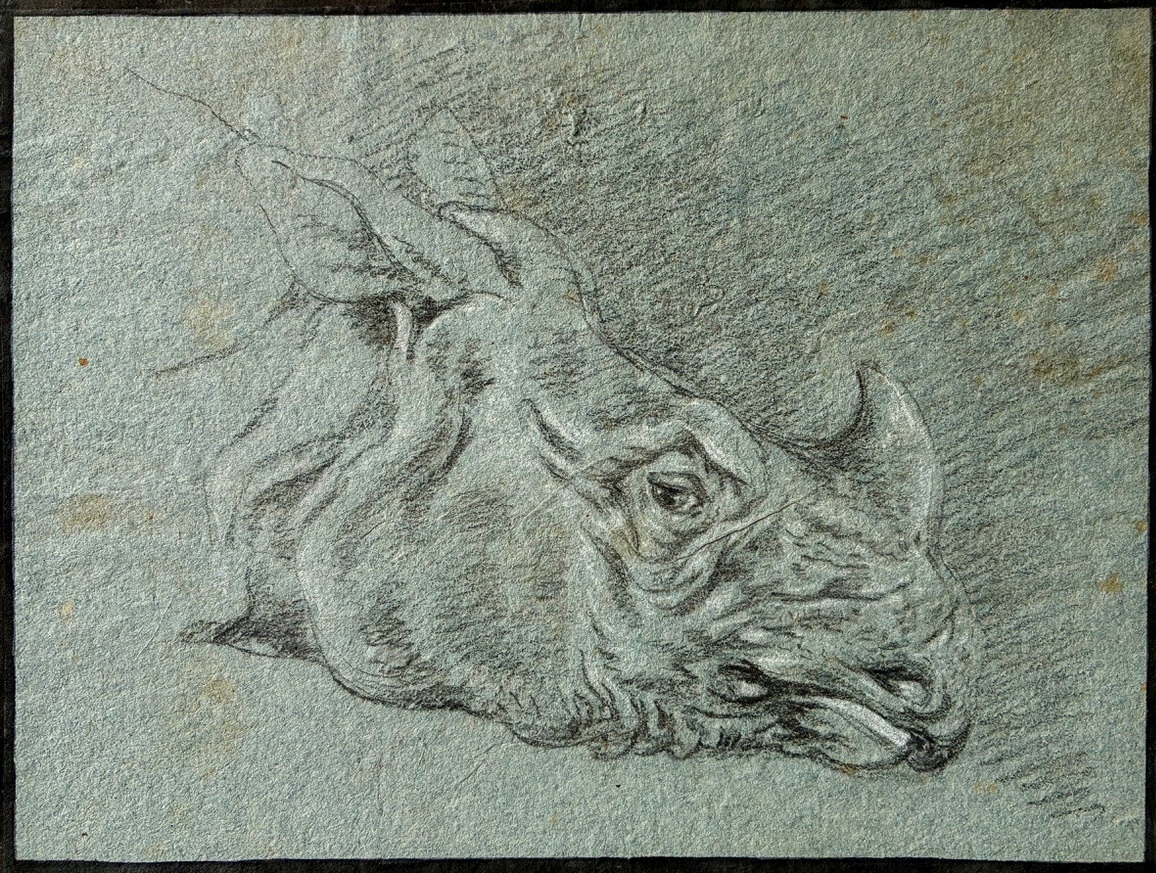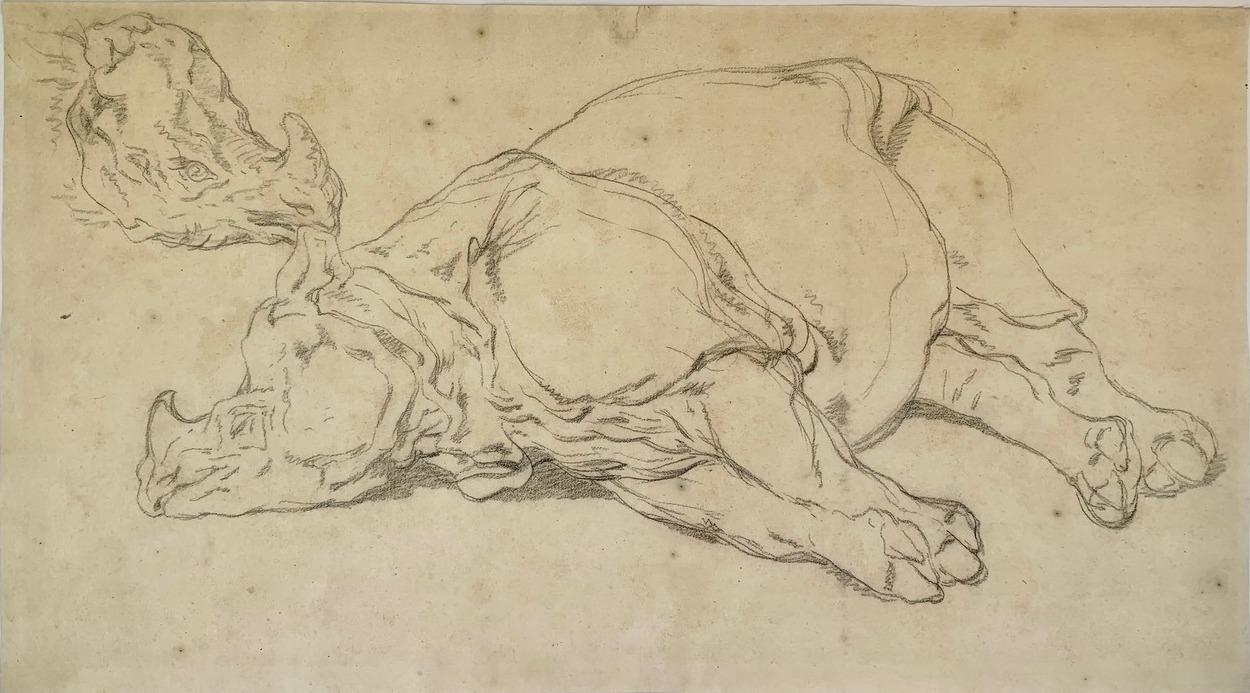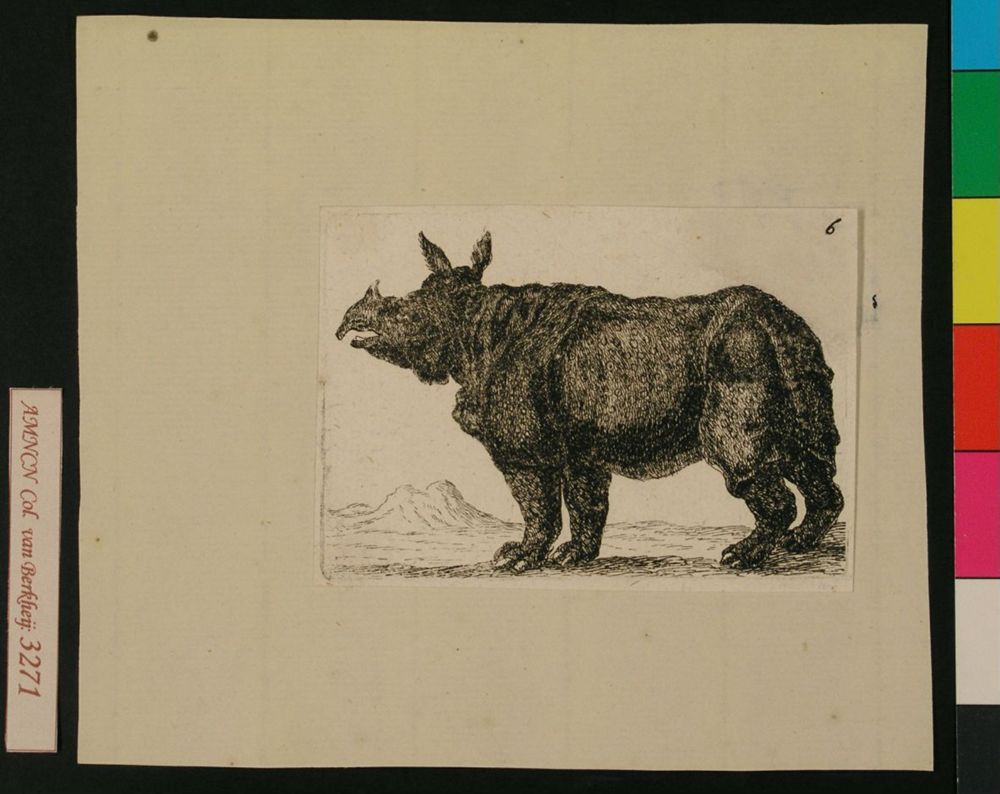


Douwe Mout received permission to exhibit the rhinoceros on 18 June 1755 (source 7601; source 7602). It was shown outside the Norreport (North Gate) in premises of Paul Nyegaard (source 7603; source 7604). A broadsheet without illustration called the attention of the people, stating intended departure on 26 July 1755 (source 7604). A drawing was made from life by Johanna Fosie (source 7605). The arrival in Copenhagen was widely represented in local and foreign news media (source 7606; source 7607). A book in Danish on the rhinoceros was announced but never appeared (source 7608).
Literature
- Jorgensen, B. 1986. A visit of Douwe Mout’s rhinoceros to Copenhagen. Zoologische Garten 56 (6): 385–386, fig. 1.
- Clarke 1986:175, note 54
- Van der Ham 2022: 185 Norreport, premises of Poul Nygaard -note 246 refers Kiobenhavnske Danske Post-Tidender, 20 June 1755; and Jorgensen 1986
Source 7601. City Archives – Permission to exhibit
* King Frederick V (1723–1766), reigned 1746–1766
Literature
- Jorgensen 1986: 386
- Pontoppidan 1793: 70 [source 7602]
Archives of the City Magistrate of Copenhagen:
King Fredrik received an application from ‘Douve Mout’ asking permission to exhibit a rhinoceros just outside the City Walls. The King granted permission on the condition that 50 Thaler was paid to the poor in lieu of a fee. The permission is noted in the proceedings of the City Magistrate on 16 June 1755.
Source 7602. Pontoppidan – Permission to exhibit
City Magistrate permission on 18 June 1755, for 50 Rdlr., for maximum 6 weeks.
* Carl Pontoppidan (1748–1822)
Pontoppidan, C. 1793. Sanker til hoiere Eftertanke angaaende Alimentations- og Fattig Vaesenets Tilstand i Dannemark, isaer i Hovedstaden Kisbenhavn, baade i aeldre og nyere Tider. Magasin for almeennyttige Bidrag til Kundskab om Ind retninger og Forfatninger i de danske Stater 2: 1–522.
Original text (Danish)
[p. 70] 1755. B. Kiobenhavns, Magistrats Skrivelse af 18 Junii til de Hrr. Committerede for Fattigvæsenet, at Hans Majestæt havde tilladt Capitain Dauwe Maut, som her til Staden er hidkommen med et fremmed Dyr Rhinoceros kaldet * [fra Africa]), at lade det see i 6 Uger, dog at han af Fordelene derved skulle erlægge noget til Fattigvæsenet, som bestemmes til 50 Rdlr. m. m.
English translation
Kiobenhavn, Magistrate’s letter of 18 June to the Messrs. Committed for the Poor, that His Majesty had permitted Captain Dauwe Maut, who has come to this city with a foreign animal called Rhinoceros * [from Africa]), to let it be seen for 6 weeks, however, that he should pay something of the benefits thereby to the Poor, which is determined at 50 Rdlr.
Source 7603. Kiobenhavnske Danske Post-tidender, June 1755
Kiobenhavnske Danske Post-Tidender, 20 June 1755
Norreport [North Gate], by Poul Nygaard
Literature:
- Jorgensen 1986
- Van der Ham p.184, note 246
Douwe Mout 1755. Kiobenhavnske danske post-tidender No. 49, 1755 June 20: 3.
Original text (Danish)
Avertissemens. Det gisees herved bekiendt, at det forhen i Aviserne ommeldte dyr, Rhinoceros kaldet, er nu at fage at see uden for stadens norre port hos Sr. Poul Nogaard. Hohe Standspersoner betale efter generosite, andre Herstaber 3 mk. de af Vorgerstanden 1 mk. 8 stl. rungere personer 4 st.
English translation
It is hereby announced that the animal previously reported in the newspapers, called Rhinoceros, can now be seen outside the city’s north gate at Sr. Poul Nogaard. High-ranking persons pay according to their generosity, other gentlemen 3 mk. those of the Vorgerstanden 1 mk. 8 stl. older persons 4 stl.
Douwe Mout 1756. Kiobenhavnske danske post-tidender, summary for 1756, p. 31.
Original text (Danish)
Endeligen kom det bekiendt Dyr Rhinoceros og 1 denne Maaned til Kiobenhavn; da et Fruentimmer, som kunde gaae med fine Fodder paa gloende Jernplader samme Tid lod sig der indfinde.
English translation
Finally, the well-known animal Rhinoceros also arrived in Copenhagen this month; …
Source 7604. Broadsheet from Copenhagen 1755 “Rhinoceros kaldet”
Broadsheet on Rhinoceros, with text in Danish. Title 5 lines, text 16 lines plus 7 lines of local information. No illustration of rhinoceros, text only
Size not recorded.
Examples:
- Kongelige Bibliothek, Copenhagen, Arkiv-Nr. 207554
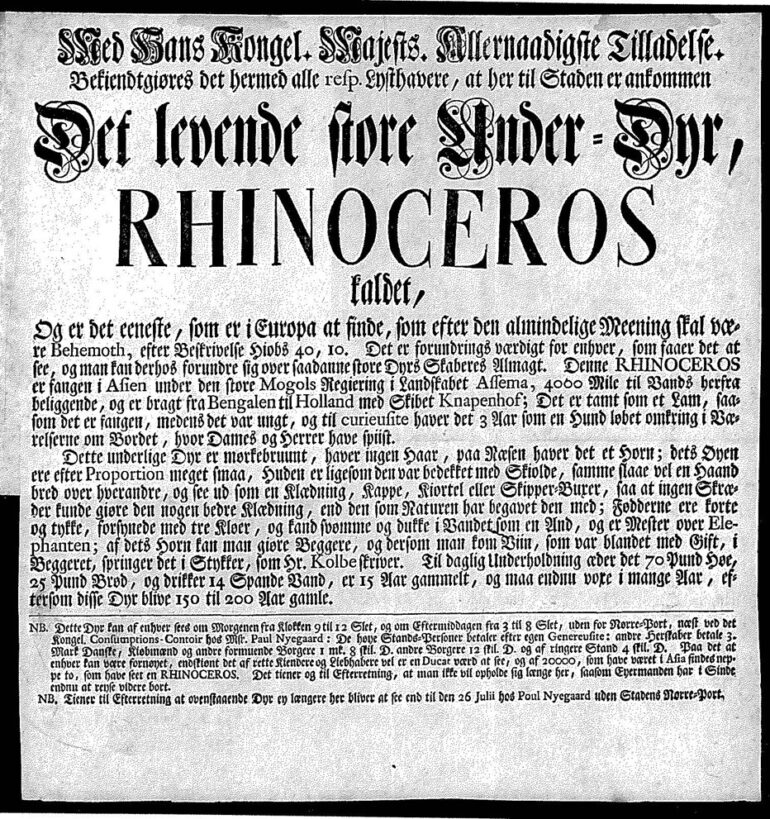
Original text (Danish)
Med Hans Kongel. Majests. Allernaadigste Tilladelse.
Bekiendtgiores det hermed alle resp. Lysthavere, at her til Staden er ankommen
DET LEVENDE STORE WUDER-DYR, RHINOCEROS KALDET,
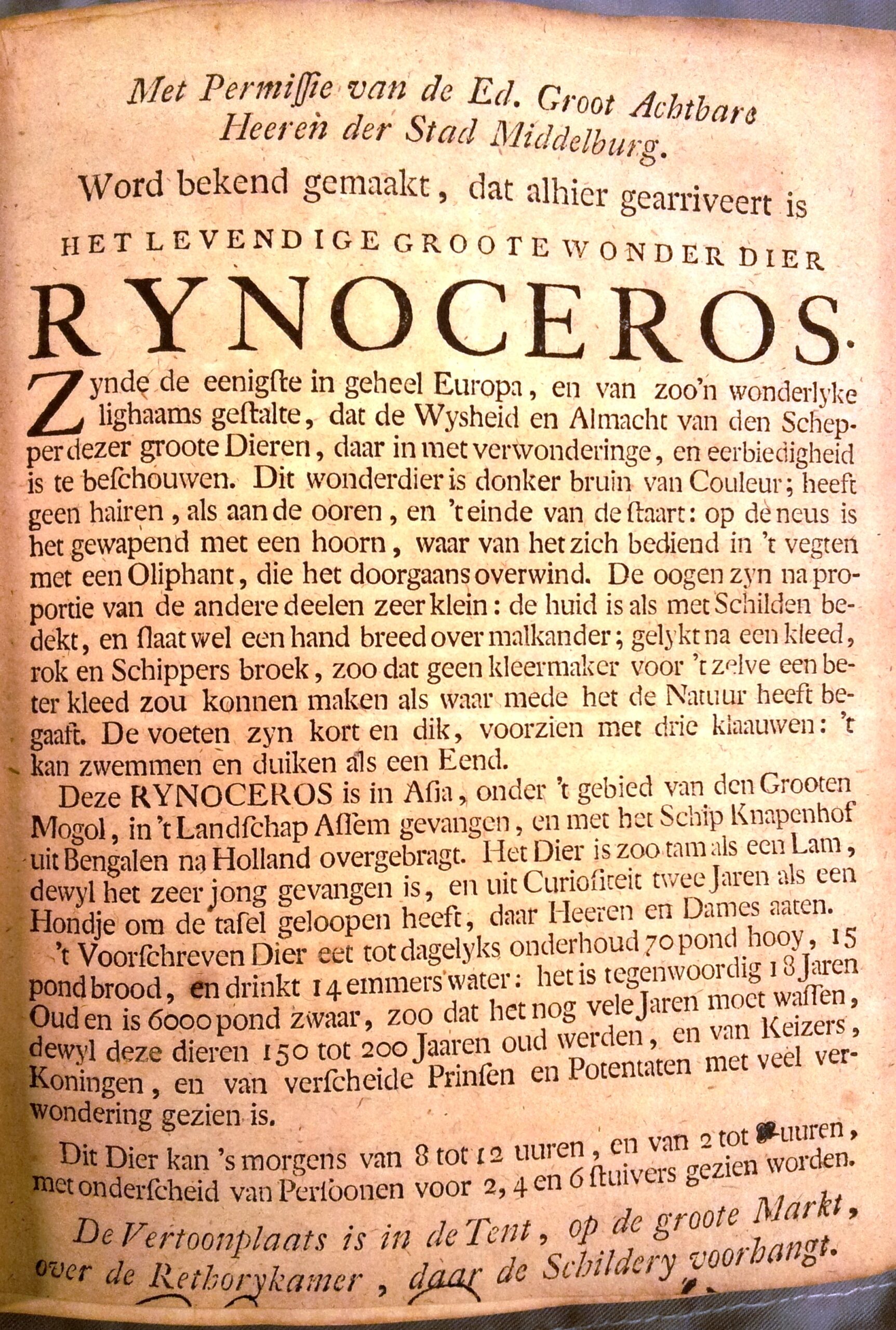
Og er det eeneste, som er i Europa at finde, som ester den almindelige Meening skal voere Behemoth, ester Beskrivelse Hiobs 40, 10. Det er forundrings vaerdigt for enhver, som faaer det at see, og man kan derhos forundre sig over saadanne store Dyrs Skaberes Almagt. Denne Rhinoceros er fangen i Asien under den store Mogols Regierung i Landskabet Assema, 4000 Mile til Bands herfra beliggende, og er bragt fra Bengalen til Holland med Skivet Knapenhof; Det er tamt som et Lam, saasom det er fangen, medens det var ungt, og til curieusite haver det 3 Aar som en Hund lobet omkring i Baerelferne om Bordet, hvor Dames og Herrer have spiist.
Dette underlige Dyr er morkebruunt, haver ingen Haar, paa Naesen haver det et Horn; dets Dyen ere ester Proportion meget smaa, huden er ligesom den var bedekket med Skiolde, samme slaae vel en haand bred over yvernadre, og see ud som en Klaedning, end den som Naturen har begavet den med; Fodderme ere korte og tykke, forsynede med tre Kloer, og fand suomme og dukke i Bandet som en And, og er Mester over Elephanten; af dets Horn kan man giore Beggere, og dersom man kom Wiin, som var blandet med Gift, i Beggeret, springer det i Stykker, som Hr. Kolbe skriver. Til daglig Underholdning aeder det 70 Pund Hoe, 25 Pund Brod, og drikker 14 Spande Band, er 15 aar gammelt, og maa endnu vore i mange Aar, estersom disse Dyr 150 till 200 Aar gamle.
NB. Dette Dyr kan af enhver sees om Morgenen fra Klokken 9 till 12 Slet, og om Estermiddagen fra 3 till 8 Slet, uden for Norre-Port, naest ved det Kongel. Consumptions-Contoir hos Msr. Paul Nyegaard: De hove Standes-Personer betaler ester egen Genereusite: andre Herstaber betale 3. Mark Danske, Kiobmaend og andre formuende Borgere 1 mk. 8 stil D. andere Borgere 12 stl D. og af ringere Stand 4 stil D. Paa det at endver kan fornoyet, endskiont det af vette Kiendere og Liebhabere vel er en Ducat voerd at see, og af 20000, som have voeret i Asia findes neppe to, som have seet en Rhinoceros. Det tiener og til Estervetning, at man ikke vil opholde sig laenge her, saasom Evermanden har i Sinde, endnu at reyse videre bort.
NB. Tiener til Estervetning at ovenstaaende Dyr en laengere her bliver at see end til den 26 Julii hos Poul Nyegaard uben Stadens Norre-Port.
English translation
By His Royal Majesty’s Most Gracious Permission.
It is hereby announced to all concerned that here in the city has arrived
THE LIVING GREAT WONDER ANIMAL, CALLED RHINOCEROS,
And is the only thing to be found in Europe, which according to the general opinion is the Behemoth, according to the description of Job 40:10. It is worthy of astonishment to every one who sees it, and one can also marvel at the omnipotence of the creators of such great animals. This Rhinoceros was captured in Asia under the government of the great Mogul in the country of Assema, 4000 miles from here, and was brought from Bengal to Holland with the ship Knapenhof. It is as tame as a lamb, as it was captured when it was young, and for curiosity it has been running around like a dog around tables where ladies and gentlemen have eaten for 3 years.
This strange animal is dark brown, has no hair, on its nose it has a horn. Its coat is very small in proportion, the skin is as if it were covered with scales, the same spans a hand wide over the udders, and looks more like a garment than that with which nature has endowed it; its feet are short and thick, provided with three claws, and it can swim and dive in the water like a duck, and is superior to the elephant; from its horns one can make beakers, and if one puts wine mixed with poison into the beaker, it bursts into pieces, as Mr. Kolbe writes. For daily entertainment it eats 70 pounds of hay, 25 pounds of bread, and drinks 14 buckets of water, is 15 years old, and must still be for many years, as these animals are 150 to 200 years old.
NB. This animal can be seen by anyone in the morning from 9 to 12 o’clock, and on Easter afternoon from 3 to 8 o’clock, outside the North Gate, next to the Royal Consumption Counter at Mr. Paul Nyegaard. The high class people pay as their own generosity: other gentlemen pay 3. Danish marks, merchants and other wealthy citizens 1 mk. 8 style D. other citizens 12 style D. and of lower status 4 style D. In order to be satisfied, even though it is worth a ducat to see it, and out of 20,000 who have been to Asia there are hardly two who have seen a Rhinoceros. It also serves to show that one will not stay here long, as the owner has in mind, yet to travel further away.
NB. Further to Estervetning that the above animals will be on view here no longer than until July 26th at Poul Nyegaard’s, outside the city’s North Gate.
Source 7605. Drawing by Johanna Fosie from life
* Johanna Fosie (1726–1764), daughter of organ-player Jacob Fosie. Worked in watercolour
Drawing, 144 x 177 mm. “Tab. 6. Johanna Fosie ad vivum delin. et fec.”
Preserved in National Gallery of Denmark, Copenhagen, KKSgb11030
open.smk.dk
Literature:
- Jorgensen 1986, fig. 1 – illustrated
- Clarke 1986: 63 – not illustrated
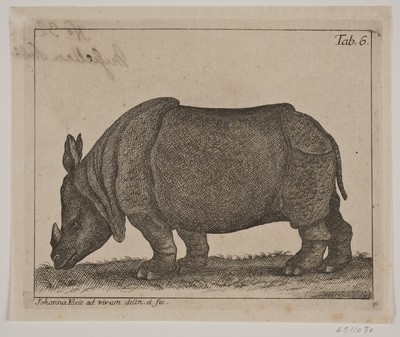
Text on drawing:
[upper right] Tab. 6.
[below rhinoceros] Johanna Fosie ad vivum delin. et fec.
English translation
Johanna Fosie drawn after life and engraved
“Tab. 6” seems to indicate that this was part of a larger work or magazine, but this information not retrieved.
Source 7606. Addition to Valmont de Bomaire, 1769
Translator * Hans von Aphelen (1719–1779), Danish lexicographer
Valmont-Bomare, J.C. 1769. Den almindelige Natur-Historie i Form af et Dictionnaire, ved Valmont de Bomare. Oversat, forøget og forbedret af H. von Aphelen, vol. 5. Kiobenhavn, T.L. Borup.
Original text (Danish)
[p. 532] 1755. fremviste og Hallænderne een i Kiobenhavn a., som og blev ført til Sees; men, som der siges blev borte paa Reisen tilbage.
English translation
The Dutch also presented one in Copenhagen, which was taken by sea; but, as is said, it was lost on the journey back.
Source 7607. Arrival in Copenhagen – various foreign media
Copenhagen:
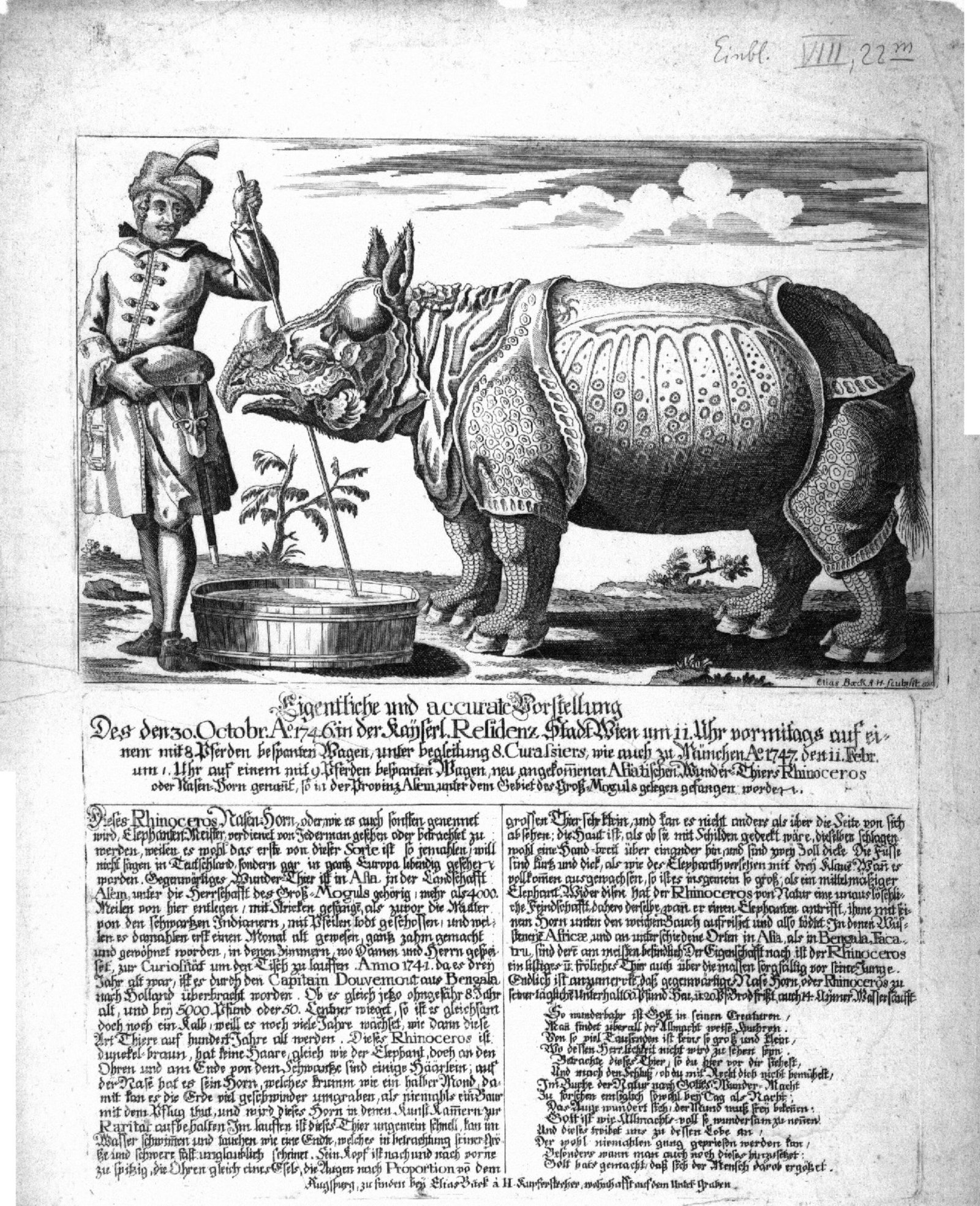
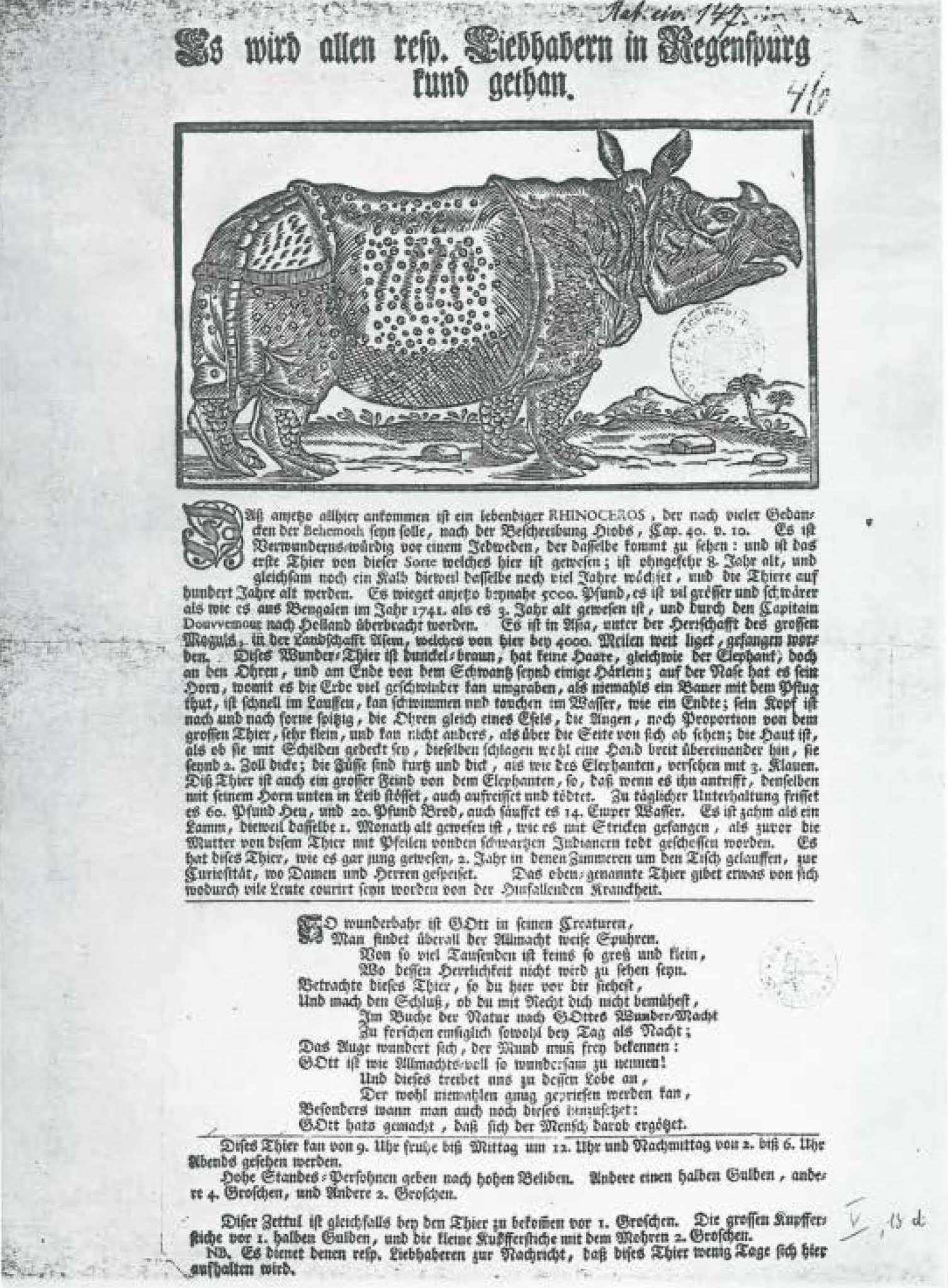
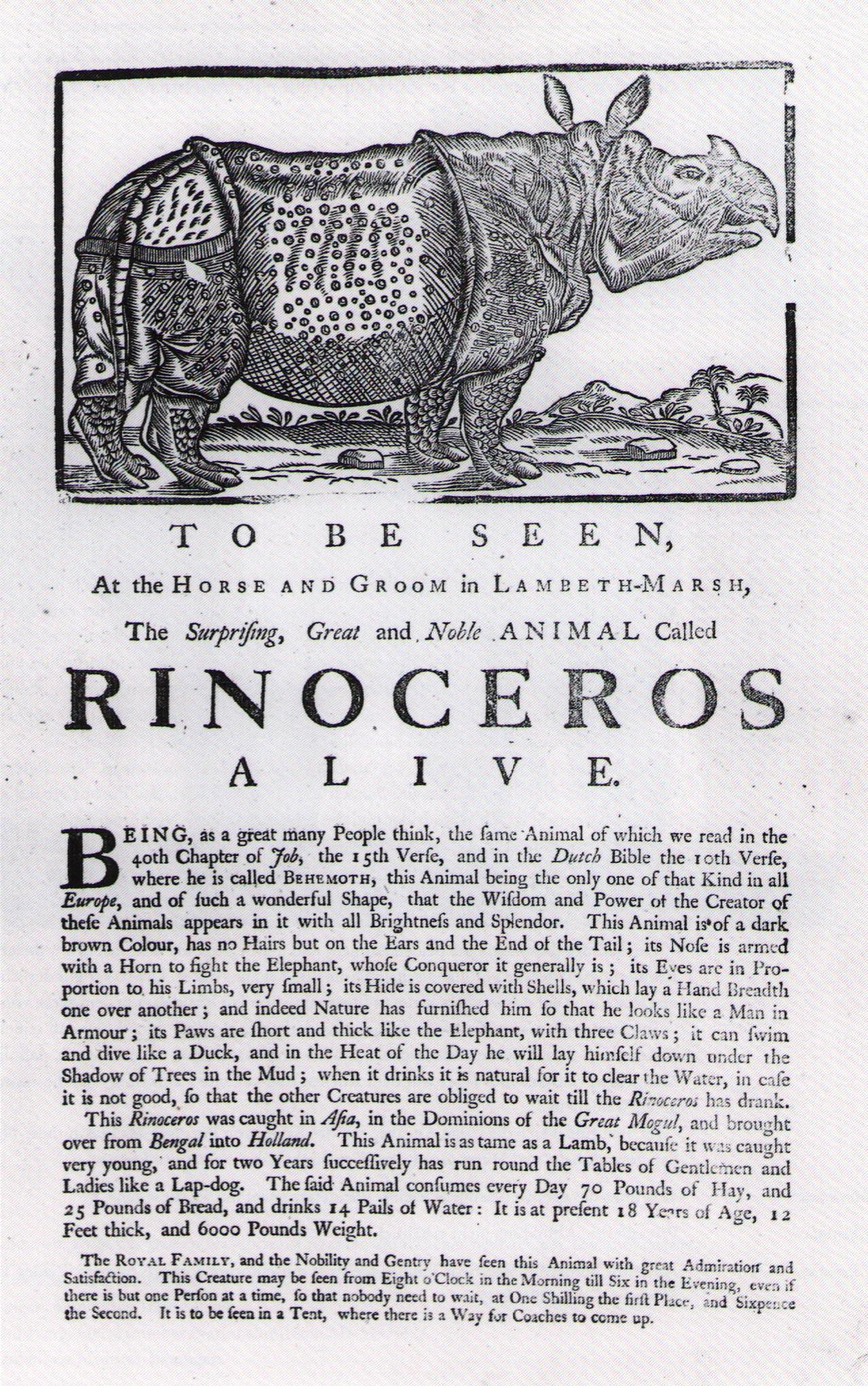
The arrival of the rhinoceros in Copenhagen was repeated in the international press. Note the strange information on Clara’s age as 13 or 14 years [should be 15 years]
– London Evening Post Thursday 26 June 1755
Copenhagen, June 14. A Dutch Ship is arrived here with a Rhinoceros, which is 13 Years old and weighs 6000 lb. This beast consumes daily 80 lb of Hay and 30 of Bread, besides a good qunatity of Wine and spirituous Liquors. They keep it in a great Cage set on Wheels.
– Münchner-Zeitung 24 June 1755: 1–2
Sonsten hat man Nachricht von Coppenhagen, daß am 5. dieses [5 June 1755] der fast durch ganz Europa geriste bekannte Rhinoceros, auf einem hollaendischen Schiffe, daselbst angelanget seye;
– Derby Mercury Friday 4 July 1755
– Whitehall Evening Post or London Intelligencer No. 1539, Thursday 1 January 1756, p.3
They write from Copenhagen, that a Rhinoceros brought last Year from the East-Indies thrives very well, and is in a good State of Health. This Creature is said to be about fourteen Years of Age, weighs between two and three tons, consumes about 100 lb. of Bread and Hay in a Day, and seems perfectly well reconciled to the Climate.
– Mercure de France, Sunday 31 August 1758 [sic]
Un navire Hollandois a conduit ici un rhinocéros, âgé de treize ans. Cet animal chaque jour mange trente livres de pain, & quatre-vingt livres de foin. Il pèse soixante quintaux.
Source 7608. Bang, 1756. Natural History of Rhinoceros. Not published
Bang, Olaus [Oluf Bang] – in catalogue of 2 works:
Original text (Danish)
Rhinoceros, eller Næsehorningens naturlige Historie. Khavn-1756. 4. Hvoraf dog intet videre er trykt end Titel-bladet med nogle andre dertil hørende Tegninger i Kobber.
English translation
Rhinoceros, or the Natural History of the Rhinoceros. Khavn-1756. 4. Of which, however, nothing further has been printed than the title page with some other accompanying drawings in copper.
Danish Kg Bibliothek – on enquiry state that there is no known copy of this work.