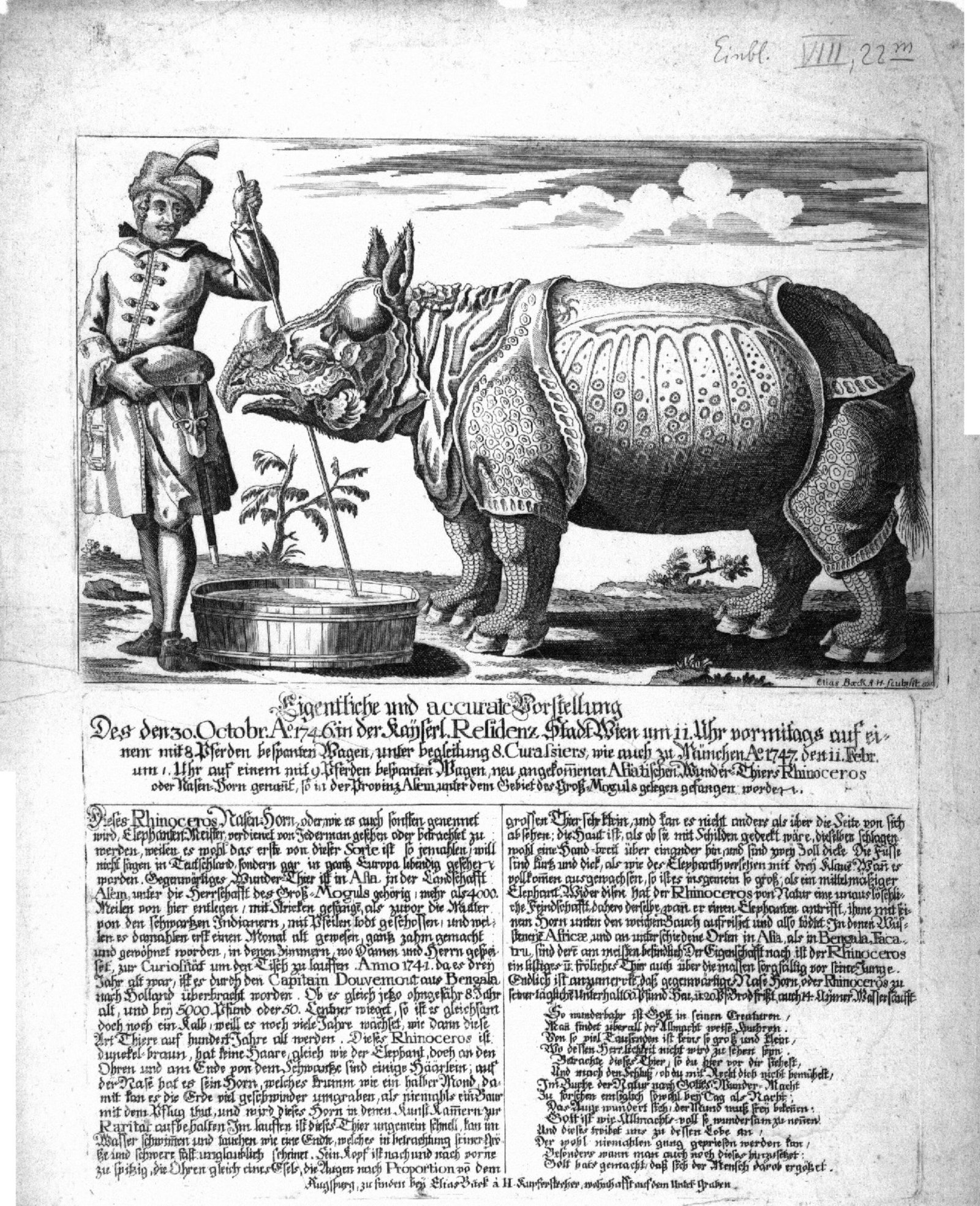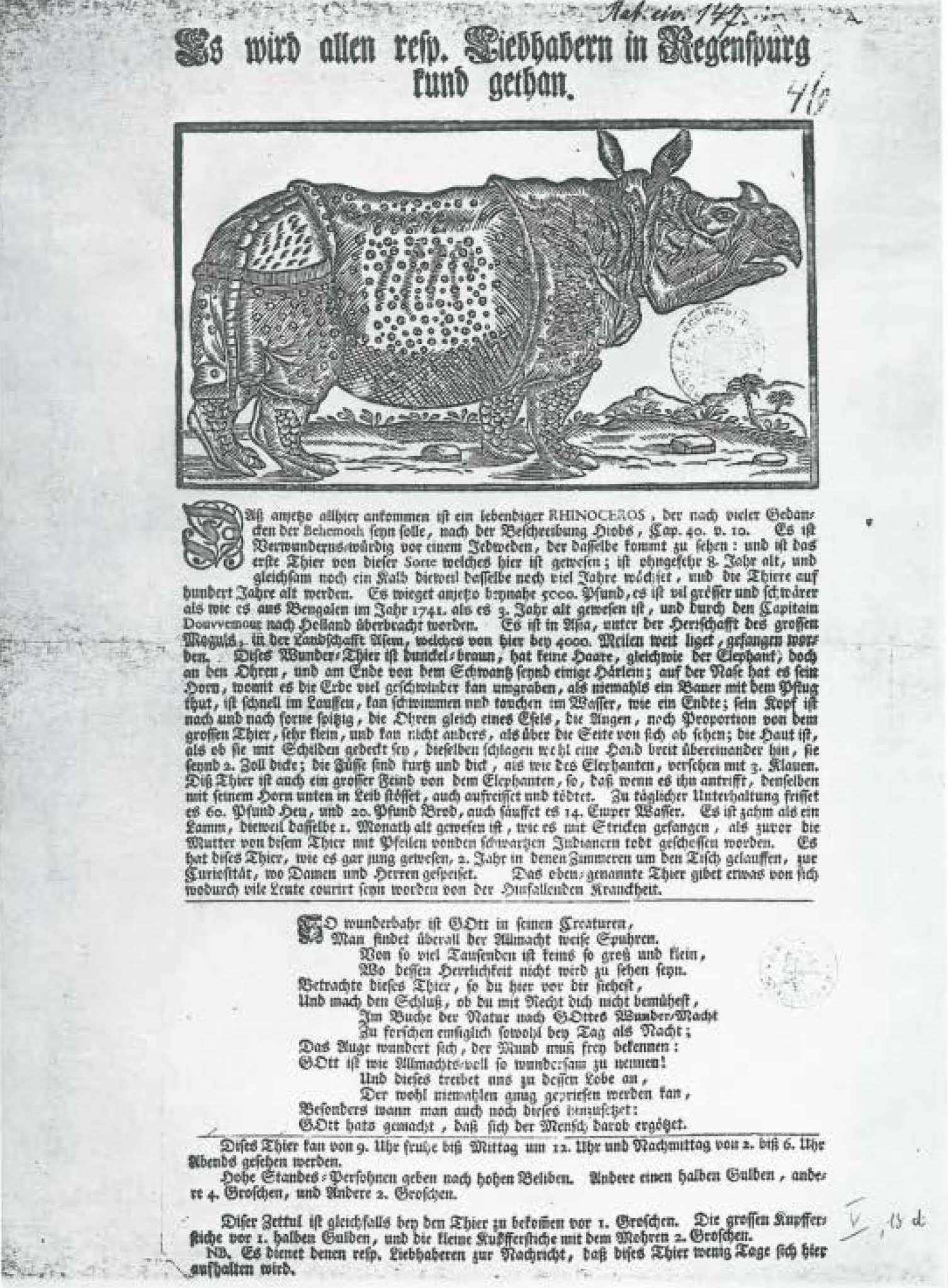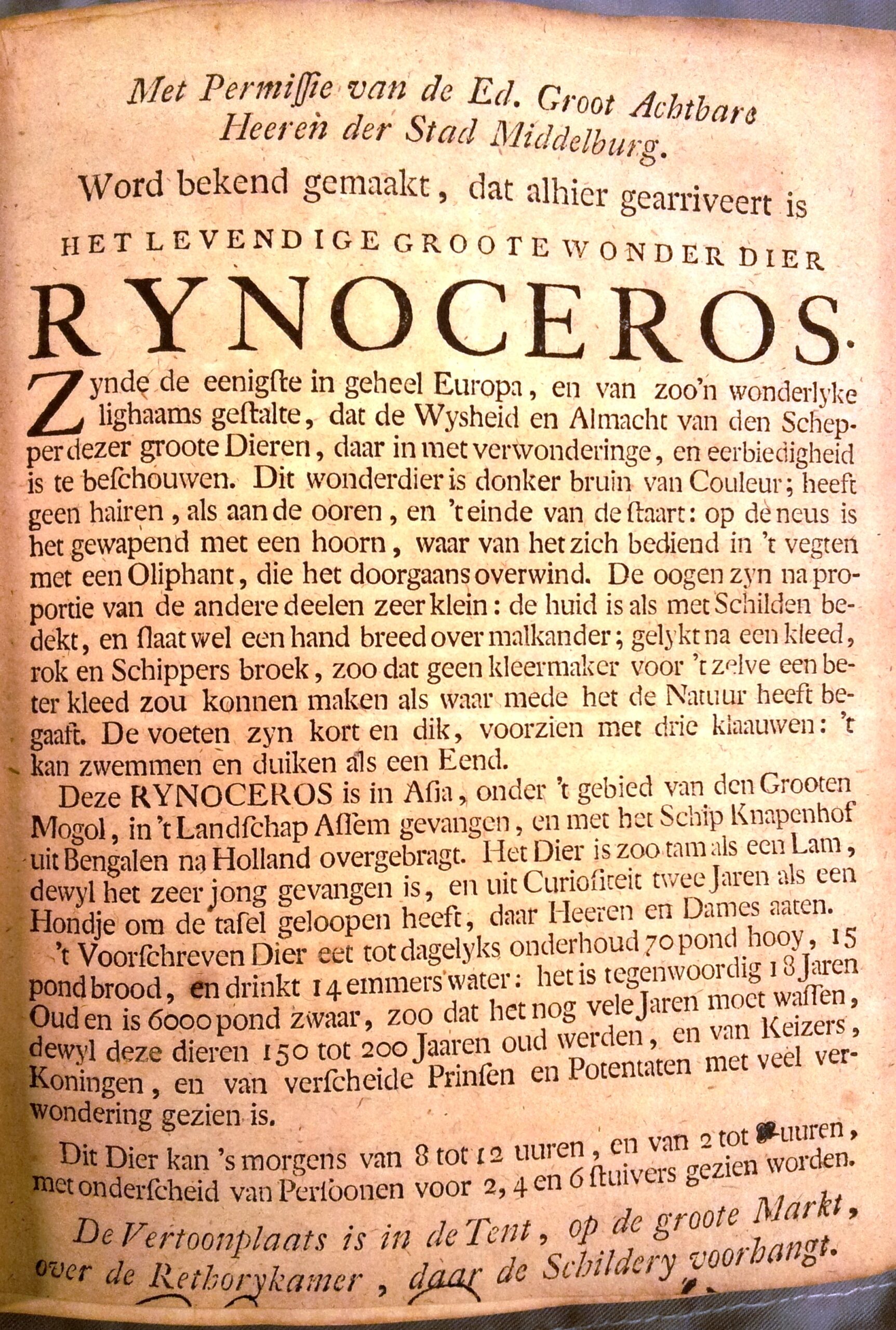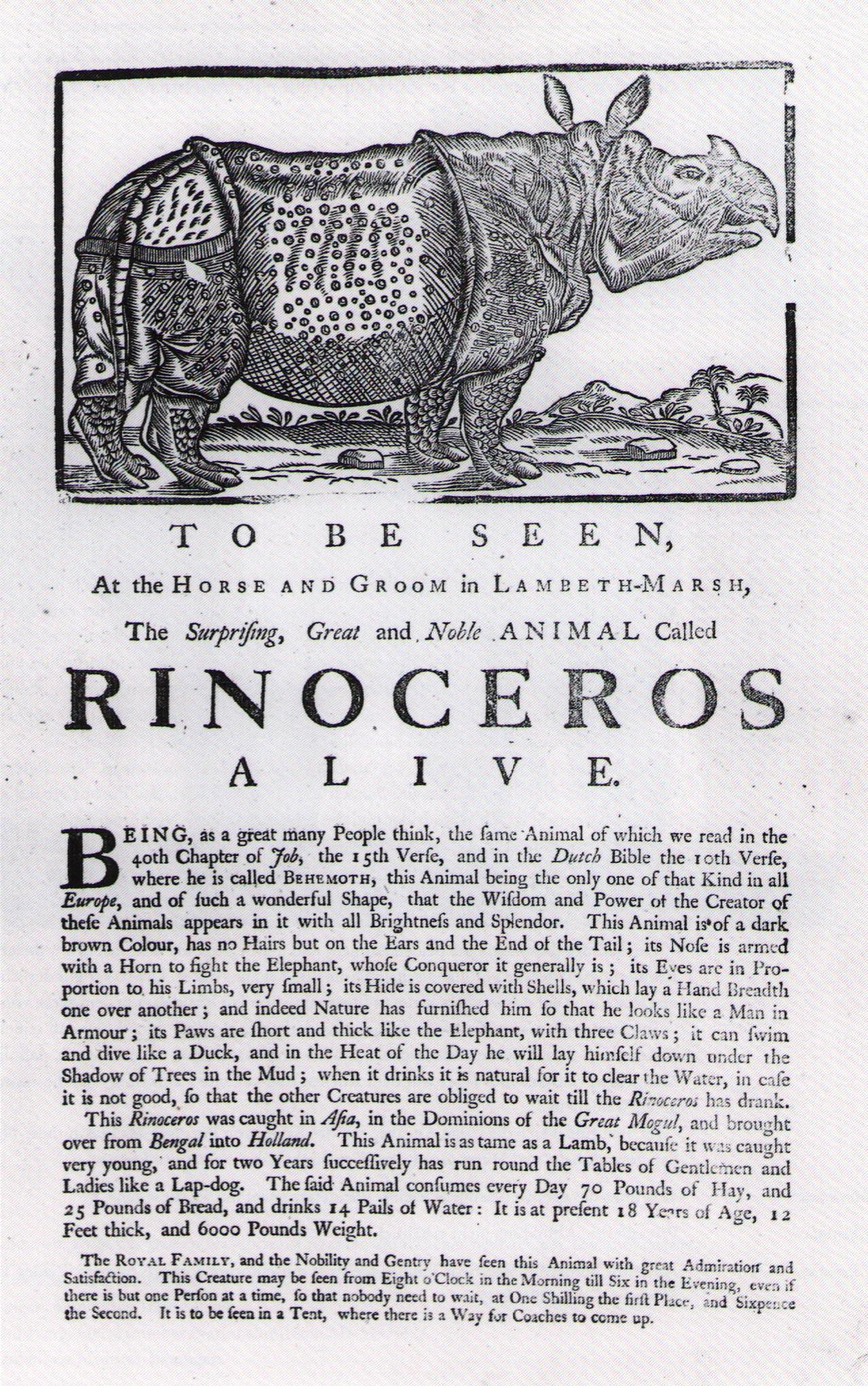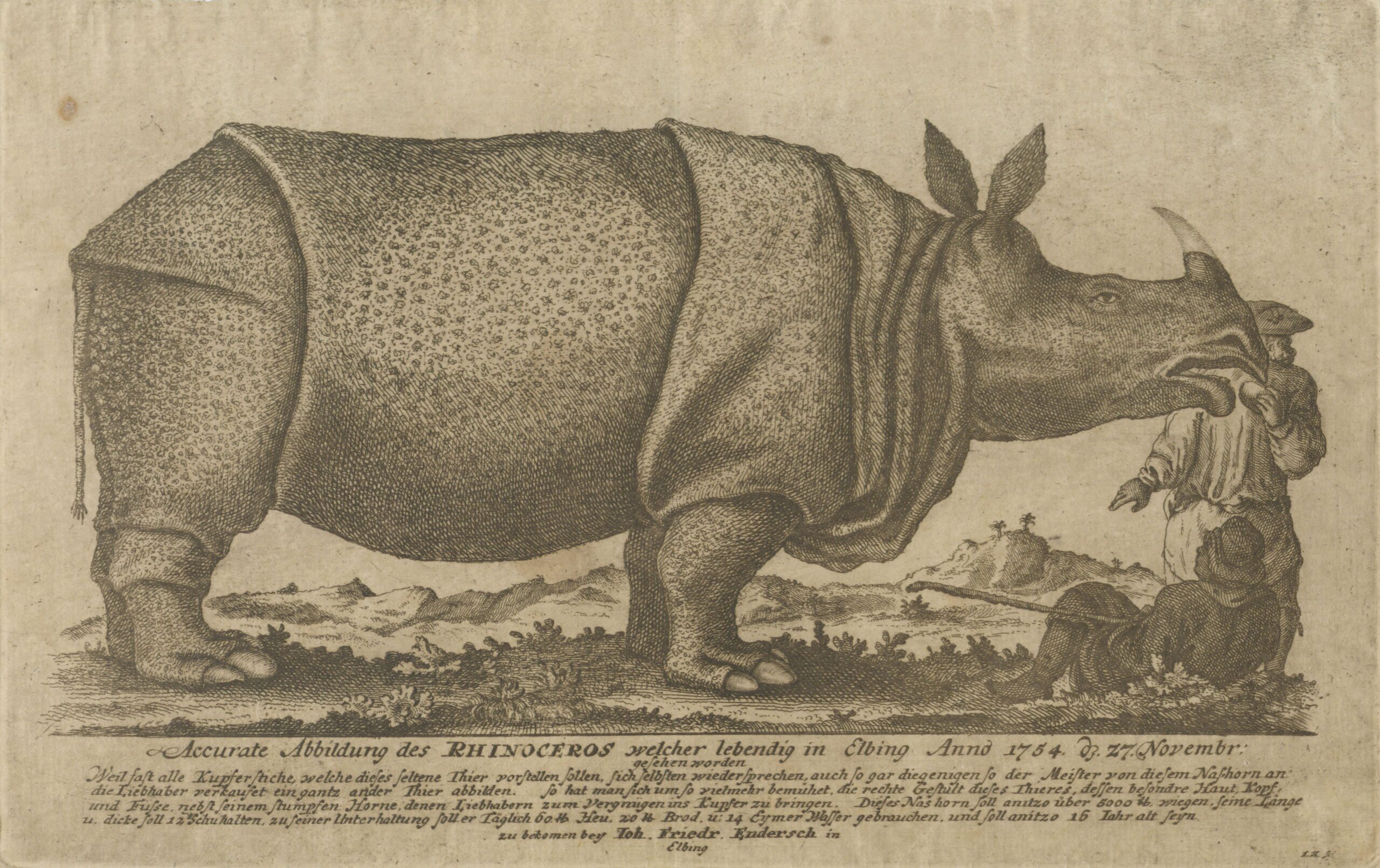


The Chronicle of Elbing by Thomas Fuchs mentions that the rhinoceros was seen on 27 November 1754, 16 years old, arriving from Warsaw and leaving to Kaliningrad (source 7502). The information was first published by Chodynski 2020 (source 7501). There is a broadsheet by Friedrich Hampe, with the same date 27 November 1754 with one known copy first published by Rookmaaker 2024 (source 7503).
Elblag on coast of Baltic Sea is 60 km east of Gdank (Danzig), 280 km north of Warsaw.
Literature
- Chodynski, A.R., 2020. – see source 7501
- Rookmaaker, 2024. The Rhinoceros of South Asia. Leiden, Brill, p. 69, fig. 5.26 – illustrated.
Source 7501. Chodynski (2020), about rhino in Elbing
Chodynski, A.R. 2020. Dzielo M.B. Valentiniego Museum museorum i inne publikacje muzeograficzne z gdanskich ksiegozbiorow oraz ich znaczenie w ksztaltowaniu zbiorow przyrodniczych i artystycznych w XVII i XVIII wiek. Opuscula Musealia 27: 131–167.
Original text (Polish)
[p. 145] Przykładem niech będzie nosorożec (Rhinoceros) przywieziony do Elbląga nie drogą morską, lecz Wisłą z Warszawy, wzbudzając wielką sensację 27 listopada 1754 roku. Uwieczniony na miedziorycie sygnowanym monogramem D.H., został włączony jako ilustracja do rękopiśmiennej kroniki elblążanina Thomas Fuchs (note 43).
English translation
An example is the rhinoceros (Rhinoceros) brought to Elblag not by sea, but by the Vistula River from Warsaw, causing a great sensation on November 27, 1754. Immortalized on a copperplate signed with the monogram D.H., it was included as an illustration in the manuscript chronicle of Thomas Fuchs from Elblag (note 43).
Note 43 in Chodynski 2020: 145:
AP Gd, 492/457, s. 121 – Elbingsche Chronic geschrieben von Thomas Fuchs 1285‒1756. [see source 7502]
Source 7502. Fuchs, Elbingsche Chronik, 27 November 1754
* Thomas Fuchs (1696–1755)
Elbingsche Chronic geschrieben von Thomas Fuchs, for years 1285‒1756.
Preserved: Archiwum Państwowe w Gdańsku [cyt. APGd.], 492/457, page 121
AP Gd, 492/457, s. 121 – Elbingsche Chronic geschrieben von Thomas Fuchs 1285‒1756
Text quoted after Chodynski 2020
Original text (German)
Den 27 ten November [1754] ist von Warszaw zu Wasser ein gewiesses Thier, so genant Rhinoceros ausern gebracht Worden, und von hier wiederumb zu Wasser mis einer Gefässe nach Cönigsberg Transportiret. Dieses in ein Thier so noch einmahlne Europa zu sehen gewiesen, zu dein habe es (?)Lliebhaber bekommen.
English translation
On November 27 [1754], a certain animal, called a rhinoceros, was brought from Warsaw by water, and from there transported by water in a vessel to Königsberg. This animal, which Europe has never seen before, has many fans.
Source 7503. Engraving by Friedrich Hampe with date 27 November 1754
Attributed to Johann Friedrich Endersch and engraved by Friedrich Hampe.
* Johann Friedrich Endersch (1705–1769) was a German cartographer and mathematician.
* F.H. = Friedrich Hampe (d. 1767), engraver
Engraved broadsheet showing rhinoceros facing right. The short horn is also shown in a longer version. One standing man is seen feeding the animal, another man with a stick is lying down. Text with title in 1 ½ lines, description in 4 lines, followed by signatures and locality. There are initials in lower right corner.
Examples:
- 1. Archiwum Państwowe w Gdańsku [cyt. APGd.], 492/457, page 121 [scan made in 2023]
- 2. Stadtbibliothek in Elblag, listed in Catalogue, probably destroyed in WW2.
For second example:
Katalog der Stadtbibliothek zu Elbing, 1894, volume 2, p. 323 has:
Endersch, J.F. – Abbildung des Rhinoceros, welcher in Elbing 1754 gesehen worden. Farbige Kupferstich. In d. Handschrift F. 38a (S.246).
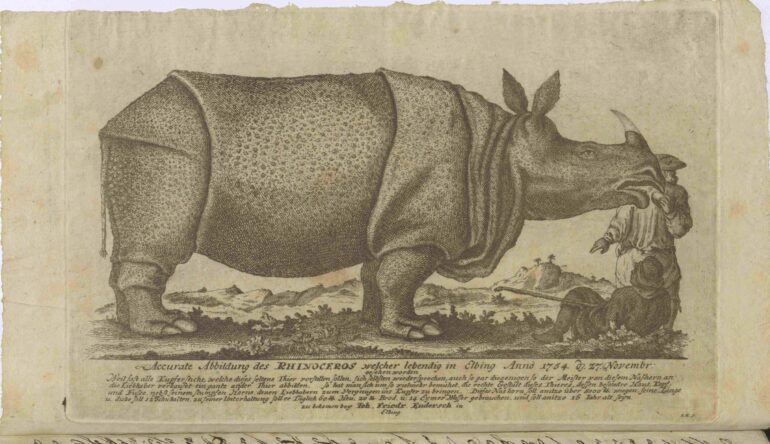
[Text on broadsheet]
Original text (German)
Accurate Abbildung des RHINOCEROS welcher lebendig in Elbing Anno 1754 dn. 27 Novembr. gesehen worden.
Weil fast alle Kupferstiche welches dieses seltene Thier vorstellen sollen sich selbsten wiedersprechen, auch so gar diegenigen so der Meister von diesem Nashorn an die Liebhaber verkaufet ein gantz ander Their abbilden. So hat man sich um so vielmehr bemühet die Rechte Gestalt dieses Thieres, dessen besondre Haut, Kopf, und Füsse, nebst seinem stumpfen Horne, denen Liebhabern zum Vergnügen ins Kupfer zu bringen. Dieses Nashorn soll anitzo über 5000 lb. wiegen. seine Länge u. dicke soll 12 Schu halten, zu seiner Unterhaltung soll er Täglich 60 lb. Heu, 20 lb. Brod u:[nd] 14 Eymer Wasser gebrauchen, und soll anitzo 16 Jahr alt seyn.
Zu bekommen bey Joh. Friedr. Endersch in Elbing.
[signature lower right corner] F.H. sc.
English translation
Accurate depiction of the rhinoceros, which was seen alive in Elbing on November 27, 1754.
Since almost all copper engravings depicting this rare animal contradict each other, even those that the master sold to collectors depict a completely different image, even more effort was made to capture the exact shape of this animal, its distinctive skin, head, and feet, as well as its blunt horn, in copper for the enjoyment of collectors. This rhinoceros is said to weigh over 5,000 lbs. Its length and thickness are said to hold 12 feet. For its daily sustenance, it needs 60 lbs. of hay, 20 lbs. of bread, and 14 buckets of water, and is said to be 16 years old.
Available from Joh. Friedr. Endersch in Elbing.
About Johann Friedrich Endersch:
Literature
- Toeppen, M. 1901. Geschichte der räumlichen Ausbreitung der Stadt Elbing mit besonderer Berücksichtigung ihrer Befestigungen und ihrer wichtigsten Gebäude. Zeitschrift des Westpreussischen Geschichtsvereins 21: i, 1–131
dlibra.bibliotekaelblaska.pl
p. 37 note 1. Mentions the Rhinoceros Kupferstich, attributed to Friedrich Hampe.
Information about Johann Friedrich Endersch, pp. 33–39
Endersch and Hampe worked together, probably was Endersch the teacher, Hampe his pupil or assistant.
Hampe signed E.H. or D.H. or F.H.