

PROBABLY MISTAKEN
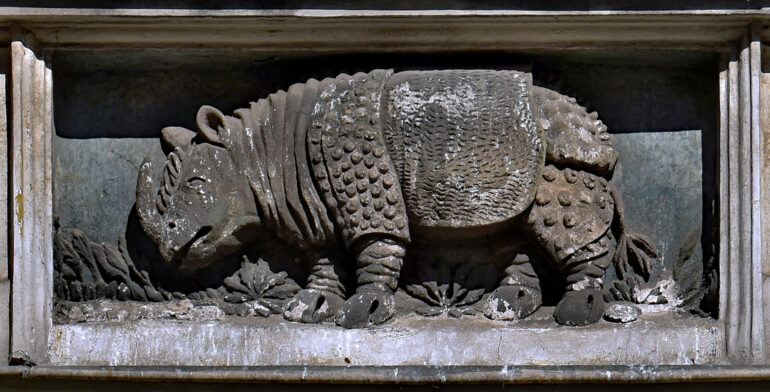
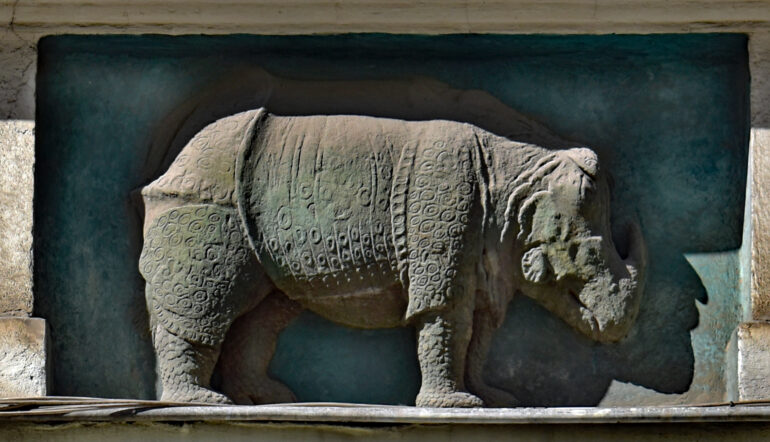
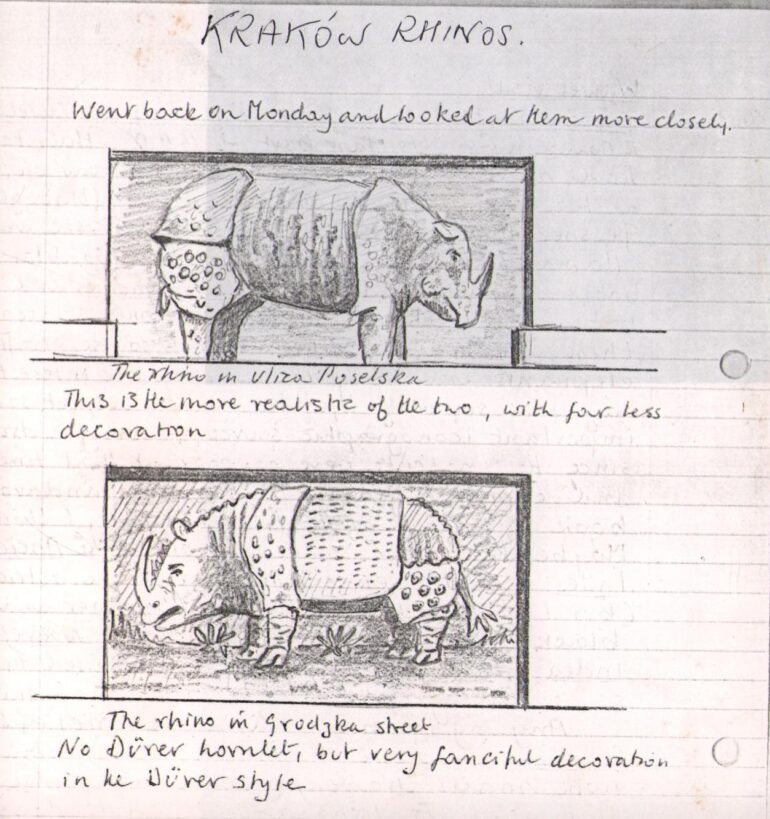
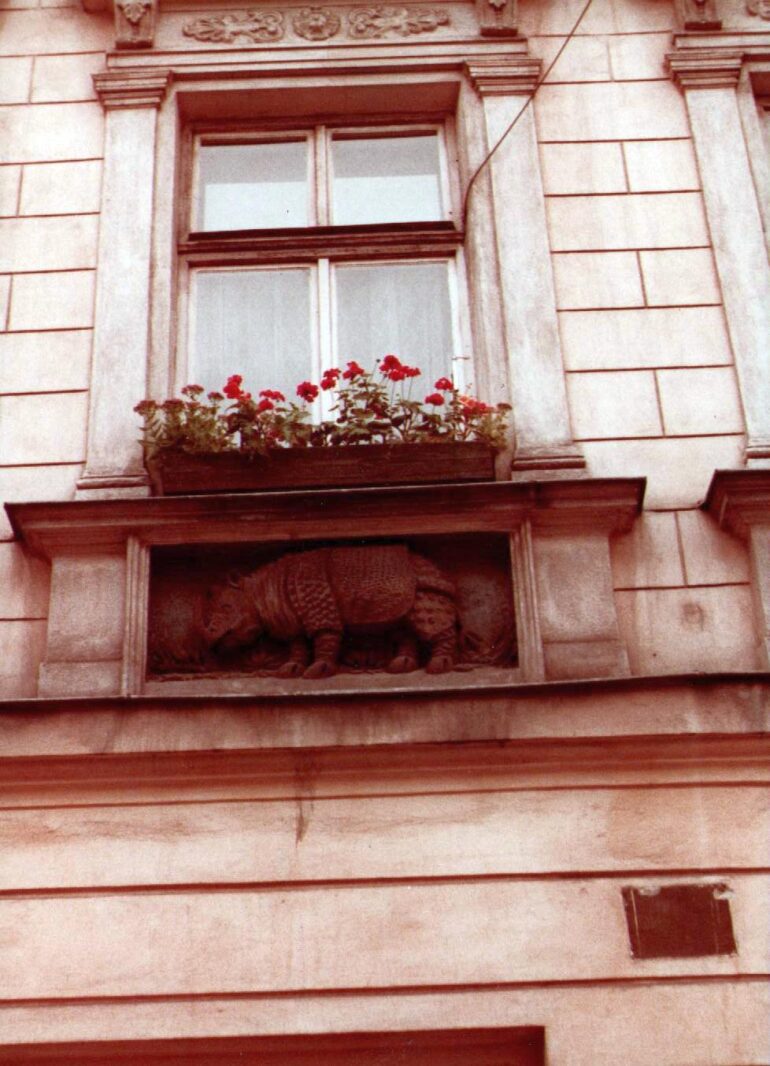
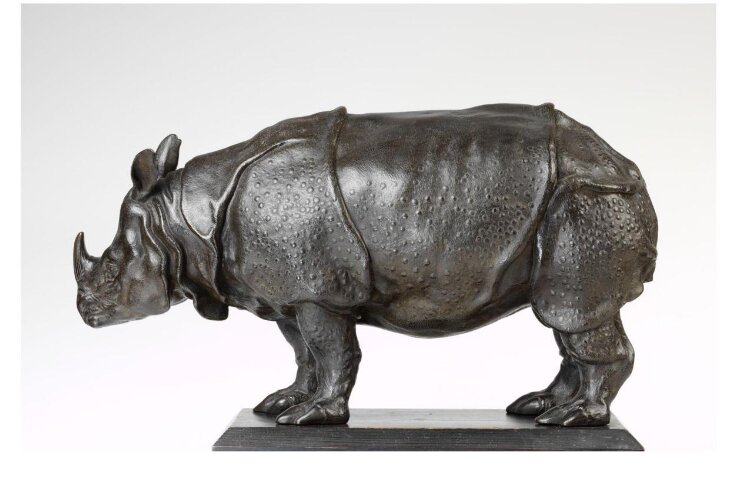
Tim Clarke included a potential visit to Krakow in his itinerary of Clara, on the basis of two plaques found in the façade of a house in the Ulica Grodska (source 7251). The history of these two rhino depictions is not clear, and Clara’s visit around 1751 is unlikely.
Literature
- Faust 2003
- Clarke 1986:63 Cracow 1754. – A possibility for there are two bronze plaques on a house of roughly this period
- van der Ham 2022, p. 185 Krakow 1754, note 243 (refers Clarke 1986, p. 63)
Source 7251. Krakow, Ulica Grodska no. 38
Information about the Elephant / Rhinoceros House in Krakow:
Krakow, Ulica Grodska no. 38
Kamienica Pod Elefanty (also Kamienica Pod Nosorożcem)
The “Pod Elefanty” tenement house, with its elephant and rhinoceros emblems, boasts well-preserved 18th-century wooden polychrome ceilings in the ground floor shop. This site was originally occupied by St. Peter’s Church.
https://pl.wikipedia.org/wiki/Kamienica_Pod_Elefanty_w_Krakowie
located in Krakow, in District I at 38 Grodzka Street, on the corner with 18 Poselska Street, in the Old Town.
In the 15th century, the site of the current tenement house was occupied by two Gothic houses and St. Peter’s Church, adjacent to Poselska Street. The northernmost house had an emblem embedded in its façade, depicting an elephant or rhinoceros, from which it took its name, which was later transferred to the adjacent building. In the 17th century, it housed the Golden Elephant Pharmacy, run by the Italian Boniface Cantelli.[2][3] In 1791, St. Peter’s Church was demolished, and the site remained empty for over forty years. In 1835, a thorough reconstruction was carried out, designed by Tadeusz Piotrowski, combining the two Gothic houses and expanding the building to include the former church. The building burned down during the Great Fire of Kraków in 1850. It was rebuilt between 1850 and 1852, designed by Piotr Baranowski.
* Not clear how original these plaques are, or were restored in the 19th century.