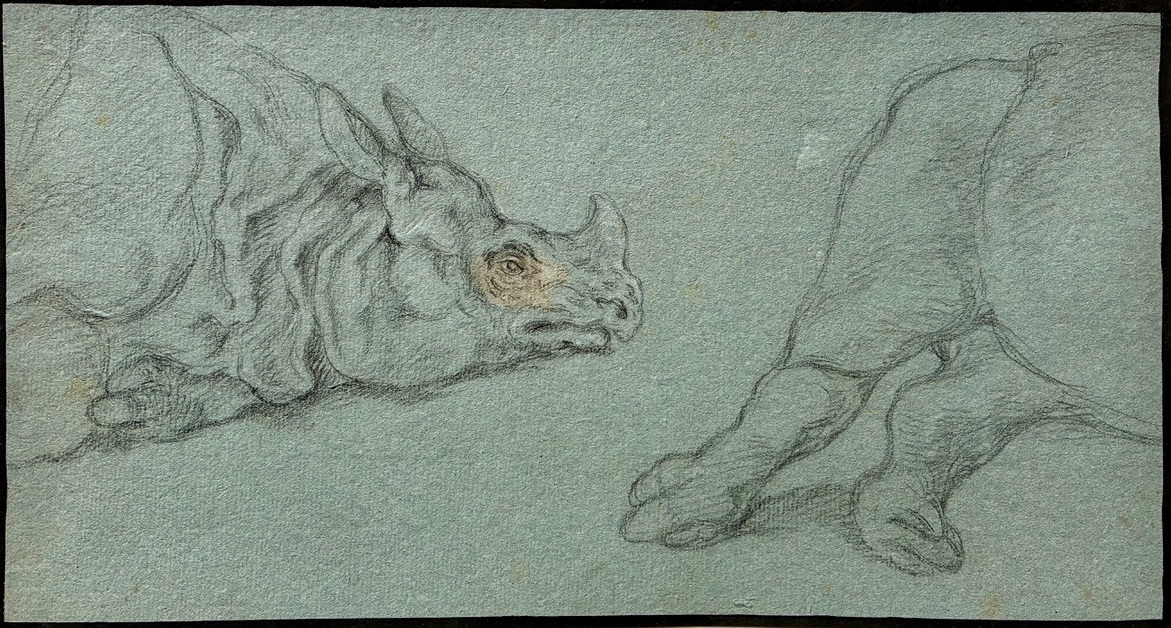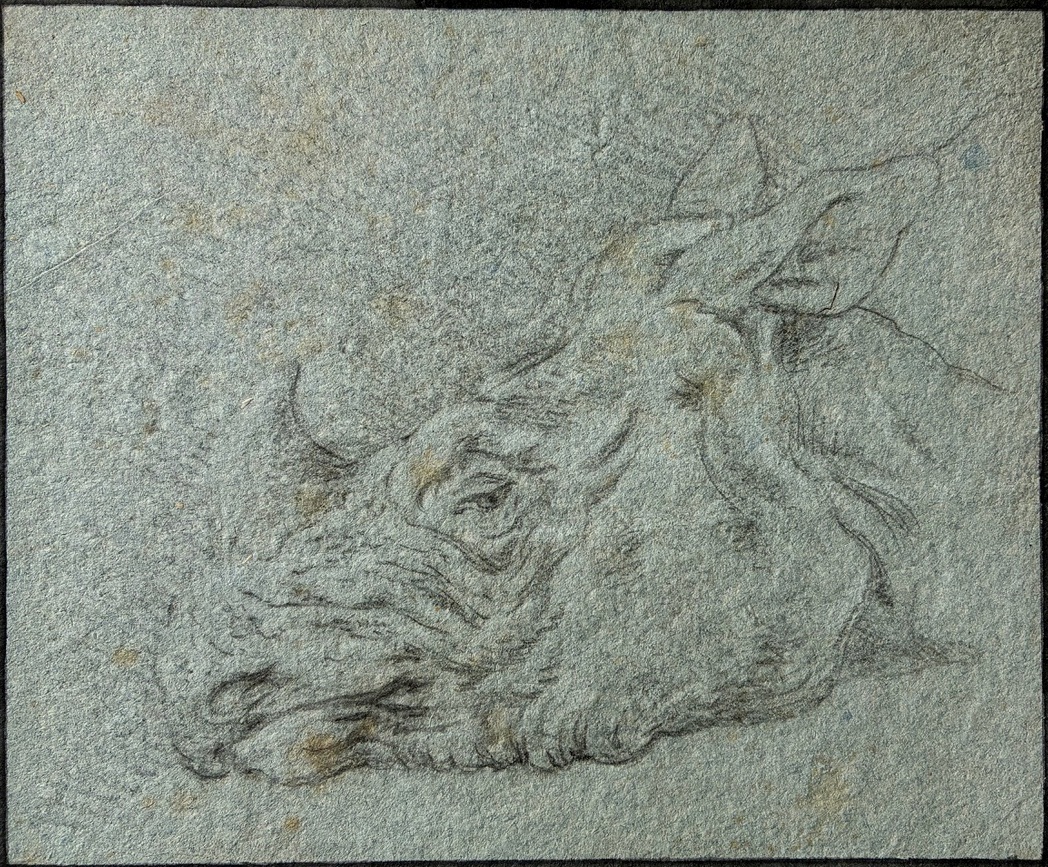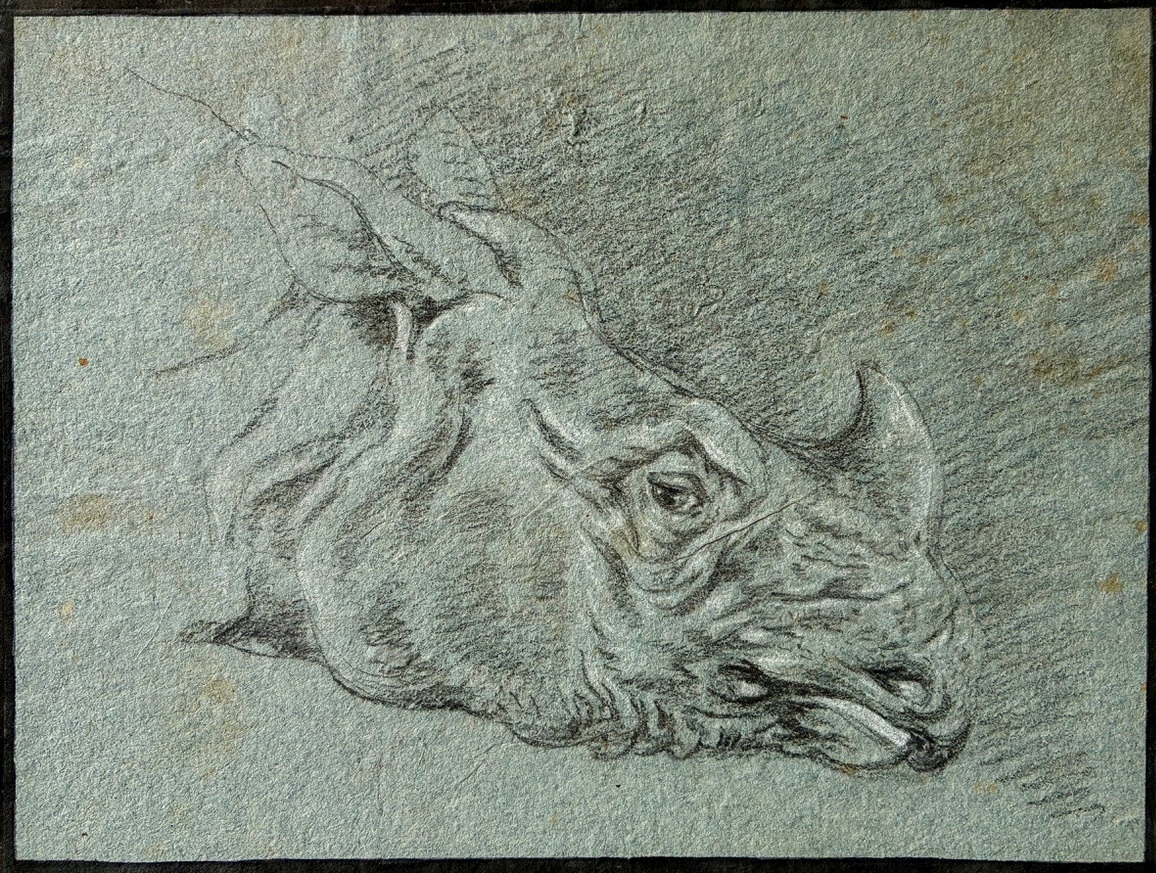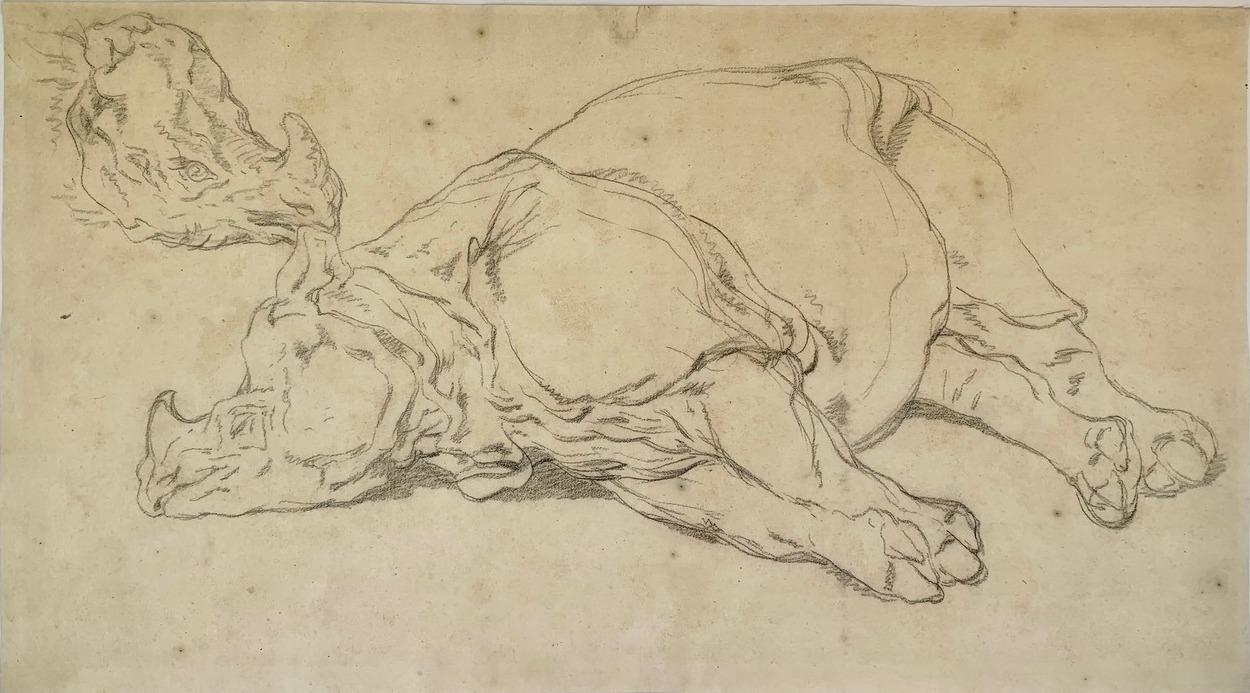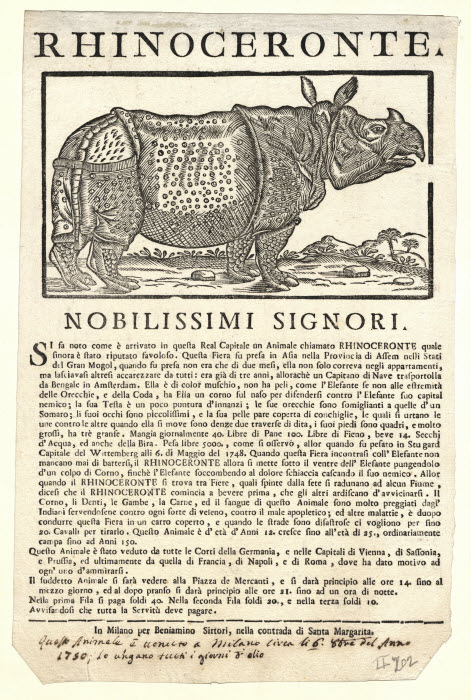


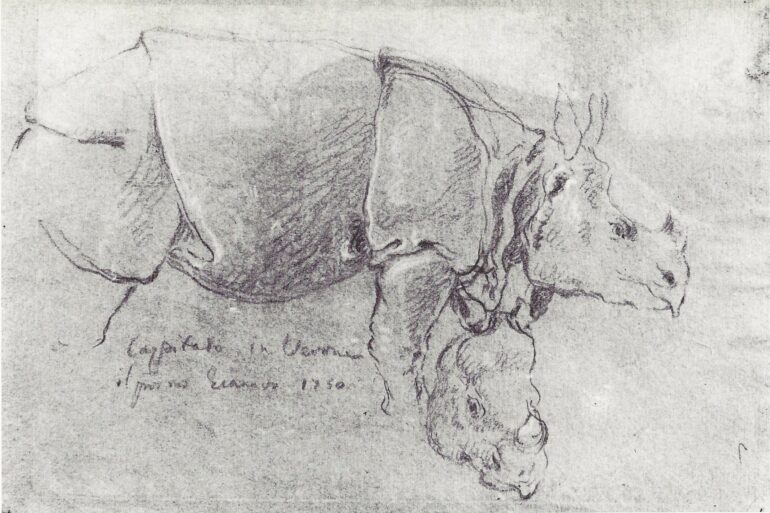
Biancolini mentioned the exhibition in Verona in the arena or amphitheatre in 1751 (source 5901), which is also found in a later work by Cancellieri (source 5902). Clara was sketched in Verona on 1 January 1751 probably by the Venetian painter Francesco Lorenzi, with two copies, one known (source 5903) and one lost (source 5904). A medal with Italian text was probably struck earlier (source 5905). Clara was seen on 4 January 1751 in the Amphitheater by Pfalzgraf Friederich Michael von Zweibrücken (source 5906).
Possibly arrived from Milan (180 km). Next station Verona to Venice is 120 km.
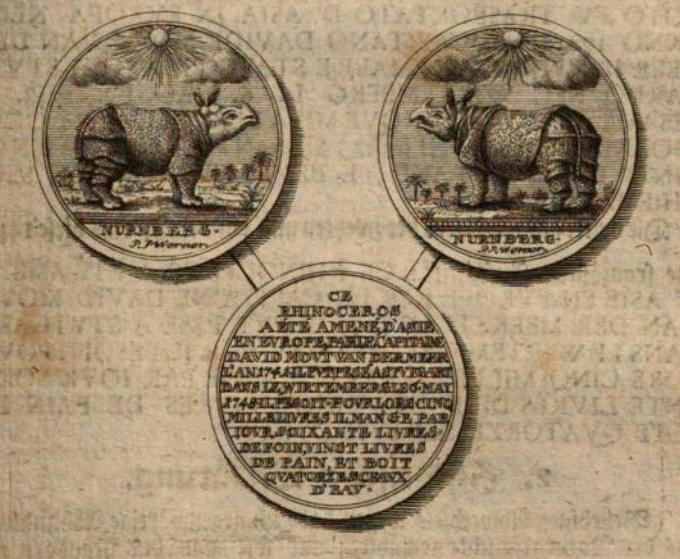
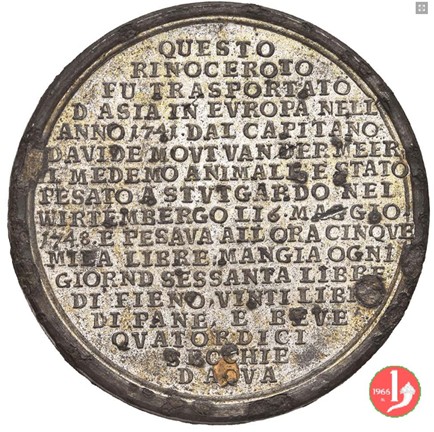
Note 1. It was said that a medal of Clara was struck in Verona. There is a medal with Italian text struck in Nuremberg in 1748 (5).
Note 2. Scipione Maffei published a chapter about the rhinoceros. Although Maffei was from Verona, it appears that he saw the animal in Venice, not in Verona.
Literature
- Clarke 1974: 122, n.23;
- Clarke 1986:60, fig. 37;
- Heikamp 1980, fig.15;
- Rookmaaker 1989: 66;
- Van der Ham 2022:184, note 221
- Giarola, A.; Serena, A. 2013. Gli spazi dello spettacolo popolare a Verona. Luoghi e riti delle meraviglie. In: Corpo Animali Meraviglie – Le Arti Circensi a Verona tra Sette e Novecento, pp. 15-22 – p.20 mentions visit of Clara – from modern sources. The paper also gives history and ilustrations of the Arena where shows were give.
Source 5901. Biancolini, Notizie storiche 1751
* Giovanni Battista Giuseppe Biancolini (1697–1780)
Biancolini, G. 1750. Notizie storiche delle chiese di Verona. Verona, Alessandro Scolari, vol. 3 [book dated 1750, but in text refers 1751]
books.google.com
Original text (Italian)
[p. 133] Chiesa di Santa Sofia
E quindi s’impara che il Zagata non scriffe cose favolose, come per malignità, andavan cicallando cert’uni. I quali, di ciò non contenti, noi pure di troppo credulità tacciarono, per aver creduto insieme col Limerı, ed altri che nel mondo ci foffe il Rinoceronte; uno de’ quali animali effendo stato condotto in Verona il mese di Gennaio di quest’ anno 1751, e fatto vedere vivo nell’ Anfiteatro, confusi resteranno, cred’ io, e del torto fattoci si vergogneranno.
English translation
And so we learn that Zagata does not write fabulous things, as certain people were gossiping about in malice. Not content with this, they also accused us of being too credulous, for having believed together with Limerì and others that the Rhinoceros was the only animal in the world; one of which animals was brought to Verona in the month of January of this year 1751, and shown alive in the Amphitheatre, and they will, I believe, deny doing us such an injustice.
Source 5902. Cancellieri, Descrizione 1811
* Francesco Cancellieri (1751–1826)
Rhinoceros in the Arena of Verona in 1751 [no earlier source provided]
Cancellieri, F. 1811. Il mercato, il Lago dell’Acqua Vergine, ed il Palazzo Panfiliano nel circo Agonale detto volgarmente Piazza Navona, con un’appendice di 32. documenti ed un trattato sopra gli obelischi. Roma : F. Bourliè
Original text (Italian) – p. 146
[p. 146] [summary of additions] Descrizione della Statua del Nilo, trasportata a Parigi. Perchè l’ultimo de’ 15 Putti sia scolpito nella sommità del Cornucopia? Notizie del Loto, dell’Ibide, del Coccodrillo, e dell’ Ippopotamo, che per la i volta fu veduto in Roma, nell’ Edilità di M. Scauro. Riveduto poi sotto Augusto, e sotto Antonino Pio. Battaglie fra l’Ippopotamo, e’l Rinoceronte uno de’ quali fece mostra di sè nel 1751 nell’ Arena di Verona. Rinoceronte ricamato nelle Coperte de’Barberi, con un Motto, indicante, che non torna mai indietro senza Vittoria. p.160.
English translation
Battles between the Hippopotamus and the Rhinoceros, one of which was exhibited in 1751 in the Arena of Verona. Rhinoceros embroidered on the Barberi Blankets, with a Motto, indicating that it never returns without Victory.
Original text (Italian) – p. 161
[p.161] [in footnote] Poichè la Volta della Sistina dava segni evidenti di aprirsi dopo l’ Elefante, può vedersi nella Risposta del Marchese Maffei sopra il Rinoceronte, veduto in Venezia nel 1751, Opusc. Calog. LXV, 329, e che poi fece mostra di sè nell’ Anfiteatro di Verona, ove, entro uno Steccato, si teneva rinchiuso.
English translation
Since the Sistine Vault showed clear signs of opening after the Elephant, it can be seen in the Response of the Marchese Maffei on the Rhinoceros, seen in Venice in 1751, Opusc. Calog. LXV, 329, and which was then exhibited in the Amphitheatre of Verona, where, within a specially formed enclosure, it was kept confined.
Source 5903. Drawing on blue paper, unsigned but attributed to Francesco Lorenzi
Francesco Lorenzi (1723–1787)
The Rhinoceros in Verona. Drawing in black and white chalk on blue paper, 21.8 x 32 cm. From collection of late Ulrich Middeldorf (1901–1983). Current location unknown.
The date on the drawing is 1750. In the Old Style calendar then used in Verona, the new year started on 25 March. Elsewhere the New Style dictated that the year started on 1 January. Hence in O.S. 1 January 1750 is in N.S. 1 January 1751.
Original text (Italian) – manuscript
Capitato in Verona il primo Gennaio 1750
English translation
Arrived in Verona on 1 January 1750 = 1751
Literature:
- Clarke 1986:60, fig. 37;
- Heikamp 1980, fig.15
- Clarke 1974: 122, n.23
Stated to be a commission by Maffei for Lorenzo:
Guzzo, Enrico M. 2005. Francesco Lorenzi a Verona tra Tiepolo e Maffei. In: Chignola, I., Guzzo, E.M., Tomezzoli, A. (eds). Francesco Lorenzi (1723–1787): un allievo di Tiepolo tra Verona, Vicenza e Casale Monferrato. Atti della Giornata di Studi di Mozzecane, 16 novembre 2002, pp. 1-37
[p. 14] . . . e forse ca dere verso il 1751, quando il rapporto con Maffei e con il suo entourage viene confermato dalla commissione di un ‘ritratto’ del rinoceronte in arena.
[English: and perhaps fall around 1751, when the relationship with Maffei and his entourage is confirmed by the commission of a ‘portrait’ of the rhinoceros in the arena.]
Francesco Lorenzi (1723–1787) was a friend of Scipione Maffei (1675–1755). He was in Verona from 1745, and returned to Venice in 1751. He studied under Giambattista Tiepolo.
Source 5904. Drawing by Francesco Lorenzi commissioned by Jean-François Séguier
* Jean-François Séguier (1703–1784), French botanist. He was a friend of Scipio Maffei. Member of Academie Royale from 1749.
cths.fr
Drawing now unknown. Attributed to Francesco Lorenzi (1723–1787). It was mentioned by Diego Zannandreis (1768–1836) as a drawing in red and black pencil (Zannandreis 1891: 428).
Literature:
- Levey, M. 1971. National Gallery catalogues: The seventeenth and eighteenth century Italian schools. London, National Gallery, p. 155 (after Zannandreis)
- Zannandreis, D. 1891. Le vite dei pittori, scultori e architetti veronesi. Verona – p. 428.
Original text (Italian)
[p. 428] Disegnò per Mr Francesco Seguier francese il Rinoceronte che si vide in Verona; e il disegno trattato a lapis rosso e nero riportava il vero colore di quell’ animale enorme, e col mezzo di una scala l’esatta misura della sua grandezza. Fu presentato in dono all’Accademia Reale delle Scienze in Parigi dallo stesso Seguier, eh’ era uno de’ suoi più celebri membri.
English translation
He designed the Rhinoceros that was seen in Verona for the French Mr. Francesco Seguier; and the drawing drawn in red and black pencil reported the true color of that enormous animal, and with the aid of a scale the exact measurement of its size. It was presented as a gift to the Royal Academy of Sciences in Paris by Seguier himself, who was one of its most celebrated members.
Source 5905. Medal of Verona
Guggisberg 1966:129: From Venice it went to Verona, where it was housed in the arena and had the distinction of featuring on a medal struck to celebrate the occasion.
Rookmaaker 1973:55 – medal, reference to Guggisberg
Verheij 1992:40 – a medal was struck in Verona [no source]
Not listed in Emmerig 1973. He includes Medal with Italian text but not Verona
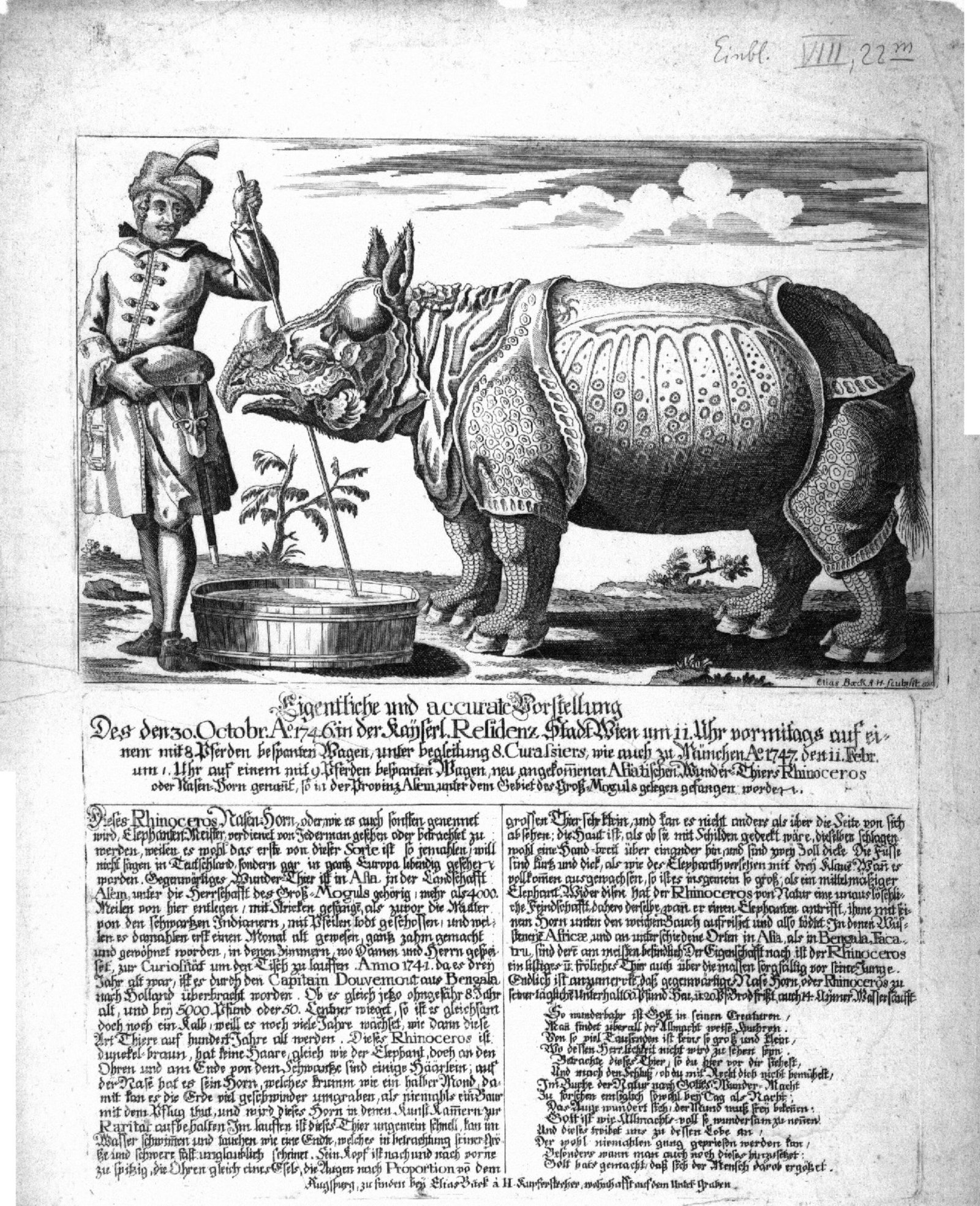
II.4 – LEFT – ITALIAN
Front: Rhino facing left in landscape.
Text: NURNBERG / P.P. Werner
Reverse: Text in Italian, 17 lines
Text on medal:
Questo / Rinoceroto / fu transportado / d’Asia in Europa nell’ / Anno 1741. Dal Capitano / Davide Mout van der Meer / il medemo animale estato / pesato a Stutgardo nel / Wirtembergo li 6. Maggio. / 1748. E pesava allora cinque / mila libre, mangia ogni / giorni sessanta libre / di fieno, vinte libre / di pane, e beve quattordici / secchi di aqua.
This medal mentioned in:
Imhoff, C.A. 1782. Sammlung eines Nuernbergischen Munz-Kabinet welches mir vieler Mühe so vollstaendig, als moeglich, wenig Jahren zusammengetragen und sodann auf das genaueste beschrieben worden. Vol. 1 part 2. Nurnberg, Paul Jonathan Feltzecker – p. 190, no. 61
Questo Rinoceroto fu transportado d’Asia in Europa nell’ Anno 1741
Source 5906. Tagebuch of tour by Pfalzgraf Friederich Michael von Zweibrücken
Herzog Friedrich Michael (1724–1767), Pfalzgraf und Herzog von Zweibrücken-Birkenfeld
Trost, L.; Leist, F. 1892. Pfalzgraf Friederich Michael von Zweibrücken und das Tagebuch seiner Reise nach Italien. München
Original text (German)
p. 31 Verona – January 1751
Den 4. Januar früh morgens besichtigten Seine Durchlaucht das oben beschriebene Amphitheater, worin das ehemals zu Mannheim gewesene Rhinoceros eingestellt war. Die Grobheit des ungehobelten Holländers sekten Höchstdieselbe in mißvergnügten Humor und gab Anlaß zum baldigen Aufbruch.
English translation
Early on the morning of January 4, His Serene Highness visited the amphitheater described above, where the Rhinoceros, formerly seen in Mannheim, was housed. The rudeness of the uncouth Dutchman stirred His Highness to disgruntled humor and prompted an early departure.