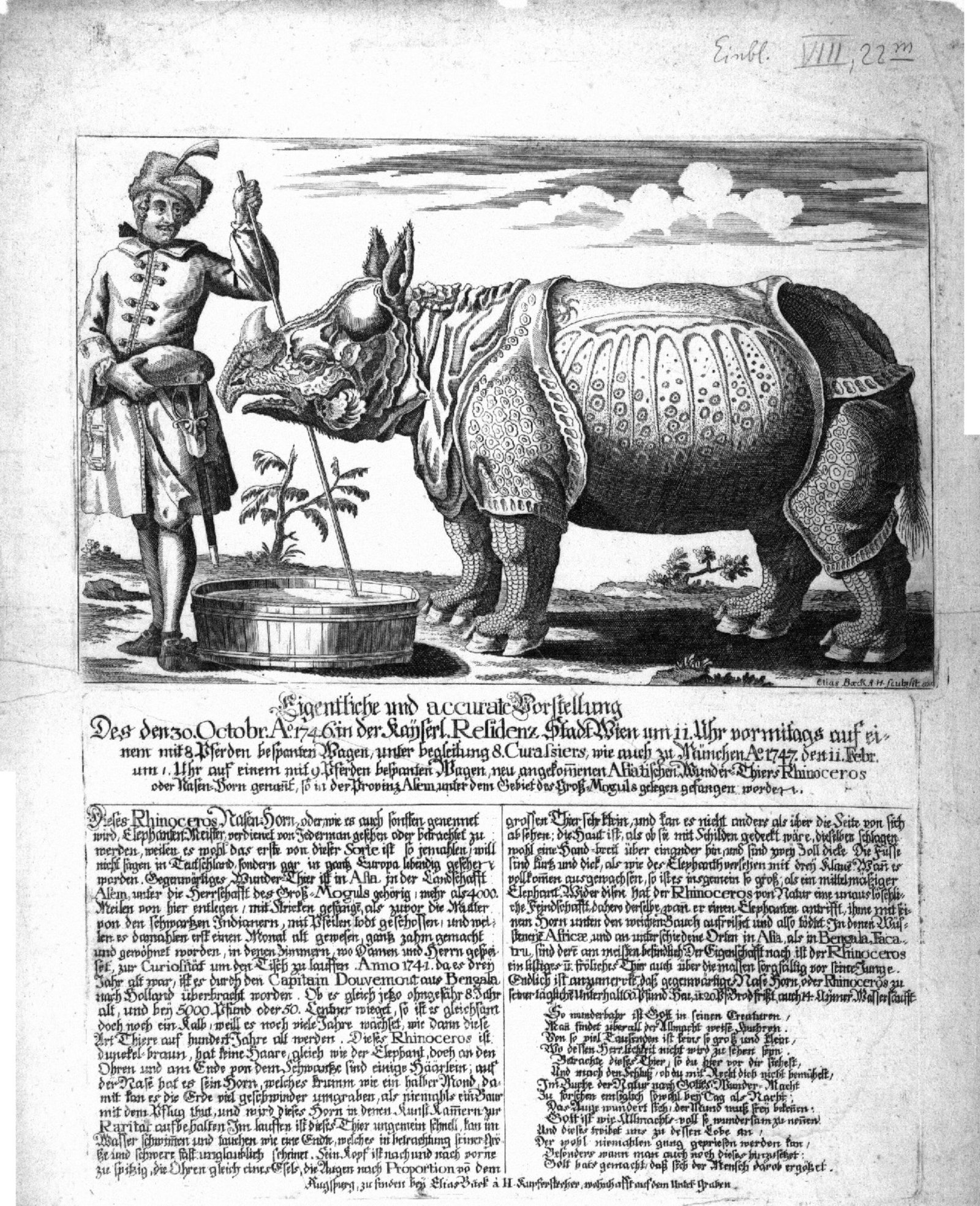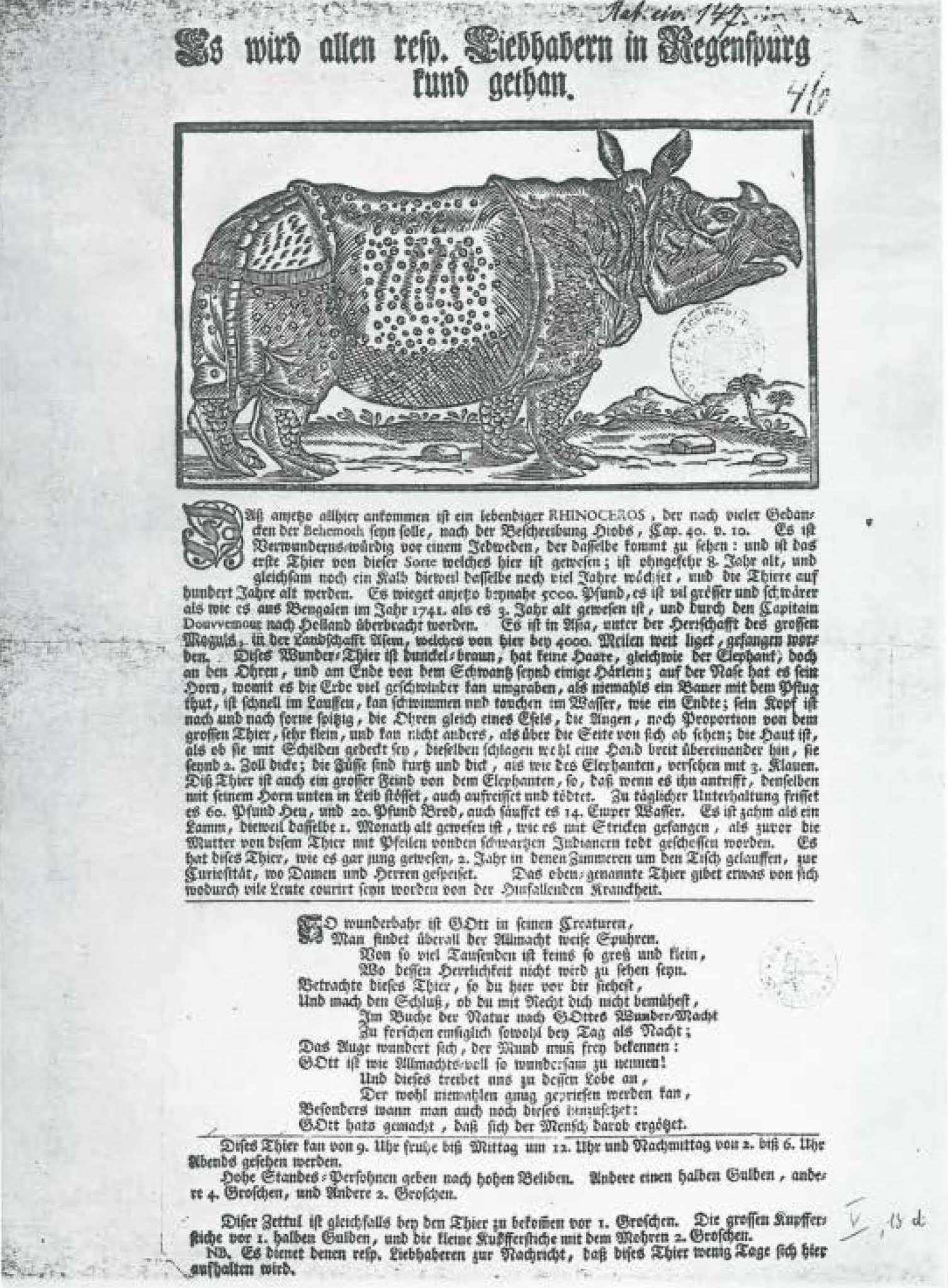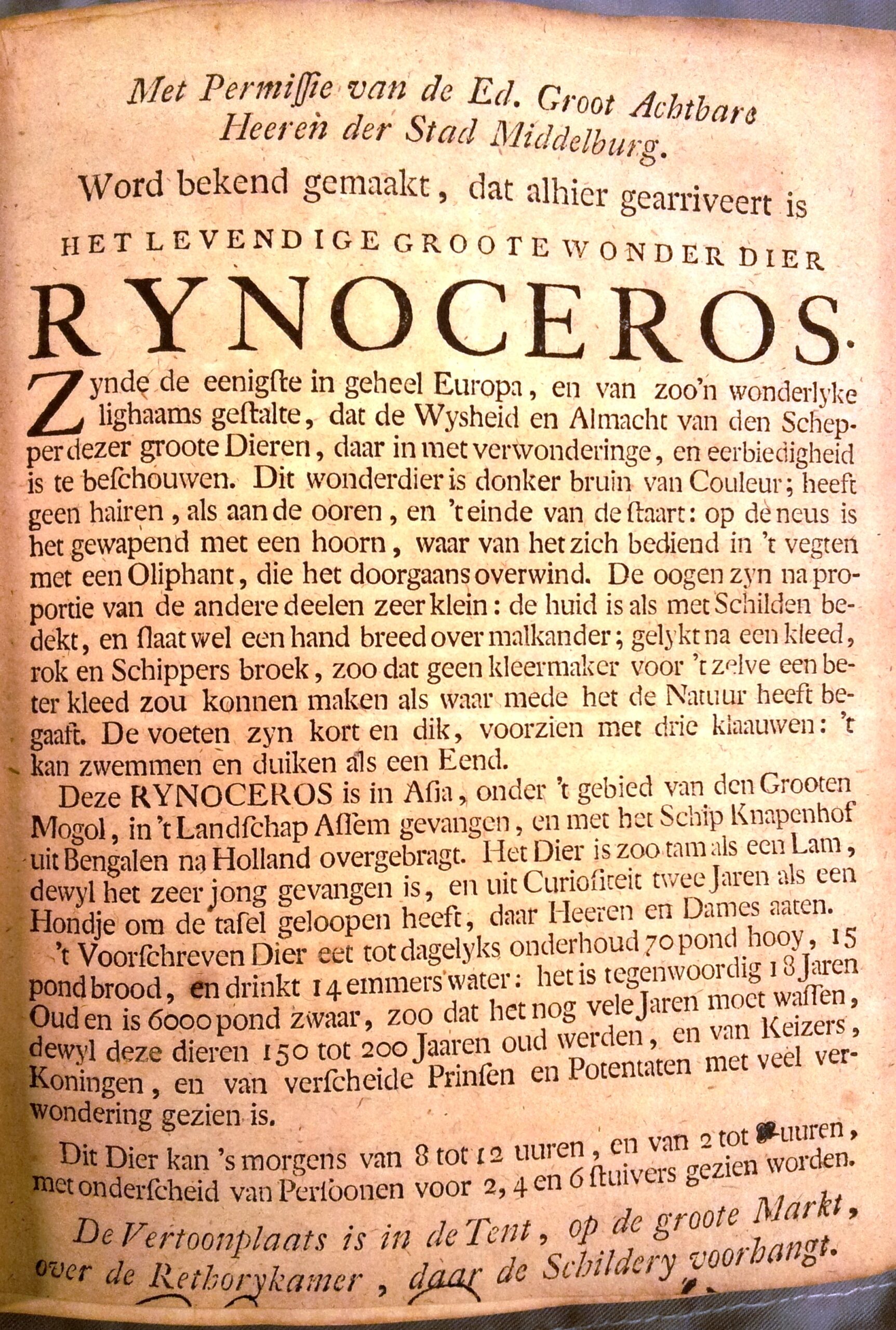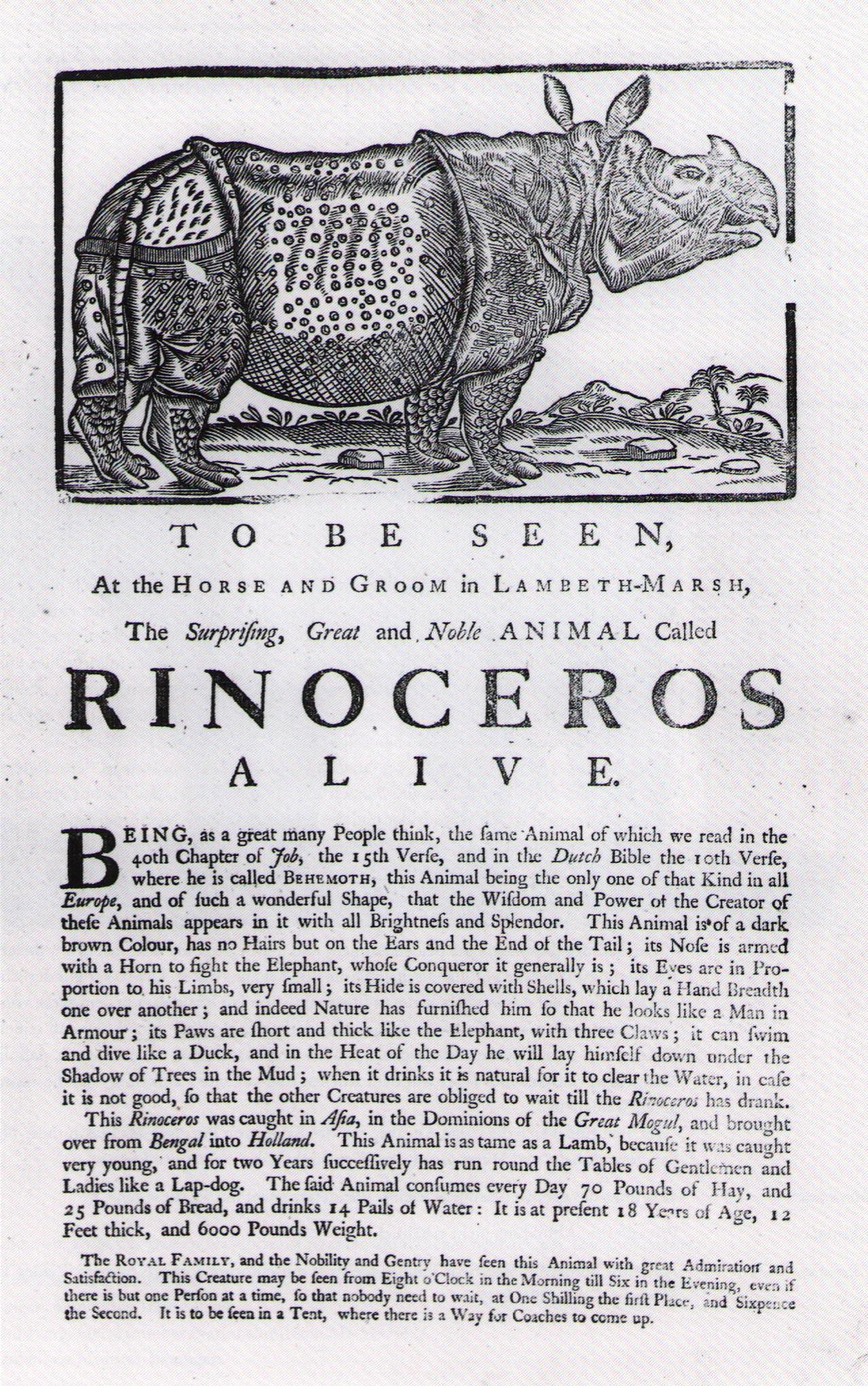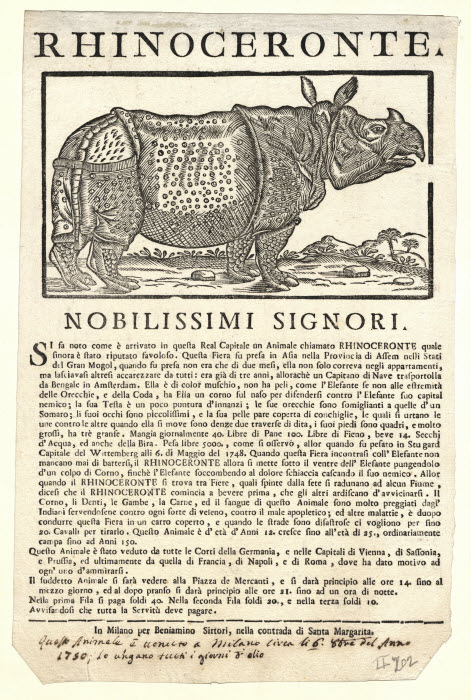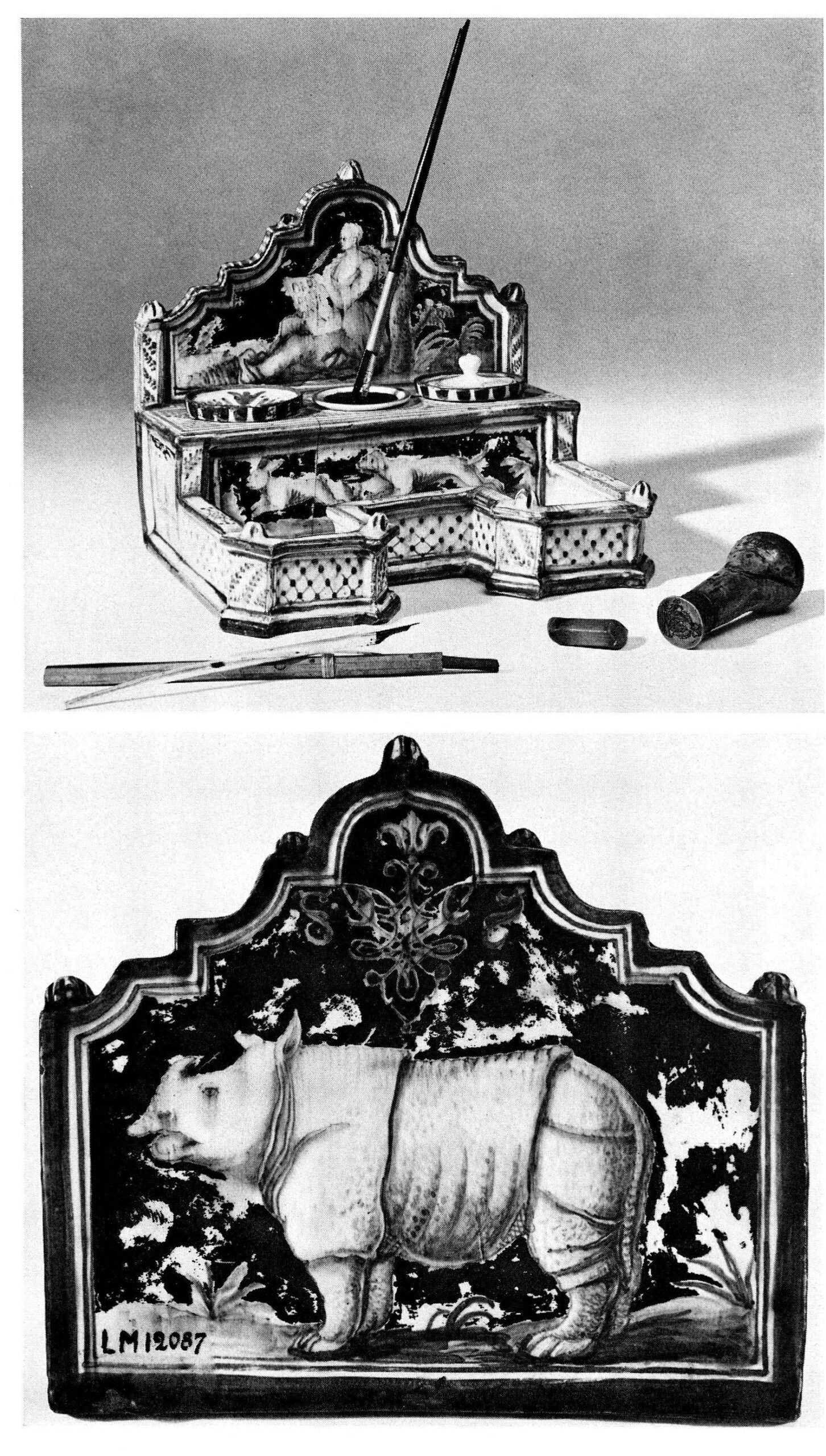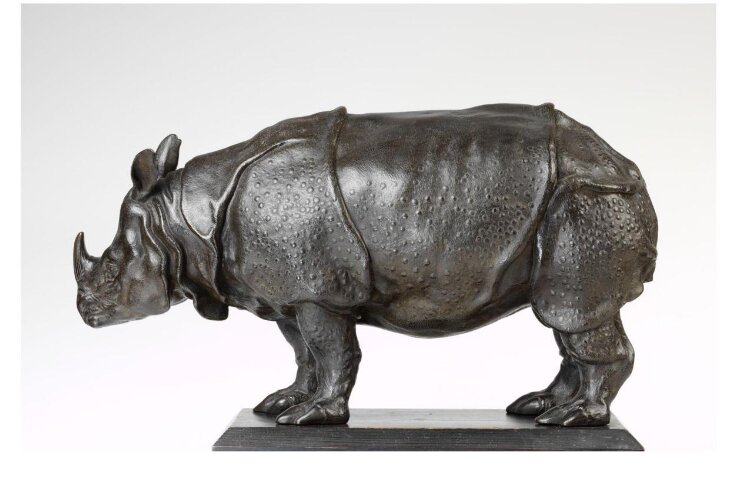


Pietro Gradenigo saw the rhinoceros on 22 January 1751 (source 6001). Giovanni Battista Capello, without date, states that the horn was short as it had been shed (source 6002). Rhino was shown on Piazzetta San Marco next to the Zecca (Mint) (source 6003).
On 20 January 1751 the rhino attacked a boy from the Santa Ternita district, who died from his injuries in hospital (source 6003). On 23 January 1751 the Consiglio dei Dieci (Council of Ten) decreed that the rhino should be exhibited outside the city limits (source 6003)
Scipione Maffei (scientist of Verona) published a description of rhino seen in Venice in 1751, stating that the animal had shed the horn the previous year (source 6004).
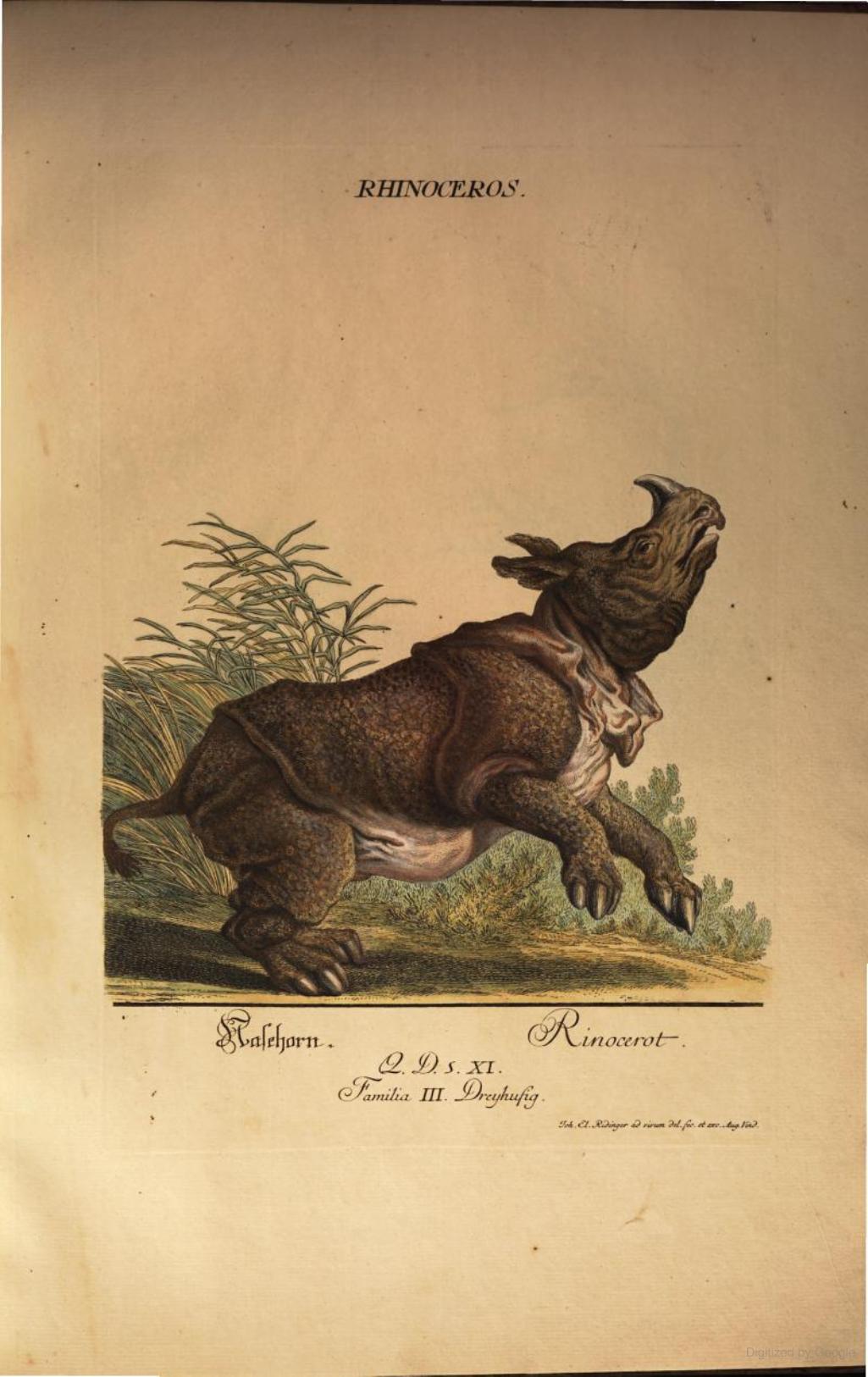
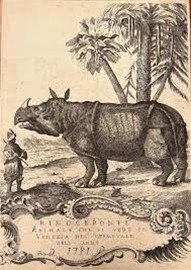
Seen and painted by Giovanni Grevembroch, stating that the rhino arrived on 22 January 1751 (source 6005). He depicts the rhino with a long horn (source 6005; source 6006).
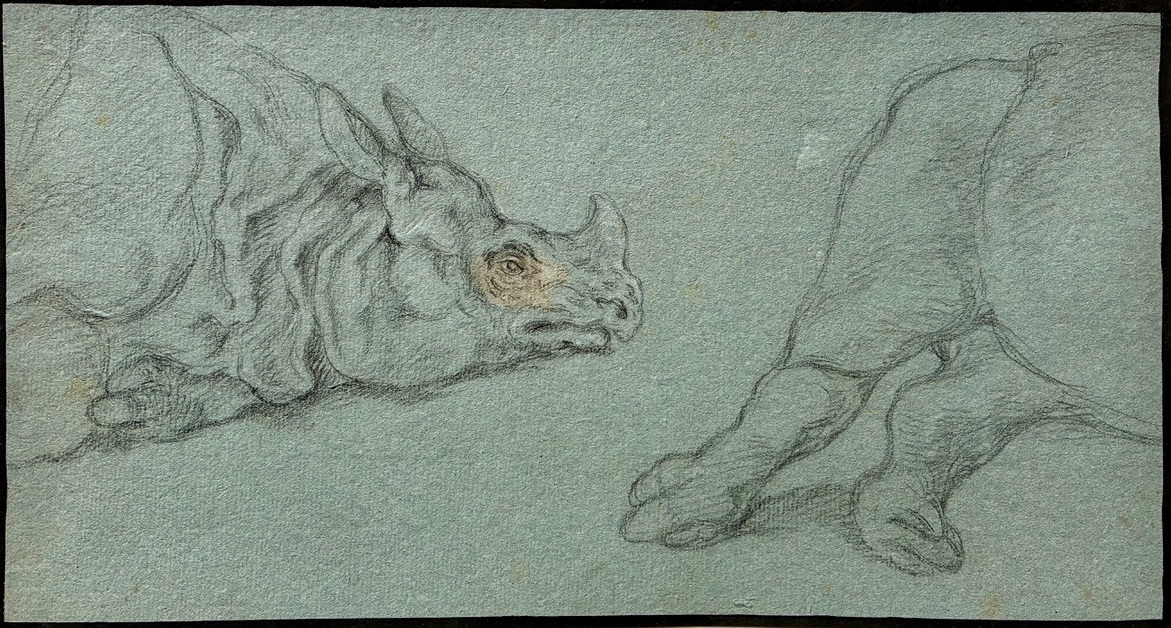
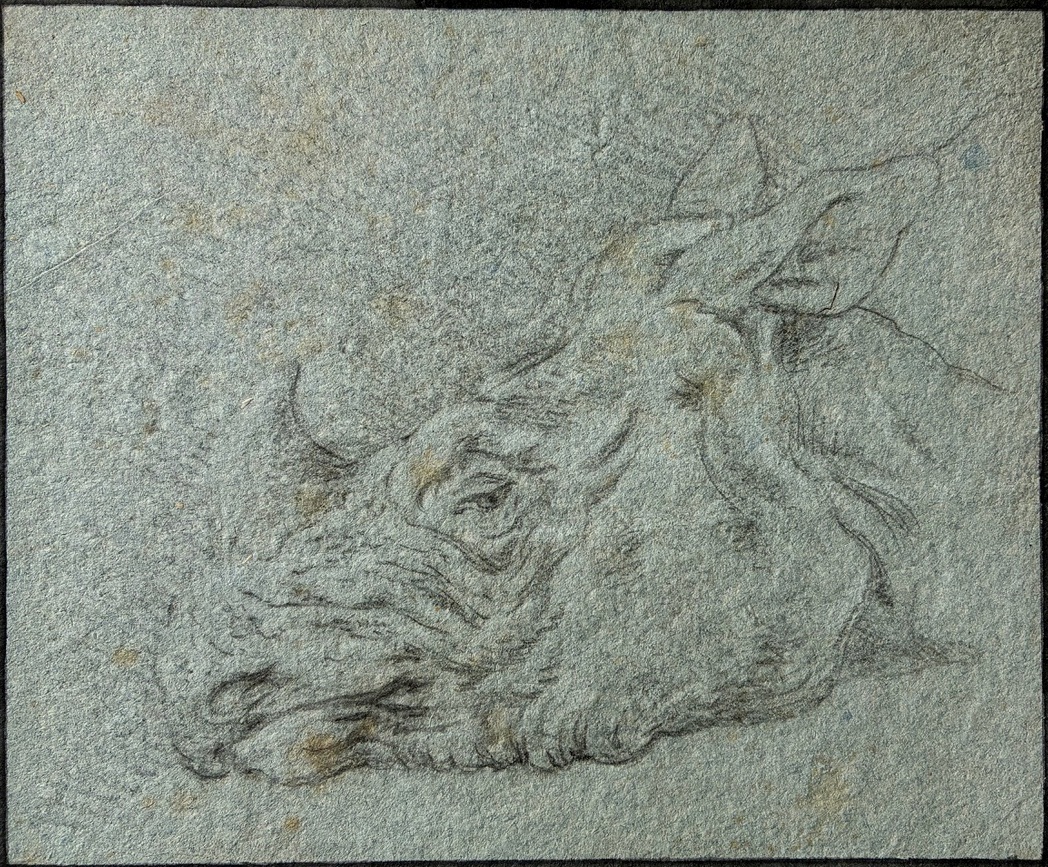
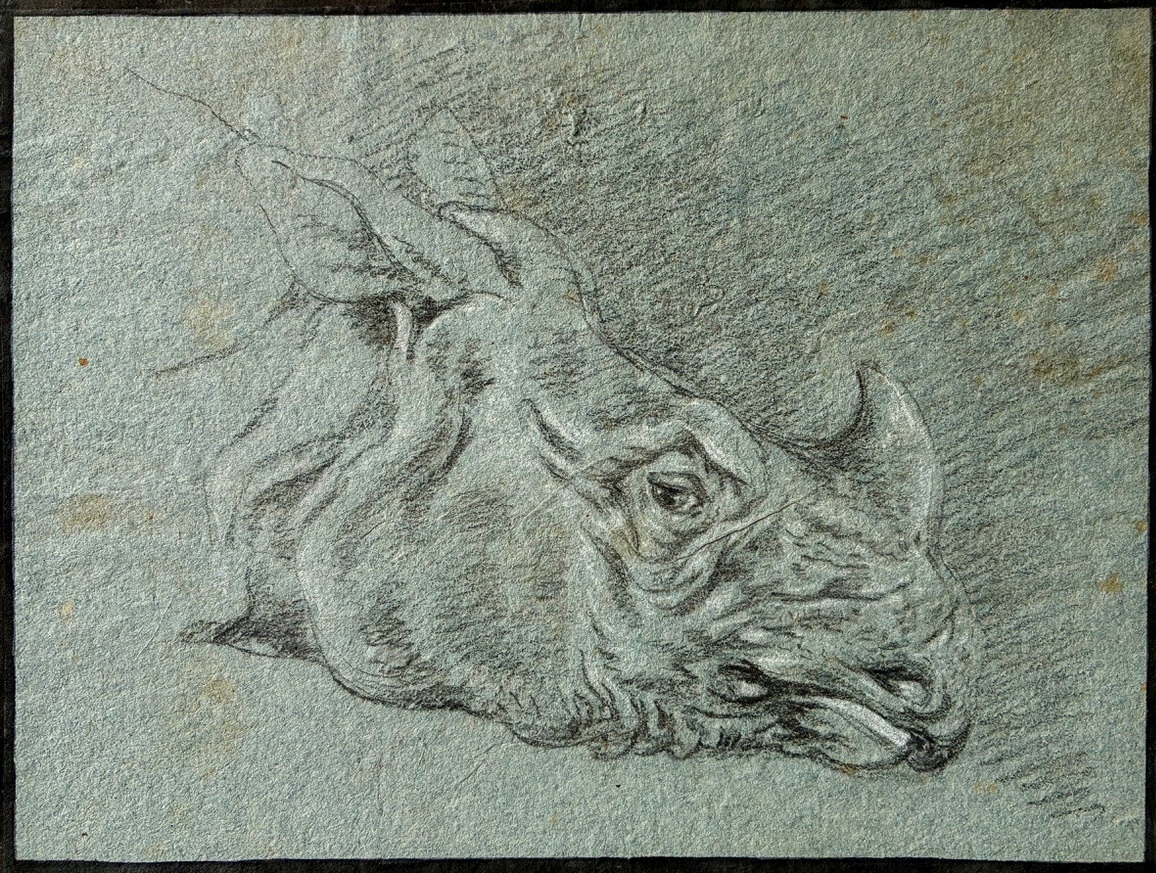
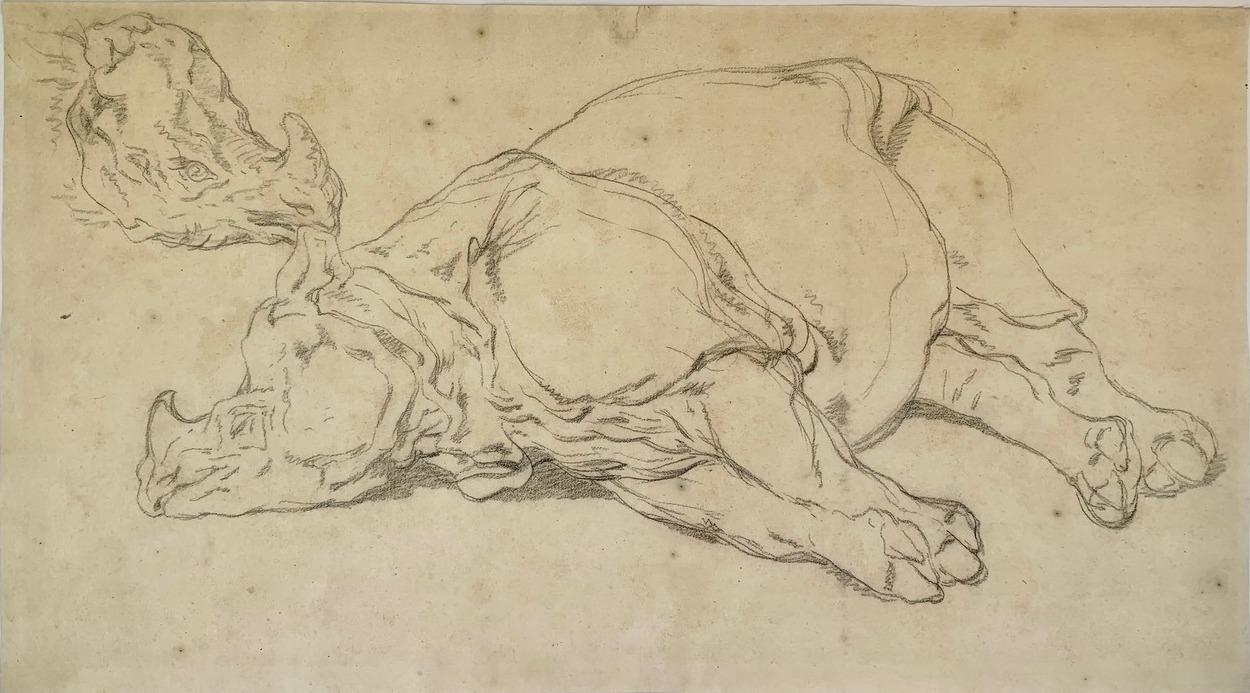
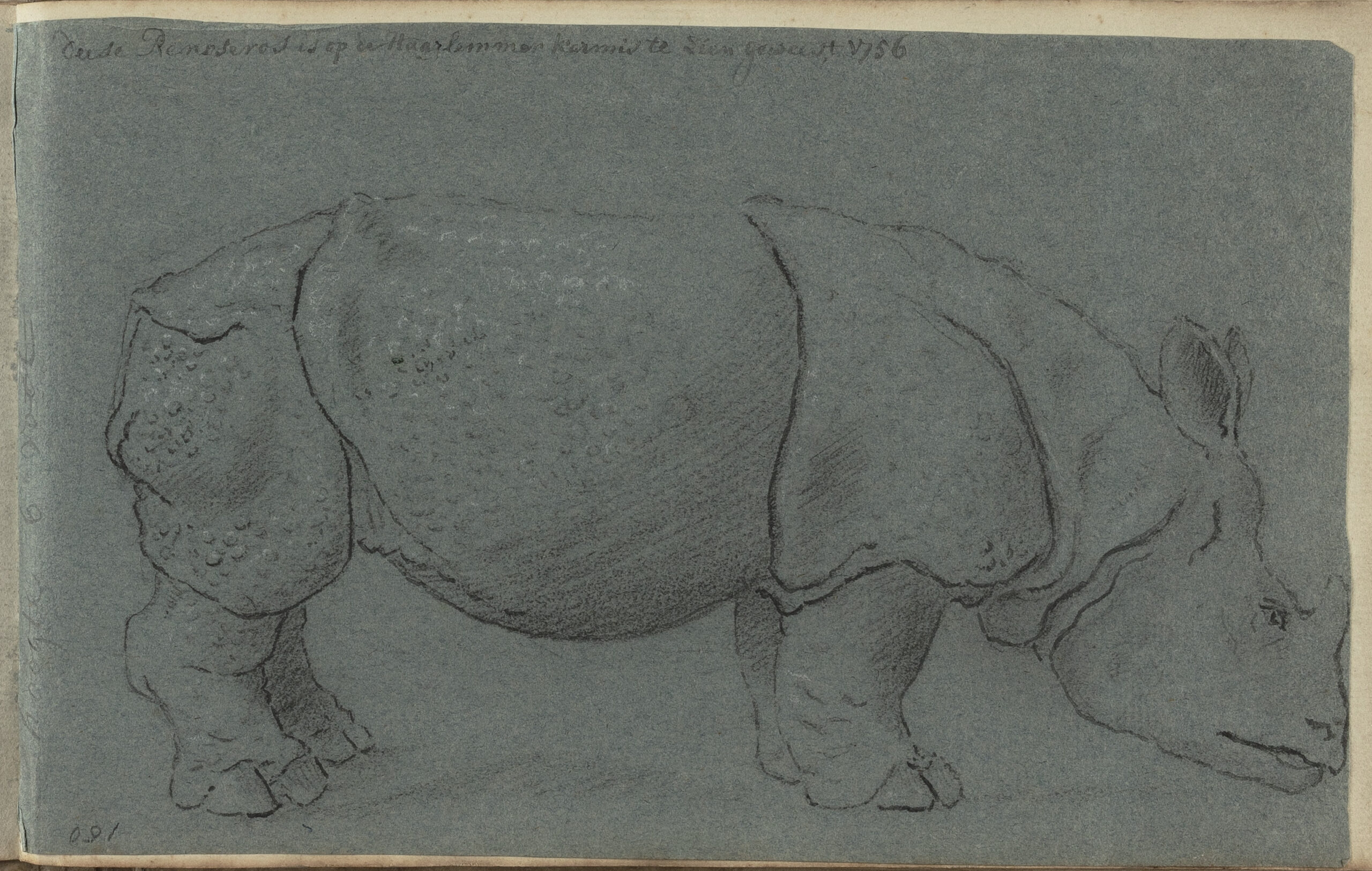
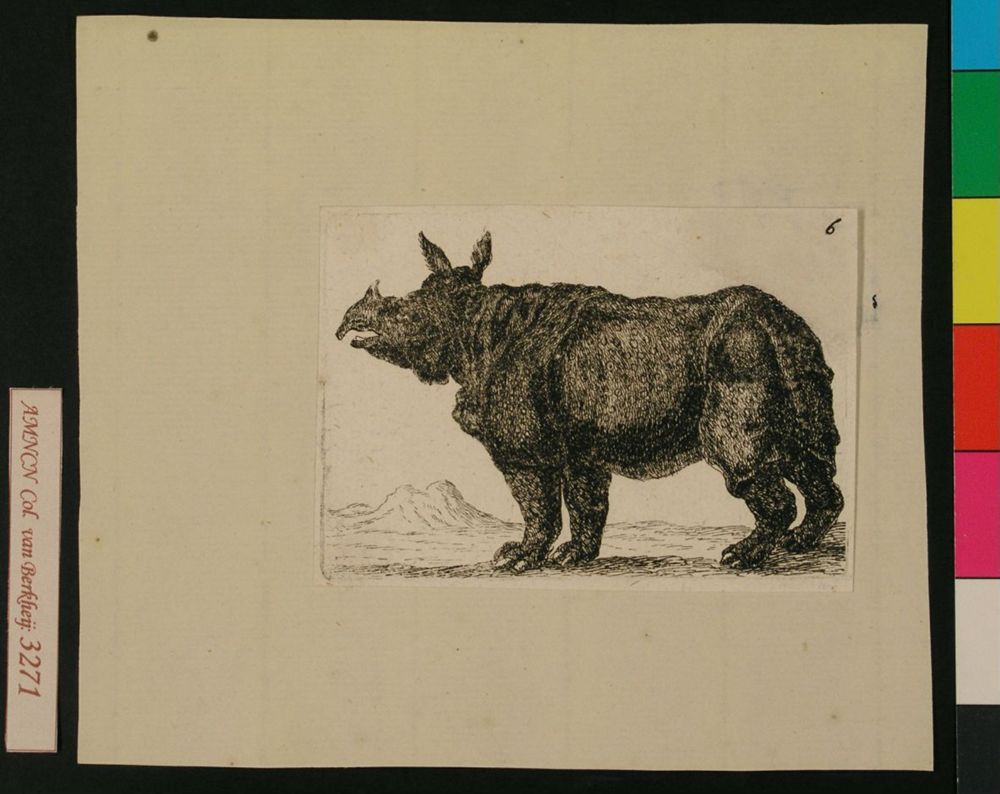
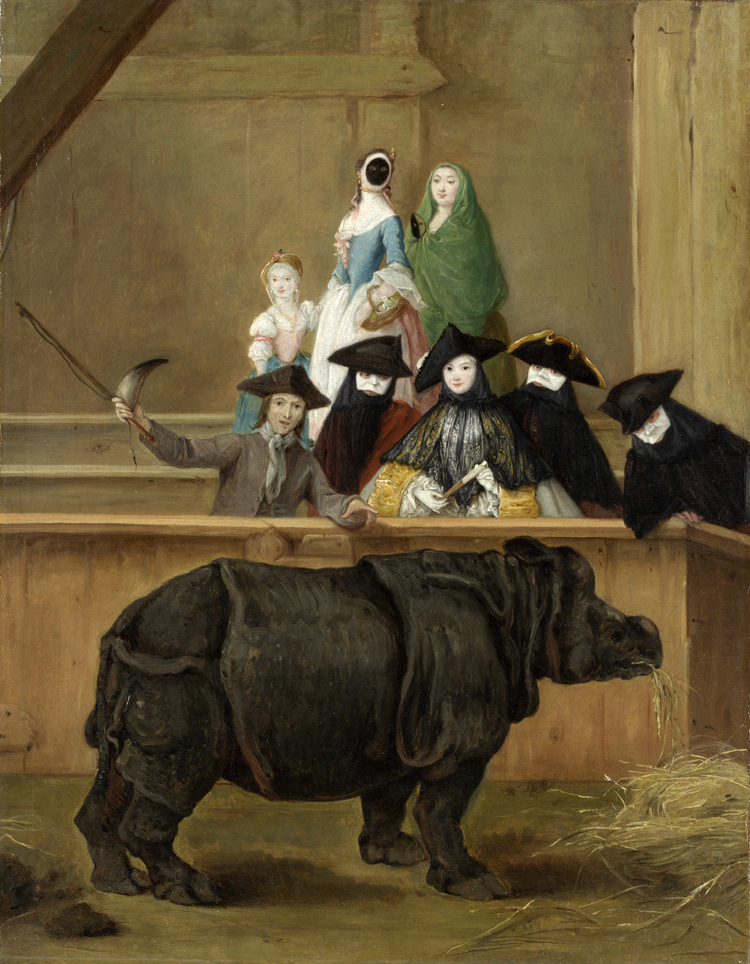
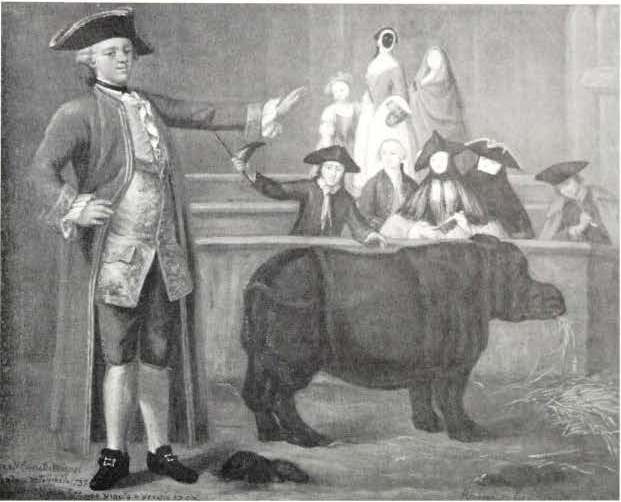
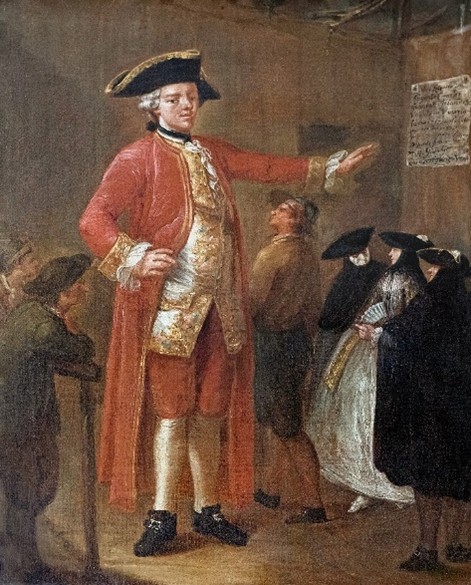
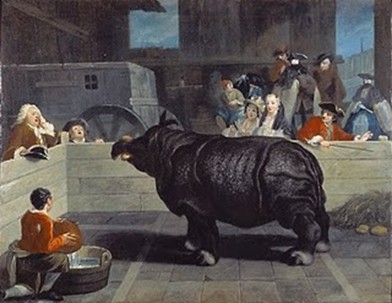
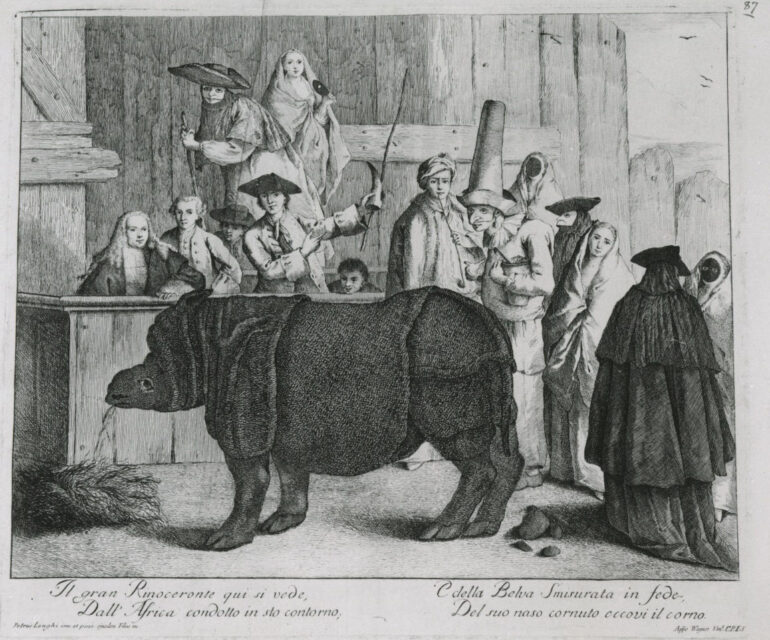
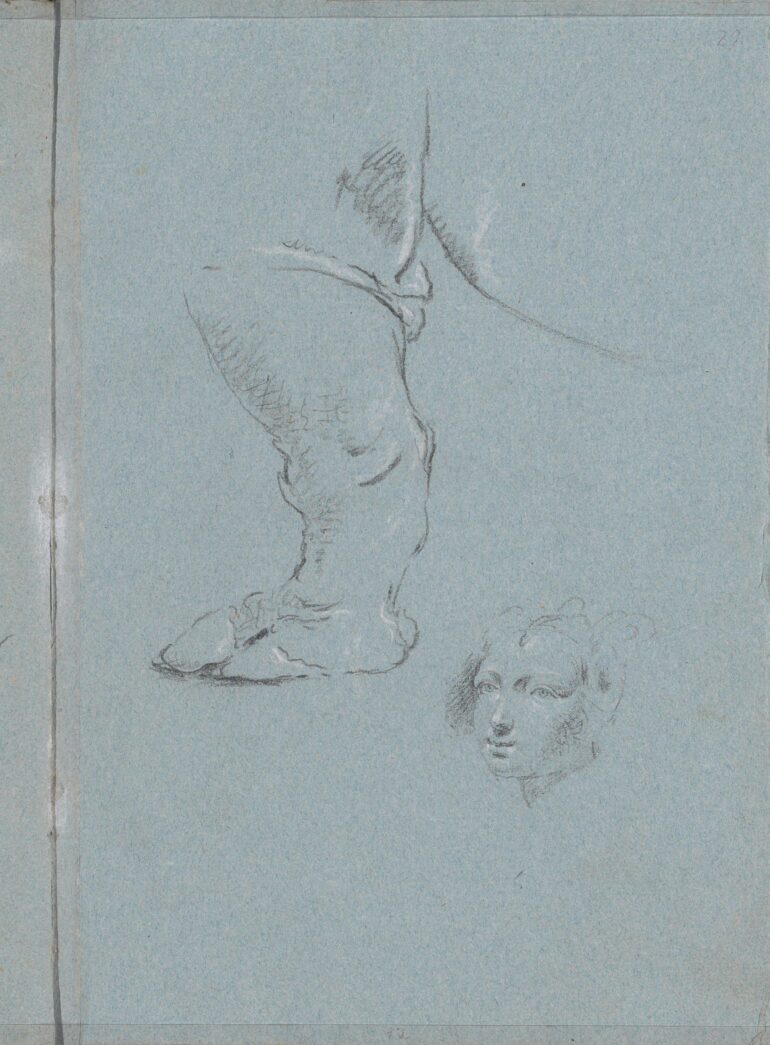
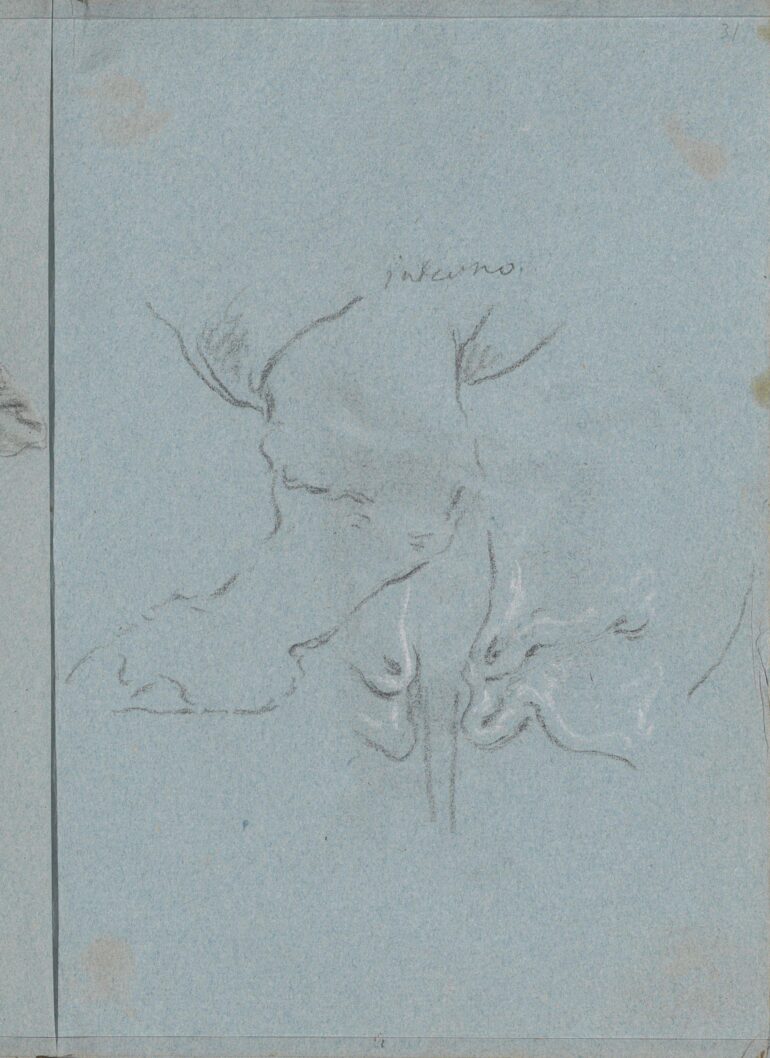
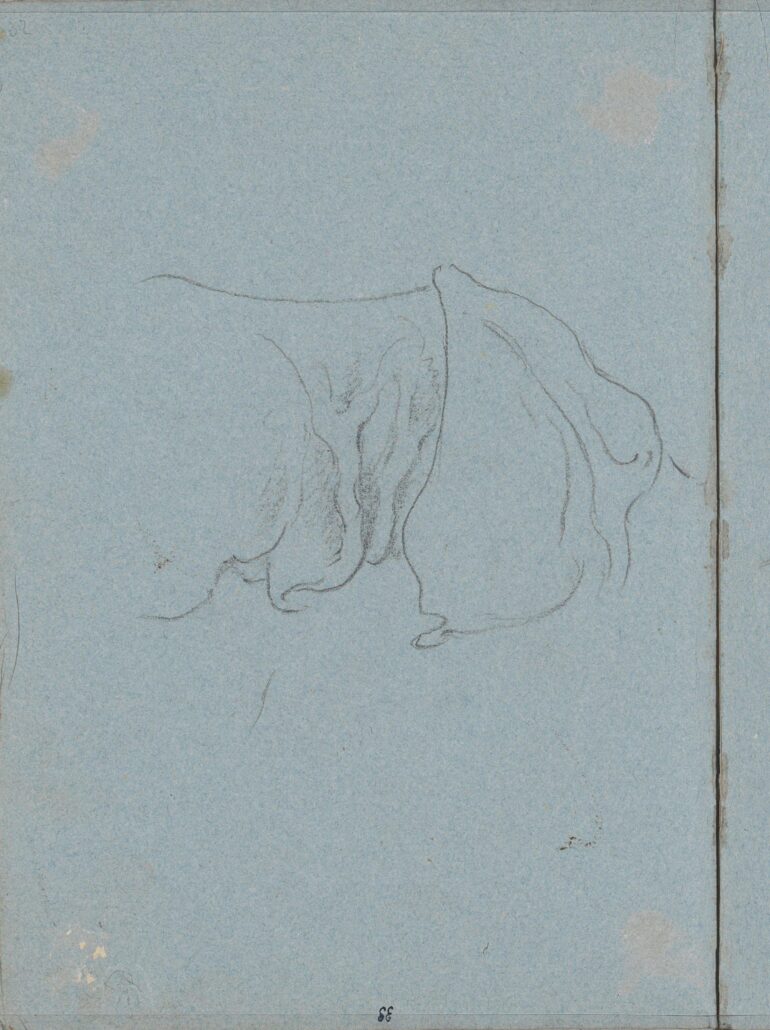
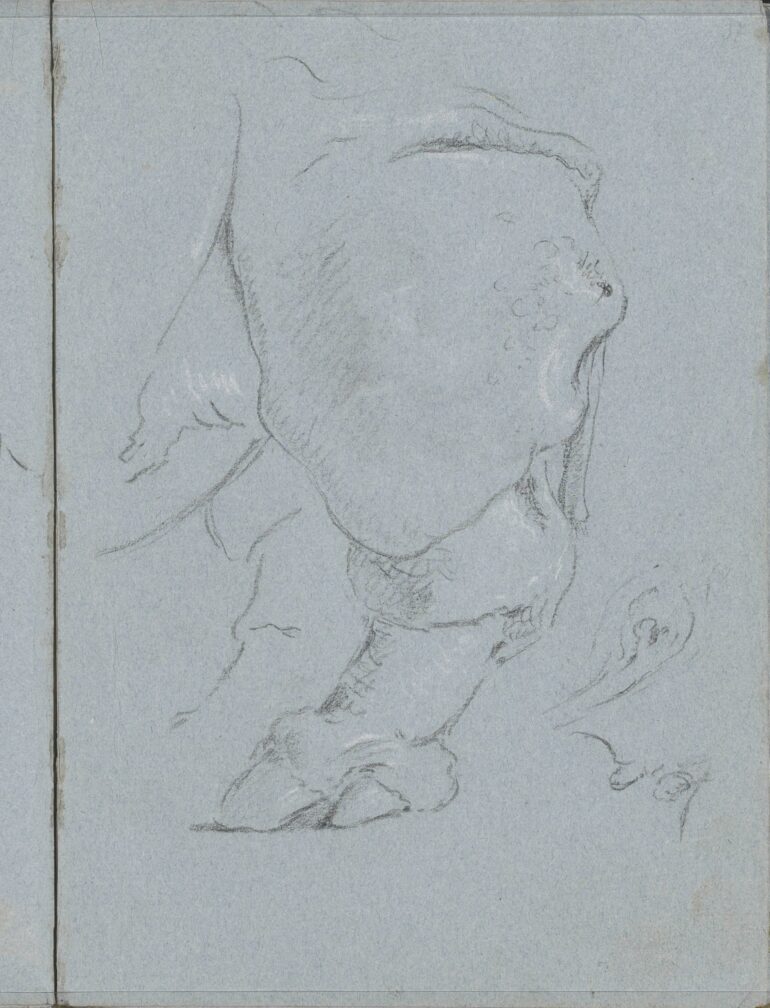
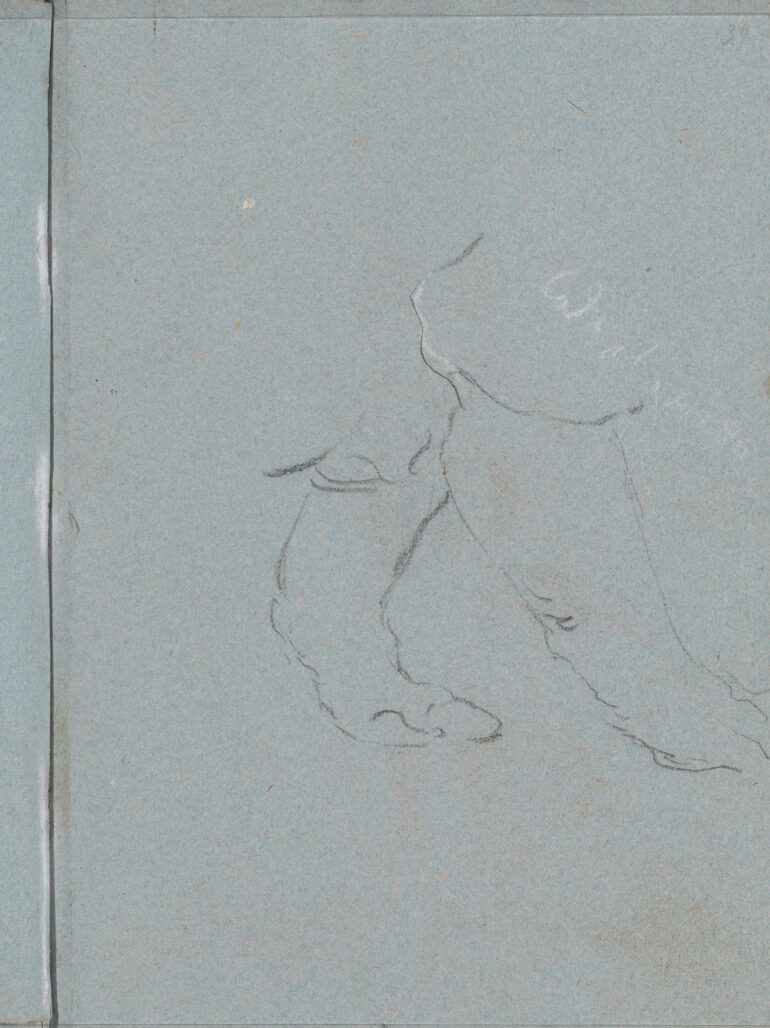
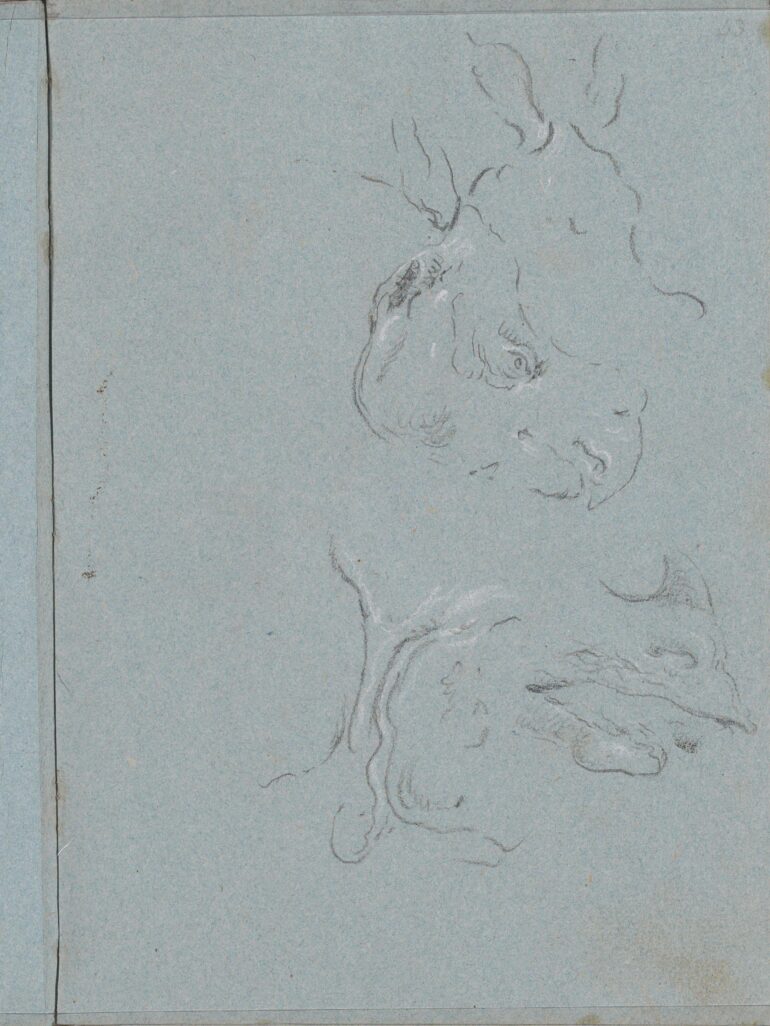
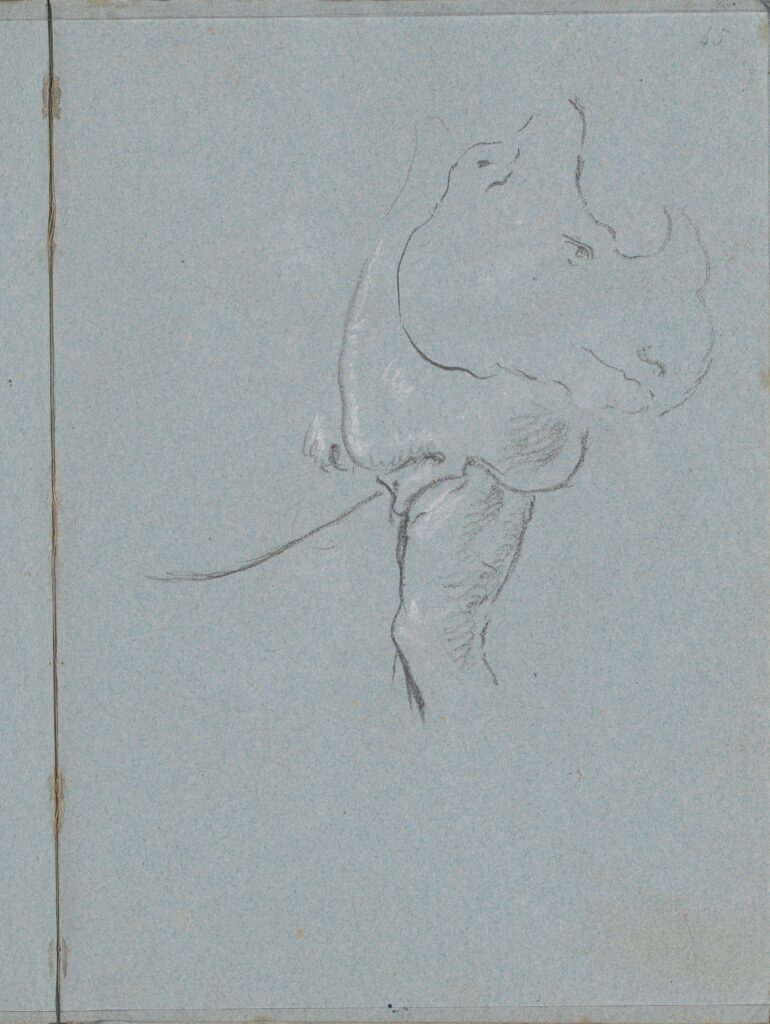
Clara’s exhibition in Venice has been well-known through two similar paintings by Pietro Longhi commissioned by Venetican noblemen in 1751 (source 6052; source 6053). A dramatic scene (of Clara rearing up when attacking the boy ?) is also by Longhi (source 6054). Longhi depicted the rhino with a very short horn, which is repeated in a later composite painting by Longhi with the giant Magrath (source 6055), and in an engraving by his son Alessandro Longhi (source 6057). Another painting of Clara in her booth shows the cart on which she was transported, but the painter is uncertain (source 6056). A series of sketches (with the rhino showing a small horn) remain of undecided attribution (source 6058).
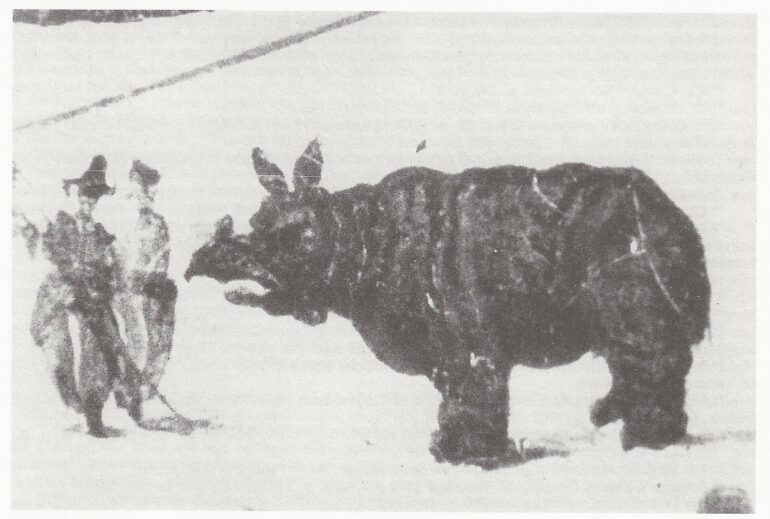
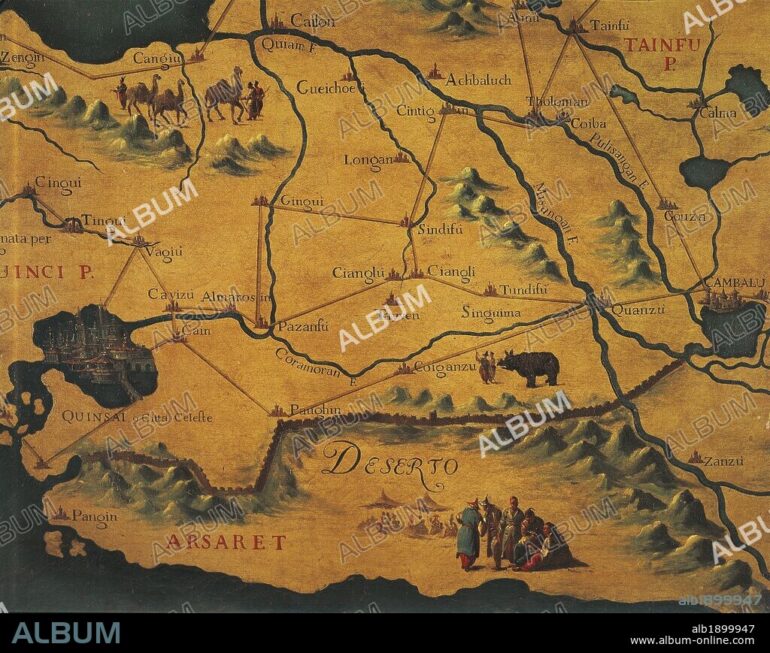
Based on Clara depictions, Rhinoceros is included in map of the world, painted on the wal of the Sala dello Scudo in Palazzo Ducale di Venezia (source 6007). Gian Francesco Costa made a watercolour showing Clara in two positions with short horn (source 6008).
All sources mention dates in January 1751 when Clara arrived, and no later mentions have been found. The Venetian carnival started just after Christmas, on December 26th, and continued for six weeks until Lent (Easter was 11 April 1751).
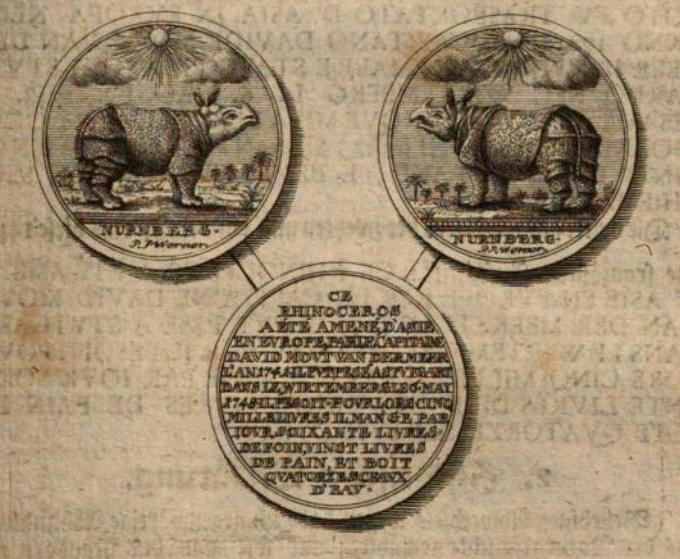
A medal possibly sold in Venice is described at Verona source 5905.
Literature
- Clarke 1986
- Van der Ham 2022
- Doyle, J. 2002. New Orleans Review 28 (2): 170-171. Poem by James Doyle of 2002
- Ridley, G. 2021. One of a kind: Clara the rhinoceros in eighteenth-century Venice and the tale of a missing horn. Luxury 8 (1): 41-58.
Images of the Dutch keepers with Clara in Venice
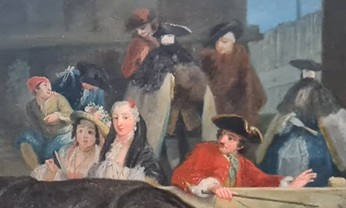
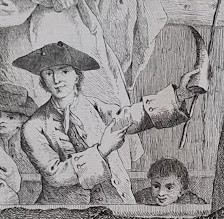
Source 6001. Gradenigo, Annali 1751
Pietro Gradenigo (1695–1776), Venetian patrician and historian
Manuscript from collection of Gradenigo, in Biblioteca Marcian -IT.VII. 1603 (9141) Pietro Gradenigo, Annale I. (gennaio 1773 – marzo 1774 more veneto), ms. p. 10ve 11r
Literature:
- Marchesi, I.; Crevatin, F. 2006. Gli annali di Pietro Gradenigo. Trieste, Universita degli Studi di Trieste, p.34–35
- Balletti, D. 1903. Medagliere veneto. Rassegna d’Arte 3 (9): 132–133, fig. 1.
Text (manuscript)
Anche il rinoceronte, animale bellissimo, e raro, fu veduto in Venezia parimente in un casotto a 22. gennaro l’anno 1750. M.V., condotto dal Capitano Davide Hotuan Deer Maeer; era del peso di circa 5000. libre, mangiava ogni giorno 60. libre di fieno, 20. di pane, e beveva per il solito 14. secchi di acqua.
English translation
Also the rhinoceros, a very beautiful and rare animal, was seen in Venice in a hut on January 22, 1750. M.V., led by Captain Davide Hotuan Deer Maeer; it weighed about 5,000 pounds, eated every day 60 pounds of hay, 20 of bread, and drank the usual 14 buckets of water.
* NB. The date 1750 is likely Old Style, changed that year to 1751.
* NB. Davide Hotuan Deer Maeer = David Mout van der Meer
Balletti, D. 1903. Medagliere veneto. Rassegna d’Arte 3 (9): 132–133, fig. 1.
Has this passage:
Il Gradenigo, cronista veneto, narra: “Poi (dopo il 1751) venne un rinoceronte, animale novissimo per Venezia, e raro anche per l’Europa, se è vero quanto dicevasi, che cioè, dall’imperator Tito in qua non se ne fosse visto nei nostri paesi uno di simile. Proveniva dall’Asia, pesava cinquemila libre, mangiava in un giorno sessanta libre di fieno e venti di pane, e beveva quattordici secchie d’acqua.”
This translates:
Gradenigo, a Venetian chronicler, recounts: “Then (after 1751) a rhinoceros arrived, an animal completely new to Venice, and rare even in Europe, if what was said is true, that is, that since the time of Emperor Titus, one like it had not been seen in our country. It came from Asia, weighed five thousand pounds, ate sixty pounds of hay and twenty of bread in a day, and drank fourteen buckets of water.”
Source 6002. Capello, Lessico 1775
* Giovanni Battista Capello (1700–1763)
Capello, G.B. 1775. Lessico farmaceutico-chimico contenente li rimedj piu usati d’oggidi di Gio: Battista Capello. Decima impressione riveduta, e accresciuta da Lorenzo Capello suo nipote. In Venezia, dalle stampe di Antonio Graziosi.
This book on pharmacy had many editions from 1728. The 9th (1769) and 10th (1775) edited by his grandson Lorenzo Capello. The text about the rhinoceros is not found in editions before 1775.
Text in 1775:
[p.238] Il Rinoceronte che abbiamo veduto in questa Città non ha molto, n’era privo, essendoli caduto qualche tempo prima per relazion de custodi. Ma tornando all’Unicorno la verità è, che al dì d’ oggi non si trovano altri Unicorni, che li Marini del Settentrione
English translation
The Rhinoceros that we saw in this City does not have much, nor was it without, having fallen some time before following the report of the keepers. But returning to the Unicorn, the truth is, that nowadays there are no other Unicorns, except the Marines of the North.
* NB. In questa citta = Venice (where book was published)
Source 6003. Malgarotto in Il Gazettino, 1926
Giovanni Malgarotto, Il Gazzettino, 29 May 1926
Literature
- Van der Ham 2012: 192, n.222
- https://www.conoscerevenezia.it/?p=52563
- Malgarotto, G. 1926. Reprint 2022 on: conoscerevenezia.it.
The sources of these statements are not clear.
Original text (Italian)
Nel carnevale del 1751 la folla veneziana correva festante e rumorosa in Piazzetta San Marco dove accanto alla Zecca era stato innalzato un baraccone di bestie feroci, tra le quali il beniamino dell’inclito pubblico era un grosso rinoceronte che per la prima volta faceva la sua comparsa nelle lagune.
Il 20 gennaio il rinoceronte era di pessimo umore; il serraglio si presentava gremito di gente ed il bestione, divenuto sempre più irrequieto, cominciò ad agitarsi e sbuffare. Ad un tratto si lanciò contro lo steccato e col corno robusto si dette impetuosamente a dar di cozzo quasi volesse abbattere la barriera della sua libertà. La folla proruppe in alte urla e con gran tumulto cercò di fuggire; volarono all’aria sciarpe, cappelli, zendadi; parecchi furono i feriti e un povero putto della contrada di Santa Ternita fu travolto e calpestato dalla gente ormai suggestionata dalla terribile paura del pachiderma. Raccolto, venne portato all’ospizio della Pietà dove giunse morto.
Il 23 gennaio una ordinanza del Consiglio dei Dieci decretava che il serraglio “che sta in piazzetta san Marco dove è il rinoceronto, trasportasse le sue tende lontano dalla città“.
English translation
During the carnival of 1751, the Venetian crowd ran joyfully and noisily in Piazzetta San Marco where a booth of wild beasts had been erected next to the Mint, among which the darling of the illustrious public was a large rhinoceros that was making its appearance in the lagoons for the first time.
On January 20, the rhinoceros was in a terrible mood; the menagerie was crowded with people and the beast, becoming increasingly restless, began to agitate and snort.Suddenly, he lunged at the fence and began to slam his strong horn impetuously as if he wanted to break down the barrier to his freedom. The crowd burst into loud shouts and tried to escape in great tumult; scarves, hats, and zendadi flew into the air; several were injured and a poor child from the Santa Ternita district was trampled on and trampled by the people, now influenced by the terrible fear of the pachyderm. Picked up, he was taken to the Pietà hospice where he arrived dead.
On January 23, an order from the Consiglio dei Dieci (Council of Ten) decreed that the menagerie “which is in Piazzetta San Marco where the rhinoceros is, should move its tents far from the city”.
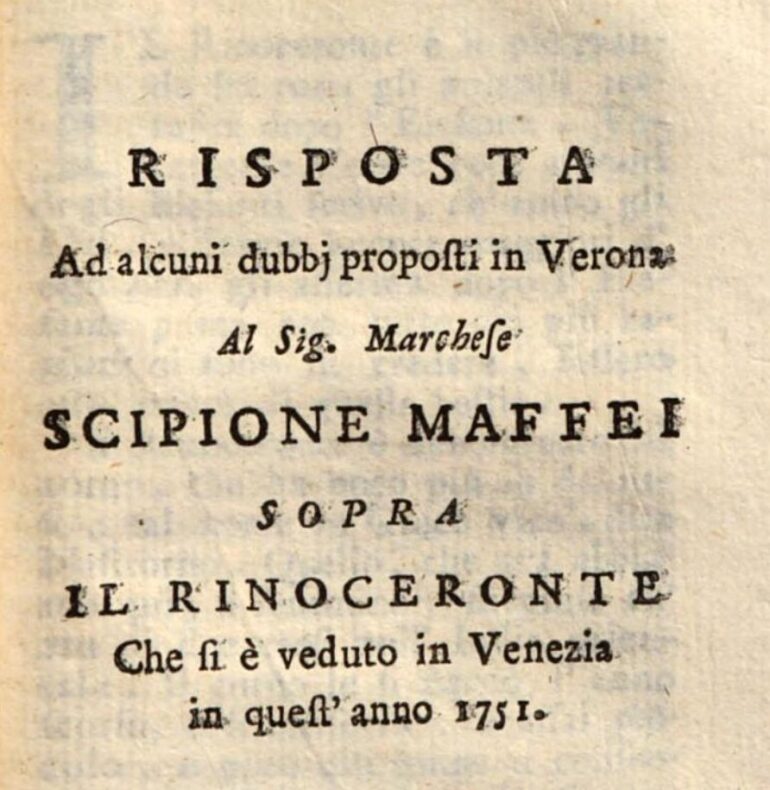
Source 6004. Maffei, Risposta of 1751
* Scipione Maffei (1675–1755). Maffei was a scientist in Verona. It appears from the title that he saw the rhinoceros in Venice in 1751 (not in Verona).
Maffei, S. 1751. Risposta ad alcuni dubbi proposti in Verona Al Sig Marchese Scipione Maffei sopra il Rinoceronte che si e veduto in Venezia in quest’anno 1751. In: Calogera, P. Raccolta di opusculi scientifici e filologici. Firenze, vol. 45, pp. 327–336.
[full text, no illustration]
Original text (Italian)
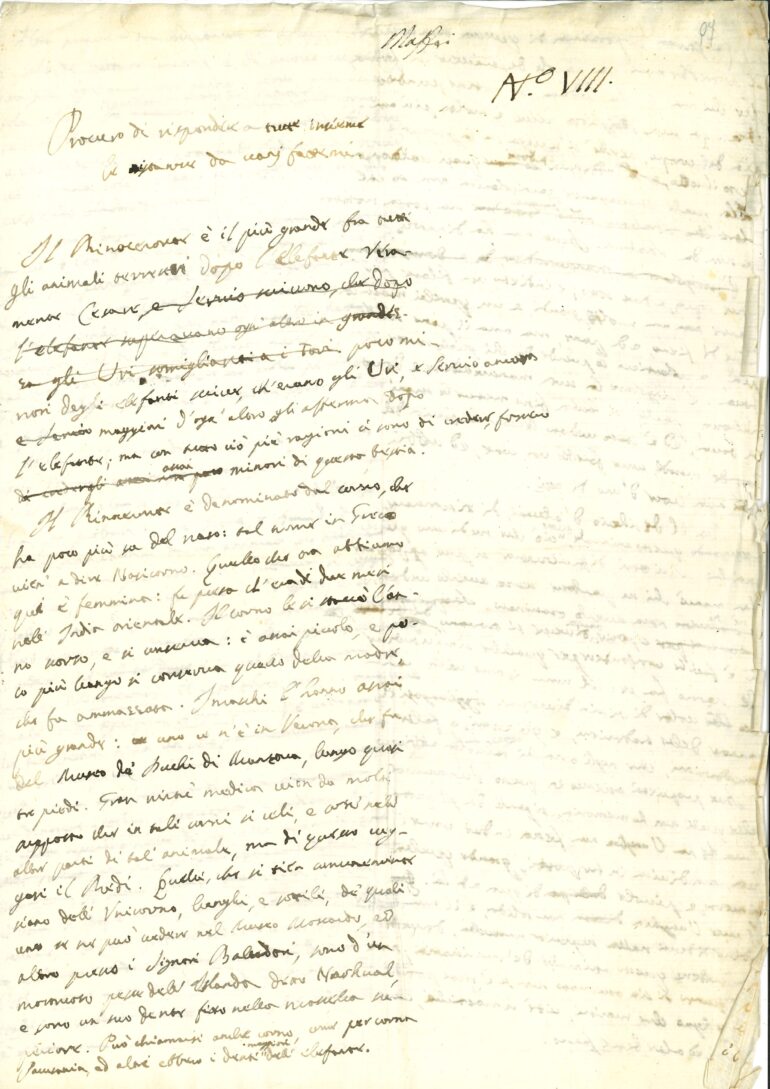
Risposta ad alcuni dubbi proposti in Verona Al Sig Marchese Scipione Maffei sopra il Rinoceronte che si e veduto in Venezia in quest’anno 1751
[329] Il Rinoceronte è il più grande fra tutti gli animali terrestri dopo l’Elefante. Veramente Cesare poco minori degli Elefanti scrive, ch’ erano gli Uri, e Servio ancora maggiori d’ ogn’altro gli afferma dopo l’ Elefante; ma con tutto ciò più ragioni ci sono di credere, fossero assai minori di questa bestia.
Il Rinoceronte è denominato dal corno, che ha poco più su del naso: tal nome in Greco vien’a dire Nasicorno. Quello, che ora abbiamo qui, è femmina: su presa ch’ era di due mesi nell’ India orientale. Il corno le fi staccò l’anno scorfo, e si conserva : è assai piccolo, e poco più lungo si conferva quello della madre, che su ammazzata. I maschi l’hanno assai più grande, e uno ce n’è in Verona lungo quasi tre piedi. Gran virtù medica vien da molti supposto, che in tali corni si celi, e così nell’altre parti di tal’ animale; ma di quefto veggasi il Redi. Quelli, che si tien comunemente
[330] siano dell’ Unicorno, lunghi, e sottili, de’ quali uno se ne può vedere nel Museo Moscardo, ed altro presso i Signori Balladori, sono d’un mostruofo pesce dell’ Islanda detto Narhval, e sono un suo dente sitto nella mascella superiore. Può chiamarsi anche corno, come per corna Pausania, ed altri ebbero i denti maggiori dell’ Elefante.
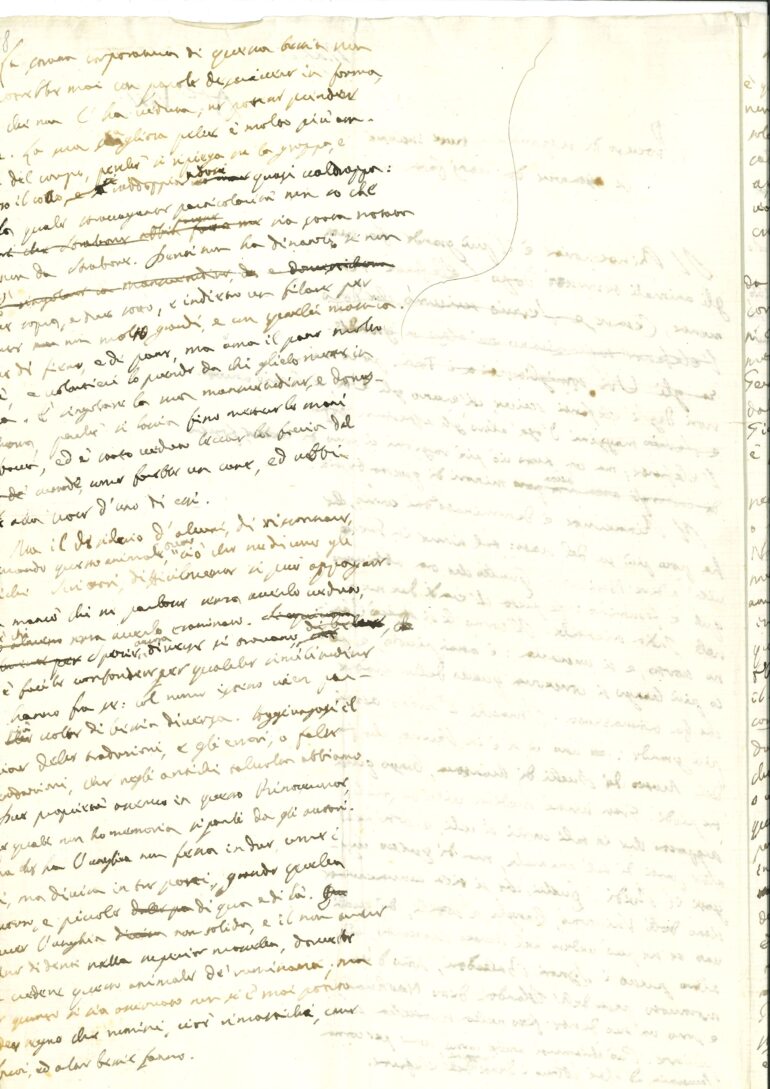
La strana corporatura di questa bestia non si potrebbe mai con parole descrivere in forma, che chi non l’ha veduta, ne potesse prendere idea. La sua scagliosa pelle è molto più ampia del corpo, perchè si ripiega su la groppà, e verso il collo, raddoppiandosi quasi valdrappa: la quale stravagante particolarità non so che fia stata notata se non da Strabone. Denti non ha dinanzi se non due sopra, e due sotto, e indietro un filare per parte non molto grandi, e con quelli mastica. Vive di fieno, e di pane, ma ama il pane molto più, e volontieri lo prende da chi glielo mette in bocca. E’ singolare la sua mansuetudine e domestichezza, perchè si lascia sino mettere le mani in bocca, ed è stato veduto leccar la faccia del
[331] stode, come farebbe un cane, ed ubbidire alla voce d’uno di essi.
Ma il desiderio d’alcuni di riscontrare, osservando quest’ animale, tutto ciò che ne dicono gli antichi Scrittori, difficilmente si può appagare. Non mancò chi ne parlasse senza averlo veduto, nè chi senza averlo esaminato. Spezie ancora diverse si trovano, ch’è facile confondere per qualche similitudine che hanno fra se: col nome istesso vien parlato più volte di bestia diversa. Aggiungasi il variare delle traduzioni, e gli errori, o false emendazioni, che negli antichi talvolta abbiamo.
Due proprietà osservo in questo Rinoceronte, delle quali non ho memoria si parli dagli autori. L’una, che ha l’unghia non fessa in due, come i buoi, ma divisa in tre parti, grande quella di mezzo, e piccole di qua e di là. L’aver l’unghia non solida, e il non avere ordine di denti nella superior mascella, dovrebbe far credere questo animale de’ ruminanti, ma per quanto si sia osservato, non si è mai potuto veder segno, che rumini, cioè rimastichi, come i buo, ed altre bestie fanno.
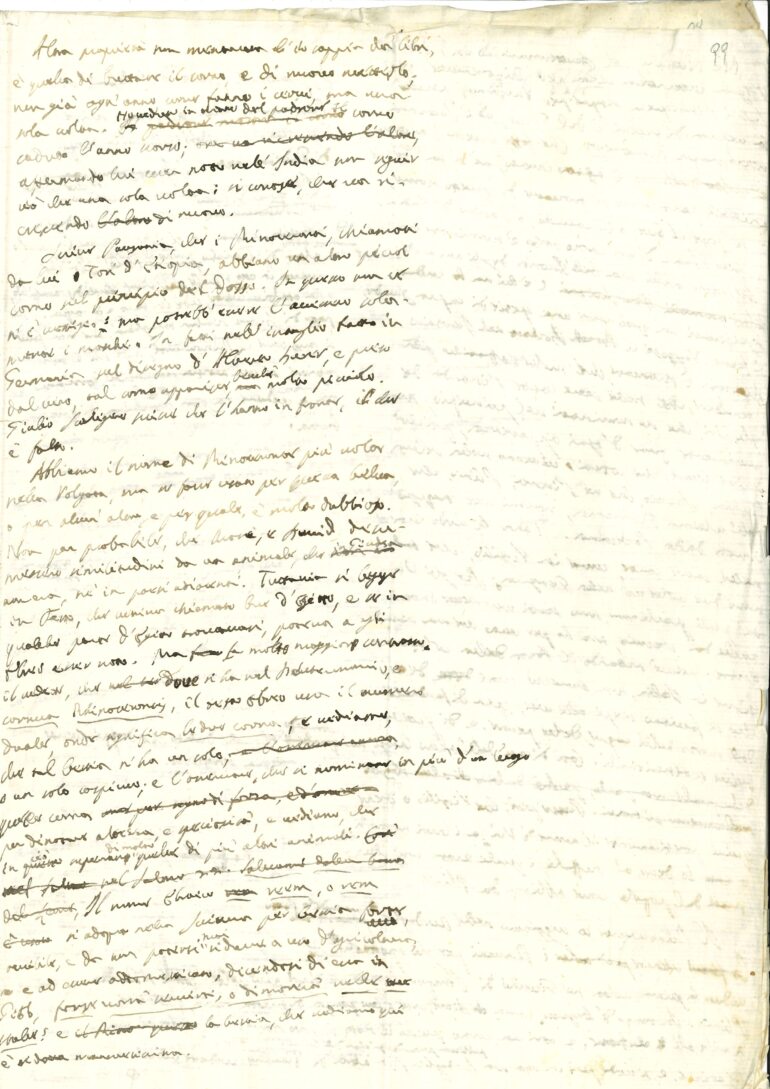
[332] Altra proprietà non mentovata ch’ io sappia dai libri, è quella di buttare il corno, e di nuovo metterlo; non già ogn’ anno come fanno i cervi, ma una sola volta. Ho veduto in mano del padrone il corno caduto l’anno scorso ; assermando lui, esser noto nell’ India, non seguir ciò che una sola volta: si conosce, che va ricrescendo di nuovo.
Scrive Pausania che i Rinoceronti, chiamati da lui Tori d’Etiopia, abbiano un altro piccol corno sul principio del dorso. In questo non ce n’è vestigio: ma potrebb’ essere l’avessero solamente i maschi. In fatti nell’ intaglio fatto in Germania ful disegno d’ Alberto Durer, e prefo dal vero, tal corno apparisce, benchè molto piccolo. Giulio Scaligero scrisse che l’hanno in fronte, il che è falso.
Abbiamo il nome di Rinoceronti più volte nella Volgata, ma se fosse usato per questa belua, o per alcun’ altra, e per quale, è molto dubbioso. Non par probabile, che Mosè, e David desumessero similitudini da un animale, che in Giudea non era, nè in paesi adiacenti. Tuttavia si legge in Festo, che
[333] veniva chiamato bue d’Egitto; e se in qualche parte d’Egitto trovavasi, poteva a gli Ebrei esser noto. Ma fa molto maggior contrasto il vedere, che dove si ha nel Deuteronomio, cornua Rhinocerontis, il testo Ebreo usa il numero duale, onde significa le due corna, e vediamo che tal bestia n’ha un solo, o un solo cospicuo; così l’osservare, che si nominano in più d’un luogo quelle corna, per dinotare altezza, speciosità, e vediamo che in ciò superan di molto quelle di più altri animali. Il nome Ebraico reem, o rem si adopra nella Scrittura per bestia forte, terribile, e da non potersi mai ridurre a uso d’agricoltura, nè ad essere addomesticata, dicendosi di essa in Giob, forse vorrà servirti, o dimorerà nelle tue stalle? e la bestia, che vediamo quì, è ridotta mansuetissima.
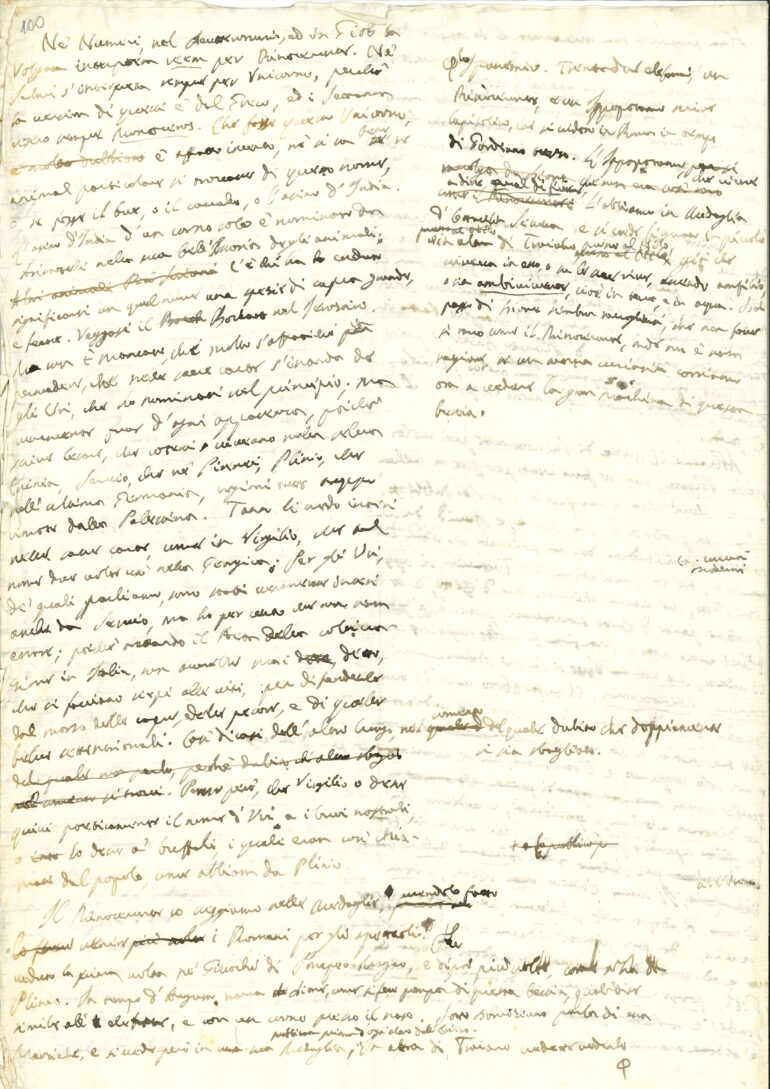
Ne’ Numeri, nel Deuteronomio, ed in Giob la Volgata interpreta reem per Rinoceronte. Ne’ salmi s’interpreta sempre per Unicorno, perchè la version di questi è dal Greco, ed i Settanta refero sempre Monoceros. Che fosse questo Unicorno, è affatto incerto, nè si
[334] fa bene se animal particolare si trovasse di questo nome, o se fosse il bue, o il cavallo, o l’asino d’India. L’Asino d’ India d’un corno solo è nominato da Aristotele nella sua bell’ Istoria degli animali. C’ è chi ha creduto significarsi con quel nome una spezie di capra grande, e feroce: Veggasi il Bochart nel Jerozoico. Non è mancato, chi molto s’ affatichi in persuadere, che nelle sacre carte s’ intenda degli Uri, quali ho nominati nel principio; ma veramente suor d’ogni apparenza, poichè scrive Cesare, che cotesti viveano nella Selva Ercinia, Servio, che ne’ Pirenei, Plinio, che nell’ ultima Germania, regioni tutte troppo rimote dalla Palestina. Tanto li credo intesi nelle sacre carte, come in Virgilio, che tal nome due volte uso nella Georgica. Per gli Uri, de’ quali parliamo, sono stati veramente intesi anche da Servio, ma ho per certo, che non senza errore, poichè trattando il Poeta della coltivazione in Italia, avrebbe mai detto, che si facciano siepi alle viti, per difenderle dal morso delle capre, delle pecore, e di quelle belve settentrionali.
[335] Così dicasi dell’ altro luogo, nel comento del quale dubito che doppiamente si sia sbagliato. Penso però che Virgilio, o deffe quivi poeticamente il nome d’Uri ai buoi nostrali, o lo desse a bufali, i quali eran così chiamati dal popolo, come abbiam da Plinio.
Il Rinoceronte lo veggiamo nelle Medaglie, avendolo fatto venire i Romani per gli spettacoli. Fu veduto la prima volta ne’ Giuochi di Pompeo Magno, e dipoi più volte, come si ha da Plinio. In tempo d’ Augusto narra Dione, come si fece pompa di questa bestia, qual dice simile all’ Elefante, e con un corno presso il naso. Sotto Domiziano parla di essa Marziale, e si vede però in una sua Medaglia publicata prima d’ogni altro dall’ Erizzo. In altra di Trajano credette vederlo lo Spanhemio. Trentadue Elefanti, un Rinoceronte, e un Ippopotamo scrive Capitolino, che si videro in Roma in tempo di Gordiano terzo. L’ Ippopotamo, che viene a dire caval di fiume, l’abbiamo in Medaglia d’ Otacilia Severa, e si vede figurato in piccolo in altra di Trajano presso al Nilo, già che viveva in esso, e fu le
[336] sue rive, essendo amfibio, o sia ambivivente, cioè in terra, e in acqua. Dal passo di Dione sembra raccogliersi, che non fosse sì raro come il Rinoceronte, onde non è senza ragione, se con tanta curiosità corriamo ora a vedere la gran machina di questa bestia.
English translation:
Passages referring to his observations of the rhinoceros seen in Venezia in 1751 [eg. not in Verona, although Maffei lived there]
[329] The Rhinoceros is the largest of all land animals after the Elephant. Caesar actually writes that the Uri were slightly smaller than the Elephants, and Servius says that they were larger than any other after the Elephant; but with all this there is more reason to believe that they were much smaller than this beast. The Rhinoceros is named for the horn that it has a little above the nose: this name in Greek comes to mean Nasicorno. The one we have here is a female: taken when she was two months old in eastern India. The horn was torn off last year, and is preserved: it is very small, and that of the mother, which was killed, is slightly longer. The males have much larger ones, and there is one in Verona almost three feet long. Many suppose that great medicinal virtue is hidden in these horns, and so in the other parts of this animal; but of this see Redi. Those, which are commonly held to be [330] of the Unicorn, long and thin, of which one can be seen in the Moscardo Museum, and another at the Balladori family, are of a monstrous fish of Iceland called Narhval, and are one of its teeth located in the upper jaw. It can also be called a horn, as Pausanias called horns, and others had the larger teeth of the Elephant.
The strange build of this beast could never be described in words, so that those who have not seen it could form an idea of it. Its scaly skin is much larger than its body, because it folds over the rump and towards the neck, doubling almost like a cloth: which strange peculiarity I do not know what has been noted except by Strabo. It has no teeth in front except two above and two below, and a row on each side at the back, not very large, and with these it chews. It lives on hay and bread, but loves bread much more, and willingly takes it from anyone who puts it in its mouth. Its tameness and domesticity are singular, because it even lets you put your hands in its mouth, and it has been seen to lick the face of the
[331] keeper, as a dog would do, and to obey the voice of one of them.
But the desire of some to verify, by observing this animal, all that the ancient writers say about it, can hardly be satisfied. There was no lack of those who spoke of it without having seen it, nor those without having examined it. Different species are also found, which are easy to confuse because of some similarity they have among themselves: with the same name different beasts are spoken of several times. Add to this the variation of translations, and the errors, or false emendations, that we sometimes have in the ancients.
I observe two properties in this Rhinoceros, which I do not remember being spoken of by the authors. One, that it has a hoof not split in two, like oxen, but divided into three parts, the middle one being large, and small on both sides. Having a non-solid hoof, and not having a row of teeth in the upper jaw, should make this animal be considered a ruminant, but from what has been observed, it has never been possible to see any sign that it ruminates, that is, it chews, like oxen and other animals do. [332] Another property not mentioned as far as I know in books, is that of throwing off the horn, and putting it back again; not every year as deer do, but only once. I saw in the owner’s hand the horn that fell off last year; he asserted, that it is known in India, not to do this but once: it is known, that it grows again.
Pausanias writes that the Rhinoceroses, called by him Ethiopian Bulls, have another small horn at the beginning of the back. In this there is no trace of it: but it could be that only the males had it. In fact in the engraving made in Germany, designed by Albert Durer, and close to life, such a horn appears, although very small. Julius Scaliger wrote that they have it on the forehead, which is false.
We have the name Rhinoceroses several times in the Vulgate, but whether it was used for this beast, or for some other, and for which, is very doubtful. It does not seem probable, that Moses, and David derived similarities from an animal, which was not in Judea, nor in adjacent countries. However we read in Festus, that
[333] it was called the Egyptian ox; and if it was found in some part of Egypt, it could have been known to the Jews. But it makes a much greater contrast to see that where it is in Deuteronomy, cornua Rhinocerontis, the Hebrew text uses the dual number, which means the two horns, and we see that such a beast has only one, or only one conspicuous one; so also to observe that those horns are named in more than one place, to denote height, speciosity, and we see that in this they greatly surpass those of many other animals. The Hebrew name reem, or rem is used in Scripture for a strong, terrible beast, and one that can never be reduced to the use of agriculture, nor to be domesticated, it being said of it in Job, perhaps it will want to serve you, or will it live in your stables? and the beast, which we see here, is reduced to very tame.
In Numbers, in Deuteronomy, and in Job the Vulgate interprets reem for Rhinoceros. In the Psalms it is always interpreted for Unicorn, because the version of these is from the Greek, and the Septuagint always refers to Monoceros. What this Unicorn was, is quite uncertain, nor is it clear whether a particular animal was found with this name, or whether it was the ox, or the horse, or the Indian ass. The Indian ass of one horn is named by Aristotle in his beautiful History of Animals. There are those who have believed that this name signifies a species of goat, large and fierce: see Bochart in the Hierozoic. There is no lack of those who are very at pains to persuade, that in the sacred papers are meant the Uri, such as I have named at the beginning; but truly sisters of every appearance, since Caesar writes that these lived in the Hercynian Forest, Servius, than in the Pyrenees, Pliny, than in the farthest Germany, all regions too far from Palestine. I believe they are heard in the sacred papers, as in Virgil, who uses this name twice in the Georgics. As for the Uri, of whom we speak, they were truly heard also by Servius, but I am certain, that not without error, since treating of the Poet of the cultivation in Italy, he would never have said, that hedges are made for the vines, to protect them from the bite of goats, sheep, and those northern beasts.
[335] The same can be said of the other passage, in the commentary of which I doubt that he was doubly mistaken. I think, however, that Virgil either poetically gave the name of Uri to our oxen, or gave it to buffaloes, which were thus called by the people, as we have from Pliny. We see the Rhinoceros in the Medals, having brought it to the Romans for the shows. It was seen for the first time in the Games of Pompey the Great, and later many times, as we have from Pliny. In the time of Augustus, Dion narrates how this beast was pompously displayed, which he says was similar to the Elephant, and with a horn near the nose. Under Domitian, Martial speaks of it, and therefore it is seen in one of his Medals published before any other by Erizzo. In another of Trajan, Spanhemius believed he saw it. Thirty-two elephants, a rhinoceros, and a hippopotamus, writes Capitolinus, which were seen in Rome in the time of Gordian III. The hippopotamus, which is to say river horse, we have in the Medal of Otacilia Severa, and it is seen depicted in small in another of Trajan near the Nile, since it lived in it, and was on its banks, being amphibian, or rather ambivious, that is, on land, and in water. From the passage of Dione it seems to be gathered, that it was not as rare as the rhinoceros, so it is not without reason, if with such curiosity we now run to see the great machine of this beast.
Source 6004b. Maffei, Manuscript of Risposta of 1751
Maffei, S. 1751. Osservazioni sul Rinoceronte. Manuscript in Biblioteca Capitolare Veronese. B. IV, n.3. pp. 1–4. * handwritten, not illustrated.
Literature
Doro, Federico. 1909. Bibliografia Maffeiana. Studi Maffeiani, appendice. Torino, Fratelli Bocca.
p.83 Bibliografia Maffeiana, Manoscritti, no.71. Osservazioni sul ‘Rinoceronte’
In Biblioteca Capitolare veronese. B. IV, n.3 [Cfr. I, n.82 = same entry]
NOTE. THESE PAGES ARE HARD TO READ. PROBABLY BEST CONSULTED IN THE PDF ATTACHED TO THE REFERENCE ON THE RRC
Source 6005. Grevembroch, drawing
Giovanni Grevembroch (1731–1807), Italian painter of German descent working in Venice
italiancarnival.com
Rinoceronte, description with illustration
Watercolour of 200 x 290 mm.
Title: Gli abiti de veneziani di quasi ogni età con diligenza raccolti e dipinti nel secolo XVIII – A total of 648 watercolors, with commentary for each image, collected in the four books
Album in Museo Correr, Venice
Giovanni Grevembroch’s work can be found at the “Biblioteca Civici Musei Veneziani – Museo Correr” in Venice.
https://arte.cini.it/lista/any:rinoceronte/
Ubicazione: Venezia, Museo Correr
Oggetto: Disegno, acquerello, mm 200 x 290
Literature
- Walter, H. 2003. Per datare il rinoceronte nel pavimento musivo della Basilica di S. Marco in Venezia. Studi Umanistici Piceni 23: 253-259, figs. 1-9.
- Molmenti, P.G. 1885. La storia di Venezia nella vita privata dalle origine alle coduta dalla republica, 3rd ed. Torino, Roux e Favale. pp. i-vii, 1-599.
- Molmenti, P.G. 1908. Venice: its individual growth from the earliest beginnings to the fall of the Republic. Part III: the decadence. Chicago.
Text in Molmenti 1885, 1908:
Grevembroch, in his oft-quoted work, has a coloured drawing of the beast, and in the description of it occurs the statement that in the fourteenth century, during the reign of Andrea Dandolo, another rhinoceros was brought to Venice. Longhi’s picture was once in the Palazzo Pisani at Santo Stefano, and is now in the Museo Civico. The following inscription may be read in one corner : “Vero ritrato de un rinoceronte | condotto in Venezia nel 1751 | fatto da Pietro Longhi | pel N. O. Giovanni Grimani de’ Servi | Patrizio Veneto.” There is a replica in the National Gallery in London.
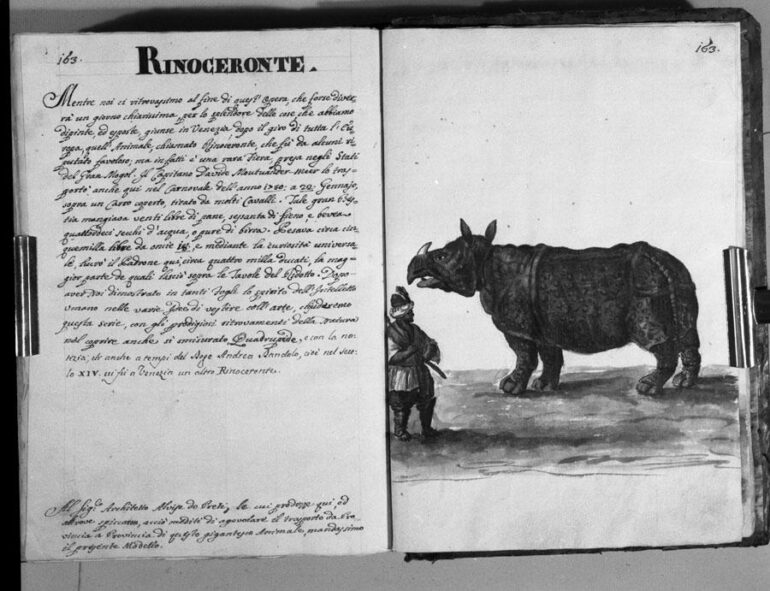
Grevembroch, Giovanni. Gli abiti de veneziani di quasi ogni eta con diligenza raccolti e dipinti nel secolo XVIII, orig. c. 1754. Venezia, Filippi Editore, 1981, vol. 3, p. 163.
https://historywalksvenice.com/translation/rinoceronte-grevembroch-3-163/
Original text (italian)
Mentre noi ci ritrovassimo al fine di quest’Opera, che forse diverrà un giorno chiarissima, per lo splendore delle cose, che abbiamo dipinte, ed esposte, giunse in Venezia, dopo il giro di tutta l’Europa, quell’Animale, chiamato Rinoceronte, che fù da alcuni riputato favoloso; ma infatti è una rara Fiera, presa negli Stati del Gran Mogol. Il Capitano Davide Moutuander-Meer lo trasportò anche qui nel Carnovale dell’anno 1750 a 22 Gennajo, sopra un Carro coperto, tirato da molti Cavalli. Tale gran Bestia mangiava venti libre di pane, sessanta di fieno, e bevea quattordeci secchi d’acqua, o pure di birra. Pesava circa cinquemilla libre da oncie 18, e mediante la curiosità universale, lucrò il Padrone qui, circa quattro milla ducati, la maggior parte de quali lasciò sopra le Tavole del Ridotto. Dopo aver Noi dimostrato in tanti Fogli lo spirito dell’Intelletto umano nelle varie Idee di vestire coll’Arte, chiudaremo questa serie, con gli prodigiosi ritrovamenti della Natura nel coprire anche si smisurato Quadrupede, e con la notizia; ch’anche a tempi del Doge Andrea Dandolo, cioè nel Secolo XIV vi fu a Venezia un altro Rinoceronte.
Al Sig.e Architetto Alvise de Preti, le cui prodezze qui, ed altrove spiccaron, acciò mediti di agevolare il trasporto da Provincia a Provincia di questo gigantesco Animale, mandassimo il presente Modello.
Translation
As we were at the end of this Work, which perhaps will one day become very clear, due to the splendor of the things we have painted and exhibited, that Animal, called Rhinoceros, arrived in Venice, after a tour of all of Europe, which was considered fabulous by some; but in fact it is a rare show, captured in the States of the Great Mogul. Captain Davide Moutuander-Meer also transported it here for Carnival of the year 1750 in 22 January, on a covered wagon, pulled by many horses. This great Beast ate twenty pounds of bread, sixty of hay, and drank fourteen buckets of water, or even beer. It weighed about five thousand pounds of 18 ounces, and through universal curiosity, the Master profited here, about four thousand ducats, most of which he left on the Tables of the Ridotto [Casino]. After having demonstrated in many sheets the spirit of the human intellect in the various Ideas of dressing with Art, we will close this series, with the prodigious discoveries of Nature in covering even such immense Quadrupeds, and with the news; that even at the time of Doge Andrea Dandolo, that is, in the 14th century, there was another Rhinoceros in Venice.
To Mr. and Architect Alvise de Preti, whose prowess here and elsewhere stood out, in order to facilitate the transport from Province to Province of this gigantic Animal, we send this Model.
Source 6006. Grevembroch, Drawing, Animale nel Carnovalo
* Giovanni Grevembroch (1731–1807)
Rinoceronte / Animale, che si vede in / Venezia nel Carnovale / del anno / 1751
Rhino facing left, with long horn, with man below mouth.
Venice, Museo Civico Correr – P.D. 4948 (M 37533). Anonimo, 1751. Animale, che si vede in Venezia nel Carnovale del anno 1751
Literature:
- Walter, H. 1994. Un ritratto sconosciuti della ‘Signorina Clara’ in Palazzo Ducale di Venezia: nota sulle mappe geografiche di Giambattista Ramusio e Giacomo Gastaldi. Studi Umanistici Piceni 14: 207–228, figs. 1–12. – see fig. 7 – says that this after a drawing by Giovanni Grevembroch (1731–1807)
Text below animal, in 5 lines:
Rinoceronte / Animale, che si vede in / Venezia nel Carnovale / del anno / 1751
Source 6007. Griselini, Map of the World
Francesco Griselini (1717–1783) and Giustino Menescardi (fl. 1750)
Map of the world
Venice, Palazzo Ducale di Venezia – Sala dello Scudo
In the palace, the original map on the wal of the Sala dello Scudo was prepared by Giambattista Ramusio (1485–1557) and Giacomo Gastaldi (fl. 1544–1565), around 1550. In mid 18th century the map was in bad state and the senate of Venice asked Francesco Griselini (1717–1783) and Giustino Menescardi (fl. 1750) to reconstruct the map. It was ready in 1763.
On the map of China, south of the Great Wall and west of the town Coiganzu, there is a representation of the rhinoceros. It is based on figures of Clara made in Italy.
Literature
- Walter, H. 1994. Un ritratto sconosciuti della ‘Signorina Clara’ in Palazzo Ducale di Venezia: nota sulle mappe geografiche di Giambattista Ramusio e Giacomo Gastaldi. Studi Umanistici Piceni 14: 207-228 – The map is illustrated in fig. 2, detail of the rhinoceros in fig. 1
Source 6008. Costa, Engraving
Gian Francesco Costa (1711–1772)
Watercolour of rhinoceros seen in Venice in 1751
Venezia, Gabinetto Disegni e Stampe del Museo Correr (Cicogna 119) – Gian Francesco Costa, I Rinoceronti
Literature:
- Succi, D. 1983. Da Carlevarijs ai Tiepolo: incisori veneti e friulani del Settecento. Catalogo della mostra. Gorizia, Musei provinciali, Palazzo Attems and Venezia, Museo Correr – p. 154
Original text (italian)
165. I Rinoceronti
Aquaforte. i. 225 x 320 mm. l. 248 x 327 mm. Venezia, Gabinetto Disegni e Stampe del Museo Correr (Cicogna 119).
[marg.inf.] La vera configurazione della Femina rinoceronte veduta in Venezia l’anno 1751 [a, sin.:] Costa del. et incid.
[Succi 1983] Questa curiosa stampa, giu esposta alla mostra veneziana del 1751, dimostra un’attenzione del Costa verso gli avvenimenti singolari della vita veneziana di cui non restano altre prove. Il foglio fu individuato al Museo Correr da Fabio Mauroner.
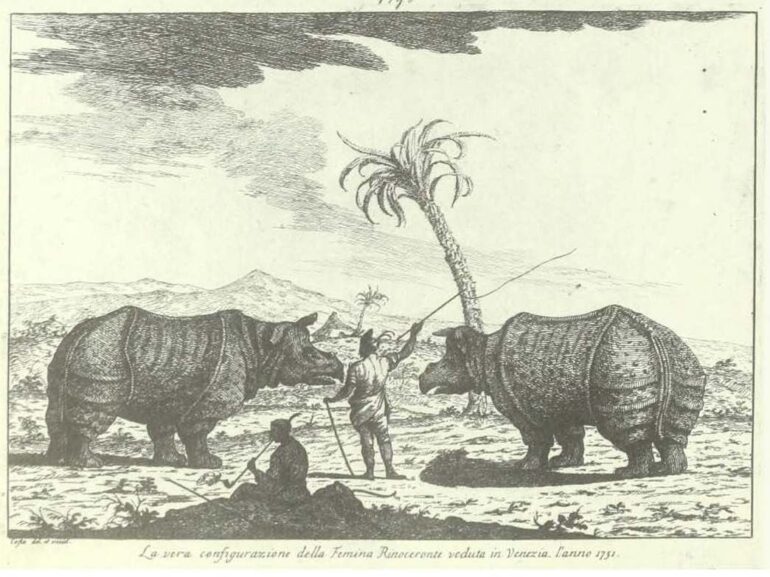
https://www.archiviodellacomunicazione.it/sicap/Stampe/246297/?WEB=MuseiVE
* Fabio Mauroner (1884 – 1944) was an Italian painter and engraver
ART WORK IN VENICE 1751
Source 6051. Levey, Italian Schools, 1971
Van der Ham 2022, note 102, refers to Levey 1971, pp. 154-156
Levey, M. 1971. The seventeenth and eighteenth century Italian schools. London, National Gallery – works on rhinoceros, p. 155
<no. 15> An unrelated composition but showing presumably the same rhinoceros was in the Galeria Salom at Venice. [note10: Further for this picture, now at Segromigno Monte, which has received various attributions, see Pignatti, 1968, Pietro Longhi, p.137 with bibliography.]
<no. 16> There is an engraving by Alessandro Longhi [11] engraved as after a painting by his father, which reproduces the rhinoceros, the showman, and one of the women in the background. . . No picture corresponding exactly with this engraving seems to exist. [note11: There is a print in the Museo Correr, Venice, with quatrain: Il gran Rinoceronte qui se vede / dall’Africa condotto … (etc.)
<Naples> Fiocco reproduced (as by Alessandro Longhi) another picture showing a rhinoceros, in a private collection at Venice, cf. Venetian painting, 1929, pl. 87A. – NB. This is the painting now thought to be made in Naples, where further described. – see Naples source 5355
Source 6052. Pietro Longhi, Painting in Ca’Rezzonico, Venice
* Pietro Longhi (1701-1785)
Painting, Oil on canvas, Rhinoceros facing right with short horn. There is a plaque with text on the wall behind the animal.
size50 x 61 cm
Painting commissioned by Giovanni Grimani dei Servi (1727-?). He married with Caterina Contarini on 27 April 1750.
Example:
- Ca’Rezzonico Museum, Venice, Italy
http://www.rhinoresourcecenter.com/images/Venice-1751_i1176721500.php
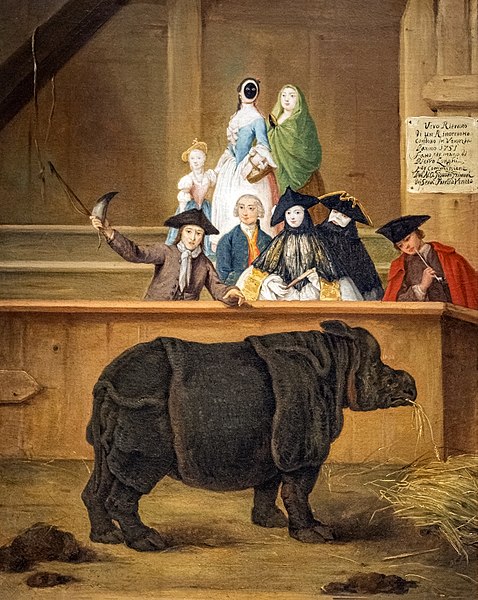
Plaque in background, text [refer Molmenti 1885: 383]
Italian text:
Vero Ritratto di un Rinocerotto, condotto in Venezia l’anno 1751, fatto per mano di Pietro Longhi per commissione del N.O. Giovanni Grimani dei Servi, Patricio Veneto.
Translate:
True Portrait of a Rhinoceros, brought to Venice in the year 1751, made by Pietro Longhi on commission from N.O. Giovanni Grimani dei Servi, Venetian Patricio.
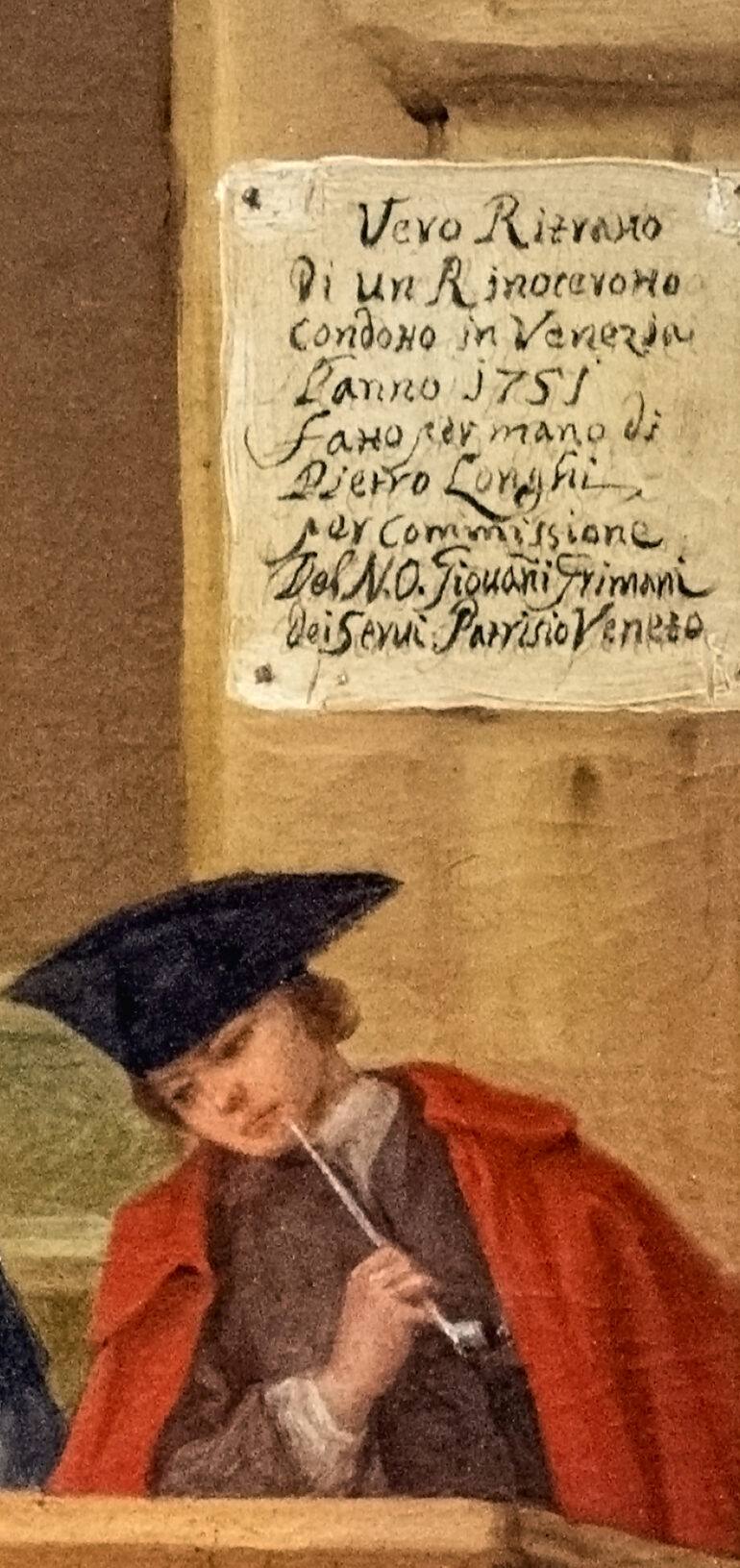
Literature:
- Molmenti, P.G. 1885. La storia di Venezia nella vita privata dalle origine alle coduta dalla republica, 3rd ed. Torino.
- Molmenti, P.G. 1908. Venice: its individual growth from the earliest beginnings to the fall of the Republic. Part III: the decadence. Chicago – p. 147 states that the Longhi painting was once shown in the Palazzo Pisani at Santa Stefano, now in Museo Correr
- Fiocco, G. 1929. Die venezianische Malerei – pl. 86 has this from Museo Correr
- Torchynowycz, A. 2011. Exhibiting a rhinoceros: iconography and collecting in eighteenth century Venice. Thesis presented to the University of South Florida. pp. 1-25.
- Fapanni, F.S. 1838. Fuor d’opera. Intorno tredici quadri di costume veneziano dipinti da Pietro Longhi. Lettera ad Eugenio Rosa. Il Vaglio – Antologia della letteratura periodica 3 (38), 22 September 1838: 306-309.
https://carezzonico.visitmuve.it/en/il-museo/percorsi-e-collezioni/second-floor/longhi-room/
At the center of the pyramidal composition, we find the commissioner of the painting himself (who was 23 years old at the time) next to his beautiful and unfortunate bride, Caterina Contarini, who was to die shortly after giving birth to their only daughter.
https://www.albertosanavia.com/pietro-longhi-e-le-tele-di-giovanni-grimani
* Francesco Scipione Fapanni
Fapanni, F.S. 1838. Fuor d’opera.
Text:
“L’ordinatore di questi quadri, amantissimo com’era di tener animali stranieri, avendone un serraglio nella sua villa, si facea poi anche ritrarre quelli che più difficilmente poteva acquistare e mantenere (1). Perciò rimangono da lui ordinati una serie di quadri [Ricordo fra questi i quattro di Carlo Shmank, in due de’ quali sono ritratte due Cavalle, in un terzo un Cavallo intero, e nel quarto un Caprone di Guinea dipinti nel 1774]. Del Longhi però non vi ha che questo solo col rinoceronte, avendovi anzi scritto il proprio nome (locchè non fece negli altri) e l’epoca del 1751 in cui si fece vedere a Venezia questo animale. Mangiando fieno egli è dentro lo steccato dei casotti. Il custode, con una faccia malinconica e propriamente straniera, scuote la bestiaccia collo scudiscio. – Spettatori fra varii altri, la stessa signorina in tabarro e bautta, descritta nella Strolega: da lato il Cavaliere cupidamente attento al bruto bestione”
Translate:
The author of these paintings, who was very fond of keeping foreign animals, having a menagerie of them in his villa, also had portraits made of those that he had the most difficulty in acquiring and maintaining (1). Therefore, a series of paintings commissioned by him remain [I remember among these the four by Carlo Shmank, in two of which are portrayed two Mares, in a third a whole Horse, and in the fourth a Guinea Goat painted in 1774]. By Longhi, however, there is only this one with the rhinoceros, having even written his own name on it (which he did not do in the others) and the period of 1751 in which this animal was shown in Venice. Eating hay, it is inside the enclosure of the huts. The keeper, with a melancholy and truly foreign face, shakes the beast with his whip. – Spectators among various others, the same young lady in cloak and cape, described in the Strolega: on the side the Knight greedily attentive to the brute beast”
Source 6053. Pietro Longhi, Painting in National Gallery, London
Pietro Longhi (1701-1785)
Painting, Oil on canvas. Rhinoceros facing right with short horn. There is no plaque on the wall behind the animal.
Size: 47 x 60.4 cm
Example:
- National Gallery, London.
Commissioned by Girolamo Mocenigo (d.1772), son of Alvise IV Mocenigo
Literature:
- Levey, M. 1956. National Gallery catalogues. Provenance: In the Count Oldofredi collection, Milan, prior to 1880. Purchased by National Gallery from Giuseppe Baslini, Milan, 1881.
- Levey, M. 1970. Review of Pignatti on Longhi. Art Bulletin 52 (4): 463-464 – When the painting was relined, it showed inscription on reverse: “per commissione del Nobile Uomo Sier Girolamo Mocenigo.”
- Clarke 1986:183. This painting for Girolamo Mocenigo, Venetian nobleman.
* Conte Oldofredi Tadini (1810-1887)
* Giuseppe Baslini (1817-1887), art dealer in Milan
Source 6054. Venetian School, Rhinoceros rearing up in its pen
Rhinoceros rearing up in its pen. The animal faces right, on her hind legs, with short horn.
Oil on canvas
Sold in 1954, currently unknown
Possibly by Pietro Longhi or his circle
Literature:
- Levey, M. 1971. The seventeenth and eighteenth century Italian schools. London, National Gallery. – p. 155. Another picture of the rhinoceros, rearing up in its pen, was in an anonymous sale, [Sotheby’s] London, 12 May 1954 (lot 137) as by ‘Longhi’.
- Clarke 1986: 61, without references or comments.
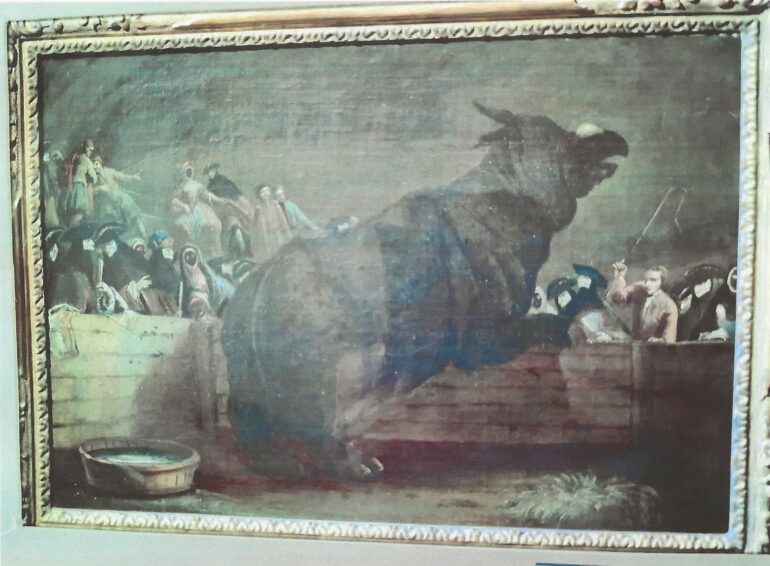
T.H. Clarke legacy: This has label: Foto Barsotti, Via della Scala n. 12 r, Tel 215.471 Firenze
Source 6055. Longhi, Magrath and the Rhinoceros
Oil on canvas. Rhinoceros facing right with people as in the Pietro Longhi painting, combined with the giant Magrath on the left.
size: 50.5 x 64 cm.
Perhaps from the Count Mapelli collection, Bergamo.
Cornelius Magrath (1736–1760) was an Irish giant born in County Tipperary. Magrath was in Venice in 1757.
Also: Painting (without rhino) The giant Magrath by Pietro Longhi in Ca’ Rezzonico Venice
Literature:
- Ridley 2005: 185, attribution to Venetian School
- Pignatti, Terisio, 1969. Pietro Longhi; paintings and drawings. Complete edition. London, Phaidon – pl. 209c., p.105 Magrath The Giant And The Rhinoceros – Oil on canvas, 50.5×64 cm. Perhaps from the Count Mapelli collection, Bergamo. “This unpublished work is a composition to the Forlana (pl. 299d). Here again Longhi had evidently been commissioned to repeat two earlier works (pl. 116 and 179). In fact the original descriptions appear here as a reminder. The painting appears in a good state of preservation. Showing the deeper tones of the late period, with vibrant touches of light in the faces and clothes.”
Source 6056. Painting of the Venetian School: Rhinoceros in its booth
The Rhinoceros in its booth
Oil on canvas,
Size: 55.5 x 72 cm
Venetian School
Attributed to Pietro Longhi (Rava 1909), or Alessandro Longhi (Fiocco 1929), or anonymous painter in Longhi school, or Lorenzo Tiepolo (1736-1776) (Sgarbi 1982). [see Delorenzi 2010]
Example:
- Palazzo Leoni Montanari, Vicenza – coll. Banca Cattolica del Veneto – or: Banca Intesa Sanpaolo. Provenance: Heirs of the Salom Collection, Segromino Monte
Literature:
- Clarke 1986, pl. IX – illustrated in colour
- Rava, A., 1909. Pietro Longhi. Bergamo – illustrated on p. 85 attributed P. Longhi
- Rava, A., 1923. Pietro Longhi. Firenze – Plate on p.84 in
- Oudry’s painted menagerie p.97
- Van der Ham 2022, fig. 40 – states location in Vicenza, Gallerie d’Italia, Palazzo Leoni Montanari, Intesa Sanpaolo collection, inv.nr. A.A.-00088A-C/81. Attributed to Venetian School, and he says painted after leaving Venice in 1751
- Sgarbi, V., 1982. Pietro Longhi. I dipinti di Palazzo Leoni Montanari, catalogo della mostra itinerante (1982-1983), Milano 1982. [not seen]
- Delorenzi, Paolo. 2010. Alessandro Longhi, pittore e incisore del Settecento veneziano. Thesis presented to Università Ca‟ Foscari di Venezia – [p. 302, no. R217] Details of this “Il rinoceronte”
https://gallerieditalia.com/it/musei-online/opere/il_rinoceronte-196/#
Source 6057. Alessandro Longhi, Etching
Alessandro Longhi (173301813)
Joseph Wagner (1705-1786), engraver, publisher
Etching. Rhinoceros facing left, with very short horn. The keepr is showing the horn which had been lost. There is a small crowd behind the animal.
size 361 x 455 mm
Literature:
- Clarke 1974: 119, fig. 18
- Faust 2003: 154-155, no. 732
- Delorenzi, Paolo. 2010. Alessandro Longhi, pittore e incisore del Settecento veneziano. Thesis presented to Università Ca‟ Foscari di Venezia – [p.339, no. I 8] States original painting unknown, dates ca. 1763. Illustrated p.472
Examples:
- Metropolitan Museum, New York, link
- Museo Correr, Venice. GNSR, FN 33988. MCV, Stampe Molin 2008
Text:
Il gran Rinoceronte qui si vede / Dall’Africa condotto in sto contorno
E della Belua Smisurata in fede / Del suo naso cornuto eccovi il corno.
[Bottom left]
Petrus Longhi inv. et pinx. eiusdem Filius inc.
[Bottom right]
Appo. Wagner Ven:a C.P.E.S.
https://www.archiviodellacomunicazione.it/sicap/Stampe/203279/?WEB=MuseiVE
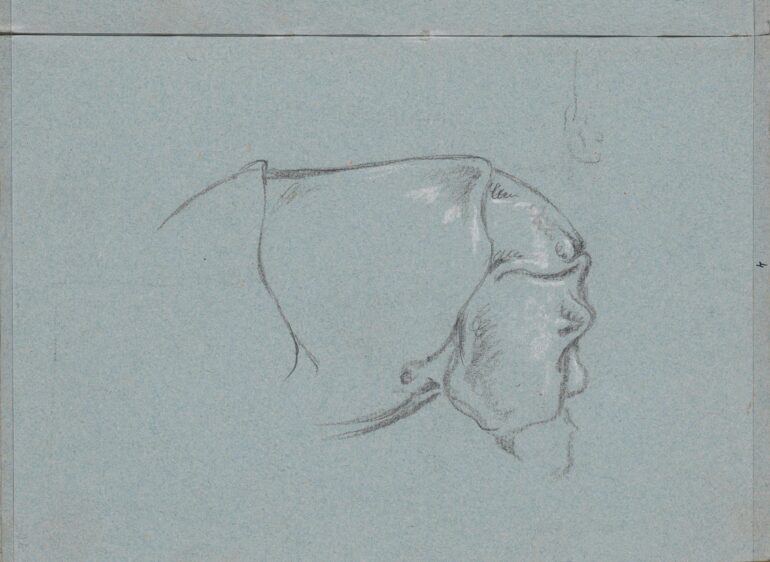
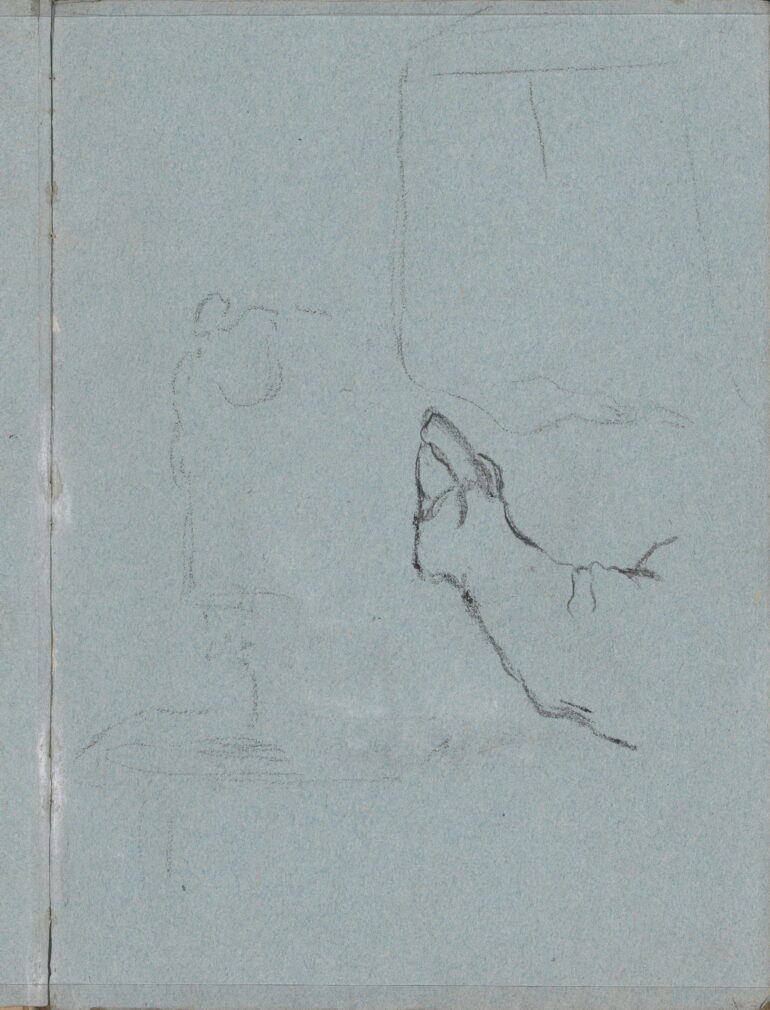
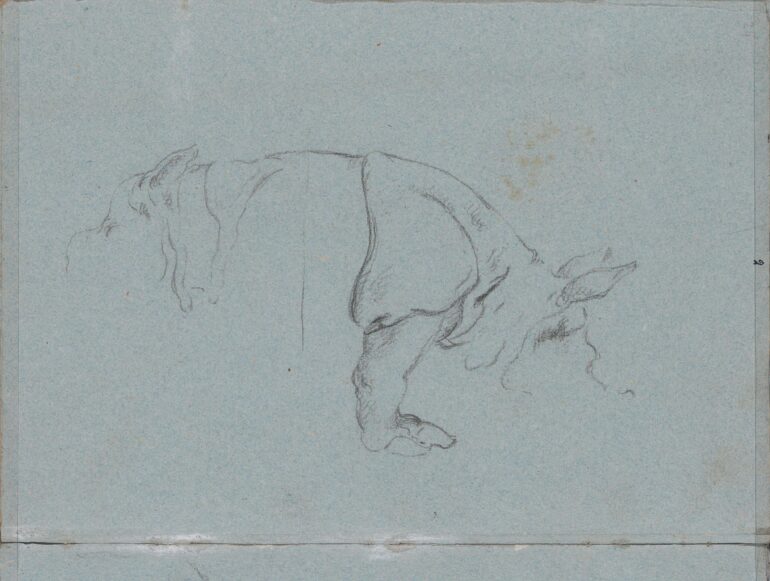
Source 6058. Sketches of the Venetian School
Album in Rijksmuseum, Amsterdam, inv.nr. RP-T-1953-359/405
(pages 20, 21, 24, 29, 31, 32, 37, 39, 43, 45).
Drawings black and white chalk on blue paper, 315 x 223 mm
The Album (Schetsboek) has 158 pages. Two pages in the album are numbered with the number ‘37’. – Purchased 1953 from the J.W. Edwin Vom Rath Fonds/Rijksmuseum Fonds
Anonymous, the drawings in this album have been attributed to Lorenzo Baldissera Tiepolo – unlikely because he had moved to Würzburg in January-February 1751. Or Giambattista Pittoni (1687-1767). Another artist Lorenzi made drawing in Verona 1751.
* Lorenzo Baldissera Tiepolo (1736-1776), son of the famous Giovanni Battista Tiepolo (1696-1770)
NB. Lorenzo Tiepolo would have been only 14-15 when Clara was in Venice
* Giambattista Pittoni (1687-1767), Venetian painter
Literature:
- Ham, G.van der, 2005. Clara in beeld. Bulletin van het Rijksmuseum, Amsterdam 53 (2): 192-203, figs. 1-8
- Van der Ham 2012: 136, figs. 48-51 (on pp. 138-139)
Note the presence of a short horn. Clara lost her horn in 1750 after visiting Rome.
a