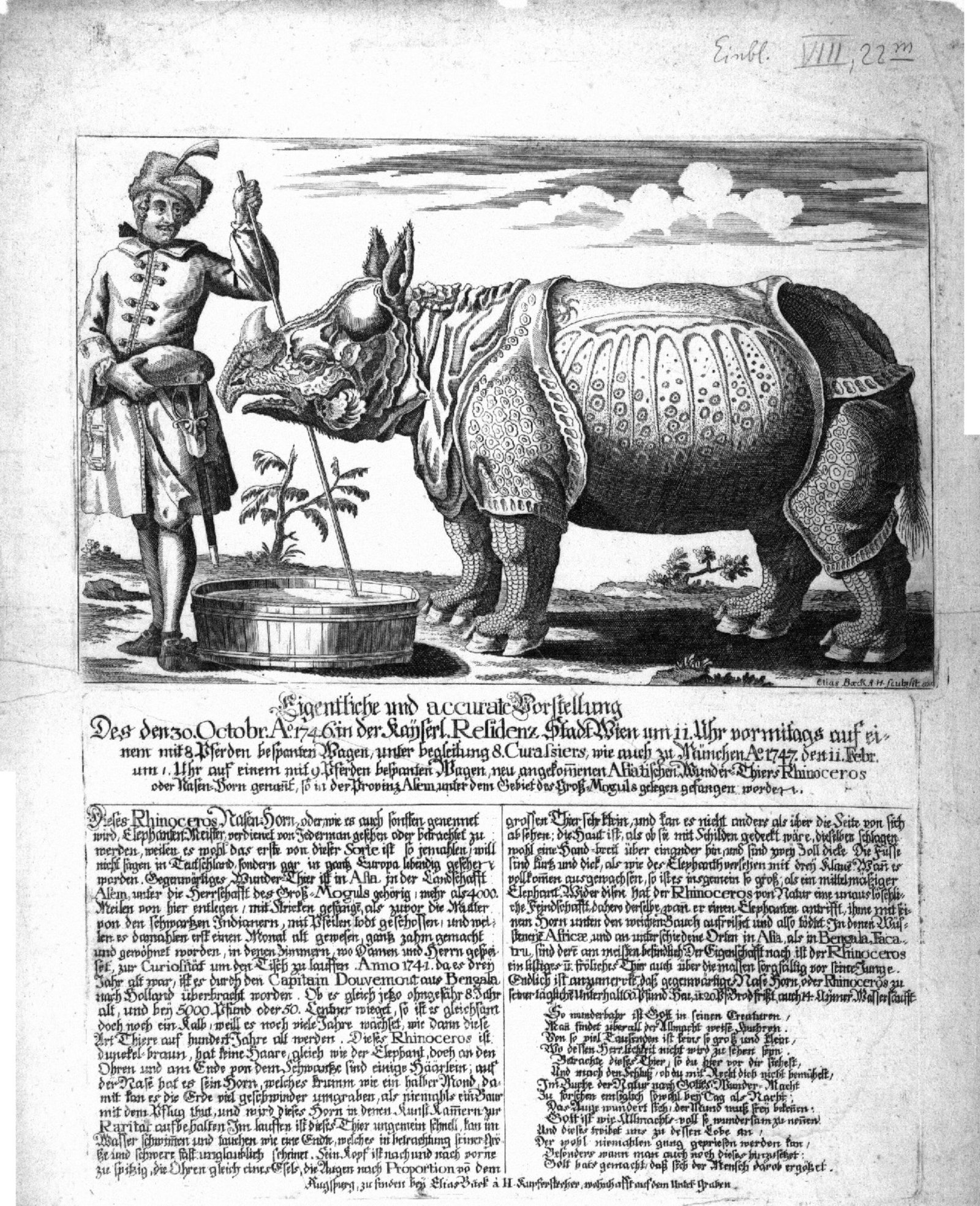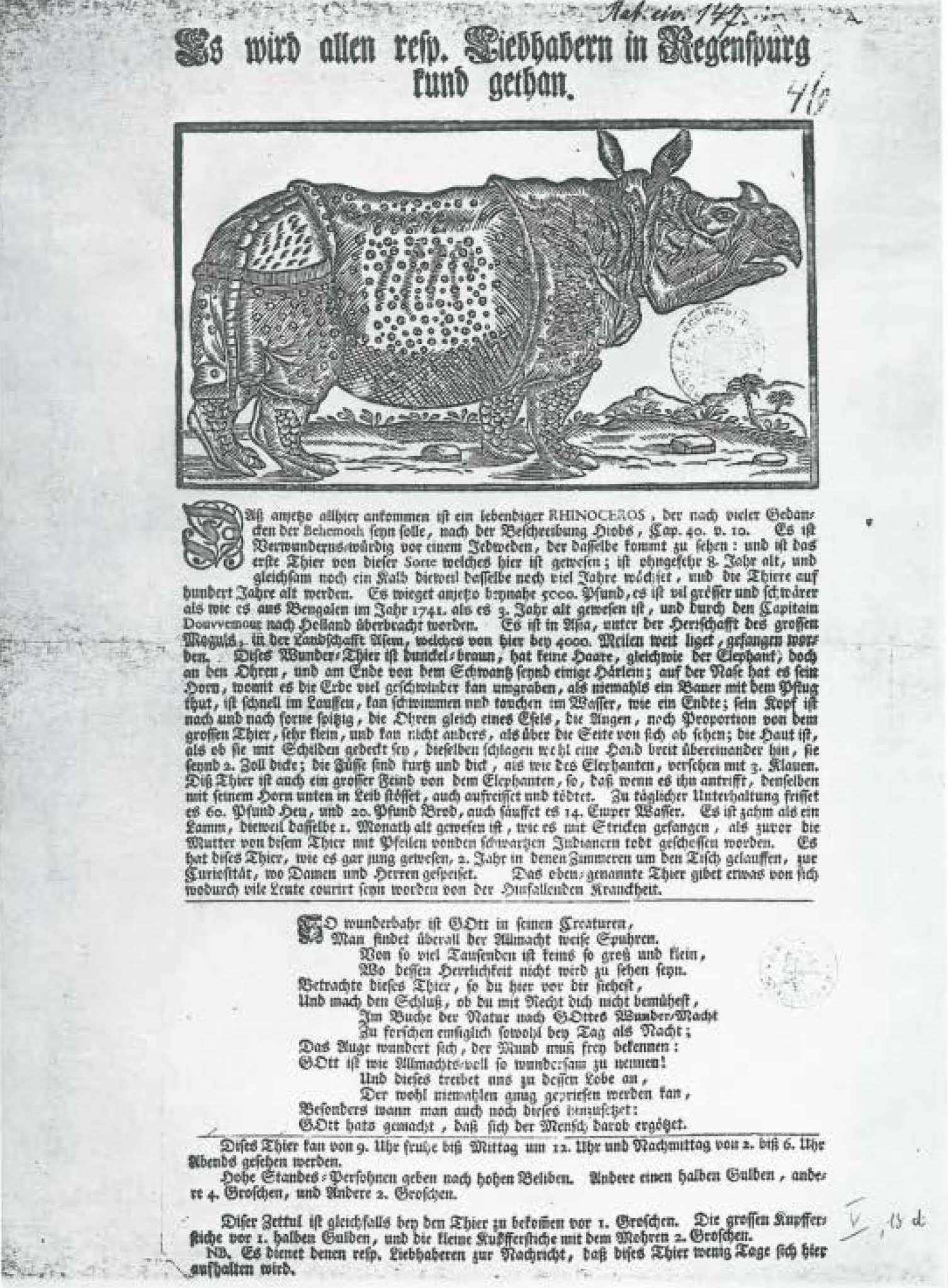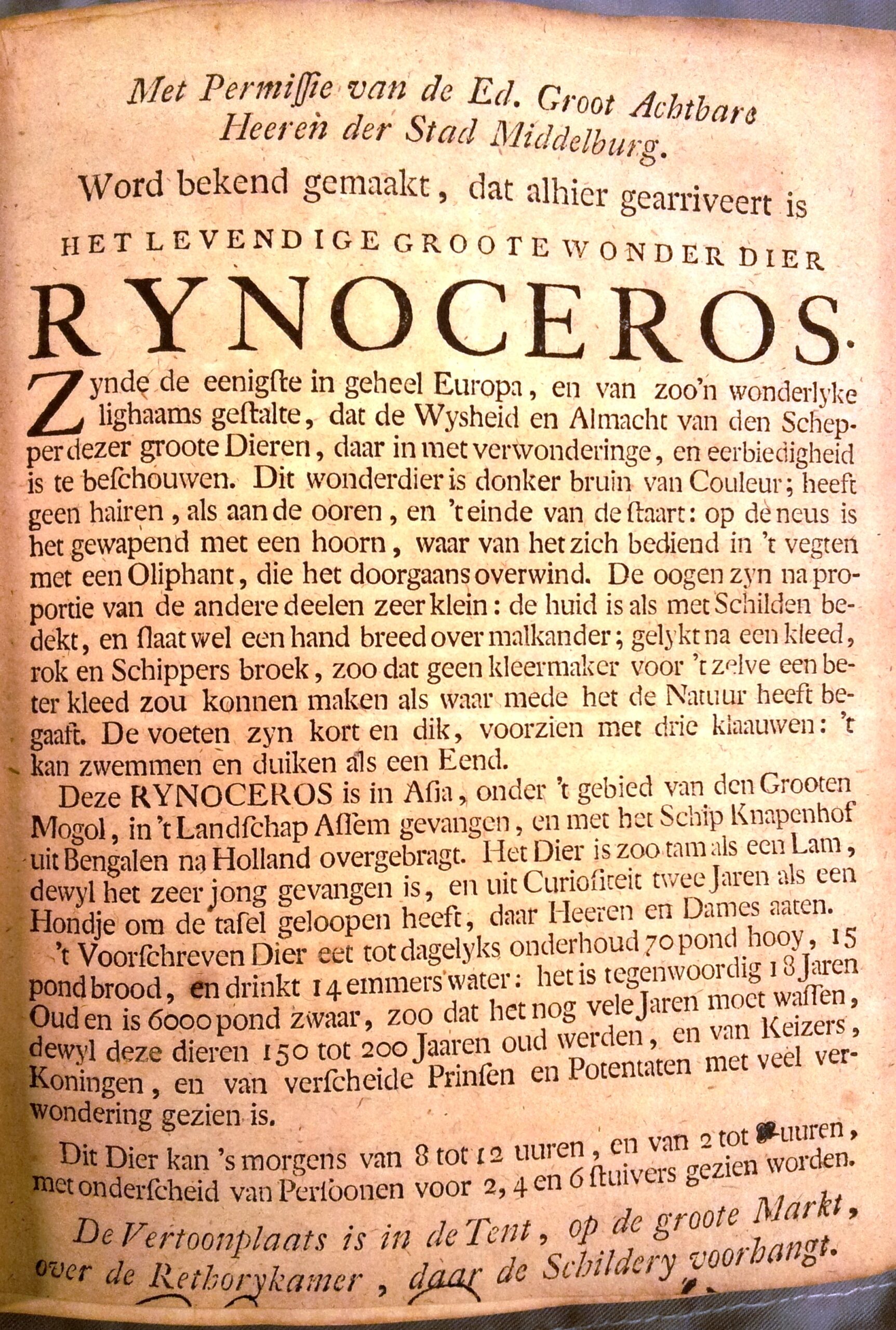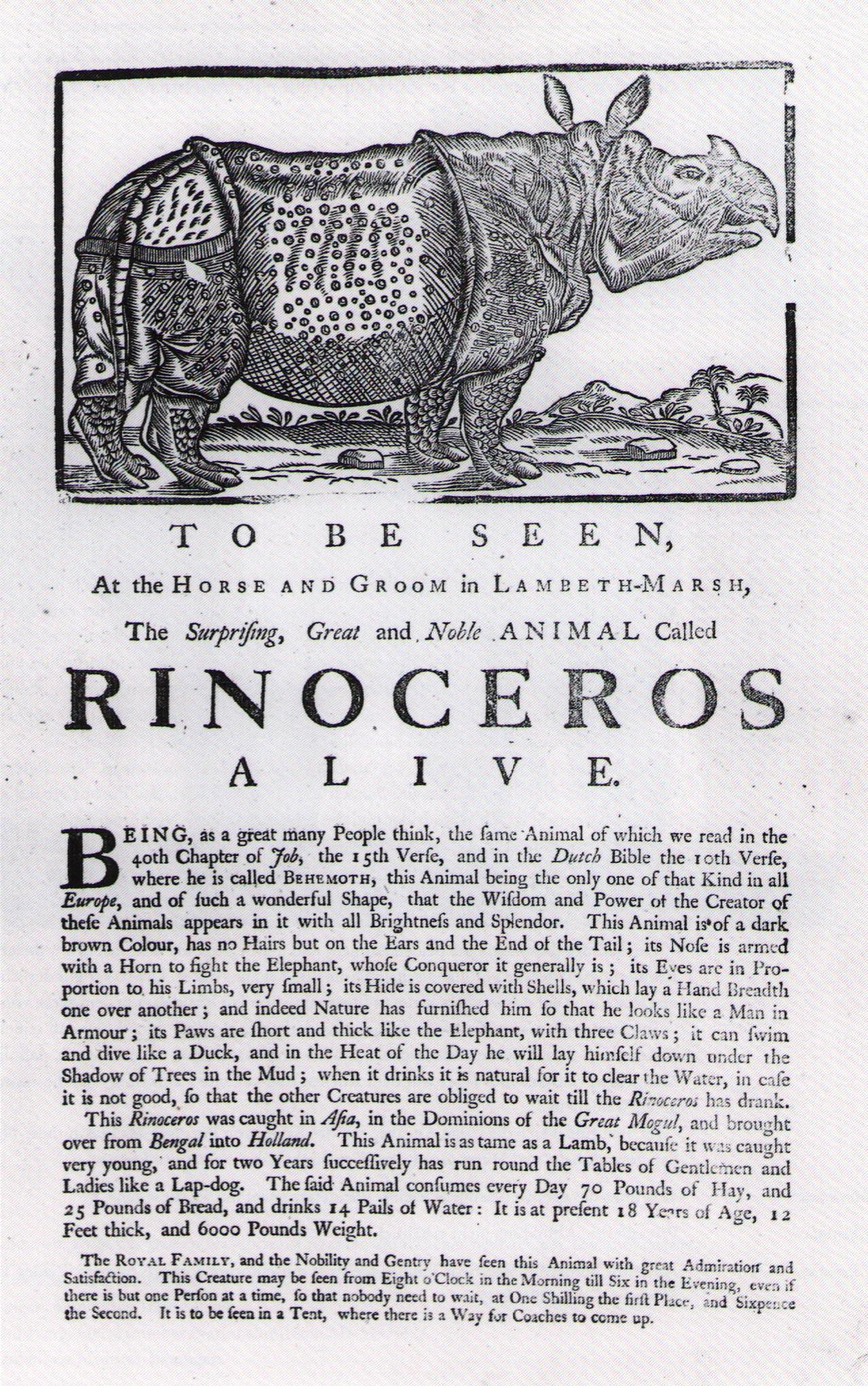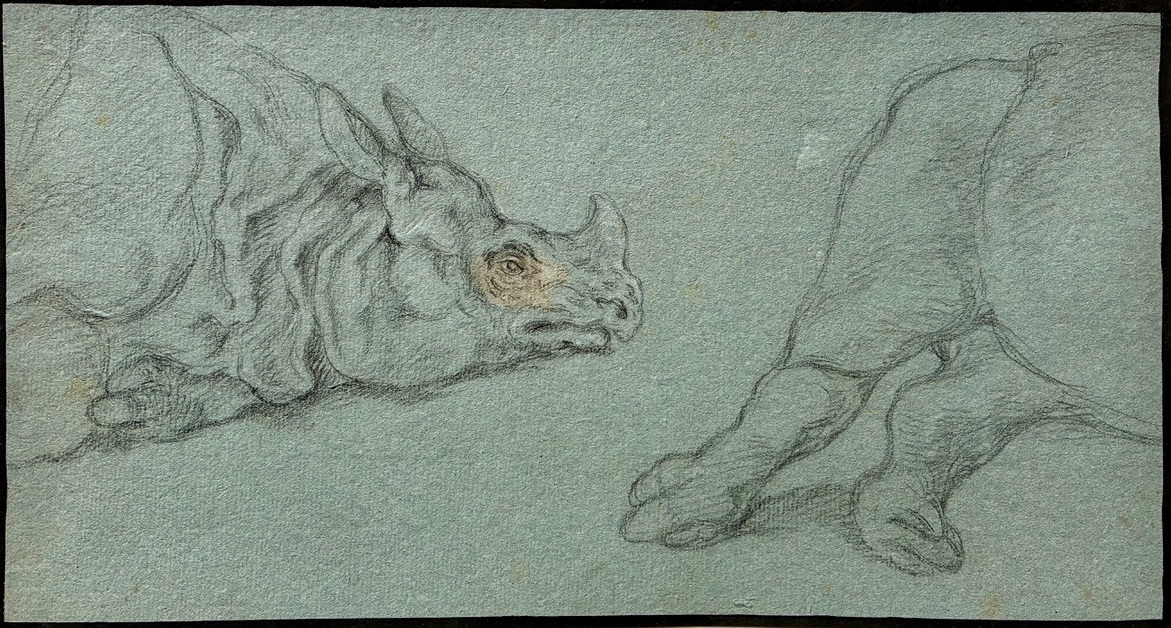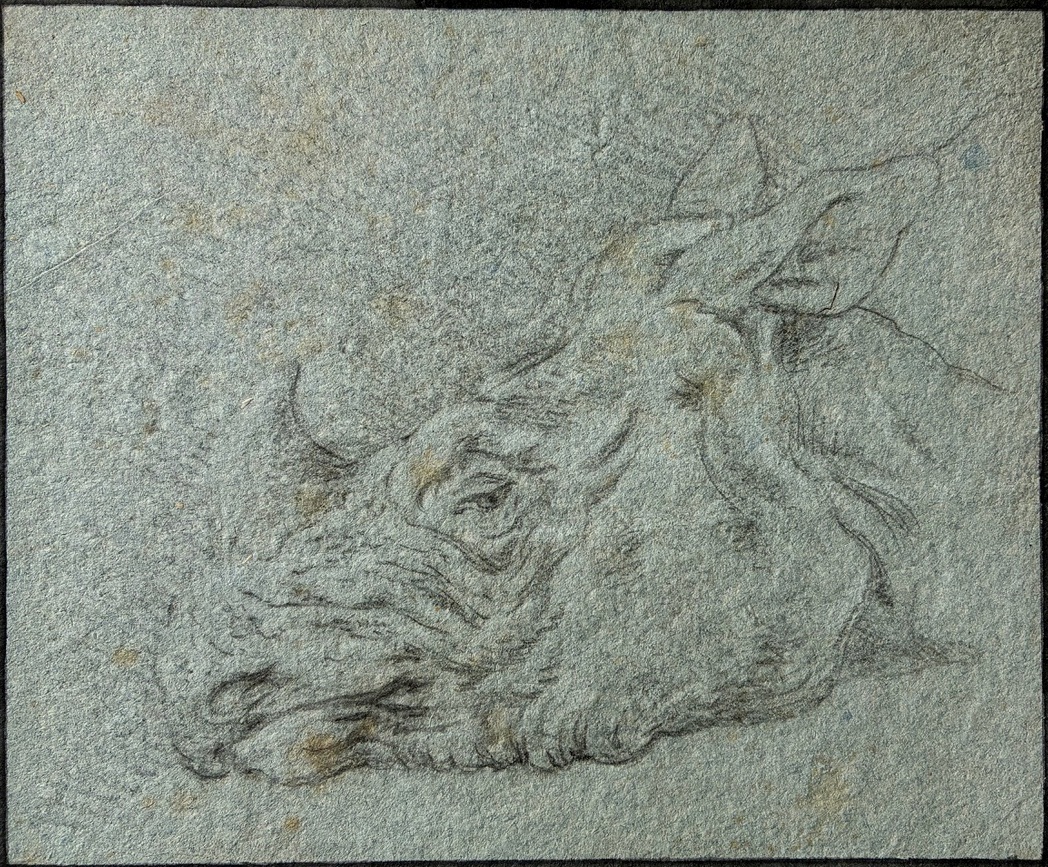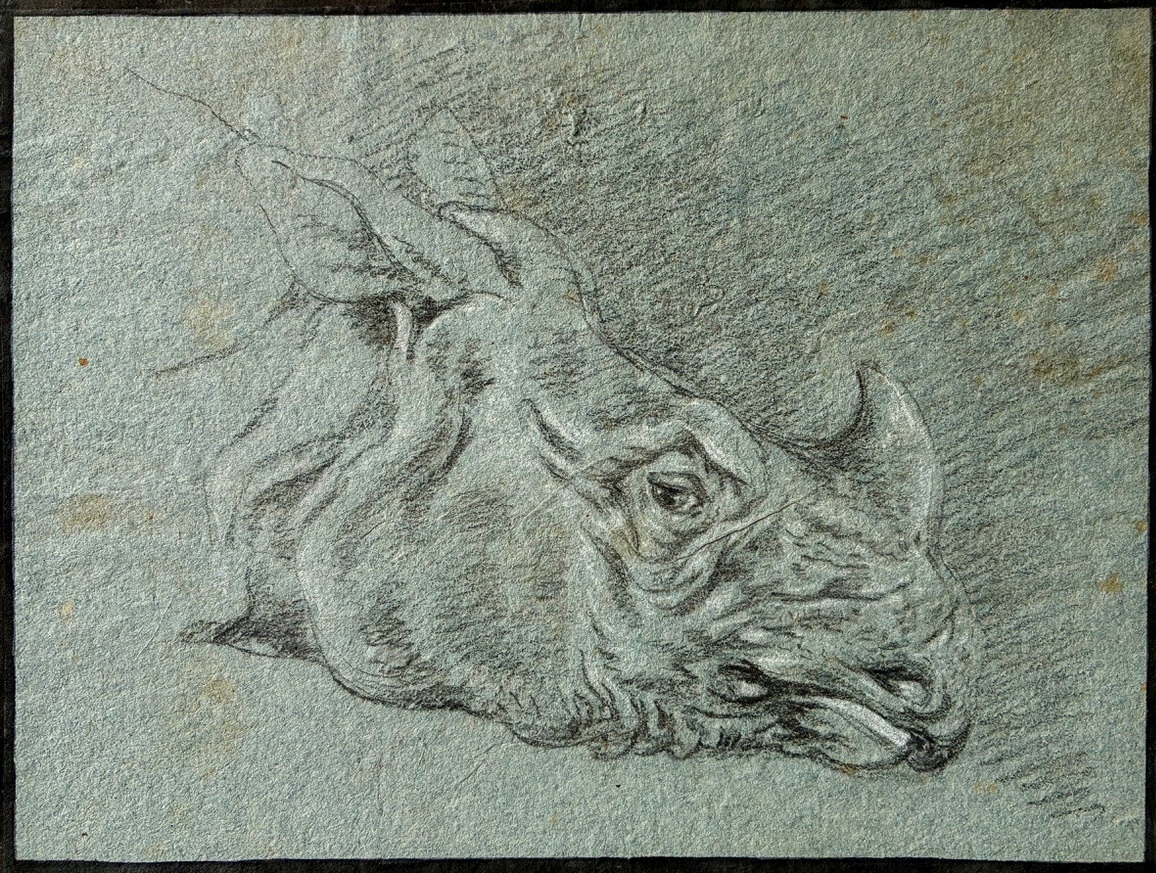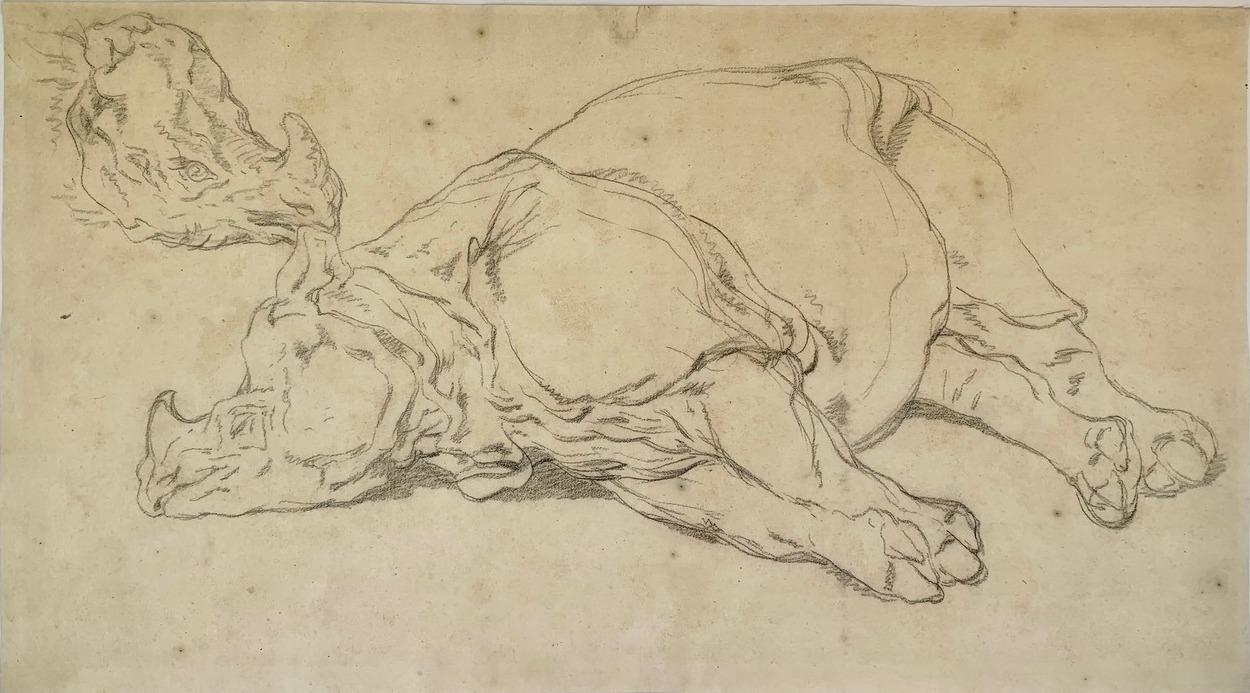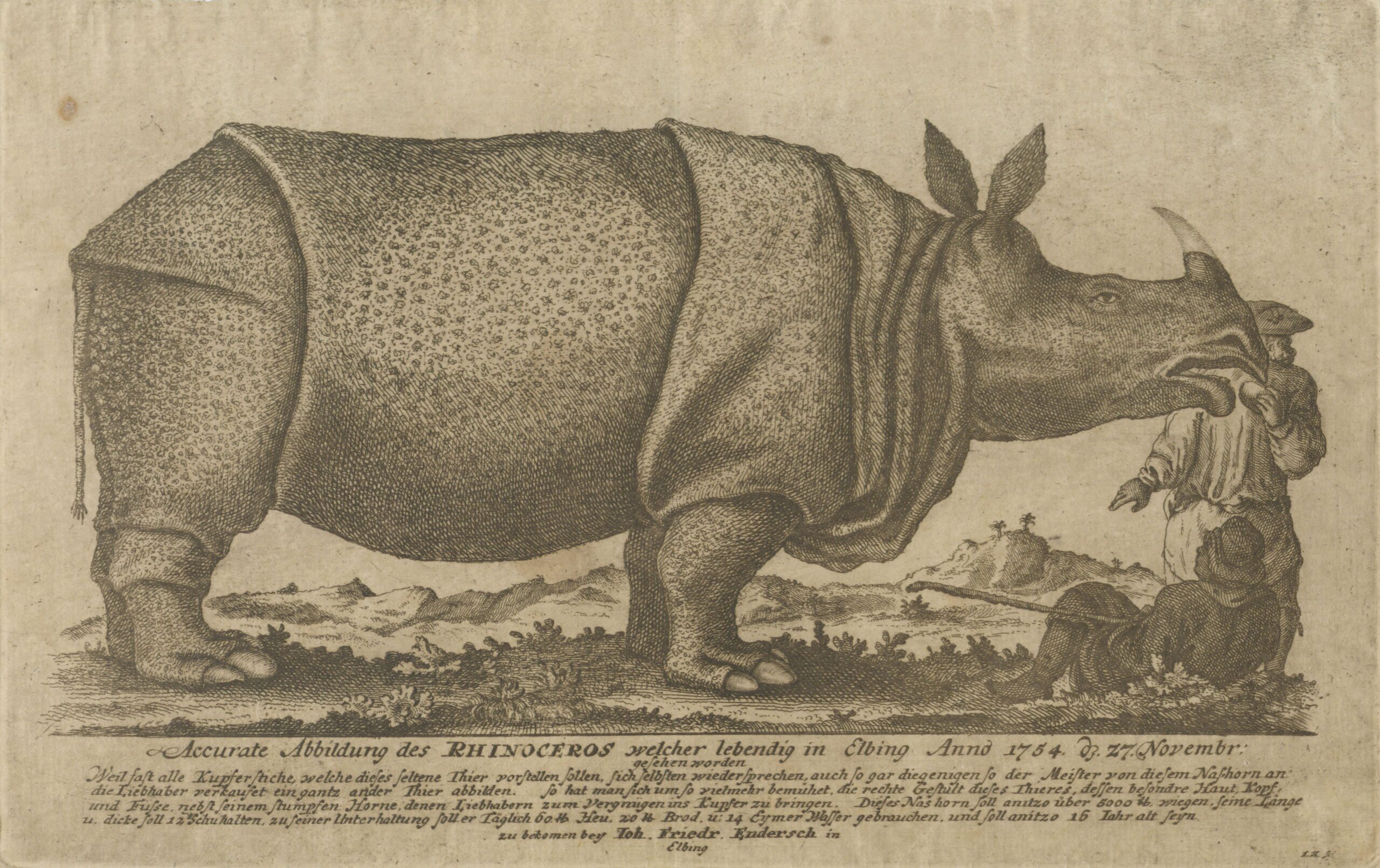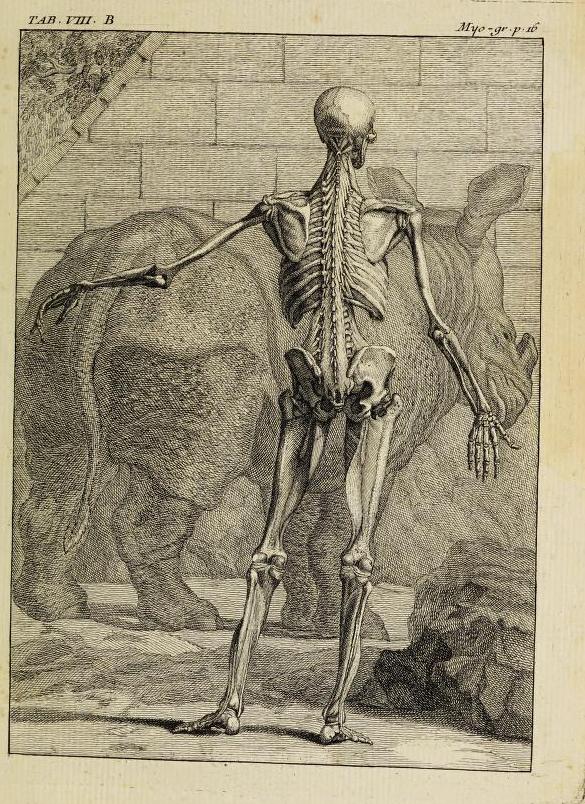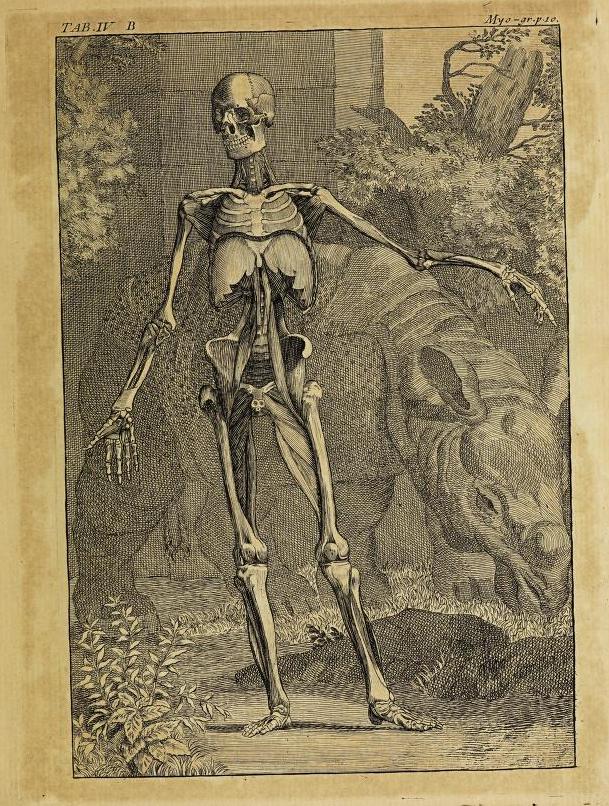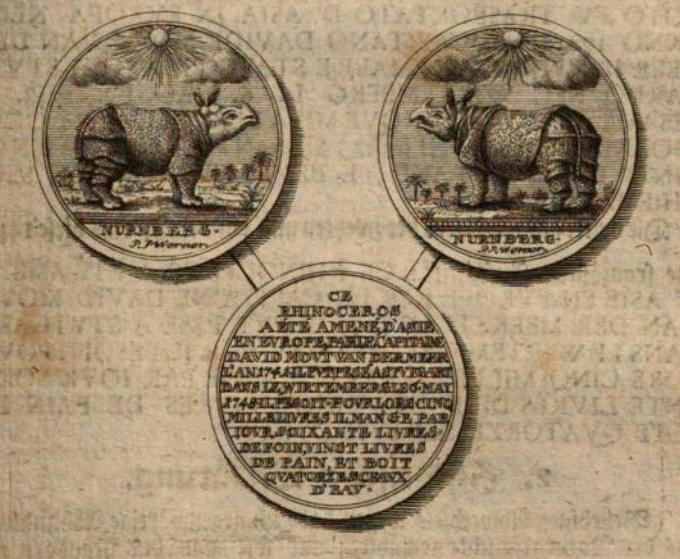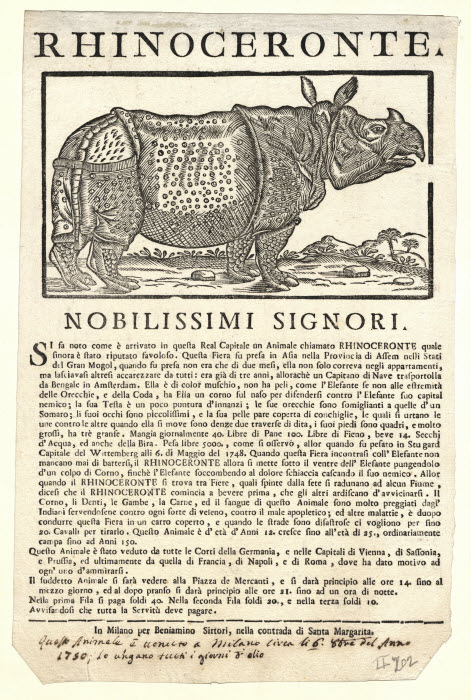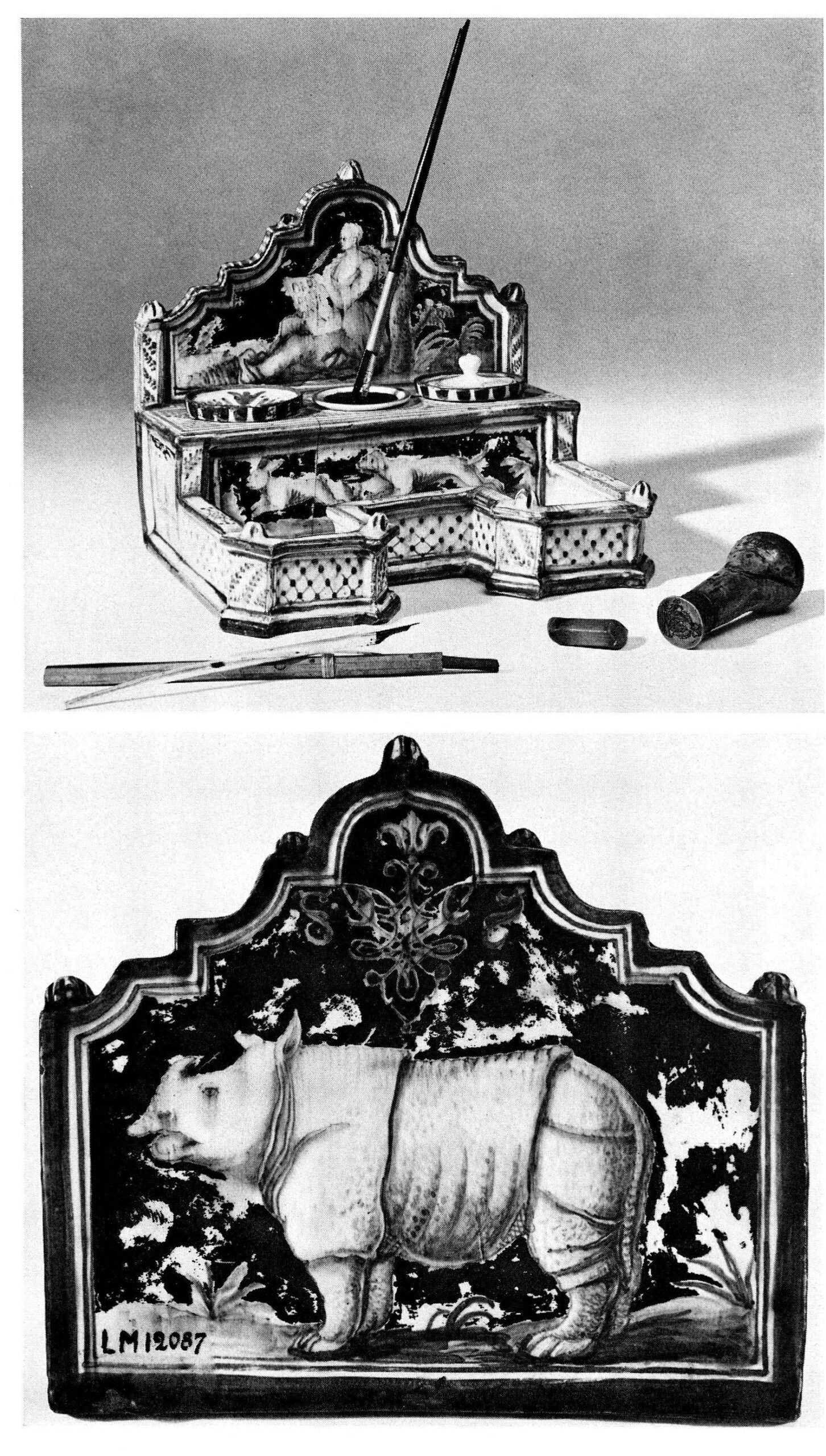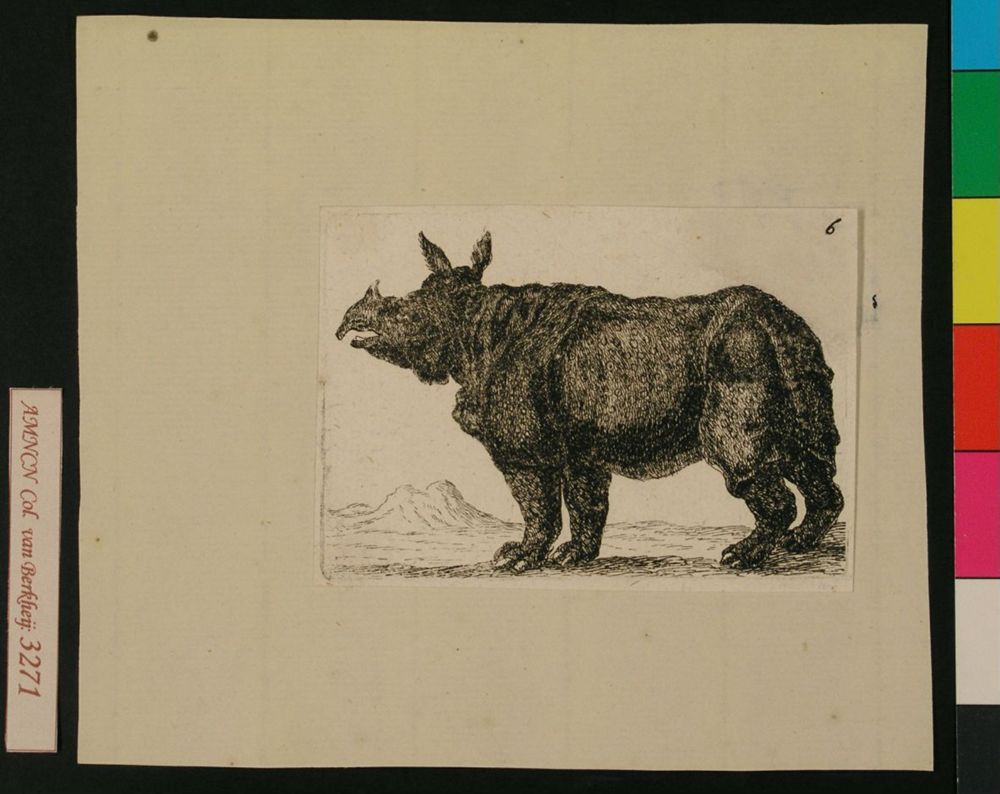


Giovanni Antonio Battarra mentioned seeing the rhinoceros in Rimini in August 1750 (source 5551). He states that the horn broke off on the way from Rome to Rimini when Clara was made to walk inside the waggon after the floor was taken out (source 5552). The horn was depicted in a plate (source 5551). There is also a rhinoceros in a vignette at the start of the book, possibly inspired by Clara (source 5551).
The story about the cart makes it more likely that the rhinoceros was transported from Rome overland, not by ship around the south of Italy (source 5552).
The distance from Rome to Rimini via Perugia (no account) and Senegallia (seen) is about 350 km. This must have taken 2–3 weeks?
Literature
- Rookmaaker 1998, p.66 (refers Buonanni 1773)
- Van der Ham 2022:184, note 216 (after Rookmaaker 1998)
- Rookmaaker 1983, fig. 2
Source 5551. Buonanni, Rerum naturalium historia
* Filippo Buonanni (1638–1725) writer of main text
* Giovanni Antonio Battarra (1714–1789), priest and mycologist in Rimini.
* Ariminum = Rimini
Buonanni, P.; Battarra, G.A. 1773. Rerum naturalium historia nempe quadrupedum insectorum piscium variorumque marinorum corporum fossilium plantarum exoticarum ac praesertim testaceorum exsistentium in Museo Kircheriano. Romae, Zempelliano. vol. 1, pp. i-xl, 1-260.
Original text (Latin)
[p. 16] Anno Jubilaei MDCCL Rhinoceros visus est in Italia, & Kal. Augusti fuit Ariminum transvectus. eumque commode observare potui.
English translation
In the year of the Jubilee, 1750, he was seen in Italy, and in August he was transported to Rimini [Ariminum]. And I was able to observe him comfortably.
Battarra gives a description of the animal in a long footnote:
Original text (Latin)
[16] Adnotatio [by J.A. Battarra]
Anno Jubilaei MDCCL Rhinoceros visus est in Italia, & Kal. Augusti fuit Ariminum transvectus, eumque commode observari potui. Mole corporis quatuor sane nostrorum Boum simil coagmentatorum molem aequabat. Pellem valde crassam, & rhagadis asperam, & praecipue in cruribus, in quibus Ulmi corticem aemulabatur. Vario modo circa collum plicata, ut minorum observantium cucullum repraesentaret. In dorso, & circa coxas pariter eleganter plicata. Tota fuliginosi coloris erat, & minime pilosa. Crura rotunda, brevia, cylindrica, recta, absque visilibus juncturis, dum staret; singulorum circumferentia non erat tribus Parisiensibus pedibus minor. Femina erat haec bestia. Cauda ad radicem brachium humanum ex majoribus aequabat, quae sensim descrescebat in formam eoni, seu, ut melius dicam, pyramidis quadrangularis; nam inter clunes ita aptabatur, ut sulcum clauderet, atque aequaret. Hysteros vero ita patebat, ut pueri caput, facile admittere posse videretur. Os, ratione molis corporis, exiguum, labiumque superius languidum & pendulum. Oculi bubulos non superant; quare pro tanta bestiae magnitudine parvi apparent. Linguam coniformem, mollem habebat, non autem corneis papillis ita asperam, ut in felibus, & bobus observamus. Cornu tantum uno supra nasum instructa erat, hocque vix palmum altitudine superabat, & paullo minus erat latitudine, obtuse mucronatum, cujus figura pedem humanum vestitum, & per sectionem perpendicularem a capite a tarsorum exordio abscissum aemulabatur, prout Fig.I Tab. adjectae indicamus. Pedes insuper habet tribus digitis instructos, brevibus, exteriori articulo valde mobili donatis, ita a cute pedum obvolutis, ut speciem praeputii circa eosdem digitos constituant; caput vero digitorum ita movetur, ut caput testudinis terrestris a testa ex porrectum aemuletur.
Accidit autem, ut cum ex urbe Roma ad nos Fera haec supra Plaustrum in caveae modum efformatum, & a variis bobus attractum adveheretur (ut sumptus in boves trahentes minueretur) fundum plaustro abstulerint, ut intra septa plaustri detentum ambularet, sicque par bovum sufficiens effet ad vecturam; quo factum est, ut, vitio viae, concussione capite in plaustri parietem, cornu remanserit destitutum; quare apud nos fuit absque cornu. Illud tamen a vectoribus ostendebatur, illudque ad manus habui, & vidi, nigrum, non vero nigerrimum esse; erat plenum usque ad radicem, non vero cavum, ut in bubulis, capreis, hircinis, &c. observatur. Locus autem, ubi cornu habebat, prominentiam bulbosam incipiebat ostentare ejusdem diametri, ac basis cornu, ut accidit in cervis, quando primum cornua reproducere incipiunt. Fera haec, me praesente, a puero, qui flagello bis, aut ter eam in capite percusserat, irritata, contra percussorem, tardo primum icta, sed dein voluntissime irruit, ut vix ab ictu se eripuerit, quin in vicinum murum impactus confringeretur. Ceterum fera mansueta cernebatur, & foenum, & panem, quibus nutriebatur, ex manibus circumstantium placide fumebat. Verum cum in Germaniam pervenisset, regionis inclementia sequenti anno mortuam audivimus. Denique ne quidquam videamus comittere es iis, quae vidimus, & quae ad pleniorem ferae notitiam pertinent, dicam, quod contigit quoque, ut illam viderem, quomodo corpus disponebat, ut posset cubare; quod ut assequeretur, dum stabat, coepit totum corpus a cauda ad caput ancipiti undulatione tarde urgere, dein inflexis lentissime anterioribus cruribus (in hac tantum occasione juncturae apparent, & quoad hoc schema, quod tunc a vectoribus venundabatur, male erat incisum) & hinc posterioribus, tandem ubi ventre terram attigit, totum corpus deposuit, & capite versus unum, latus tantillum reclinato, prona jacuit. Dicuntur Mares in sumeno dorsi inter homoplatas alio cornu verus caput inflexo esse instrueti, sed hoc non vidi. Dicitur: Rhinoceros (unicornis) quem modo descripsimus, & Rhinoceros cornibus duobus cum nota marginali (bicornis). Linn. Sys. Nat.104.
This note by Battarra includes the information:
(a) HORN LENGTH. It was equipped with only one horn above the nose, and this barely exceeded a palm in height, and was a little less in width, bluntly pointed, the shape of which emulated a human foot dressed and cut off by a perpendicular section from the head to the beginning of the tarsus, as we indicate in the attached Fig. I Table.
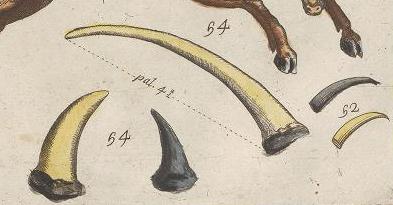
Probably the black horn is the one of Clara, as mentioned in text with wrong number.
(b) It happened, however, that when this beast was brought to us from the city of Rome on a cart shaped like a cage, and drawn by various oxen (so that the expense of drawing the oxen might be reduced), they took the bottom off the cart, so that it could walk within the walls of the cart, and thus make a pair of oxen sufficient for the carriage; which happened that, due to the fault of the road, its head hitting the wall of the cart, it remained hornless; therefore it was without a horn among us. [see note about O’Hara below]
(c) HORN. However, it was shown by the carriers, and I held it in my hands, and saw that it was black, but not very black; it was full to the root, but not hollow, as is observed in oxen, goats, male goats, &c. The place where it had a horn began to show a bulbous prominence of the same diameter as the base of the horn, as happens in deer when the horns first begin to reproduce.
(d) This wild animal, in my presence, was provoked by a boy who had struck it on the head twice or thrice with a whip, and struck it slowly at first against the striker, but then rushed forward very willingly, so that it barely escaped the blow, but was shattered by impact with a nearby wall.
(e) However, the wild beast was seen to be tame, and the hay and bread with which it was nourished, it calmly took from the hands of those around it.
(f) But when it had reached Germany, we heard that it died the following year due to the harshness of the region.
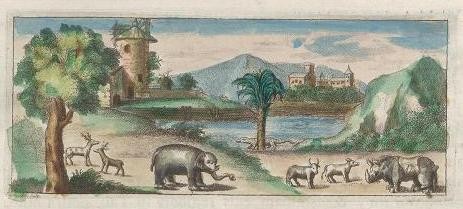
Also Rookmaaker 1983, fig. 1
The rhinoceros might have been inspired by Clara.
Source 5552. Rhinoceros walking in cage – 1907
O’Hara, G.M. 1907. Trapping of rhinoceros in the Dindings, Straits Settlements. Indian Forester 33 (8): 383-388.
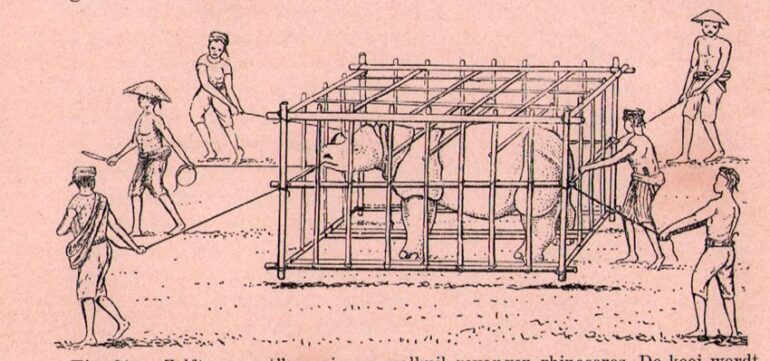
He writes about a Javan rhinoceros captured in the Dindings, Malaysia in 1905, who was made to walk in a cage after capture:
“While the animal was being fed and his attention drawn away a couple of poles were removed from the bottom of the cage underneath the animal’s feet, the rhinoceros was then made to shift a bit, causing its four feet to slip through the open space at the bottom of the cage left by the removal of the two poles. The cage was then lifted about a foot from the ground and held in position by six sturdy Malays while a couple more were busy fixing three horizontal poles that were passed through the cage over the rhinoceros’ back, then four more poles were passed through the bottom of the cage and similarly fastened so as only to allow sufficient space between them for the animal to move its legs at a walking pace. The idea of this was to cause the rhinoceros – although a captive – to carry its own cage and shift itself along, instead of being carried, which would incur a great deal of risk, labour and expense.”
The scene was drawn for the book on the history of the Javan rhinoceros by H.J.V. Sody, 1941, p. 139, fig. 21 (original Dutch edition).
Sody, H.J.V. 1941. De Javaansche neushoorn, Rhinoceros sondaicus, historisch en biologisch. Buitenzorg, Archipel Drukkerij. pp. i-vii, 1-156, figs. 1-25.