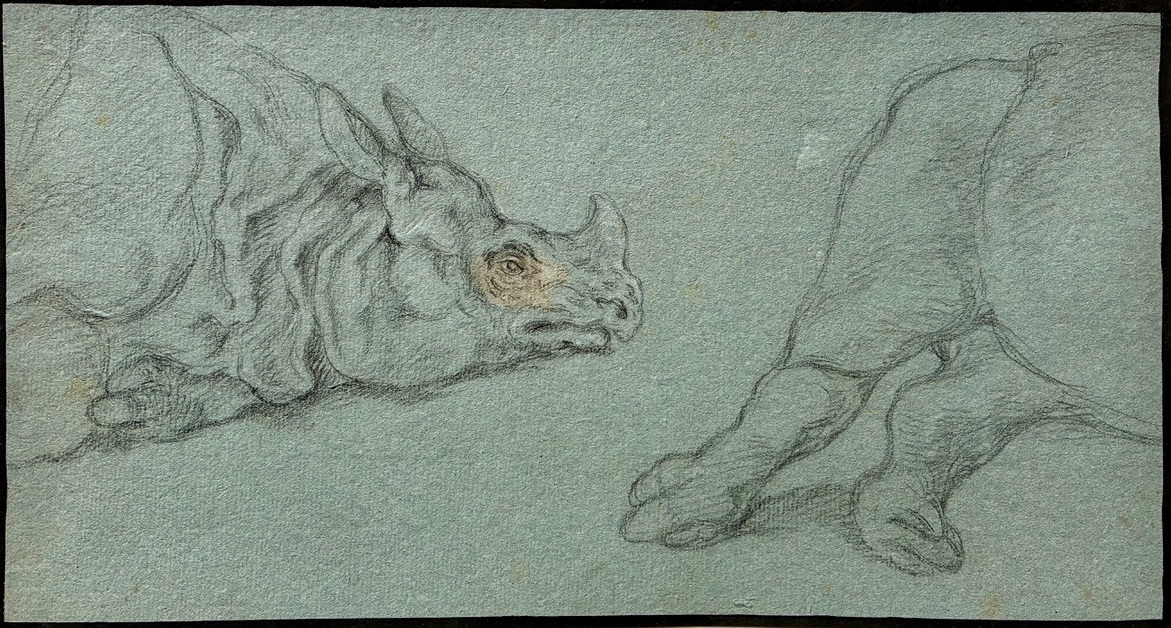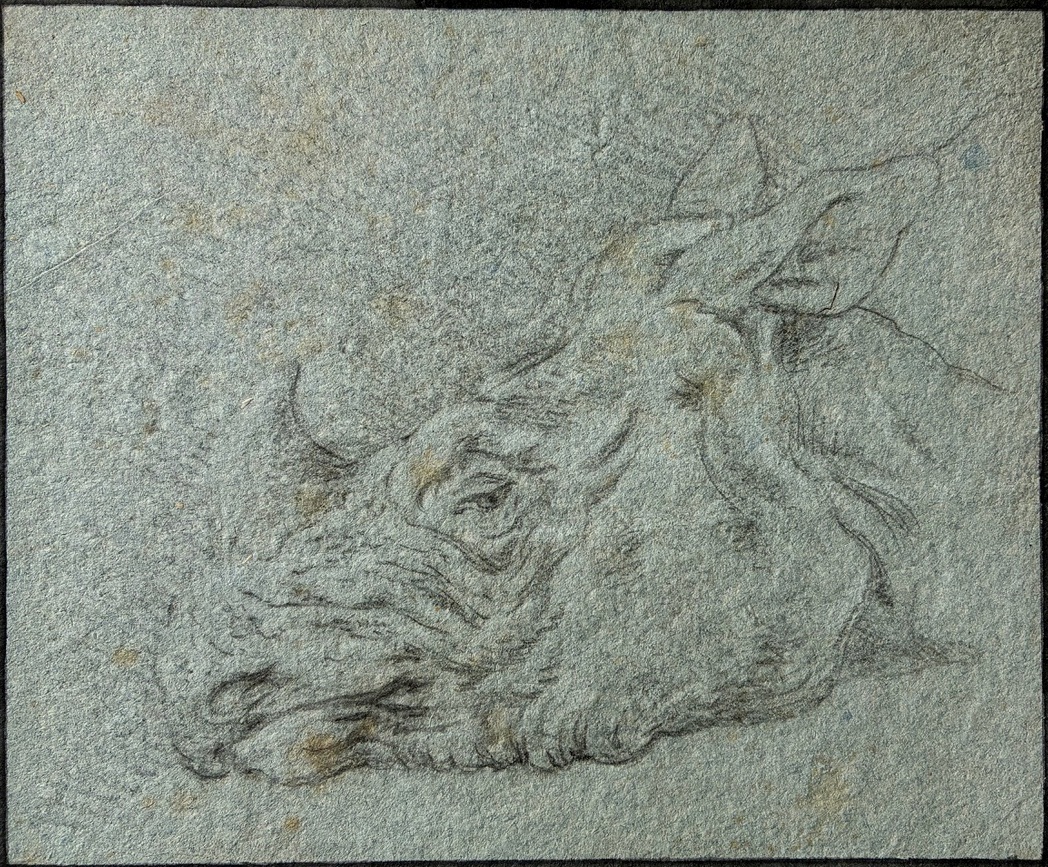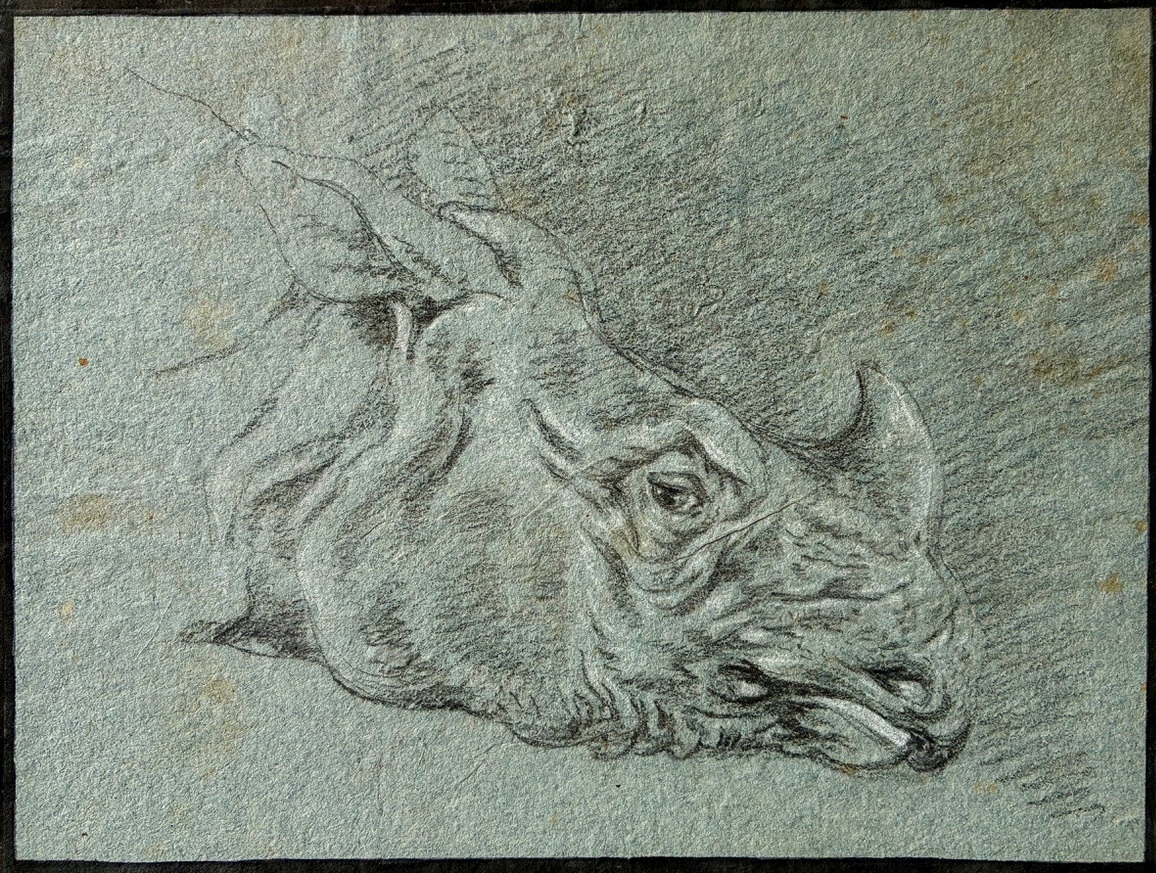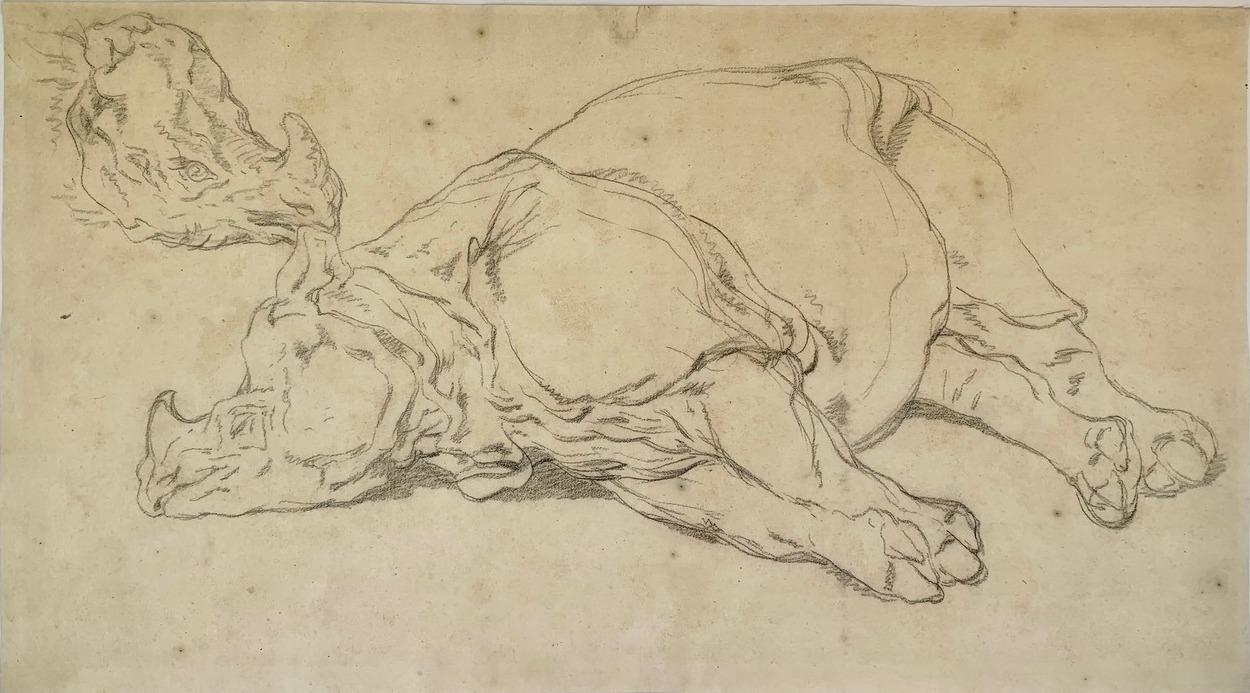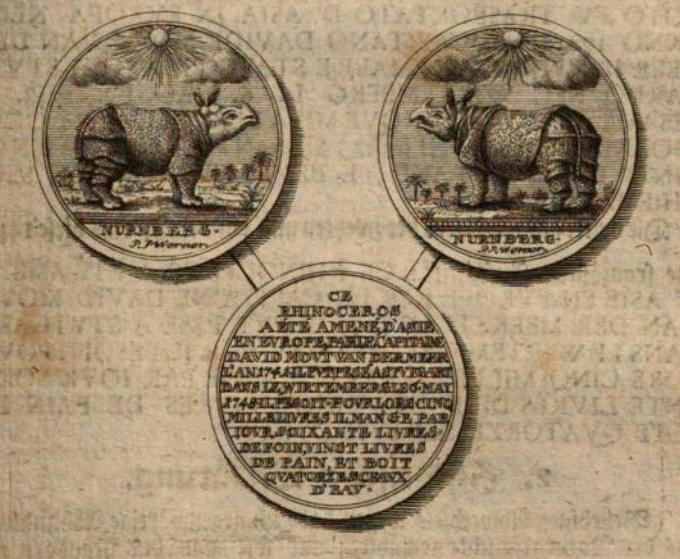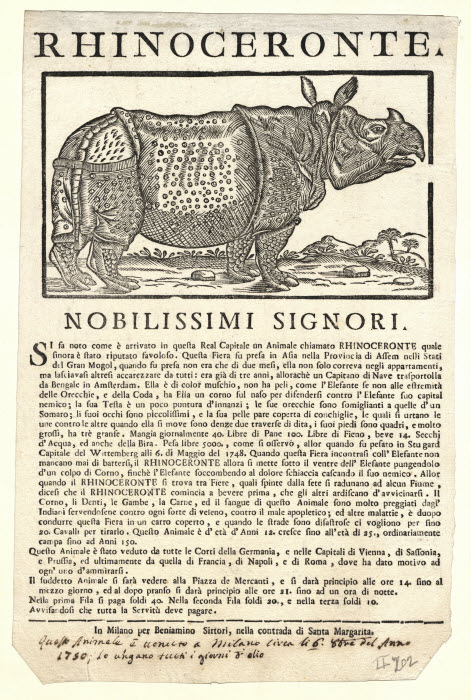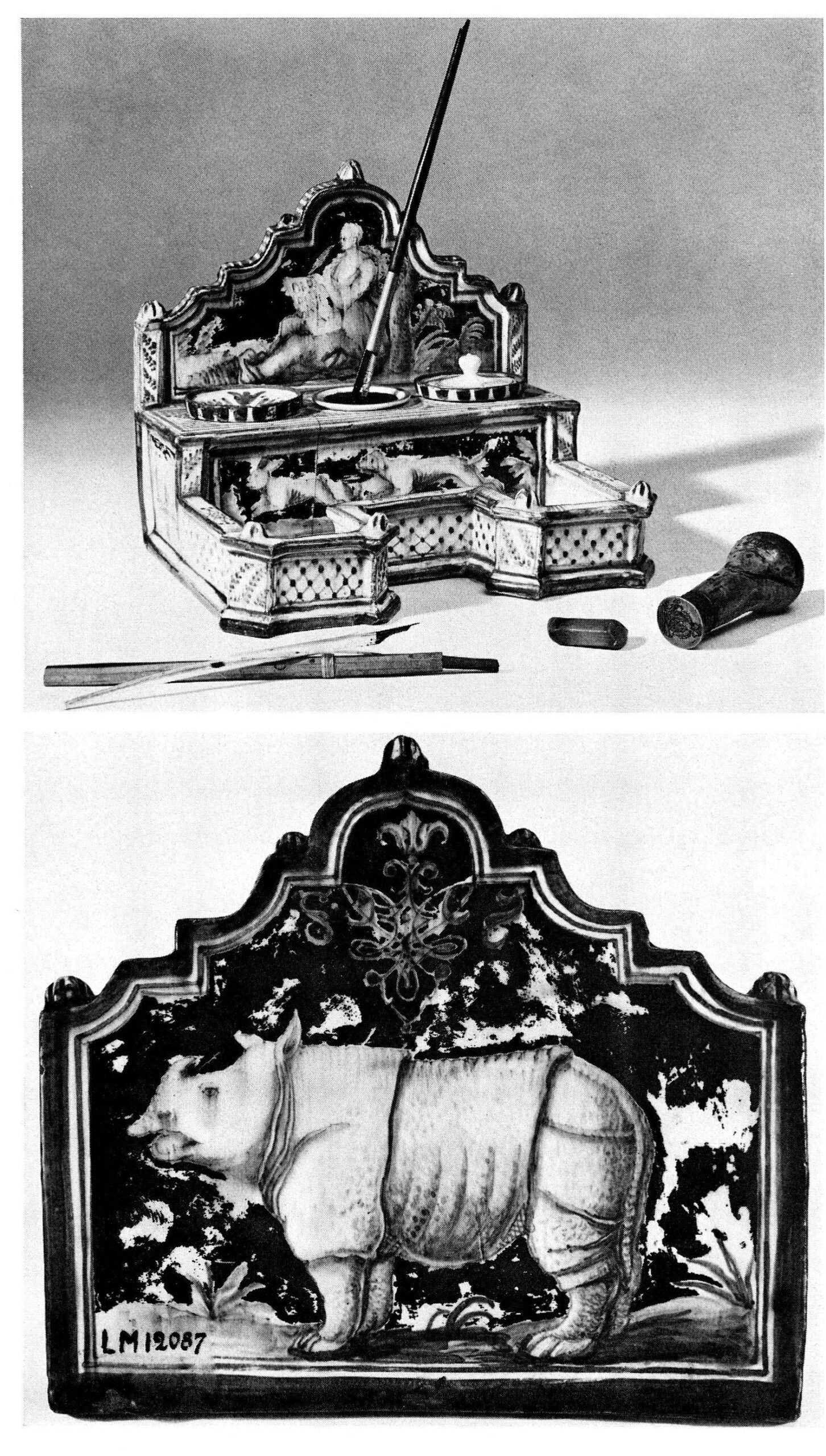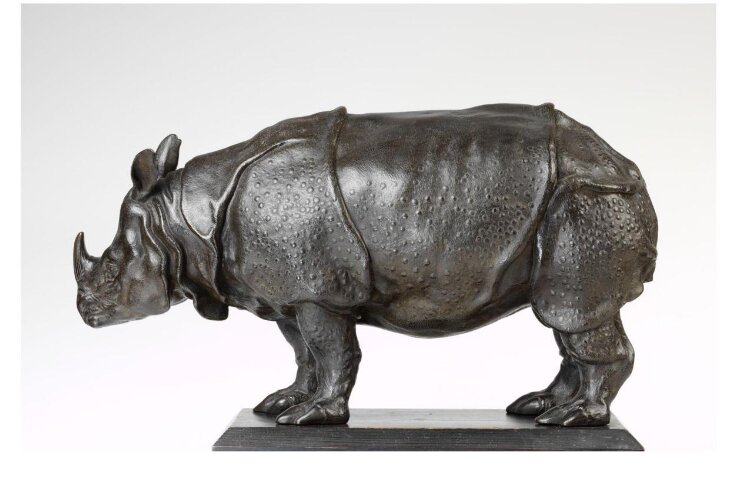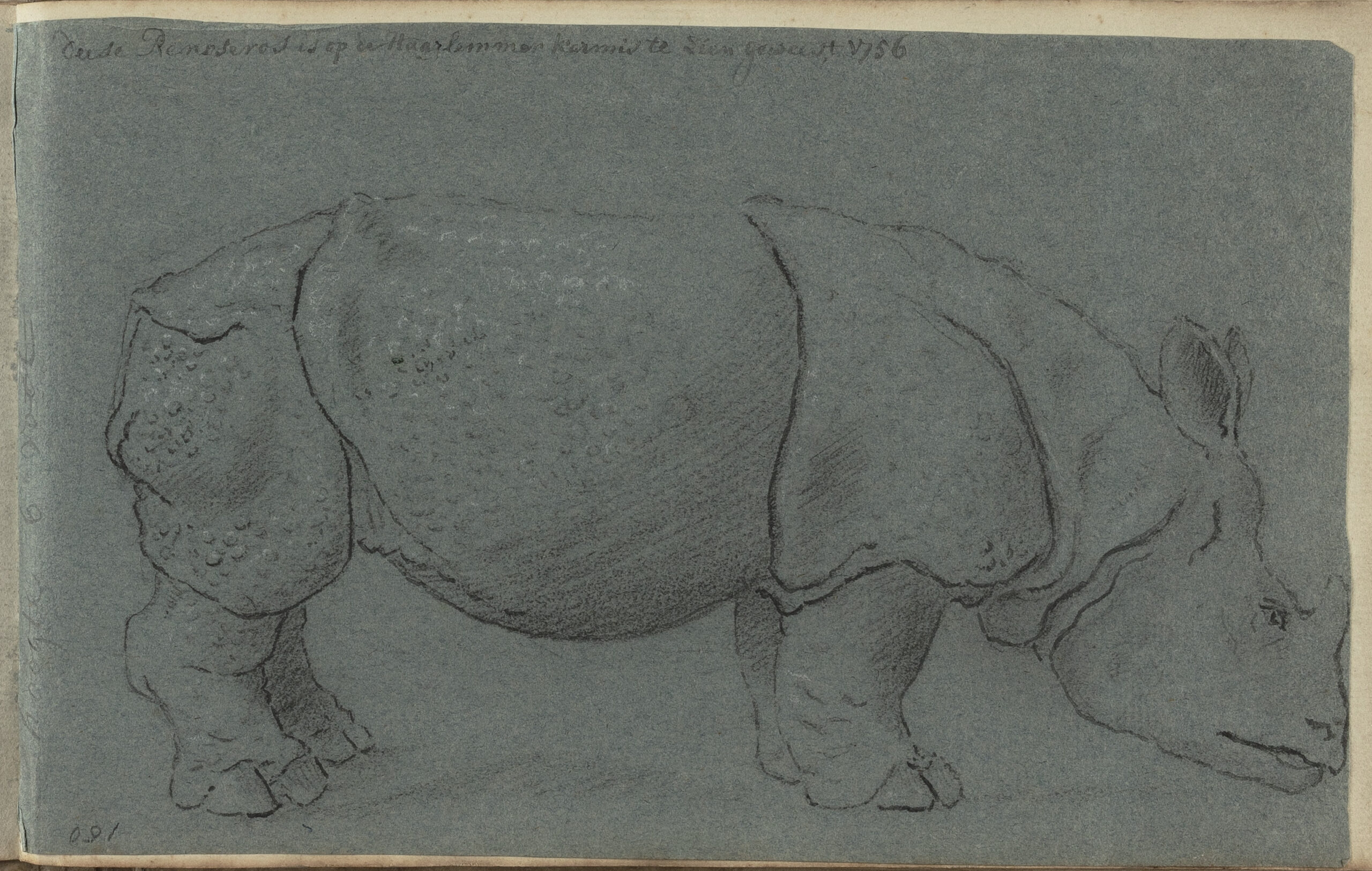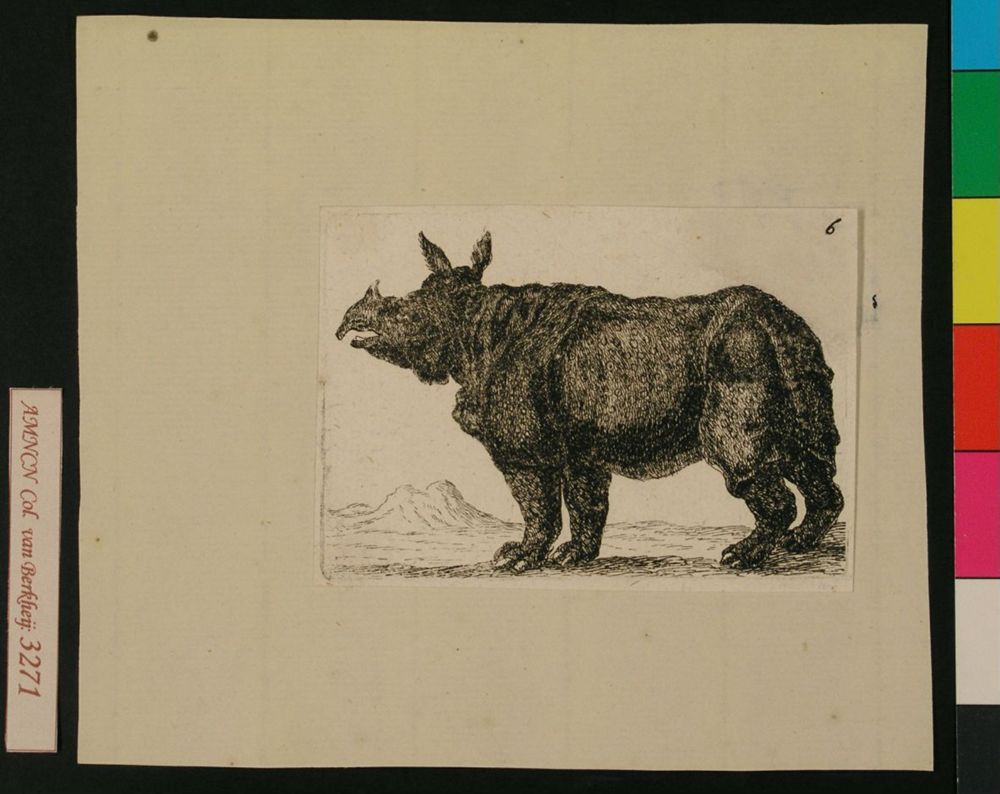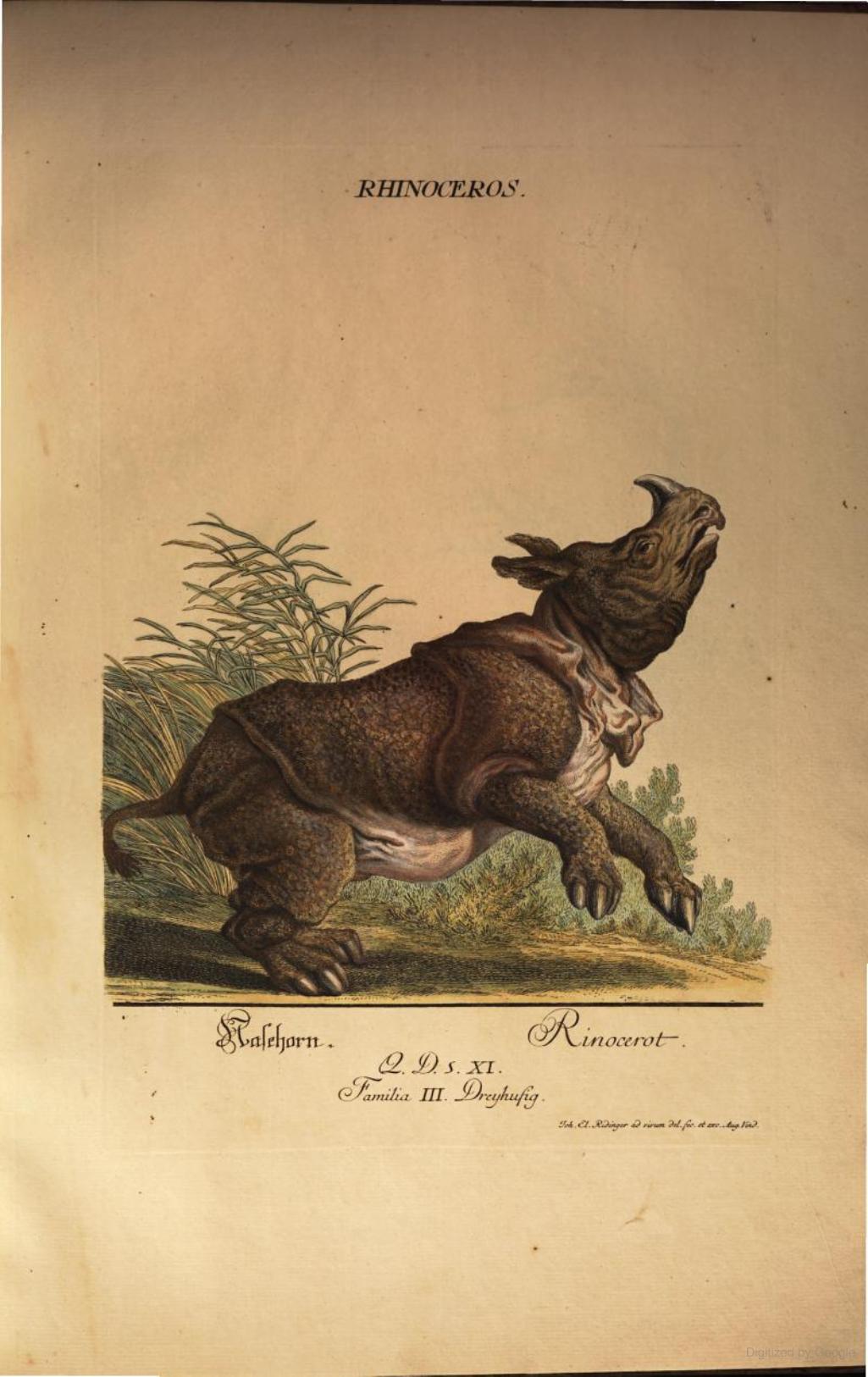


The arrival of Clara was announced in the newspaper of Groningen, in the north of The Netherlands, on 29 January 1745 (source 2201). The departure was announced on 5 February 1745 (source 2202), and again on 19 March 1745 (source 2203). The City Council was requested permission by Gerrit Harting to show the rhinoceros on 30 September 1744 (source 2204) and after acceptance request to reduce the fees on 17 December 1744 (source 2205).
The age is given as 6 years old. Species is called (in Dutch) Reinosceros, Renosseros or Nasehoorn.
Groningen is 190 km north-east of Amsterdam.
* Gerhardt Harting, married on 11 November 1740 to Marretje (Marije) Mout, probably a sister of Douwe Mout. This person is also associated with Clara in Delft in 1742.
They baptized a daughter Anna on 26–07–1741.
Marretje Mout of Houtstraat [Amsterdam] was buried in April 1776.
Amsterdam Archives:
[text of marriage:] Compareerden als vooren: Gerrit Harting, van Oldenburg, oud 35 jaar … & Marretie Mout, van A. Weduwe Gerrit Eemkes in de Hanzest.
[signatures read] Gerhardt Harting, Marije Mout.
Literature
- Doornbos, W.G. 2006. Clara de Rinoceros. Stad & Lande, Groningen 15 (4): 32-35, figs. 1-4.
- Noor Janse, Levende neushoorn tentoongesteld 18e eeuw – Internet blog at: https://www.groningerarchieven.nl/actueel/blogs/751-levende-neushoorn-tentoongesteld-18e-eeuw
- Ham, G. van der, 2022. Clara the rhinoceros: wonderbeast, sensation, muse. Amsterdam, Rijksmuseum – p. 183 and note 165 (refers Doornbos).
Source 2201. Groninger Courant, 29 January 1745
Douwe Mout 1745.. Opregte nieuwe Groninger Courant, Friday 29 January 1745, p. 2.
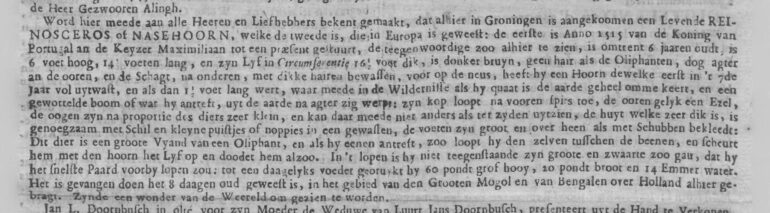
Original text (Dutch)
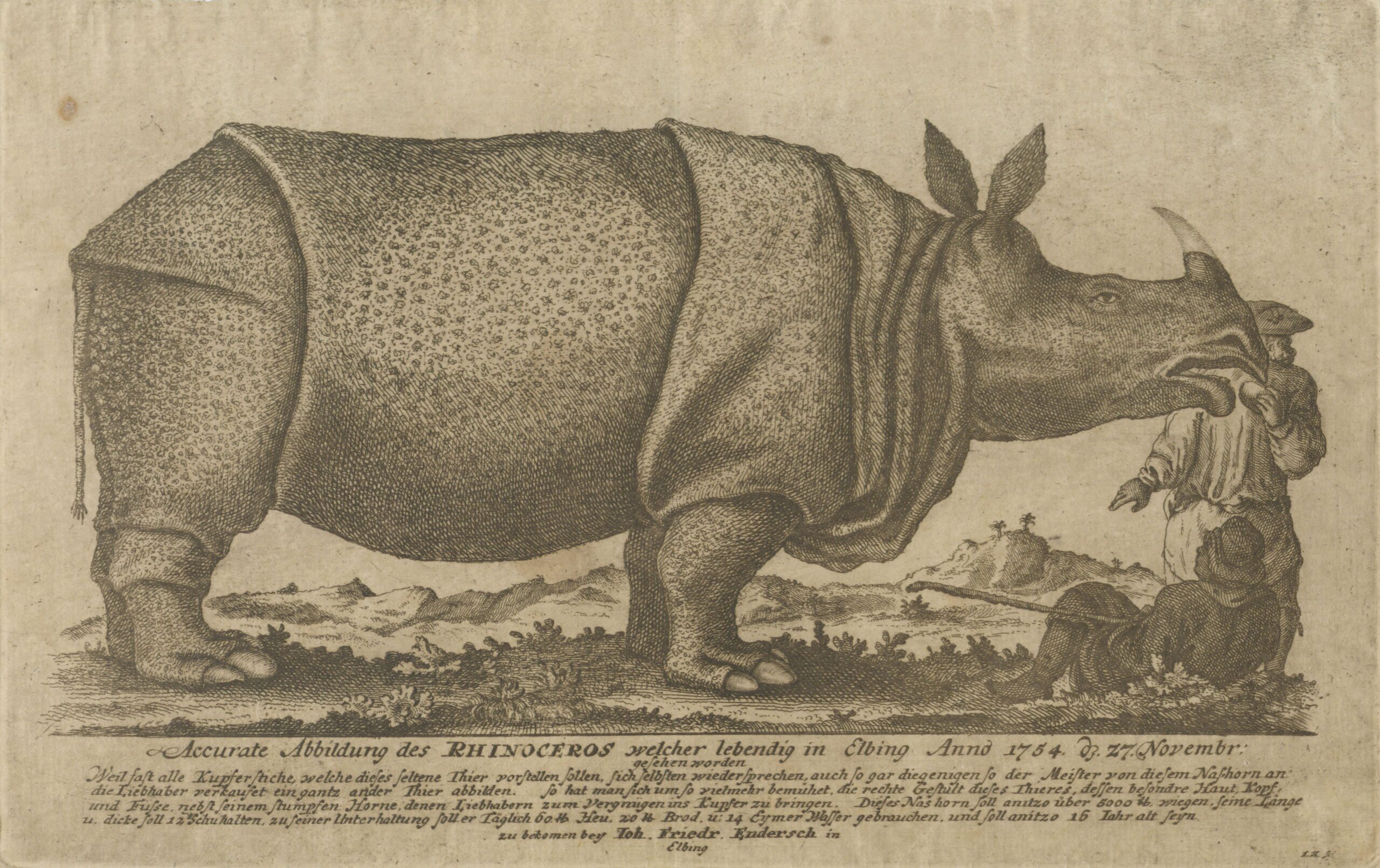
Word hier meede aan alle Heeren en Liefhebbers bekent gemaakt, dat alhier in Groningen is aangekoomen een Levende REINOSCEROS of NASEHOORN, welke de tweede is, die in Europa is geweest; de eerste is Anno 1515 van de Koning van Portugal an de Keyzer Maximiliaan tot een praesent gestuurt, de tegenwoordige zoo alhier te zien, is omtrent 6 jaaren oudt, is 6 voet hoog, 14 voeten lang, en zyn lyf in Circumferentie 16 ½ voet dik, is donker bruyn, geen hair als de Oliphanten, dog agter an de ooren, en de schagt, na onderen, met dikke hairen bewassen, voor op de neus, heeft hy een Hoorn dewelke eerst in ‘t 7de Jaar vol uytwast, en als dan 1 ½ voet lang wert, waar meede in de Wildernisse als hy quaat is de aarde geheel omme keert, en een gewortelde boom of wat hy aantreft, uyt de aarde na agter zig werpe; zyn kop loopt na vooren spits toe, de ooren gelyk een Ezel, de oogen zyn na proportie des diers zeer klein, en kan daar meede niet anders als terzyden uytzien, de huyt welke zeer dik is, is genoegzaam met Schil en kleyne puistkes of noppies in een gewassen, de voeten zyn groot en over heen als met schubben bekleedt; Dit dier is een groote Vyand van een Oliphant, en als hy eenen aantreft, zoo loopt hy den zelven tusschen de beenen, en scheurt hem met den hoorn het Lyf op en doodet hem alzoo. In ‘t lopen is hy niet teegenstaande zyn groote n zwaarte zoo gau, dat hy het snelste Paard voorby lopen zou; tot een daagelyks voeder gebruykt hy 60 pondt grof hooy, 20 pondt broot en 14 emmer water. Het is gevangen doen het 8 daagen oud geweest is, in het gebied van den grooten Mogol en van Bengalen over Holland alhier gebragt. Zynde een wonder van de Wereld gezien te worden.
English translation
It is hereby announced to all Gentlemen and Enthusiasts that a living REINOSCEROS or NASEHOORN has arrived here in Groningen, which is the second that has been in Europe; the first was sent in 1515 from the King of Portugal to the Emperor Maximilian as a present, the present one as seen here, is about 6 years old, is 6 feet high, 14 feet long, and its body in circumference 16 ½ feet thick, is dark brown, no hair like the Elephants, but behind the ears, and the shaft, towards the bottom, is covered with thick hair, in front of the nose, it has a horn which only grows out fully in the 7th year, and then becomes 1 ½ feet long, with which in the Wilderness when it is bad the earth completely turns over, and a rooted tree or whatever it finds, throws out of the earth behind it; his head tapers towards the front, the ears like an Ass, the eyes are very small in proportion to the animal, and can therefore not look out otherwise than to the side, the skin which is very thick, is sufficiently covered with skin and small pimples or nubs in one, the feet are large and covered all over as if with scales; This animal is a great enemy of an Elephant, and if he meets one, he runs it between the legs, and tears its body with the horn and thus kills it. In running he is not in spite of his great weight so swift, that he would outrun the fastest Horse; for a daily feed he uses 60 pounds of coarse hay, 20 pounds of bread and 14 buckets of water. It was captured when it was 8 days old, in the territory of the great Mogul and from Bengal brought here via Holland. Being a wonder of the World to be seen.
Source 2202. Groninger Courant, 5 February 1745
Douwe Mout 1745. Opregte nieuwe Groninger Courant, Friday 5 February 1745: 2.

Original text (Dutch)
Werd bekent gemaakt als dat de Renosseros Eersdaags van Groningen staat te vertrekken soo daar nog eenige zyn die begeerig waaren voor een seer sevile prys, het beest te zien ten genoege van de Burgers, en de gemeene man gelieve in tyds te komen.
English translation
It was announced that the Renosseros will soon be leaving Groningen, as there are still some who are eager to see the beast for the benefit of the citizens at a very reasonable price, and the common man is asked to come in time.
Source 2203. Groninger Courant, 19 March 1745
Douwe Mout 1745.. Opregte nieuwe Groninger Courant, Friday 19 March 1745: 2.

Original text (Dutch)
Aan alle Heeren en Liefhebbers wordt bekent gemaakt dat die meer gemelde Renosseros die op de Groote Markt nog te sien is, aanstaande Woensdag staat te vertrekken, zoo daar nog eenige Liefhebbers zyn die begeerig waaren het zelfde Beest voor een Civiele prys te zien, die kan by tyde koomen.
English translation
All Gentlemen and Enthusiasts are informed that the aforementioned Renosseros that can still be seen on the Grote Markt is scheduled to leave next Wednesday. If there are still any Enthusiasts who would like to see the same Beast for a Civil price, they may come in time.
Source 2204. Request of 30 September 1744 by Gerrit Harting
Groninger Archieven – Archives of Groningen
Archief: 1605 Stadsbestuur van Groningen (2), 1594 – 1815
605 1744 nov 23–1746 mrt 11
Request dated 30 September 1744
page 16 and top of p. 17
groningerarchieven.nl
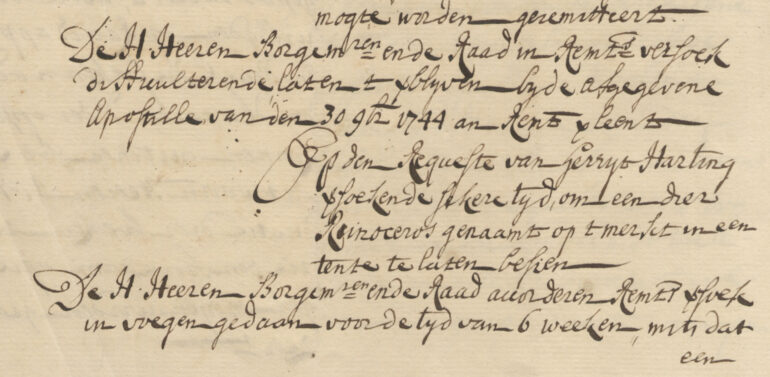
Original text (Dutch)
[request]
Op den Requeste van Gerrijt Harting
versoekende sekere tijd, om een dier
Rinoceros genaamt op t merckt in een
tent te laten besien
[resolution]
De H. Heeren Borgemeesteren ende Raad accorderen Remonstrants versoek
in voegen gedaan voor de tijd van 6 weeken, mits dat
[next page]
een vierde daarvan ten profite van de
gemene Armen deser Stad kome.
English translation
Gerrijt Harting requested permission to show a Rinoceros on the Market in a tent for short time. The authorities permitted him for 6 weeks, on the condition that a quarter of the profits was given to the poor of the town.
Source 2205. Harting’s request for reduction of fees
Request by Gerrit Harting to reduce the amount needed to be paid to the poor – 17 December 1744.
Verzoek van Gerrit Harting om minder inkomsten af te staan aan de armen, 17 december 1744. Groninger Archieven (1605–605, blz 25)
Transcriptie van bovenstaand rekest van 17 december 1744 (p. 25)
groningerarchieven.nl
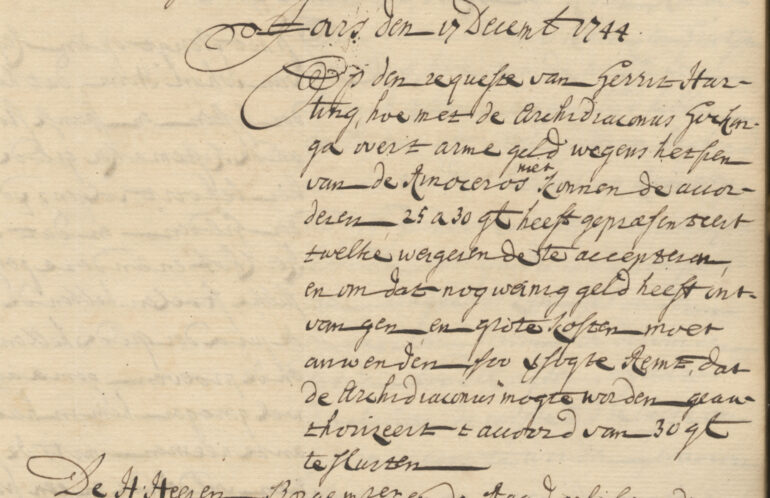
Original text (Dutch)
Jovis den 17 Decembris 1744.
Op den requeste van Gerrit Har-
ting, hoe met de Archidiaconus Gockin-
ga over t arme geld wegens het sien
van de Rinoceros niet konnende accor-
deren 25 a 30 gulden heeft gepraesenteert
t welke weigerende te accepteren,
en om dat nog weinig geld heeft ont-
vangen en grote kosten moet
anwenden soo versogte Remonstrant, dat
de Archidiaonus mogte worden geau-
thoriseert t accoord van 30 gulden
te sluiten
De H. Heeren Borgemeesteren ende Raad gelasten den
Remonstrant om tijn silveren ducatons an den armen
gedurende sijn verblijf alhijr te voldoen.
English translation
The authorities agree to accept 10 silver ducats for the poor.