

PETRUS CAMPER AND HIS ART WORKS DEPICTING THE RHINOCEROS
Petrus Camper (1722–1789), Dutch physician, artist
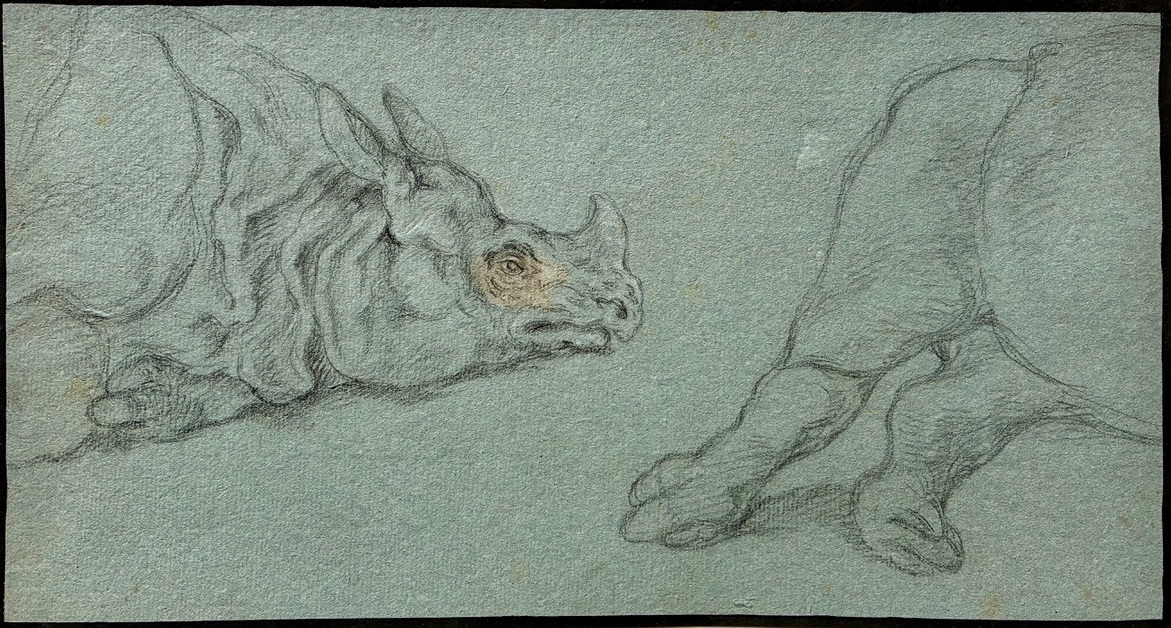
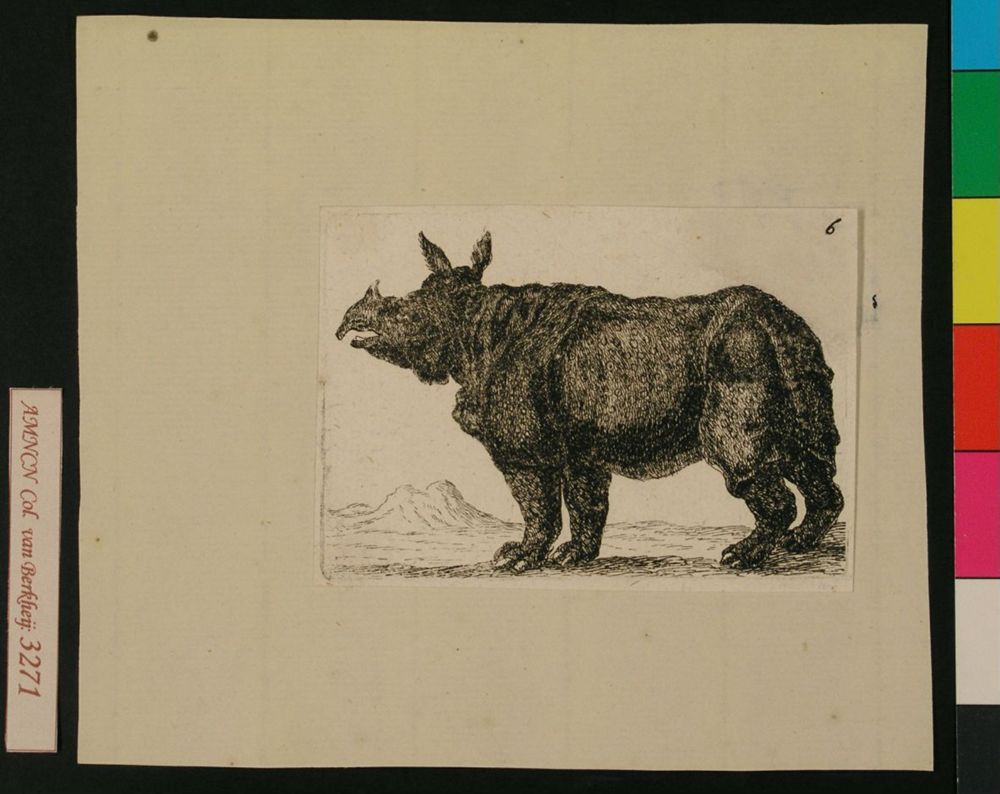
Camper writes in his lecture (delivered in Groningen in the Akademische Schouwburg der Ontleedkunde on 6 February 1772) that he saw the rhinoceros when she was in Leiden in 1748 (source 1801). He made several drawings (source 1802). Besides a painting in oil and a clay model, which were added to the collection of Gronovius (source 1804). Camper states that he had to buy them back at the auction of Gronovius in 1779 (actually 1778, source 1805).
For the work of Camper, refer
- Visser, R.P.W. 1985. The zoological work of Petrus Camper. Amsterdam, Rodopi.
Source 1801. Petrus Camper – Rhinoceros in Leiden in 1748
The main contribution by Camper on the rhinoceros appeared in Dutch in 1782, and saw translations in German (1791) and French (1803).
Camper, P. 1782. Natuurkundige verhandelingen over den Orang outang; en eenige andere aapsoorten Over den rhinoceros met den dubbelen horen, en over het rendier. Amsterdam, erven P. Meijer en G. Warnars: pp. i-iv, 1–235, i-ii.
Camper, P.; Herbell, J.F.M. 1791. Naturgeschichte des Orang-Utang und einiger andern Affenarten, des Africanischen Nashorns, und des Rennthiers Ins Deutsche uberstetzt, und mit den neuesten Beobachtungen des Verfassers herausgegeben, von J.F.M. Herbell. Düsseldorf, bei Johann Christian Daenzer. pp. 1–224. – Translation by Johann Fredrick Mauritz Herbell (1752–1819).
Camper, P. 1803. Du rhinoceros a deux cornes. Pp. 197–290 in: Oeuvres de Pierre Camper, qui ont pour objet l’histoire naturelle, la physiologie et l’anatomie comparee. Paris, H.J.Jansen: vol. 1, pp. i-civ, 1–392. – Translation by Hendrik Jonas Jansen (1741–1812).
Selected text in Dutch edition:
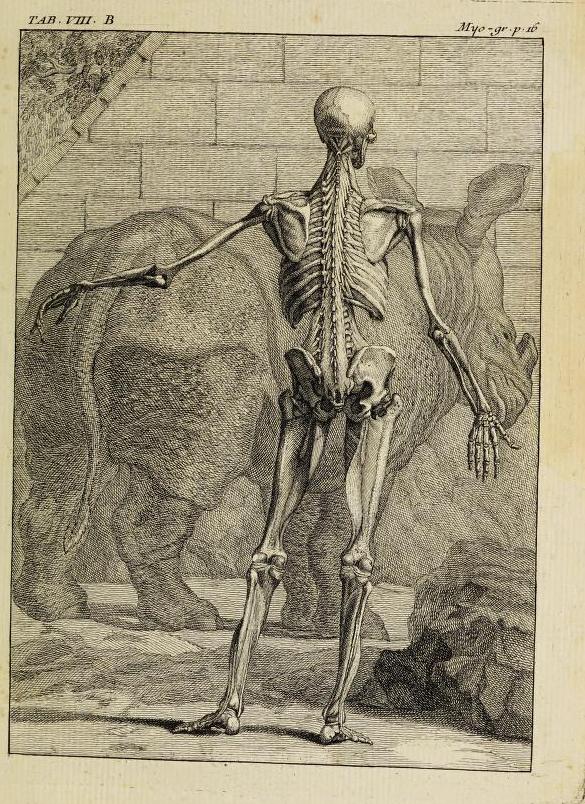
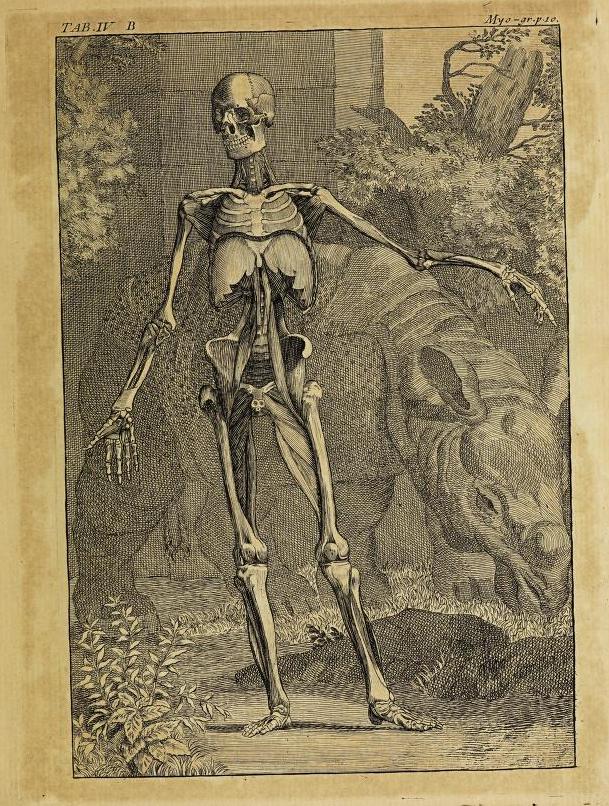
[p.139] En, Gyl. Hebt, genoegzaam alle gezien den Rhinoceros in den jaare 1741 door den Ed Heere Sichterman overgezonden, welke één enkelen hoorn hadt! Deeze is door J. Wandelaar by de Ontleedkundige Plaaten van den grooten Albinus gevoegd, en door gansch Europa omgevoerd, in Parys door den grooten Beesten-Schilder Oudry afgemaald, mede door anderen.
Van gelyken heb ik dien verscheidene maalen getekend, en in olie verwe geschilderd, ook in klaai gebootzeerd, in den jaare 1748. Welke twee laatste stukken lang geweest zyn in de verzaamelingvan den Heere Th. Gronovius, aan wiens vader ik dezelve als aan mynen grooten Begunstiger ten geschenk gegeeven hebbe (a).
(a) De familie heeft deeze naa het overlyden van dien Heer openlyk verkogt in den jaare 1779. En niet konnen goedvinden my dezelve te rug te geeven, zoo dat ik myn eigen werk, eerst geschonken, tegens geld verplicht wierdt in te koopen: offschoon ik voorgesteld hadde, dat de naagelaatene kinderen, die stukken myner jeugd tot een aandenken bewaaren zouden.
[p.147–148] De Kop van den Rhinoceros te Versailles was op het oog, en in schyn korter, om dat de plooi, die van boven den Kop langs den rand der onderkaak nederwaarts liep, zeer dik, en merkelyk dikker was dan in den Rhinoceros, dien ik in den jaare 1748 te Leiden afgetekend, en gebootzeerd.hebbe, . . . De Rhinoceros, die in Holland, en elders over 30 jaaren van veelen met my gezien wierdt, deedt hetzelfde.
[p.176] De Rhinoceros, welke ik te Leiden dikwerf gezien hebbe, at allerleie groentens, doch liefst geele wortels.
[p.176] De Rhinoceros schynt niet kwaadaartig. Die voormaals te Leiden was heb ik dikwerf uit de hand gevoerd, en den muil doen openen, door haar, want zy was een wyfje, een wortel voor te houden; als wanneer ik met vermaak het uit- en intrekken van haaren vinger der bovenlip zag.
English translation
[p.139] And, you have all seen the Rhinoceros sent over in 1741 by Mr Sichterman, which had a single horn! This one was added by J. Wandelaar to the anatomical plates of the great Albinus, and was transported throughout Europe, depicted in Paris by the great animal painter Oudry, as well as by others. Similarly, I have drawn it several times, painted it in oils, and also copied it in clay, in 1748. These last two pieces have long been in the collection of Mr. Th. Gronovius, to whose father I gave them as a gift as my great patron (a).
(a) The family openly sold these after the death of that gentleman in the year 1779. And they could not agree to give them back to me, so that I was obliged to buy my own work, which had first been donated, for money: even though I had suggested that my surviving children should keep these pieces of my youth as a memento.
[p.147–148] The head of the Rhinoceros at Versailles was visually and apparently shorter, because the fold that ran downwards from above the head along the edge of the lower jaw was very thick, and noticeably thicker than in the Rhinoceros that I drew and modelled in clay at Leiden in 1748. . . The Rhinoceros that many besides me saw in Holland and elsewhere through 30 years did the same.
[p.176] The Rhinoceros, which I have often seen in Leiden, ate all kinds of vegetables, but preferably yellow carrots.
[p.176] The rhinoceros doesn’t seem malicious. I often led the one that used to live in Leiden by hand and forced it to open its mouth by holding a carrot in front of her, as she was a female. I also enjoyed watching the finger of her upper lip extend and retract.
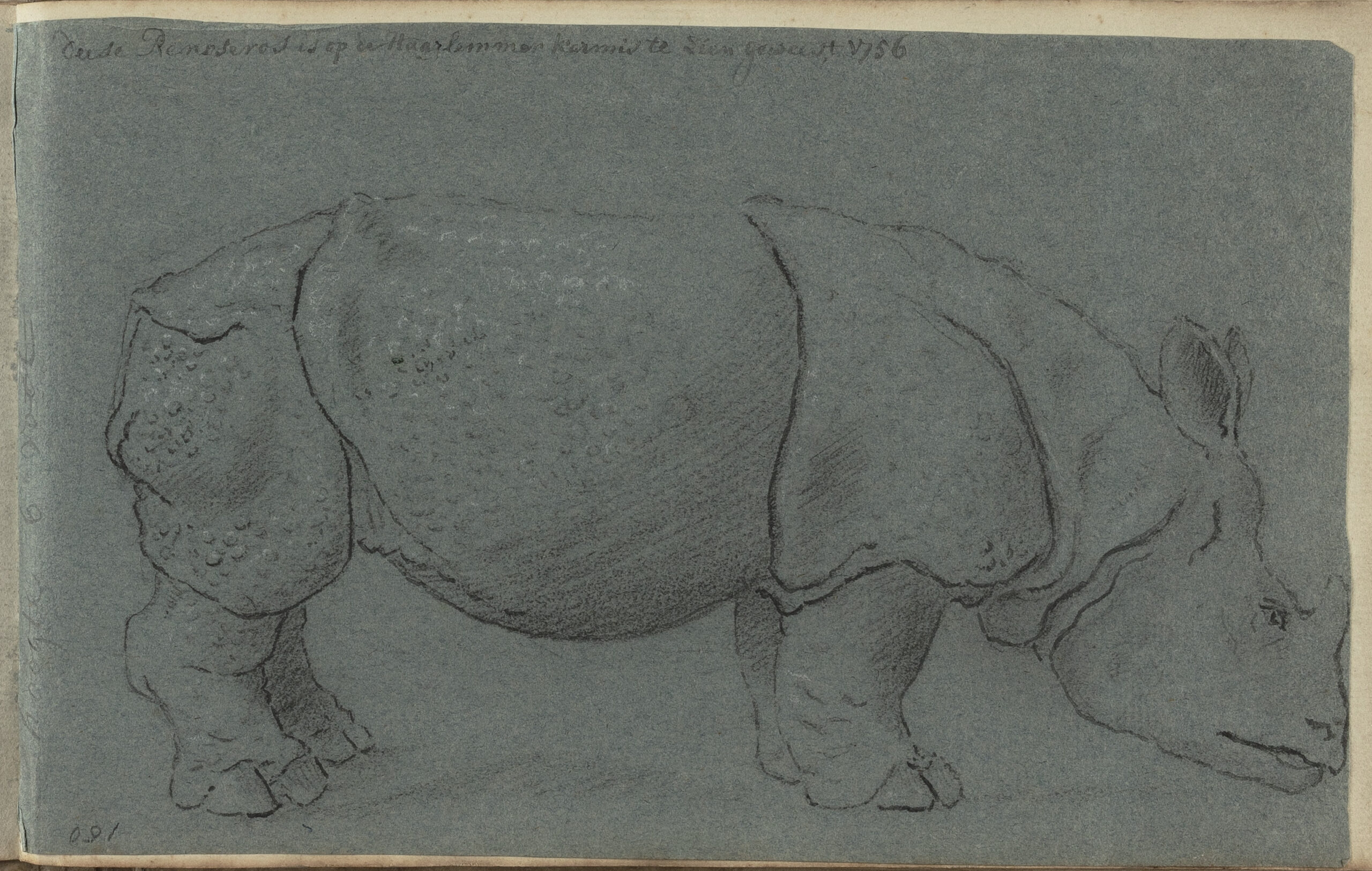
Source 1802. Camper – Drawings made of Clara in 1748
University of Amsterdam, (Allard Pierson), Collection Petrus Camper, Portefeuille A X
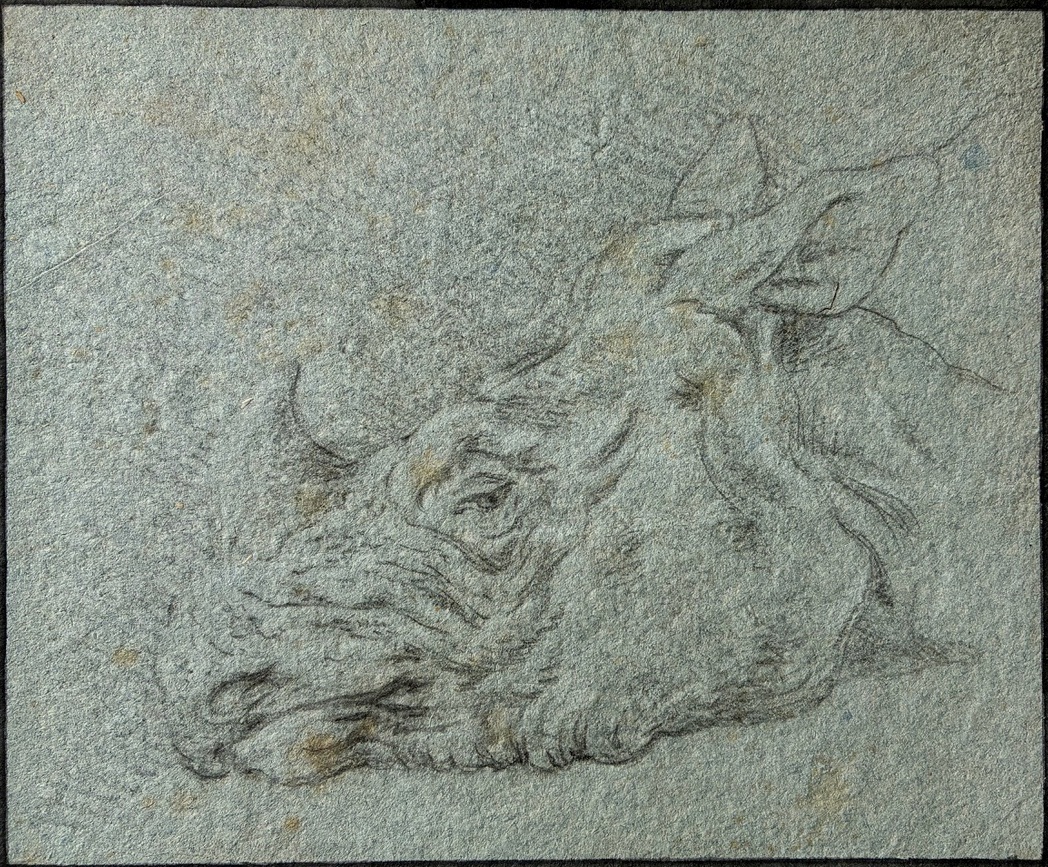
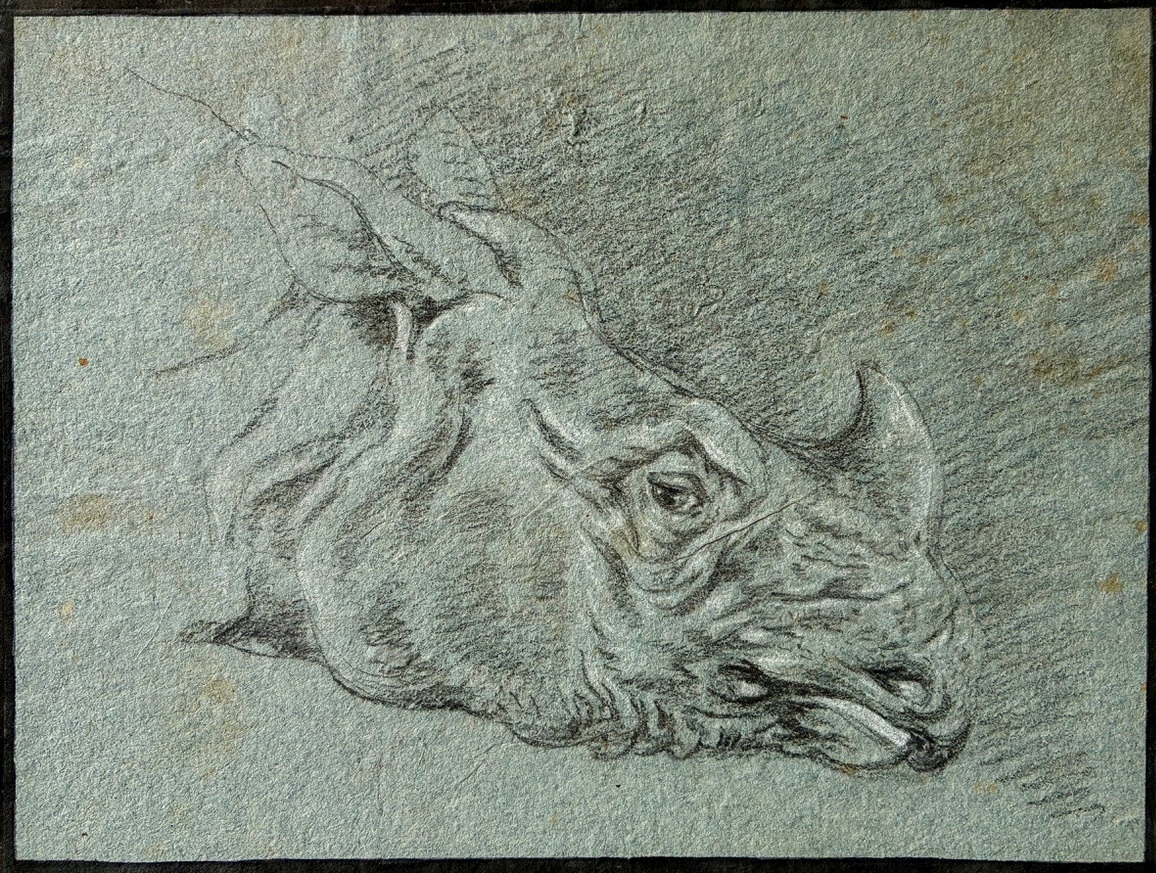
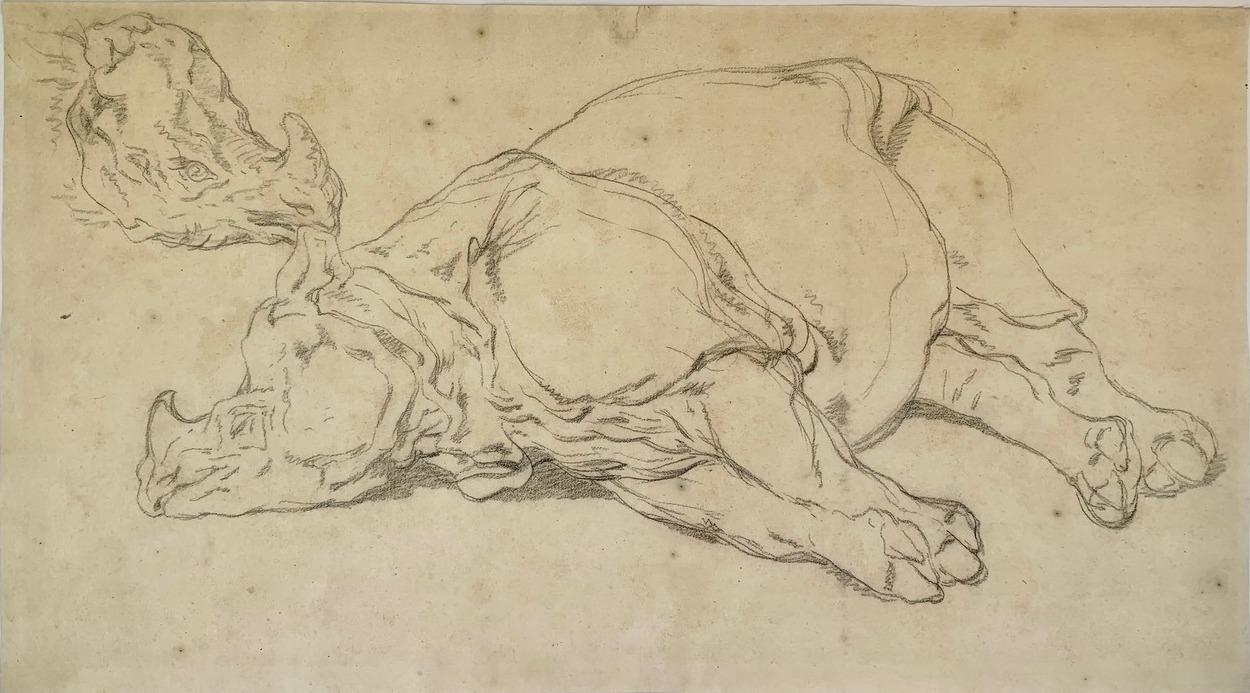
Three sheets, all black and white chalk on blue-grey paper
[Not found when the legacy of Camper was donated to the University of Amsterdam]
Reproductions:
- Rookmaaker, L.C. 1978. De neushoorn van 1741. Ons Amsterdam 30 (1): 16–17, figs. 1–3.
- Van der Ham 2022, figs. 15, 16, 17
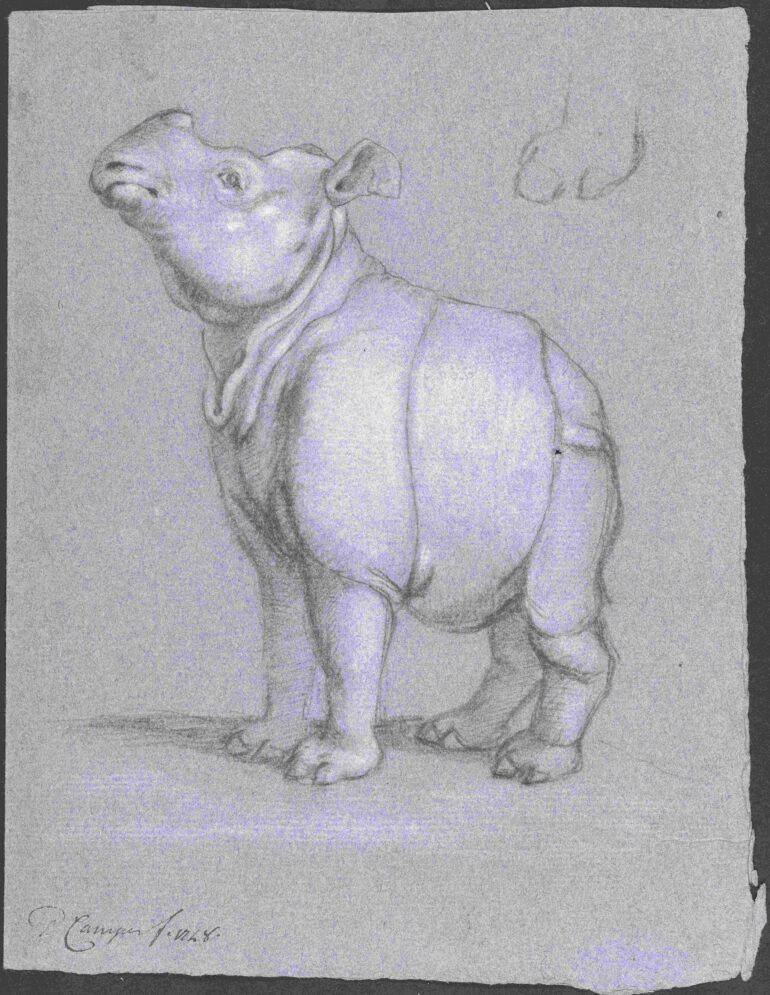
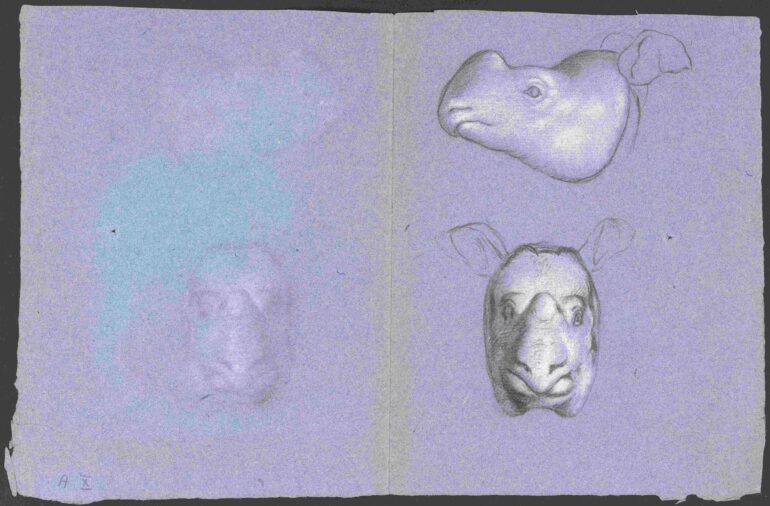
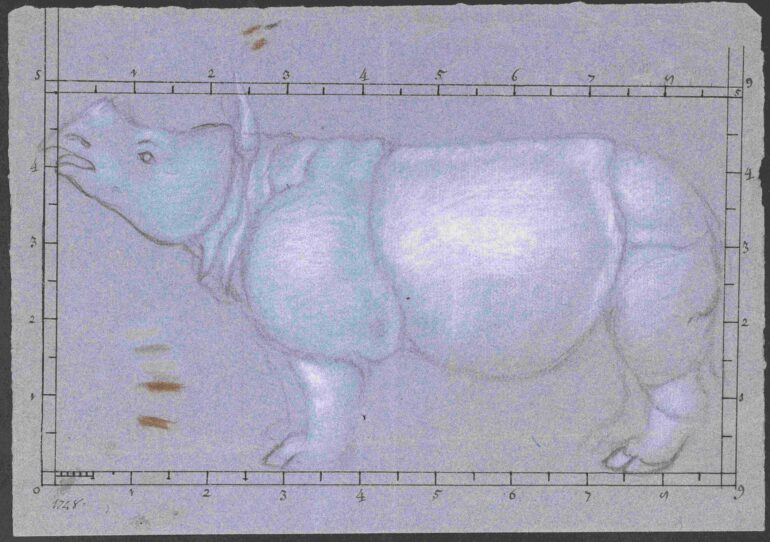
The rhinoceros drawings by Camper on three sheets:
1. Clara as a young rhinoceros, 217 x 164 mm, Signed lower left: P. Camper f. 1748
2. Two sketches of Clara’s head, 217 x 164 mm, no text
3. Sideview of Clara, within a measuring scale on all four sides, 199 x 282 mm, dated lower left: 1748. If scale is in feet, then length of animal is 9 x 31.4 = 282 cm, and height is 4 ½ x 31.4 = 141 cm
Source 1803. Comments on date by Rookmaaker 2024, The Rhinoceros of South Asia
Rookmaaker, L.C. 2024. The Rhinoceros of South Asia. Leiden, Boston: Brill (Emergence of Natural History, vol. 6). pp. i-liv, 1–836, with 707 figures, 38 maps, 75 tables, 82 datasets, bibliography with 3081 items. https://doi.org/10.1163/9789004691544_006
[p.69] Clara was also sketched by the young Petrus Camper (1722–1789), who was an accomplished and prolific artist besides his illustrious career as a scientist. Three drawings (black and white chalk on blue-grey paper) were first rediscovered among his papers and illustrated by Rookmaaker (1978a), showing an oblique front view, two views of the head, and a full side view (also figured in colour by Verhey 1992:31–34 and van der Ham 2022, figs. 15, 16, 17). An oil painting by Camper remains lost, after it was listed in the legacy of Laurentius Theodorus Gronovius (1730–1777): “no.51. Rhinoceros or two depictions of the animal painted in oil on a canvas in a black frame, 12 inches high and 10 inches wide [31 x 26 cm]” (Gronovius 1778:42). Two of these drawings include the date 1748 (figs. 05–27, 05–28), which is clearly repeated (“Rhinoceros, drawn and sculptured in the year 1748 in Leiden”) and linked with the history of Clara in Camper’s published lecture on the rhinoceros (Camper 1782:139,147). This date 1748 doesn’t fit Clara’s known history, neither do these drawings depict a full-grown rhinoceros. Camper’s side-view with a scale along all sides seems to indicate an animal with length of about 280 cm and height of 140 cm. This is similar to the size of a male calf in Basel Zoo which at an age of 3 years and 5 months measured 287 cm long and 131 cm high, with a horn length of 16 cm (Lang 1961:407). This shows that Clara’s assumed birth in the middle of 1738 and a proposed date of Camper’s drawings in late 1741 are the most likely scenario.
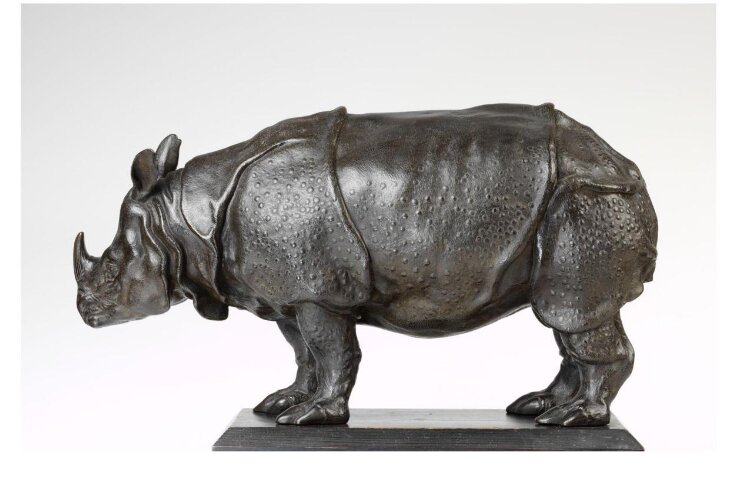
Source 1804. Camper – Clay model in Naturalis Museum
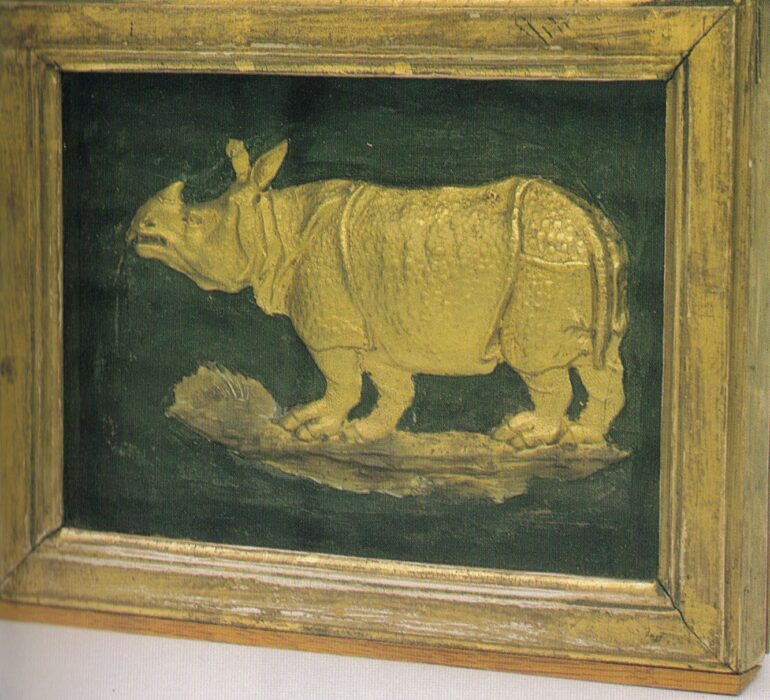
This is in Museum Naturalis, Leiden, inv. 174–1
Gilded clay in frame, 19 x 24 cm
No signature or date on the object
Illustrated:
- Rookmaaker 1978 – date uncertain as 1748 doesn’t fit
- Verheij 1992
- Van der Ham 2022, fig. 18 – where dated 1742
Source 1805. Model of rhinoceros in collection of L.T. Gronovius
* Laurentius Theodorus Gronovius (1730–1777)
Camper (1782, p. 139 note) refers to a painting and clay model of rhinoceros in collection of Gronovius. [source 1801] The catalogues made after the death of Gronovius record a drawing, an oil painting and a clay model with sizes.
Gronovius catalogue of items of natural history:
Gronovius, L.T. 1778. Museum Gronovianum sive index rerum naturalium [belonging to] Laur. Theod. Gronovius [auctioned in Leiden 7 October 1778 and following days]. Lugduni Batavorum, Th. Haak & socios, nec non J. Meerburg. pp. i-vi, 1–252.
[p. 242] Artefacta
2772. Rhinoceros, teekenagtig en aller uitvoerigst na het leeven geboetzeert door den Heer . . . . vervolgens in ‘t vuur gehart; lang 1 ¼ en hoog 4 ¾ duim. [3.25 x 12.4 cm; length must be mistaken]
2773. Rhinoceros, uitvoerig met craijon geteekent in ‘t graauw op blaauw Papier, en gedekt met glas. hoog en breed à 8 à 10 ¼ duim [20.9 x 26.75 cm]
English translation
2772. Rhinoceros, modelled in clay after life in a most natural way, by Mr …, then hardened in fire. Long 1 ¼ en high 4 ¾ inch.
2773. Rhinoceros, drawing with pencil in grey on blue paper, and covered by glass. Height and width 8 to 10 ¼ inch.
Gronovius catalogue of books:
Gronovius, L.T. 1778. Catalogus librorum [belonging to] Laurentius Theodorus Gronovius [auctioned in Leiden 5 October 1778 and following days]. Lugduni Batavorum, Th. Haak & socios, nec non J. Meerburg. pp. i-ii, 1–43.
[p.42] [Rariteyten]
no. 51. – Rhinoceros of twee beelden van hem met olyverwe geschildert op doek in een zwarte lyst, hoog 12 en breed 10 duim [ca. 31.3 x 26.1 cm]
English translation
51. Rhinoceros or 2 views painted in oil on canvas in a black frame, high 12 and wide 10 inch.
Source 1806. Model of rhinoceros in collection of Van Doeveren
* Gualtherus van Doeveren (1730–1783), Wouter van Doeveren, professor of medicine
He was professor at Groningen at same time as Camper
A terracotta clay model was listed in the collection of G. van Doeveren (in The Netherlands), catalogue of 1785, with a date as “seen in Paris in 1749”. Camper and Van Doeveren were together in Paris in February 1753 when they recorded seeing the rhinoceros. Camper is known to have visited Paris from 15 June 1749 to 30 September 1749 – which is after the departure of Clara towards the south of France.
Refer source 1804 for terracotta models made by Camper.
Doeveren, G. van 1785. Museum Doeveriani catalogus, continentis instructissimam copiam quadrupedem, avium, amphibiorum, insectorum, vermium, & quorandam vegetabilium … ; quae collegit Gualtherus van Doeveren. Horum omnium publica auctio fiet 18 Apr. 1785. Leiden, S. et J. Luchtmans.
Original text (Dutch)
[p. 148] Rariteiten
83. Een Kameel, in pleister geboetseerd door Prof. Camper A. 1770 agter glas in een lyst
84. Een dito Olyphant door denselfden
85. Een dito boetseersel van den Rhinoceros, te Parys gezien A. 1749
English translation
83. A Camel, modelled in plaster by Camper in 1770 , behind glass in a frame
84. An Elephant, modelled in plaster by the same
85. A similar model (in plaster) of the Rhinoceros, seen in Paris in 1749.
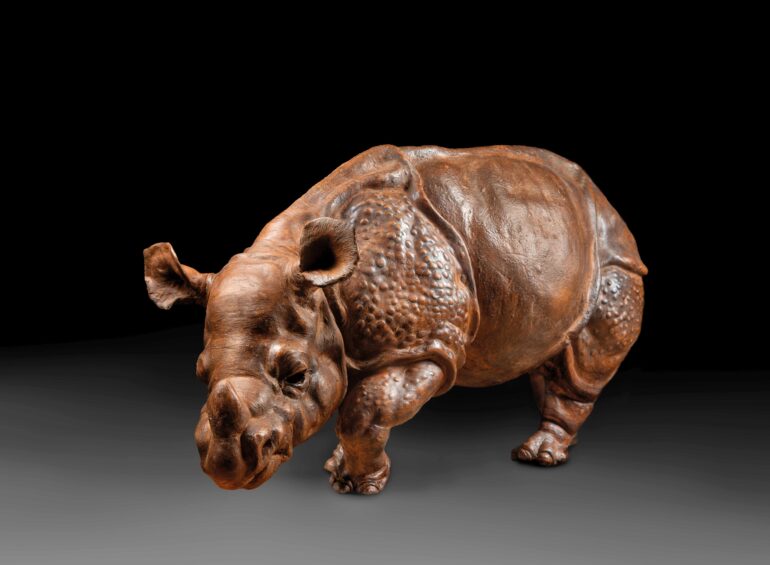
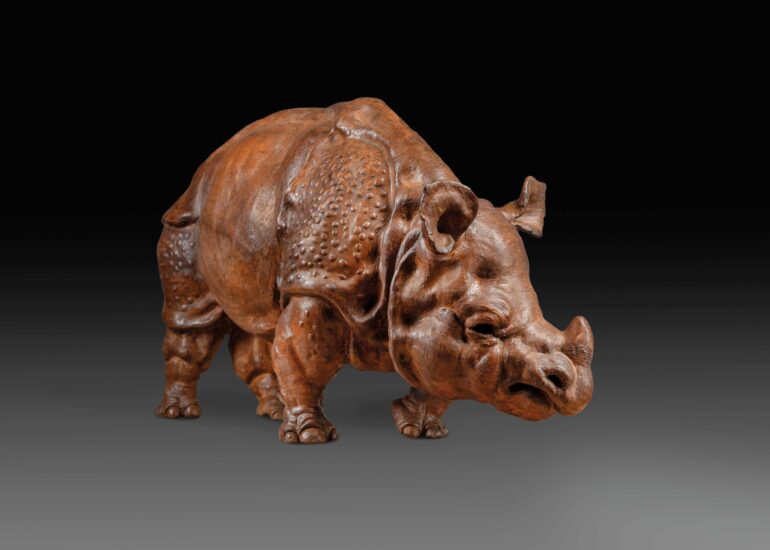
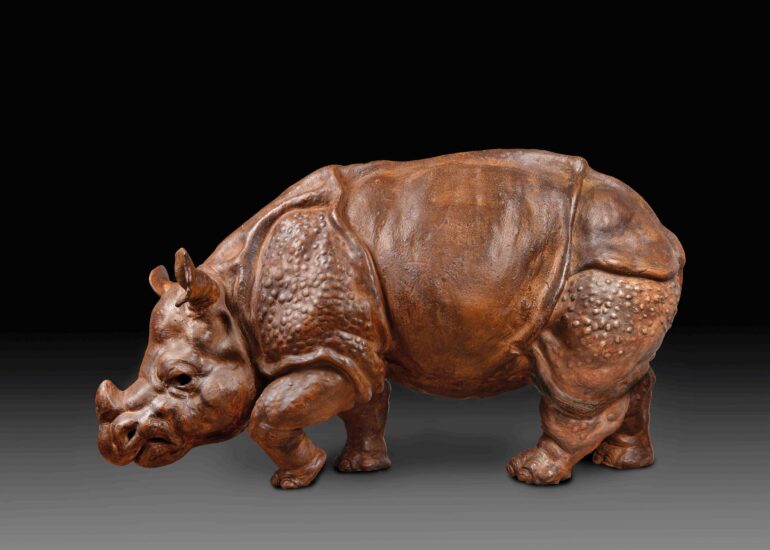
Source 1807. Clay model bought by Rijksmuseum in 2025
Rijksmuseum, bought 16–03–2025 at TEFAF Maastricht (art fair)
rijksmuseum.nl
no provenance, unsigned, undated
It is catalogued as: Clara, Petrus Camper, 1742–1745. Purchase with support of Johan Huizinga Fonds/Rijksmuseum Fonds and a private donation.
id.rijksmuseum.nl
height 31 cm x width 52 cm x depth 21 cm